
How to personalise your bedding for style and comfort
TL;DR:
- Personalising your bedding involves assessing your style, needs, and practical factors to create a comfortable, visually appealing space.
- Layering, pattern mixing, and personal details can transform basic sheets into a unique, functional, and cozy bed.
Your bed is one of the most-used surfaces in your home, yet many people settle for whatever came with the room or a safe, generic set that never quite feels right. The challenge is real: you want bedding that looks polished and personal, but not fussy or over-decorated. The good news is that personalising your bedding does not require a designer budget or a weekend of sewing. With clear priorities, the right materials, and a few practical techniques, you can create a bed that is genuinely yours.
Table of Contents
- Assess your style and needs before starting
- Gather the essentials: fabrics, tools, and inspiration
- Layer like a designer: structure, colour, and texture
- Mix patterns and personalise with finishing touches
- Ensure comfort and practicality: pillow sizing and maintenance
- DIY routes for hands-on personalisation
- The reality: balance comfort, style, and authenticity
- Bring your bedding vision to life with Roomie Design
- Frequently asked questions
Key Takeaways
| Point | Details |
|---|---|
| Style starts with layering | Begin with sheets and work upwards, mixing textures and colours for a cohesive personalised look. |
| Quality beats thread count alone | Weave and fabric construction matter as much, if not more, than a high thread count. |
| Pattern balance prevents clutter | Use a mix of large, medium, and small prints anchored by solids to avoid a busy appearance. |
| Comfort is a personal priority | Practical choices like pillow size and easy-care fabrics keep your bedroom inviting every day. |
Assess your style and needs before starting
Before adding anything to your basket or reaching for a needle and thread, pause. Clarity upfront saves money and frustration later. Think about the colours, patterns, and mood you want in your bedroom. Do you prefer a calm, minimal palette or something bolder?
Consider practical factors too:
- Allergies or sensitivities: Certain fibres such as wool or some synthetics can cause irritation.
- Climate: Warmer regions call for breathable cotton or linen; cooler climates suit heavier duvets.
- Daily habits: If you rarely make the bed, a simpler arrangement suits you better than an elaborate layered scheme.
- Visual priorities: Decide whether you want the textile to be the focal point or a quiet backdrop.
Personalisation is not just visual; too many decorative elements can reduce usability and make bedding appear staged rather than lived-in. Keeping this in mind helps you edit your choices before you begin. For more guidance, browsing choosing bedding for comfort is a useful starting point. You can also find helpful cosy home décor inspiration to sharpen your vision.
Pro Tip: Assemble a small mood board before shopping. Screenshots from interior magazines or saved product images give you a clear visual reference and prevent impulse buys.
For broader style direction, bedding design ideas offers a strong collection of curated looks to reference.
Gather the essentials: fabrics, tools, and inspiration
With your style and needs identified, it is time to collect what you need. Understanding the basics of textile options prevents costly mistakes and sets your project up for success.
| Fabric | Best for | Key qualities |
|---|---|---|
| Cotton percale | Year-round use | Crisp, cool, durable |
| Cotton sateen | Luxury feel | Smooth, lustrous finish |
| Linen | Warm climates | Breathable, gets softer with use |
| Mulberry silk | Sensitive skin | Temperature-regulating, gentle |
| Bamboo/lyocell | Eco-conscious buyers | Soft, moisture-wicking |
Thread count is not the only determinant of sheet feel; weave and construction also matter significantly. A 400-thread-count percale sheet feels very different from a 400-thread-count sateen, even though the number is identical.
Essential items to gather before personalising:
- Base sheets in your chosen fabric and colour
- A duvet or quilt in the right tog (warmth rating) for your climate
- At least one throw in a contrasting texture
- Pillows sized correctly for your bed frame
- Any embellishment tools: fabric pens, fusible web, embroidery thread
Understanding what distinguishes designer bedding quality helps you invest wisely. Quality construction outlasts cheaper alternatives by several years.
Layer like a designer: structure, colour, and texture
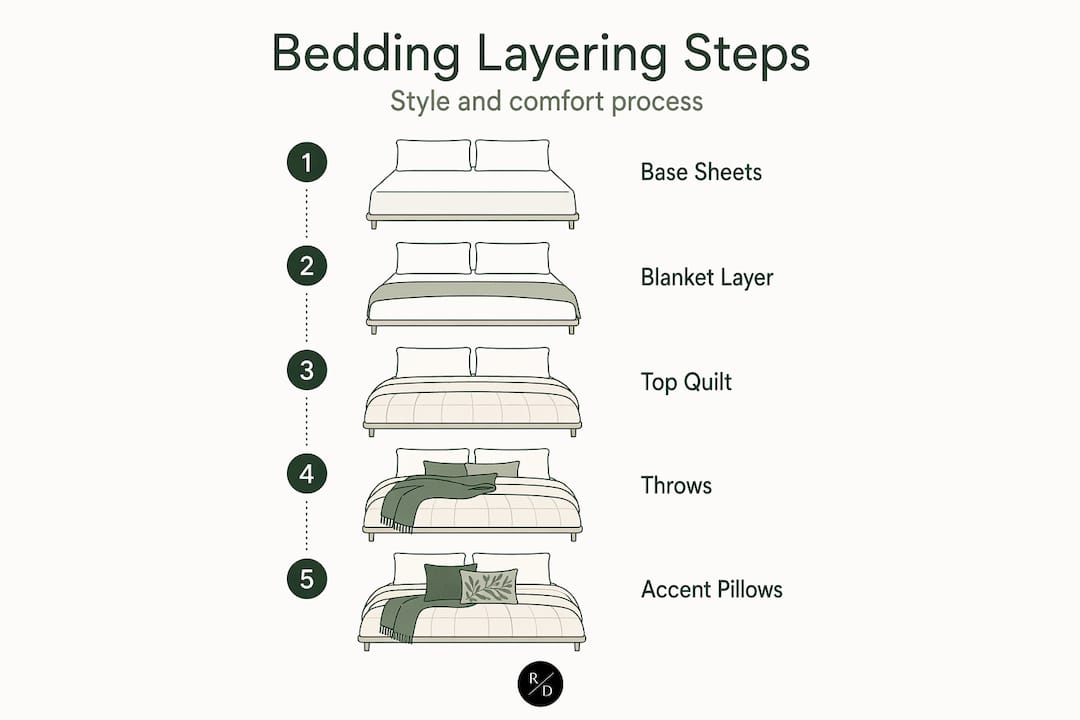
With your essentials at hand, structure is next. This is where visual impact and physical comfort meet. Follow a clear sequence:
- Fitted sheet: The functional base. Choose a neutral or tone-on-tone colour.
- Flat sheet or duvet cover: The dominant visual layer. This sets the colour story.
- Throw or blanket: Folded across the foot of the bed or draped casually for texture.
- Sleeping pillows: Always include these in pillowcases that match or complement the duvet.
- Accent pillows: One to three maximum for a grounded, usable look.
Layering begins with sheets as the base, then blankets or quilts, then throws and decorative pillows, with varied texture and colour throughout. This sequence is not arbitrary. Each layer adds both warmth and visual depth.
| Layer | Texture option | Colour approach |
|---|---|---|
| Duvet cover | Crisp cotton or linen | Anchor colour |
| Throw | Chunky knit or velvet | Accent or contrast |
| Sleeping pillow | Smooth sateen | Match duvet or slightly lighter |
| Accent pillow | Textured weave | Bold or pattern |
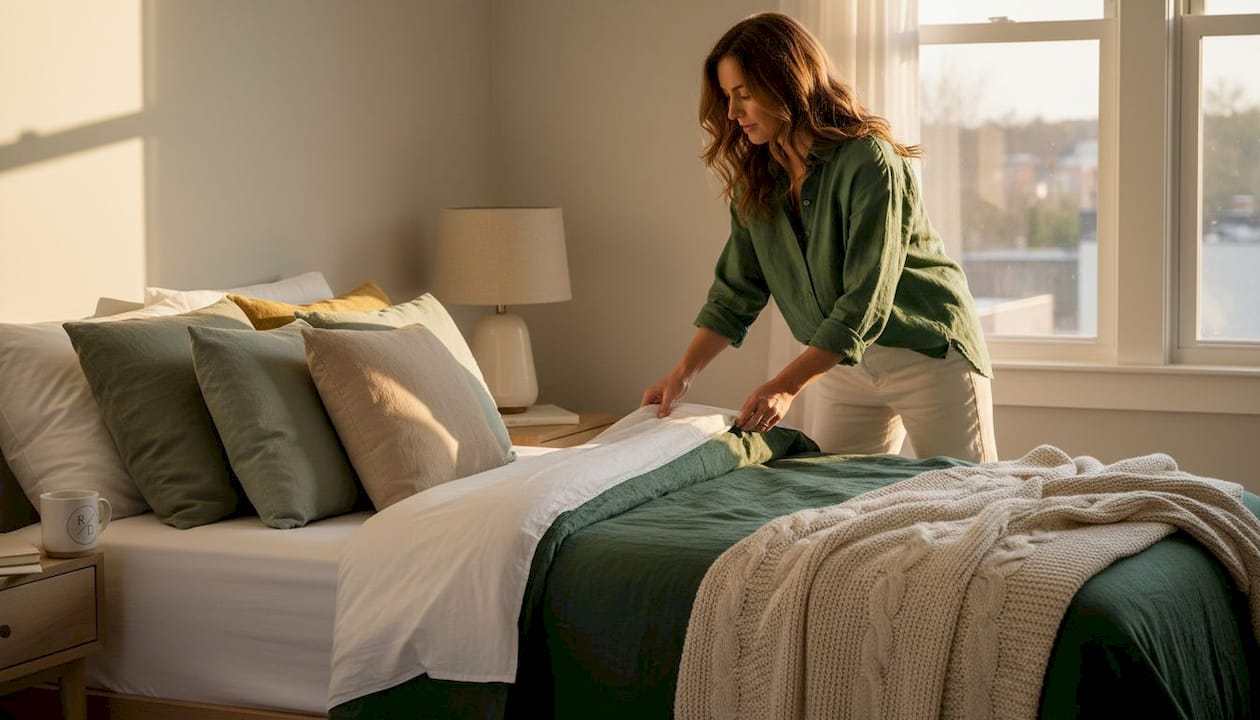
A professional look uses pattern scale hierarchy: one large-scale print, one medium, and one small, often combined with tactile contrast. This rule prevents visual chaos while keeping the result interesting.
Anchoring the room with substantial solids and distributing patterns evenly, rather than clustering them in one corner, creates a composed result. A plain duvet cover with a patterned throw and a geometric accent pillow hits all three scales neatly.
Pro Tip: Too many accent pillows can feel stiff or overly staged. Three or fewer feels more natural and keeps the bed functional at the end of the day.
Explore the full bedding layering guide for detailed advice, and see how styling bedding for a luxurious look applies these principles to high-end results.
Mix patterns and personalise with finishing touches
After mastering basic layering, it is time to make the bed entirely your own. Pattern mixing and personal details are what separate a styled bed from a catalogue photo.
Apply the three-scale pattern rule consistently. Pick one large dominant print (perhaps a floral duvet), one medium repeat (a striped pillowcase), and one small motif (a geometric cushion). This gives variety without chaos.
For a truly personal touch, consider:
- Embroidered initials on pillowcases in contrasting thread
- Contrasting border trim on flat sheets or duvet covers
- DIY appliqué using fusible web to attach fabric shapes or letters
- Visible hand-stitching along pillow edges for a handcrafted finish
Anchoring with solids or calm spaces prevents a cluttered look, even with several patterns at play.
Embroidered personalisation on pillowcases is a popular turnkey approach, with guidelines around character limits and placement keeping the result clean and readable.
Pro Tip: Limit embroidery to two to three initials and choose a thread colour that contrasts clearly with the base fabric. A pale gold thread on deep navy reads sharply; matching tones disappear into the fabric.
For hands-on creative DIY personalisation, there are numerous techniques that require minimal equipment and produce striking results.
Ensure comfort and practicality: pillow sizing and maintenance
Personalisation looks best when it functions well daily. A beautifully dressed bed that takes 20 minutes to dismantle each night quickly becomes a source of frustration rather than pleasure.
Correct pillow sizing and controlled decorative height are key for practical and comfortable personalised beds. Match pillow sizes to your bed frame: standard pillows for single and double beds, king pillows for king and super-king frames.
Maintenance matters equally:
- Cotton and linen: Machine-washable at 40°C for most sets; check care labels.
- Silk: Hand-wash or delicate machine cycle; air dry away from direct heat.
- Bamboo/lyocell: Low heat machine wash; avoid fabric softener, which reduces wicking.
- Embroidered pieces: Wash inside-out to protect thread work.
Thread counts between 300 and 600 are typically ideal for quality bedding, balancing softness, durability, and breathability across most fabric types.
Pro Tip: Set aside one or two “day pillows” purely for decoration. Store them off the bed each evening so your sleeping pillows are always accessible and undisturbed.
For detailed sizing advice, the bedding size guide covers standard UK dimensions clearly. And if you are considering a full refresh, upgrading bedding for comfort outlines why quality materials make a measurable difference to sleep. Additional practical pillow tips can further refine your setup.
DIY routes for hands-on personalisation
For those wanting truly one-off results, a DIY approach makes your bedroom unmistakably yours. The most accessible project is a personalised pillowcase using appliqué.
- Choose your base: Select a plain pillowcase in a durable fabric such as cotton percale.
- Plan your design: Sketch letters, shapes, or motifs on paper first.
- Cut your appliqué fabric: Use a contrasting fabric; cut shapes cleanly with fabric scissors.
- Apply fusible web: Iron the web to the back of your appliqué fabric before cutting to shape.
- Position and fuse: Place the design on the pillowcase and press with a hot iron for 30 seconds.
- Finish with stitching: Sew around the edges with a tight zigzag stitch or decorative hand stitch for durability.
- Wash before use: A first wash confirms adhesion and sets the stitching.
Appliqué-based pillowcases fuse letters and finish with a stitched cover for a clean, lasting result. The technique requires no specialist equipment and takes roughly two hours for a complete pair. More bedroom DIY design ideas are available if you want to extend the project beyond pillowcases.
The reality: balance comfort, style, and authenticity
Techniques and rules are useful, but the most memorable bedrooms we encounter share one quality: they feel genuinely personal rather than assembled from a styling guide. A bed dressed to impress a magazine photographer often fails the person who actually sleeps in it.
The most enduring choices are driven by what you find comfortable and calming, not what is trending this season. A plain, high-quality duvet cover in your favourite colour will outlast any trend-driven layering scheme. Small, authentic details, a piece of embroidery you made yourself, a pillowcase in a colour that genuinely makes you happy, carry more character than a perfectly coordinated set that means nothing to you.
Practicality is not the enemy of beauty. It is the foundation of it. Bedding you use, wash, and return to daily needs to work as well as it looks. Prioritising comfort-focused bedding choices at every step prevents the common mistake of investing in something beautiful that sits in the wardrobe because it is too difficult to maintain.
Start with what you genuinely love. Add one personal detail. Then stop and see how it feels.
Bring your bedding vision to life with Roomie Design
Ready to put these ideas into practice? Roomie Design offers a curated range of premium bedding in materials including cotton, linen, mulberry silk, lyocell, and bamboo, across styles from minimal plain dye to bold luxury prints.
The Aristocrat Gold bedding set suits those who want a rich, statement look, while the Premium Green Mulberry Silk bedding is ideal for comfort-first buyers who want something genuinely special. Browse the full catalogue at Roomie Design to find the base that fits your style, size, and fabric priorities.
Frequently asked questions
How do I choose the best bedding material for personalisation?
Focus on both comfort and durability. Weave and construction matter as much as thread count, so consider how each fabric launders over time alongside its visual appeal.
Is there such a thing as too many decorative pillows?
Yes. Too many decorative elements can reduce usability and make the bed look staged rather than inviting; three or fewer accent pillows is the practical guideline most stylists follow.
What is the easiest way to add a personal touch to my bedding?
Embroidered initials on pillowcases are the most accessible option. Embroidered personalisation on pillowcases works best with controlled character limits and clear placement, keeping the result readable and clean.
Are there rules for mixing bedding patterns?
Follow a scale hierarchy: one large-scale print, one medium repeat, and one small motif. Pattern scale hierarchy combined with solid anchor pieces produces a balanced, professional-looking result.


