Skip the Laundromat: Duvet or Comforter for Shoppers
A duvet is a two-part system, a plain insert plus a removable cover, while a comforter is a single-stitched piece with fill sewn directly inside. Choose a duvet if you want easy washing and the freedom to change your bedroom’s look with a new cover; choose a comforter if you prefer a ready-made finish with nothing extra to buy or swap.
Table of Contents
- Duvet vs comforter: what each term actually means
- Duvet vs comforter: comparing warmth, care, style and cost
- How to choose between a duvet and a comforter
- Materials and fill: what down, cotton, silk and bamboo actually deliver
- Caring for your duvet or comforter properly
- Styling your bed: covers, sets and seasonal looks
- Recommended picks for different sleepers
- How long a duvet or comforter actually lasts
- The sustainability side of duvets and comforters
- How we help customers decide
- Ready to build your own duvet and cover pairing
- Sources
- FAQ
Duvet vs comforter: what each term actually means
The construction difference is the whole story: a comforter is a single, all-in-one piece of bedding with fill stitched inside, while a duvet is a plain insert designed to sit inside a separate, removable cover. Once you know that, every other difference (care, styling, cost) follows naturally from it.
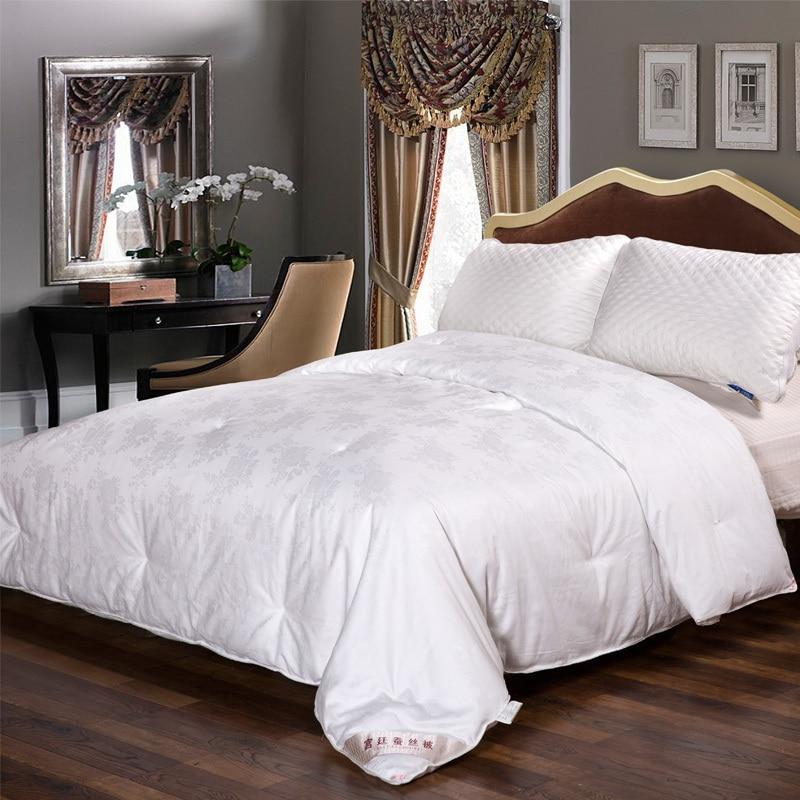
A duvet insert is usually built with baffle-box or stitched chambers that keep the fill evenly distributed, whether that fill is down, down alternative, or a natural fibre. The cover slips over it like a giant pillowcase, closing with buttons, ties, or a zip. A comforter skips that second layer entirely. Its outer fabric, quilting stitches, and fill are one permanent unit, which is why it usually arrives ready to place straight onto the bed.
There is a useful terminology note here for anyone shopping across regions. In the UK and much of Europe, duvet is the standard word for the whole insert-and-cover system, and the American-style all-in-one comforter is far less common on British beds. If you have ever wondered why UK bedding sites rarely mention comforters, that is the reason: the insert-plus-cover approach is simply the default.
Quick summary of the two systems:
- Duvet: insert with baffle-box or stitched fill chambers, worn inside a separate, washable cover
- Comforter: one sewn piece with fill and outer fabric permanently combined
- Quilt: a lighter, often decorative stitched topper, sometimes used interchangeably with “comforter” in casual conversation but generally thinner
- Regional split: UK and European households favour duvets; comforters and quilts are more familiar in North American terminology
Duvet vs comforter: comparing warmth, care, style and cost
Warmth depends far more on fill and loft than on which of the two systems you choose. Duvets generally offer higher loft and warmth, which suits colder bedrooms or anyone who loves that plush, cloudlike weight settling over them at night. Comforters tend to run thinner, which some sleepers find more convenient for year-round use without swapping bedding between seasons.
Care is where the two options genuinely part ways. A duvet cover comes off and goes straight into the washing machine, so refreshing your bedding is as simple as any other laundry load. A comforter has no separable layer, so the whole thing needs washing as one bulky item, and many need a laundromat’s oversized machine or a dry cleaner rather than a home washer.
Styling flexibility follows the same logic. Swapping a duvet cover changes the entire look of a room in minutes, while a comforter gives you one fixed, ready-made aesthetic. Neither is wrong, it is really a question of whether you enjoy redecorating seasonally or prefer to buy once and leave it be.
A quick statistic worth remembering: allergy sufferers usually do better with a duvet system, because a machine-washable cover can be laundered far more often than a bulky comforter ever could.
Cost comparisons work best over the long term rather than at the checkout:
- Upfront cost: comforters can look cheaper because you buy one item, not two
- Lifetime value: duvet covers are inexpensive to replace or refresh, extending the life of the insert underneath
- Refresh cost: changing a duvet’s look means buying a new cover; changing a comforter’s look means buying the whole comforter again
How to choose between a duvet and a comforter
Work through this short decision flow before you buy:
- Check your climate and temperature preference. Cold sleepers or chilly bedrooms usually do better with a high-loft duvet insert; if you run warm most nights, a lighter comforter or a lower-loft duvet fill suits you better.
- Be honest about laundry habits. If you like washing bedding weekly, a duvet cover fits that rhythm far more easily than hauling a comforter to a laundromat.
- Think about how often you redecorate. Frequent stylists benefit from a duvet and cover system; those who want to set up once and forget it often prefer a comforter’s fixed finish.
- Factor in storage and budget. A spare duvet cover takes up almost no drawer space, whereas a second comforter is bulky to store between seasons.
Seasonal swapping is worth building into your plan from the start. Sleep experts commonly recommend owning two duvet inserts of different weights rather than relying on a single all-season insert, which lets you match warmth precisely to the season instead of compromising all year round.
Pro Tip: If your duvet insert keeps bunching inside its cover, use internal corner ties or clips. It is a small fix that stops the insert sliding around and keeps the loft evenly distributed across the bed.
For a broader walkthrough of the whole buying process, from fabric weight to sizing, A guide on how to choose bedding for stylish comfort covers the decision in more depth.
Materials and fill: what down, cotton, silk and bamboo actually deliver
Fill choice shapes warmth, weight and upkeep more than almost any other decision you will make.
- Down: exceptionally high loft with a light, warm feel that many people describe as the most luxurious option available; anyone with allergies should weigh this against easier-care alternatives.
- Down alternative: hypoallergenic and simple to maintain, with good loft and a warm feel when well made, making it a dependable all-rounder for most bedrooms.
- Cotton: breathable and easy to launder, well suited to warmer climates or hot sleepers who want something light against the skin.
- Silk: naturally temperature-regulating and remarkably soft, prized for a refined, smooth feel that suits both warm and cool nights.
- Bamboo: soft, breathable and moisture-wicking, a popular pick for anyone who runs warm overnight.
- Wool: naturally insulating with excellent moisture control, favoured by sleepers who want warmth without heaviness.
If you sleep hot, lean towards cotton, bamboo, or a lighter down-alternative fill. Allergy sufferers generally do better with down alternative paired with a duvet cover you can wash often, since the combination of easy washing and hypoallergenic fill keeps allergens from building up. For long-term durability, well-made down and quality down-alternative fills both hold their loft impressively over years of regular use, so the choice really comes down to feel and care preference rather than one being sturdier than the other.
Caring for your duvet or comforter properly
Duvet covers should be washed roughly every one to two weeks, in line with your sheets, since they are what actually touches your skin most nights. The insert itself needs far less frequent washing, perhaps twice a year, because the cover does most of the protective work.
Comforters do not have that luxury. Washing a whole comforter at home works only if you have a large-capacity machine; otherwise, a laundromat’s oversized washer or a dry cleaner becomes the practical option. A simple workaround is to always sleep with a top sheet or a washable cover between you and the comforter, which keeps the surface cleaner for far longer between full washes.
Storage habits matter for loft retention on both systems:
- Shake out and fluff your duvet or comforter regularly to redistribute fill evenly
- Air bedding near an open window every few weeks to keep it feeling fresh
- Store off-season items in a breathable cotton bag rather than sealed plastic, which can flatten loft over time
- Rotate between two duvet weights seasonally rather than compressing one insert into storage for months
Pro Tip: Never store a down or down-alternative duvet tightly compressed for long periods. Loose, breathable storage helps the fill spring back to full loft each time you take it out.
For more detail on extending the working life of your bedding collection, see A guide to ways to extend bedding lifespan.
Styling your bed: covers, sets and seasonal looks
A duvet cover gives you the easiest route to a fresh bedroom look without buying new bedding outright. Swap the cover for the season and you get a new mood in minutes, from crisp cotton whites for summer to richer tones for winter. A statement comforter takes the opposite approach: one considered purchase, one fixed look, no further decisions needed.
Getting the drape right matters more than most shoppers expect. A duvet cover sized slightly larger than the insert gives that generous, hotel-style puff over the edges of the bed, rather than a flat, stretched appearance.
- Choose a cover one size up from your mattress for a fuller drape
- Coordinate cover tones with your sheets and pillowcases for a considered, layered look
- Add a folded throw at the foot of the bed to tie the palette together
A guide to duvet cover sizing walks through exact measurements for every bed size.
Recommended picks for different sleepers
Matching the right insert to the right sleeper makes the whole decision far simpler.
- The Down Feel Microfiber/Cotton Duvet suits anyone who wants that soft, plush down feel without the higher price tag, and it is easy to care for on a regular basis.
- The Minimalist Down & Feather Duvet is built for sleepers chasing a genuinely premium, high-loft feel, the kind of weightless warmth that feels indulgent every single night.
- The Cloud-Like Cotton & Microfiber Down Alternative Duvet is the pick for allergy-conscious shoppers or anyone who prefers a breathable, easy-care fill without sacrificing softness.
Not sure which size fits your bed frame? A guide on duvet inserts explains loft, weight and fill options in more detail, and every product page lists its own sizing chart so you can check dimensions before ordering.
— Roomie Design
How long a duvet or comforter actually lasts
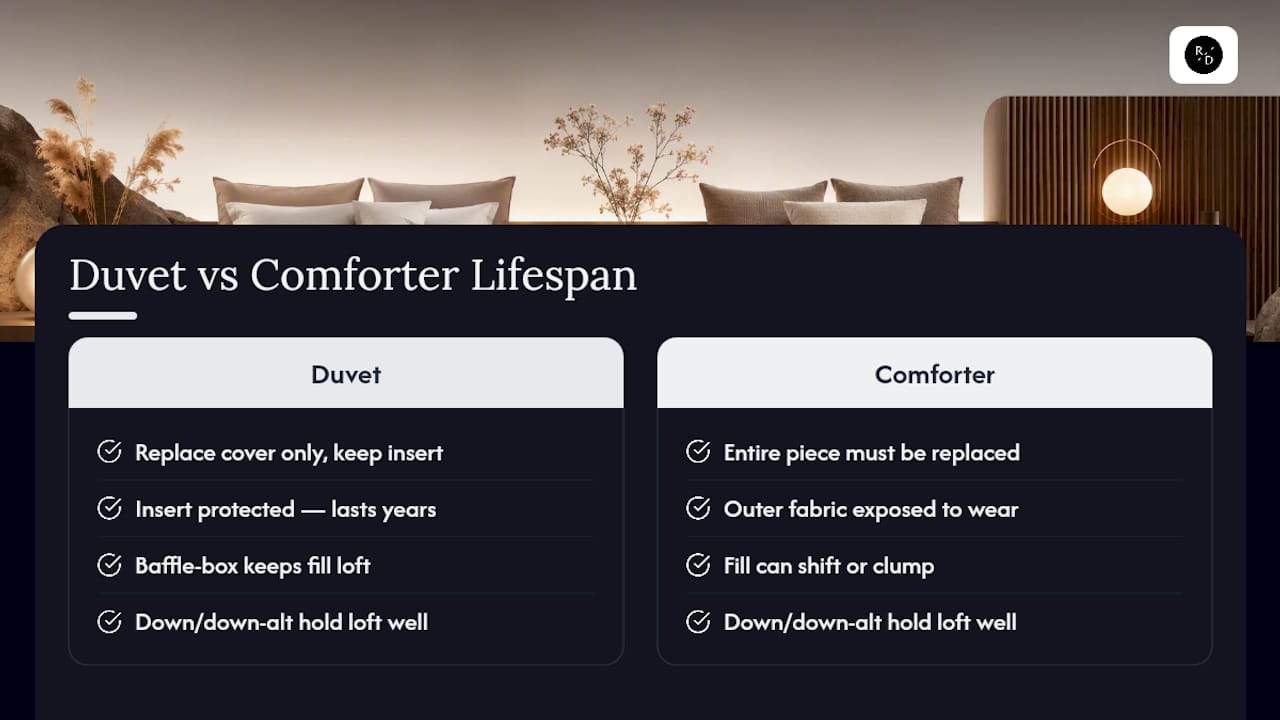
A well-made duvet system tends to outlast a comforter simply because you are replacing one part at a time rather than the whole item. When a duvet cover shows wear, fading, or a style you have grown tired of, you replace only the cover, while the insert underneath, protected the entire time, can carry on for years. A comforter has no such protection built in: its outer fabric is also its wear surface, so staining, fading, and general wear all land directly on the piece you would otherwise want to keep for a decade or more.
Fill quality plays the biggest role in lifespan regardless of which system you choose. High-quality down and well-constructed down-alternative fills both hold their loft remarkably well over years of regular use, provided they are aired and stored properly between seasons. Baffle-box construction, the same stitching that keeps fill evenly distributed day to day, also protects against the fill shifting or clumping over time, which is one of the main reasons a duvet insert can feel as good in year five as it did on day one.
Cotton and natural-fibre fills generally need a little more attention to maintain their loft over time compared with down or down alternative, but that is a question of care routine rather than inherent shorter lifespan. With sensible airing, occasional fluffing, and proper storage, either a duvet or a comforter can comfortably serve a household for many years.
The sustainability side of duvets and comforters
Longevity is itself a form of sustainability, and this is where the two-part duvet system has a genuine practical edge. Because you can replace a worn or dated duvet cover without touching the insert, you are not sending an entire piece of bedding to landfill every time your style preferences change or a cover wears thin. A comforter, by contrast, means replacing the whole item once it has reached the end of its life, since there is no separable layer to renew.
Fill choice also plays into how long bedding stays in active use. Durable down and down-alternative fills that keep their loft for years mean fewer replacement cycles overall, which matters more for the environment than any single material claim. Natural fibres like cotton, bamboo, and wool bring their own appeal here too: they are breathable, biodegradable at the end of their working life, and tend to be favoured by shoppers who prioritise natural materials in their homes.
The most sustainable approach for most households is a simple one: buy a well-made insert built to last, protect it with a washable cover, and treat the cover as the piece you refresh over time. That routine gets more genuine use out of every component you own, rather than replacing entire sets on a whim.
How we help customers decide
Most shoppers who come to Roomie Design already know they want the flexibility of a cover system. What they usually need help with is fill weight and sizing, not persuasion. We see buyers repeatedly choose a duvet and cover pairing because it lets them wash covers weekly without touching the insert, and because it means one wardrobe refresh a season rather than a whole new comforter.
Our size guides exist for exactly this reason: getting the drape and warmth right the first time avoids returns and disappointment. Customer reviews on each product page also give a genuinely useful second opinion on how a particular fill feels in practice. If you are still deciding, browsing our curated collections by fill type and style is the fastest way to narrow things down.
Ready to build your own duvet and cover pairing
A down-alternative insert paired with a neutral duvet cover is the easiest starting point for anyone switching from a comforter, giving you hypoallergenic warmth underneath and the freedom to change the look on top whenever you fancy.
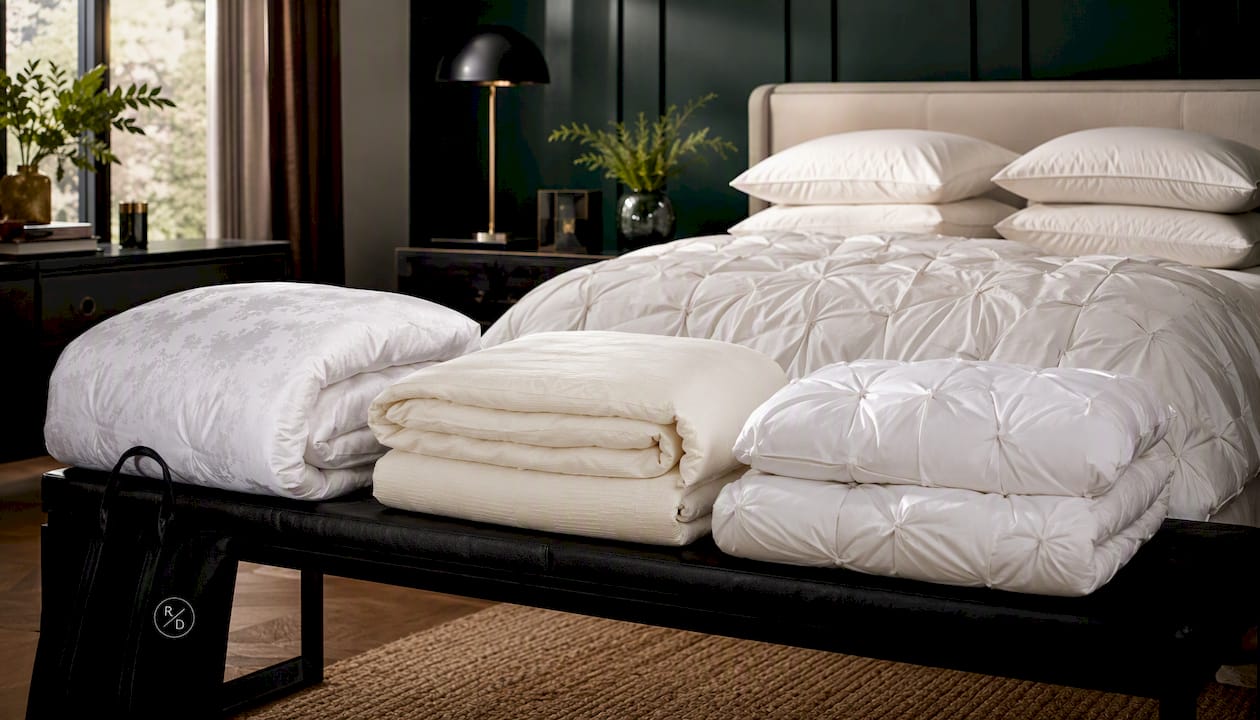
The catalogue is built around exactly that flexibility that this article has been making the case for: swap the cover, keep the insert, and never buy a whole new comforter just to refresh a room. Start with the Cloud-Like Cotton & Microfiber Down Alternative Duvet if breathability and easy care matter most, or the Minimalist Down & Feather Duvet if you want that premium, high-loft feel every night. Pair either with something from the Duvet Cover Sets collection for an instant seasonal update, and round out the bed with matching pieces from Sheets, Pillowcases, and Pillows & Cushions. For a genuinely elevated feel, the Mulberry Silk Bedlinen collection brings a smooth, temperature-regulating layer to any of these pairings. Browse the full Duvets & Bedspreads range and check the size guide on any product page before you order, so your first pairing fits perfectly from the start.
Sources
This guide draws on comparisons and care advice from the Sleep Foundation, Martha Stewart, The Spruce, and PureWow, each covering construction, care, and styling differences between duvets and comforters in more depth.
- Duvet vs. Comforter | Sleep Foundation
- What is a duvet? | Martha Stewart
- Duvet Vs. Comforter: Which Bed Cover is Right for You? | PureWow
FAQ
Is it better to have a comforter or a duvet?
It depends on your priorities: a duvet system suits anyone who wants easy washing and quick style changes, while a comforter suits those who prefer one ready-made piece with nothing extra to buy. Neither is objectively better, they simply serve different habits around laundry and styling.
What are comforters called in the UK?
In the UK, the insert-and-cover system is simply called a duvet, and the all-in-one comforter style is far less common on British beds. When UK shoppers say duvet, they usually mean the whole two-piece system rather than a single stitched item.
Do hotels use a duvet or a comforter?
Hotels overwhelmingly use duvets with removable covers, because washable covers make hygiene between guests far easier to manage than laundering a bulky comforter after every stay. That same hygiene advantage is exactly why duvet systems work well at home too.
Can I just use a comforter as a duvet insert?
Yes, in many cases. Comforters with baffle-box construction and corner loops tend to work well as duvet inserts because the stitching keeps fill stable inside a cover. Plain cotton comforters without that internal stitching are generally less suitable, since they can shift and bunch inside a cover.
How much does a duvet insert from Roomie Design cost?
Current pricing for options like the Down Feel Microfiber/Cotton Duvet and the Minimalist Down & Feather Duvet is listed directly on each product page. Prices vary by size and fill type, so checking the page for your bed size gives the most accurate figure.


