
Role of duvet inserts: what you need to know
A duvet insert is the filled inner layer that sits inside a removable duvet cover, providing insulation, loft, and a protective barrier between you and the cover itself. It is the core of your bedding system. Without it, a duvet cover is simply a decorative shell.
The role of duvet inserts covers several practical functions:
- Warmth and insulation — traps body heat to regulate sleeping temperature
- Loft and comfort — creates the plump, cloud-like feel associated with quality bedding
- Cover protection — keeps the decorative cover clean by acting as a buffer from body oils and moisture
- Styling versatility — one insert can work with multiple covers, making seasonal or aesthetic changes simple
- Ease of maintenance — because the cover is washable, the insert itself needs far less frequent cleaning
Roomie Design covers all of these functions across its curated bedding range, from premium goose down to hypoallergenic microfibre options.
Table of Contents
- What is a duvet insert, and how does it differ from a cover or comforter?
- Which fill type suits you? Common duvet insert materials explained
- How to choose the right insert: UK tog ratings, size, and seasonal strategy
- Why construction details affect warmth and durability
- How to care for a duvet insert so it stays lofty and lasts
- Roomie Design’s perspective on choosing and maintaining a duvet insert
- Roomie Design duvet inserts worth considering
What is a duvet insert, and how does it differ from a cover or comforter?
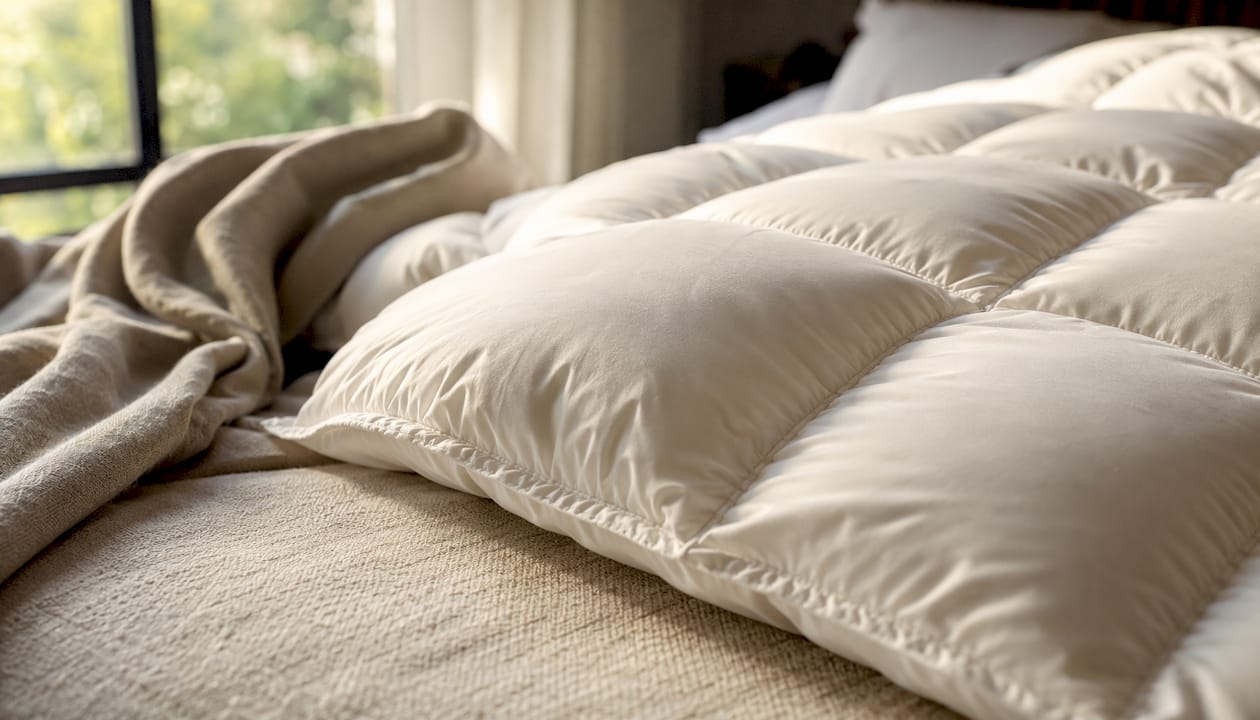
A duvet insert is the filled inner layer designed to slide inside a duvet cover. It provides the warmth; the cover provides the style and protection. The two pieces work as a system.
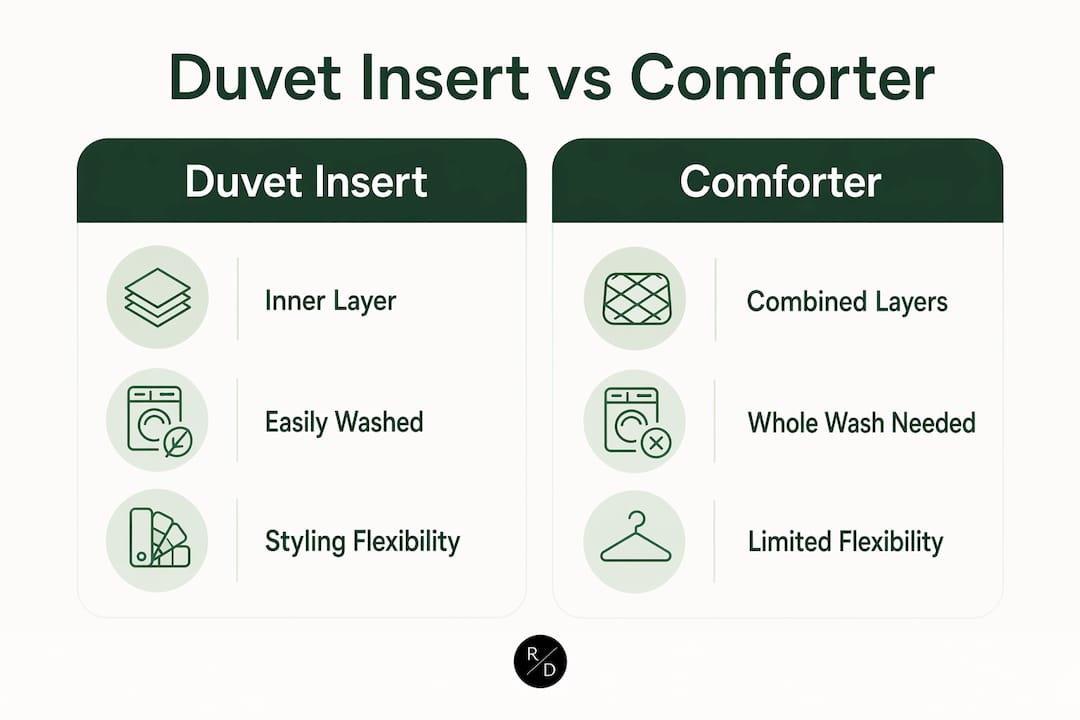
The confusion usually comes from comparing inserts, covers, and comforters. Here is how they differ:
| Item | What it is | Washed how often | Styling flexibility |
|---|---|---|---|
| Duvet insert | Filled inner layer (down, microfibre, wool) | 1–2 times per year | Fixed; swap covers to change look |
| Duvet cover | Removable decorative shell | Every 1–2 weeks | High; change covers freely |
| Comforter | All-in-one filled bedding, no separate cover | Every 1–2 months | Low; the whole piece must be washed |
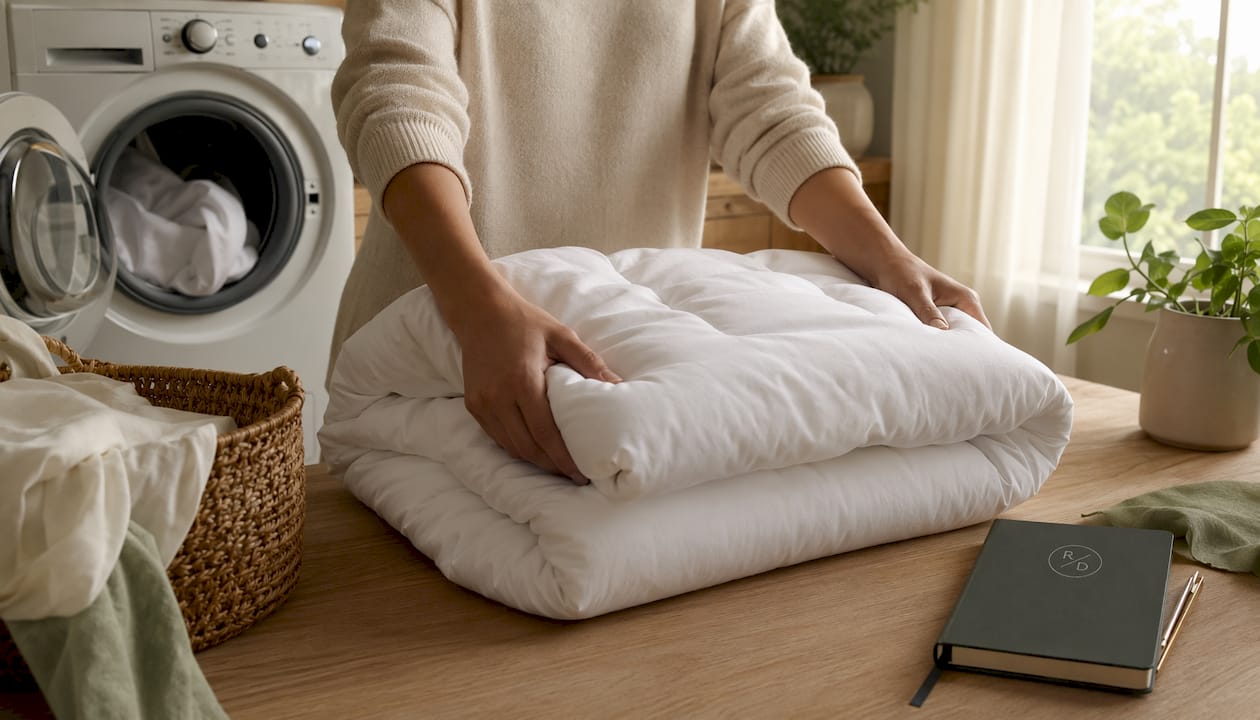
A comforter combines fill and shell into one item, which means the whole thing goes into the wash each time. A duvet insert paired with a cover separates those jobs. The cover handles daily contact with skin; the insert handles warmth. That split makes the system easier to maintain and far more flexible for styling.
One practical note: always match your insert to your cover size. A mismatched insert bunches inside the cover and creates uneven corners. More on sizing in the tog and size section below.
Which fill type suits you? Common duvet insert materials explained
Fill choice determines warmth, weight, breathability, and how long an insert lasts. Each material has a distinct profile.
Goose and duck down
- Feel: Exceptionally light and soft, with high loft that traps warmth efficiently.
- Temperature: Breathable and warm; fill power (rated 550–800+) measures loft per gram. Higher fill power means more warmth for less weight.
- Care and longevity: Requires careful washing (cool cycle, large drum) or professional cleaning; quality down lasts 10–15 years with proper care.
- Allergy note: Not suitable for those with a feather or down allergy; choose a down alternative instead.
Pro Tip: Fill power and fill weight work together. A high fill power (700+) with a moderate fill weight gives you warmth without bulk. That combination tends to wear better than a heavy, low-fill-power insert.
Down alternative (microfibre and polyester)
- Feel: Softer and slightly heavier than down for the same warmth rating; mimics the loft of down reasonably well.
- Temperature: Good insulation; less breathable than natural down over long periods.
- Care and longevity: Machine washable, making it the easiest fill to maintain at home; generally has a moderate lifespan.
- Allergy note: Hypoallergenic by design, making it the go-to choice for allergy sufferers.
Wool
- Feel: Denser than down; a firmer, more structured loft.
- Temperature: Naturally regulates temperature and wicks moisture, which makes it comfortable across seasons. Wool inserts are well suited to UK homes where bedroom temperatures vary considerably between summer and winter.
- Care and longevity: Usually dry-clean only or specialist wool wash; typically lasts several years with proper care.
- Allergy note: Naturally resistant to dust mites; a practical option for mild allergy sufferers.
Silk
- Feel: Smooth, lightweight, and luxurious.
- Temperature: Regulates well in both warm and cool conditions; less bulky than down.
- Care and longevity: Delicate; dry-clean recommended. Longevity depends heavily on care.
- Allergy note: Naturally hypoallergenic and resistant to dust mites.
For allergy sufferers, microfibre or silk inserts are the most practical starting point. For those prioritising longevity and warmth-to-weight performance, goose down remains the benchmark. Explore the best bedding materials guide for a deeper comparison of fill and shell fabrics.
How to choose the right insert: UK tog ratings, size, and seasonal strategy
Tog ratings and seasonal use
Tog ratings are the standard UK measure of thermal resistance. Higher tog means more warmth. Use this table as a starting point:
| Tog range | Typical use | UK bedroom context |
|---|---|---|
| 4.5 tog | Summer | Warm rooms, 18°C+ |
| 9.0 tog | Spring / Autumn | Average UK bedroom, 16–18°C |
| 10.5–13.5 tog | All-season / Winter | Cooler rooms, 16–18°C |
| 13.5+ tog | Winter | Cold rooms, below 16°C |
Most UK households keep bedrooms between 16°C and 18°C. A 10.5 tog insert covers the majority of the year comfortably for average sleepers.
Size guidance
Matching insert to cover size prevents bunching and uneven corners. Follow these points:
- Always buy an insert that matches your cover size (single, double, king, super king).
- If you prefer a fuller, plumped look, choose an insert one size up from the cover or select a higher fill weight within the same size.
- Check that your cover has corner ties or loops; these keep the insert in position. If your cover lacks them, duvet clips are a simple fix.
- Super king inserts are not interchangeable with king covers — the difference in dimensions causes visible bunching.
One insert or two? A decision checklist
- Do you sleep at a consistent temperature year-round? One all-season insert (10.5 tog) may be enough.
- Do you run hot in summer and cold in winter? Two inserts (a 4.5 tog and a 9.0 tog) give you precise seasonal control.
- Do you share a bed with a partner who has a different temperature preference? Consider the Scandinavian approach: two single inserts side by side inside one king or super king cover.
- Limited storage? One all-season insert removes the need to store a second duvet between seasons.
For a full buying workflow, the bedding selection guide walks through each decision step.
Why construction details affect warmth and durability
Good internal construction keeps fill evenly distributed, preserves loft over time, and prevents cold spots from forming where fill has shifted. Construction is often a better predictor of long-term performance than fill weight alone.
Baffle-box construction
A baffle-box insert has vertical fabric walls sewn between the top and bottom panels, creating individual three-dimensional chambers. Fill sits inside each chamber and cannot migrate to the edges. The result is consistent warmth across the whole surface, with no cold patches at the corners or sides. This is the construction type practitioners recommend for long-term loft retention.
Sewn-through (box-stitch) construction
Sewn-through construction stitches the top and bottom panels directly together in a grid pattern, with no vertical walls. It is lighter and less expensive to produce, but fill can shift toward the edges over time, particularly with heavier down fills. Suitable for lighter, lower-tog inserts where fill migration is less of a concern.
Pro Tip: When reading product labels, look for the words “baffle-box”, “box stitch”, or “double-stitched seams”. These terms map directly to fill retention and seam quality, which are reliable indicators of how long an insert will hold its shape.
For a detailed look at what separates construction quality across bedding ranges, the designer bedding quality guide covers stitching, seams, and finish in depth.
How to care for a duvet insert so it stays lofty and lasts
Use a duvet cover, air and fluff the insert regularly, and follow fill-specific washing instructions. Those three habits cover most of what determines how long an insert performs well.
Step-by-step care routine
- Daily: Shake and fluff the insert each morning to redistribute fill and restore loft.
- Weekly: Air the insert by folding back the cover for 20–30 minutes. This reduces moisture build-up and limits dust-mite activity.
- Monthly: Wash the duvet cover. The cover handles direct contact with skin, so the insert stays cleaner for longer.
- Every 3–6 months: Sun or air the insert outdoors on a dry day. Store seasonal inserts in breathable cotton bags rather than plastic to avoid trapped moisture.
- Annually (or when soiled): Machine wash microfibre inserts on a cool, gentle cycle with a small amount of detergent. Use a large-capacity drum. For down inserts, use a specialist down detergent or take to a professional cleaner.
- Drying: Tumble dry on low heat with two or three clean tennis balls to break up clumps and restore loft. Never store an insert damp.
Risks to avoid
- Mildew: Storing a damp insert causes mildew and permanent odour. Always dry completely before storage.
- Feather leakage: Caused by worn seams or overly aggressive washing. Use a gentle cycle and check seams annually.
- Heat damage: High dryer heat damages down clusters and synthetic fibres. Low heat only.
Care by fill type
| Fill | Washing method | Professional cleaning needed? |
|---|---|---|
| Goose / duck down | Specialist down wash, large drum, cool cycle | Recommended annually |
| Microfibre / polyester | Machine wash, cool gentle cycle | No |
| Wool | Specialist wool wash or hand wash | Recommended |
| Silk | Hand wash or dry clean | Recommended |
Replacement timelines
Quality down inserts last 10–15 years with proper care. Wool typically holds up for 8–10 years. Synthetic microfibre fills generally need replacing every 3–5 years, depending on use frequency and washing habits. For practical fixes when issues arise, the bedding troubleshooting guide covers bunching, feather leakage, and overheating in detail.
Roomie Design’s perspective on choosing and maintaining a duvet insert
The most common mistake when choosing a duvet insert is focusing on tog rating alone. Tog tells you warmth; it says nothing about how that warmth is distributed, how long the insert holds its loft, or whether the fill suits your sleep style. A 13.5 tog insert with poor baffle-box construction will develop cold spots within a year. A well-constructed 10.5 tog insert with quality goose down will outperform it for a decade.
The same logic applies to care. The cover-and-insert system exists precisely so you can protect an expensive insert from daily wear. Use it. Wash the cover regularly, air the insert weekly, and the fill does its job for years longer than it would otherwise. Premium materials reward consistent, simple maintenance.
Roomie Design’s range is built around this principle: premium fills, considered construction, and cover options in cotton, mulberry silk, linen, lyocell, and bamboo that protect the insert while giving you full control over bedroom styling. The bedding materials guide explains how shell fabric choices interact with fill performance, which is worth reading before you finalise a purchase.
Roomie Design duvet inserts worth considering
Roomie Design offers three inserts that map directly to the guidance above, covering different fill preferences, tog requirements, and care needs.
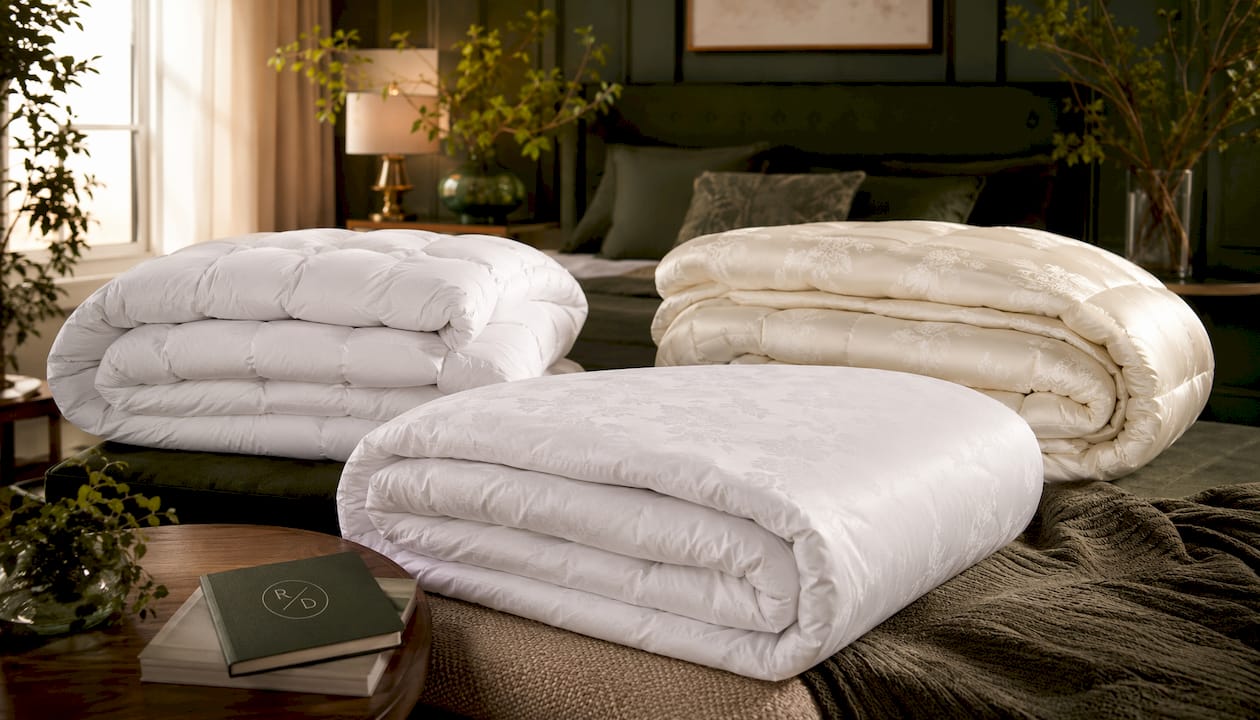
The Signature 100% Goose Down Duvet is the premium down option for those prioritising warmth-to-weight performance and longevity. Goose down fill with quality construction gives consistent loft and the kind of light, enveloping warmth that synthetic fills approximate but rarely match.
For those who want a single insert that works across most of the UK year, the Luxury Metallic All-Season Goose Down Duvet covers the mid-tog range with a refined finish. It aligns with the one-insert strategy for households that keep bedrooms at a consistent temperature.
The Down Feel Microfiber/Cotton Duvet is the practical choice for allergy sufferers or anyone who prefers machine-washable care at home. It delivers the loft and softness of down without the specialist cleaning requirement.
Browse the full range and use Roomie Design’s size guide to match your insert to the right cover before you buy. A well-matched insert and cover, chosen with construction and fill in mind, is the foundation of a bed that stays comfortable and looks good for years.


