Spot Fake Silk Sheets in Under a Minute Without Burning Them
Checking the label for “100% mulberry silk” and a momme weight, then rubbing a corner between your fingers for warmth and a soft crunch, catches most fakes in under a minute. A water droplet test adds a second layer of confidence. The burn test settles any remaining doubt, but it destroys a thread, so treat it as a last resort rather than your first move. The checklist and step-by-step tests below cover every method worth knowing.
Table of Contents
- How to spot fake silk sheets: a quick pre-purchase checklist
- How do you test if silk is real or fake?
- What do labels and product listings tell you?
- Is it safe to do the burn test at home?
- What should silk sheets actually cost?
- How Roomie Design verifies silk quality
- Why sensory checks beat obsessing over a single “perfect” test
- Shop pillowcases with clearly stated specs
- Sources
How to spot fake silk sheets: a quick pre-purchase checklist
Before you hand over your money, whether you’re stood in a shop or scrolling a listing at midnight, run through this checklist. It takes less time than reading the product description.
- Check the label or product page for “100% mulberry silk” and a momme weight, not just the word “silk.”
- Look for a soft, shifting sheen that changes as the fabric moves, not a flat, mirror-like shine.
- Rub a corner between your palms. Genuine silk warms quickly and produces a faint scroop, a soft crunching sound.
- If you have a physical sample, try the water drop test or the ring test described below.
- Buying online? Request a swatch first, or confirm the return policy covers a full refund if the fabric disappoints on arrival.
None of these takes more than a few seconds each, and together they rule out the vast majority of synthetic imitations before you spend a penny.
How do you test if silk is real or fake?
Five tests cover nearly every scenario you’ll face, from a folded sheet in a shop to a listing photo on your phone. Run through them in order of convenience, since the destructive one comes last.
1. The ring test. Take a lightweight silk item, a scarf or a pillowcase edge works well, and try pulling it through a finger ring. Genuine silk, thanks to its fine, flexible fibres, slides through with almost no resistance. Synthetics tend to bunch up or snag against the metal, and this is one of the most reliable quick checks for lighter fabrics. It’s less useful on heavier weaves or thick duvet covers, where any fabric will feel tighter passing through a ring, so save this test for scarves, pillowcases, or thin sheet corners.
2. The touch and scroop test. Rub the fabric briskly between your fingers or palms for a few seconds. Real silk warms almost immediately and produces that characteristic scroop, a subtle, dry crunch that’s hard to describe until you’ve heard it once. Polyester and other synthetics tend to stay cool, feel slightly plastique, and stay silent when rubbed, a distinctive contrast that becomes obvious once you know what you’re listening for.
3. The lustre and sunlight test. Hold the fabric up to natural light and tilt it slowly. Genuine silk has a multi-tonal sheen, it shifts from soft white to pale grey to a faint sheen of colour depending on the angle, because of the triangular prism structure of the fibre. Synthetic satin tends to throw back a flatter, more uniform shine that doesn’t change much as you move it.
4. Weave inspection. Look closely at the surface for tiny irregularities called slubs, small, natural variations in thickness that occur because silk is a protein fibre spun by an actual creature rather than extruded through a machine die. A weave that looks utterly uniform under close inspection, with zero texture variation anywhere, is more likely a synthetic mimicking silk’s appearance.
5. The water absorption test. Place a small droplet of water on the fabric and watch what happens. Genuine silk absorbs the droplet relatively quickly and evenly, spreading slightly as it soaks in. Many synthetics repel the water instead, letting it bead up and sit on the surface. This is fully non-destructive and works on a sample you intend to keep.
Pro Tip: Combine at least two of these tests before drawing a conclusion. A single result can mislead you, especially with high-quality synthetic blends, but two or three pointing the same direction give you real confidence.
6. The burn test. This is the definitive check, but it destroys the sample, so only try it on a loose thread pulled from a hidden seam. Hold the thread with tweezers over a fireproof dish and touch a flame to the tip. Genuine silk behaves like a protein fibre, similar to human hair: it burns slowly while the flame is applied, self-extinguishes the moment you pull the flame away, smells distinctly like burning hair, and leaves behind a black, brittle ash that crushes easily between your fingers. Polyester, by contrast, melts rather than burns, forming a hard bead with a sharp plastic smell that won’t crush. Rayon burns more like paper, quickly and without self-extinguishing, leaving a light, feathery ash rather than a crushable one.
Blends complicate things. A silk-viscose mix might show partial scroop but burn more like paper, and a well-made synthetic can pass one or two sensory checks while failing the burn test outright. No single test is entirely conclusive on its own, which is exactly why combining several matters more than obsessing over one perfect method.
What do labels and product listings tell you?
Reading the label properly saves you from most disappointments before you ever touch the fabric. Two details matter more than anything else on the page.
- Look for an explicit fibre statement, “100% mulberry silk,” rather than vaguer wording that only implies silk content.
- Check the momme weight. Bedding-weight silk generally sits in a reasonable range that a transparent seller will state outright rather than bury in fine print, and honest listings that name both fibre and momme tend to be more trustworthy than vague marketing copy.
- Remember that “satin” describes a weave structure, not a fibre. Satin can be woven from silk or from polyester, so the word alone tells you nothing about what’s inside.
- Treat phrases like “silky feel” or “silk-look” as a warning sign. They almost always mean synthetic.
- Zoom into high-resolution photos where available, and check whether the seller offers a swatch or a clear return policy before you commit.
If you’re still weighing up fibre options generally, our guide to premium bedding materials breaks down how different fabrics compare beyond silk alone.
Is it safe to do the burn test at home?
Yes, provided you follow a few sensible precautions, since you’re dealing with an open flame indoors.
- Pull a single thread from a hidden inside seam, never a visible part of the sheet.
- Hold it with metal tweezers, never your fingers, over a fireproof dish or an old ceramic plate.
- Work in a ventilated room, away from curtains, paper, or anything else flammable.
- Keep a damp cloth or small dish of water nearby just in case.
Skip the burn test entirely on rented bedding, items you can’t return, or anything where damaging even a thread would cause a problem. In those cases, ask the seller directly for a certificate of composition or a small swatch instead. A seller confident in their product will usually provide one, and a generous return window offers real protection if you decide the fabric isn’t what was promised. Avoid chemical alternatives like bleach tests; they work in principle but involve hazardous fumes that aren’t worth the risk for a home check.
Pro Tip: If a seller refuses to answer a direct question about momme weight or fibre percentage, that hesitation tells you more than any test result would.
What should silk sheets actually cost?
Price is one of the fastest filters you have, even before you touch the fabric. Genuine mulberry silk involves a slow, labour-intensive production process, so it costs meaningfully more than polyester satin dressed up to look similar. If a full silk sheet set is priced close to what you’d expect to pay for cotton or polyester, treat that as a signal to look closer rather than a bargain to celebrate.
- Sellers who list fibre percentage, momme weight, and weave type upfront are lower risk than those relying on words like “luxurious” or “silky” alone.
- Detailed, high-resolution photos and a clear return policy both reduce your chances of a costly mistake.
- A seller offering swatches before purchase is almost always more transparent than one who isn’t.
How Roomie Design verifies silk quality
Roomie Design specialises in premium bedding, including mulberry silk, and every product page states fibre composition and momme weight plainly rather than hiding behind vague marketing language. That transparency is deliberate: readers who’ve just learned to check for exactly this information shouldn’t have to hunt for it on the page where they’re about to spend money.
A clear fibre statement and an honest momme figure on the page you’re buying from remove most of the guesswork covered in this guide, before a single sensory test is even needed.
Beyond the specification itself, product photography and swatch or return information are laid out so you can verify quality before the parcel arrives, not after. If you want the background on why mulberry silk earns its reputation in the first place, our piece on mulberry silk bedding benefits covers that in more depth. And for readers weighing silk against blended alternatives, our fabric blends guide explains how those materials behave differently under the same tests.
Why sensory checks beat obsessing over a single “perfect” test
The advice that circulates most widely, do the burn test and you’ll know for certain, undersells how often that test simply isn’t practical. You can’t burn a thread from a display sample in a shop, and you shouldn’t burn anything from a sheet you might need to return. That’s the gap conventional wisdom skips over.

What actually works is layering quick, non-destructive checks before you ever consider the destructive one. A scroop that sounds right, a droplet that soaks in rather than beads, and a label that states momme weight plainly will agree with each other on genuine silk far more often than any single test gets it wrong on its own. Disagreement between two or three quick checks is itself useful information, a reason to ask the seller more questions rather than assume the worst or the best.
Prioritise the label first. It costs nothing to read and rules out a huge share of misleading listings before you’ve touched the fabric at all. Save the burn test for the rare case where a genuine sample is in your hands and every other check has left you still unsure.
— Roomie Design
Shop pillowcases with clearly stated specs
If checking labels and momme weight has left you wanting bedding where the specifications are never in question, Roomie Design’s pillowcase collections give you that certainty from the product page itself. Every listing states fibre content and finish clearly, so you’re never left guessing the way a vague “silky” description would leave you guessing.
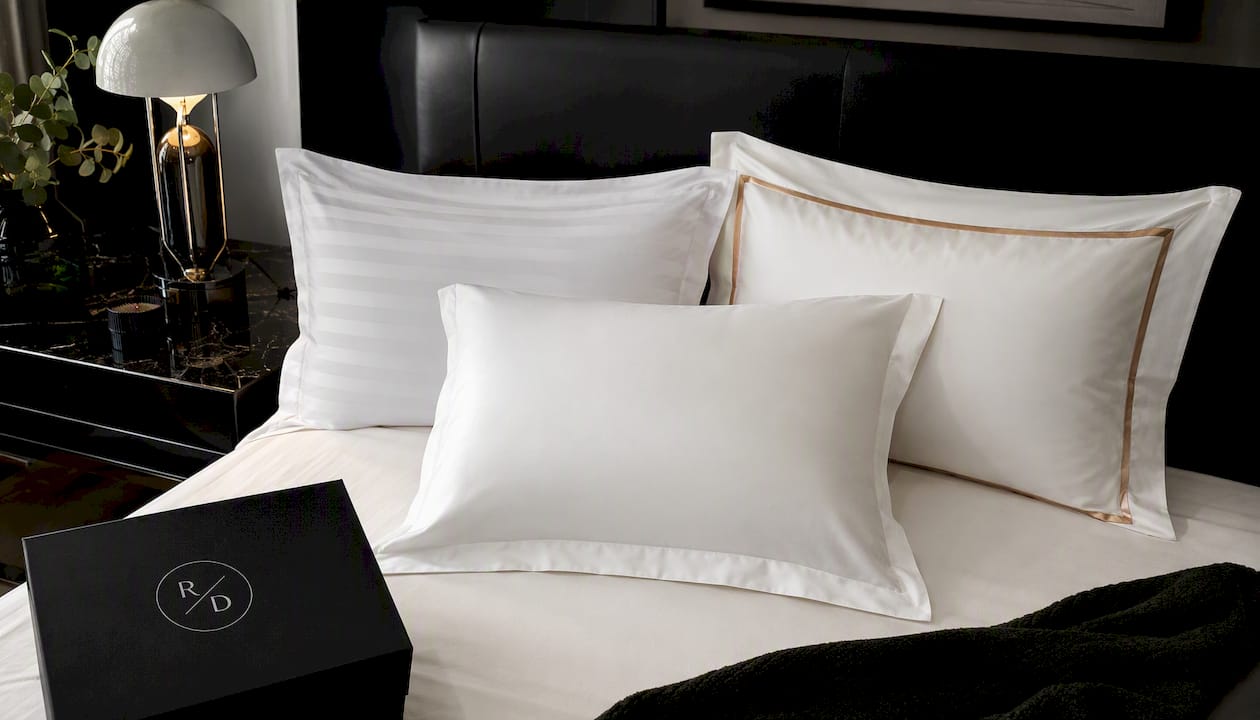
The Lux Hotel Pillowcases (Set of 2) offer a smooth, hotel-grade sateen finish with the fibre composition stated plainly on the page. If you prefer the dense, substantial feel that a higher thread count bring, the 1200 TC Egyptian Cotton Pillowcases (Set of 2) deliver a rich, luxuriously soft hand that only gets better with washing, alongside a transparent thread count you can check before buying. For a touch of pattern without sacrificing that same premium feel, the Lux Hotel Striped Pillowcases (Set of 2) pair understated styling with the same clear specifications. Every listing includes high-resolution photography and a straightforward return policy, so you can check the details that matter before your order ships.
Sources
- How to Identify Real Silk: A Guide to the Burn Test – SELVANE
- How to Determine if Silk is Genuine: Easy At-Home Tests — WikiHow


