
3 Bamboo Sheet Care Habits: Wash 30°C, No Softener, Dry Damp
Wash cold or at around 30°C on a gentle cycle, skip the bleach and fabric softener, then dry on low heat and pull the sheets out while still slightly damp. Those three habits protect the silky fibres in bamboo bedding from shrinkage, pilling, and stiffness far more reliably than any spot treatment after the damage is done. Get this right and a well-made bamboo sheet set keeps its drape and softness wash after wash.
Table of Contents
- How do you wash bamboo sheets correctly?
- What’s the best way to dry bamboo sheets?
- How do you remove stains without damaging the fabric?
- How often should you wash bamboo sheets?
- Where and how should you store bamboo sheets between uses?
- Can you iron bamboo sheets and fix small snags?
- What common mistakes damage bamboo sheets fastest?
- Choosing and caring for premium bamboo sheets
- Why gentle care is the whole philosophy
- How Roomie Design supports easy, long-lasting bedding care
- Sources
- FAQ
How do you wash bamboo sheets correctly?
Bamboo fibres, whether woven as viscose or lyocell, are more delicate than cotton and react badly to heat, harsh chemicals, and friction. Getting the wash right is the single biggest factor in how long your sheets stay soft.
Set the machine to cold water or around 30°C on a gentle or delicate cycle, and choose a reduced spin speed if your machine allows it. High spin speeds twist the fibres and encourage creasing that’s hard to iron out later. Stick to a mild, liquid detergent that’s pH neutral and fragrance free. Powder detergents often don’t fully dissolve in cold water, and undissolved granules sit against the fabric and cause dulling over time.
Load composition matters just as much as the settings. Avoid washing bamboo sheets with towels, denim, or anything with zips and hooks, since the friction from rougher fabrics and hardware is the main cause of pilling. Wash sheets alone or with other lightweight, soft items only.
New sheets need one extra step. Bamboo bedding often arrives feeling slightly stiff, and an initial gentle wash helps break in the fibres and improve drape before the first night’s use.
- Check the care label for any fabric-specific exceptions before the first wash.
- Turn sheets inside out if they have embroidery or trims.
- Set the machine to cold or 30°C, gentle cycle, reduced spin.
- Add a small amount of mild liquid detergent, no softener.
- Wash alone or with similarly delicate, soft textiles.
- For hand washing, use a basin of cool water, a capful of mild detergent, and gently agitate for two to three minutes before rinsing thoroughly.
Pro Tip: Halve the amount of detergent you’d normally use for cotton sheets. Bamboo fibres are naturally absorbent and rinse clean with far less product than you’d expect.
What’s the best way to dry bamboo sheets?
Drying is where most of the damage to bamboo bedding actually happens, not washing. Heat is the real enemy here.
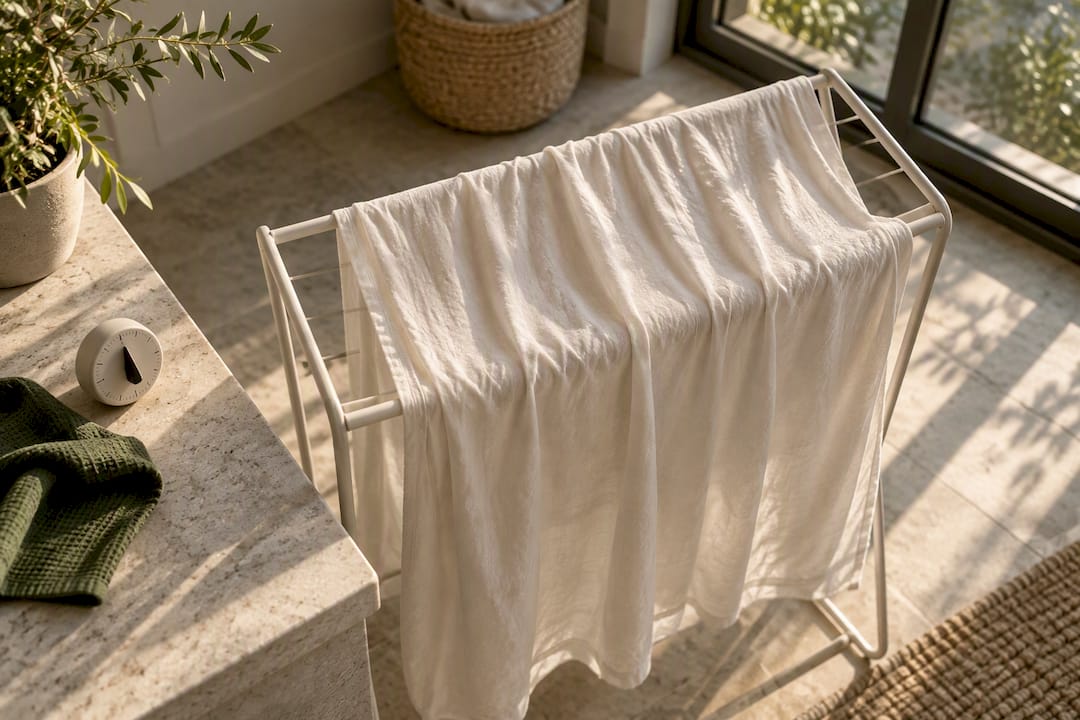
Air-drying is the gentlest option, but keep sheets out of direct sunlight, which fades colour and weakens fibres over repeated exposure. If you’re using a tumble dryer, select the lowest heat or delicate setting and add wool dryer balls rather than dryer sheets. Wool balls cut drying time and reduce the friction that leads to fuzzing, while dryer sheets leave a coating that dulls bamboo’s natural softness.
- Hang sheets indoors on a drying rack away from radiators.
- Turn duvet covers inside out before drying to protect any printed or dyed surfaces.
- Never leave sheets tumbling on high heat “just to finish the job.”
- Shake sheets out before and after drying to prevent tangling and uneven drying.
The habit that matters most: pull sheets from the dryer while they’re still slightly damp, roughly 80% dry, then finish air-drying on a rack. Over-drying is what makes bamboo sheets go stiff and start to shrink.
Pro Tip: Set a timer for slightly less than your dryer’s suggested cycle length. It’s far easier to finish drying a slightly damp sheet than to rescue an over-dried one.
How do you remove stains without damaging the fabric?
Act fast on fresh stains and always use cool water. Heat sets protein-based stains (think sweat, blood, or food) permanently into the fibres, so blot first and soak in cold water before reaching for anything else.
For everyday marks, a mild pre-treater spray worked in gently, followed by a cool soak, handles most household stains. Persistent yellowing or lingering odours respond well to a diluted white vinegar soak: a splash of white vinegar in a basin of cool water, sheets submerged for 20 to 30 minutes, then a normal gentle wash. Used sparingly, this brightens fabric and neutralises smell without harming the fibres.
- Never use bleach or strong oxidising cleaners on bamboo bedding.
- Skip vigorous scrubbing, which frays and thins the weave.
- Don’t apply heat to a stain before it’s fully treated.
- Repeat a cool soak once more if a stain persists, but avoid stacking multiple chemical treatments.
If a stain doesn’t lift after two gentle attempts, a professional cleaner experienced with delicate fibres is a safer bet than escalating the treatment yourself.
How often should you wash bamboo sheets?
A weekly wash for fitted and flat sheets keeps things fresh without over-handling the fabric. Pillowcases benefit from washing every few days, since they sit closest to skin and hair oils.
- Wash more often if you sweat heavily overnight, share the bed with pets, or have allergies.
- Rotate between two or more sets so no single sheet takes on all the wear.
- Expect several years of good service from a well-cared-for set.
Fading, thinning patches, or pilling that no longer brushes away are the signs it’s time to replace rather than repair.
Where and how should you store bamboo sheets between uses?
Store clean, fully dry sheets in a cool, dry spot, ideally inside a breathable cotton bag or pillowcase rather than sealed plastic. Bamboo’s natural absorbency means trapped moisture in an airtight bag can lead to a musty smell or yellowing over time.
- Air stored sheets occasionally, especially in humid climates.
- Rotate sets in and out of storage to spread wear evenly, a practical tip covered in detail when you learn how to coordonner le linge de votre location saisonnière.
- Keep linen cupboards away from damp walls or unventilated corners.
For more on extending the working life of your bedding rotation, Roomie Design’s guide to extending bedding lifespan covers rotation habits in more depth.
Can you iron bamboo sheets and fix small snags?
Iron on a low setting with steam only if creases are stubborn, and never press with direct high heat, which scorches and stiffens the fibres. A quick steam from a distance usually relaxes wrinkles without the iron ever touching the fabric directly.
For a small pulled thread, gently ease it back into the weave with a blunt needle rather than cutting it, which can unravel further. If pilling appears across a wide area rather than one or two spots, that’s a sign the fabric has reached the end of its comfortable life rather than something worth patching.
What common mistakes damage bamboo sheets fastest?
Hot water, fabric softener, bleach, and over-drying are the four habits that age bamboo bedding faster than anything else. Washing alongside towels or zippered items is a close fifth, since abrasion wears down fibres just as quickly as heat does.
- Avoid: hot water, fabric softener, bleach, high heat drying, mixed loads with rough textiles.
- Prefer: cold or 30°C water, a light hand with detergent, air-drying or low-heat tumbling, wool dryer balls, and line-drying out of direct sun.
Pro Tip: Cold washes and air-drying aren’t just gentler on fabric, they trim your energy bill too. A cooler cycle and a rack instead of a dryer cost noticeably less to run over a year of weekly washes.
Choosing and caring for premium bamboo sheets
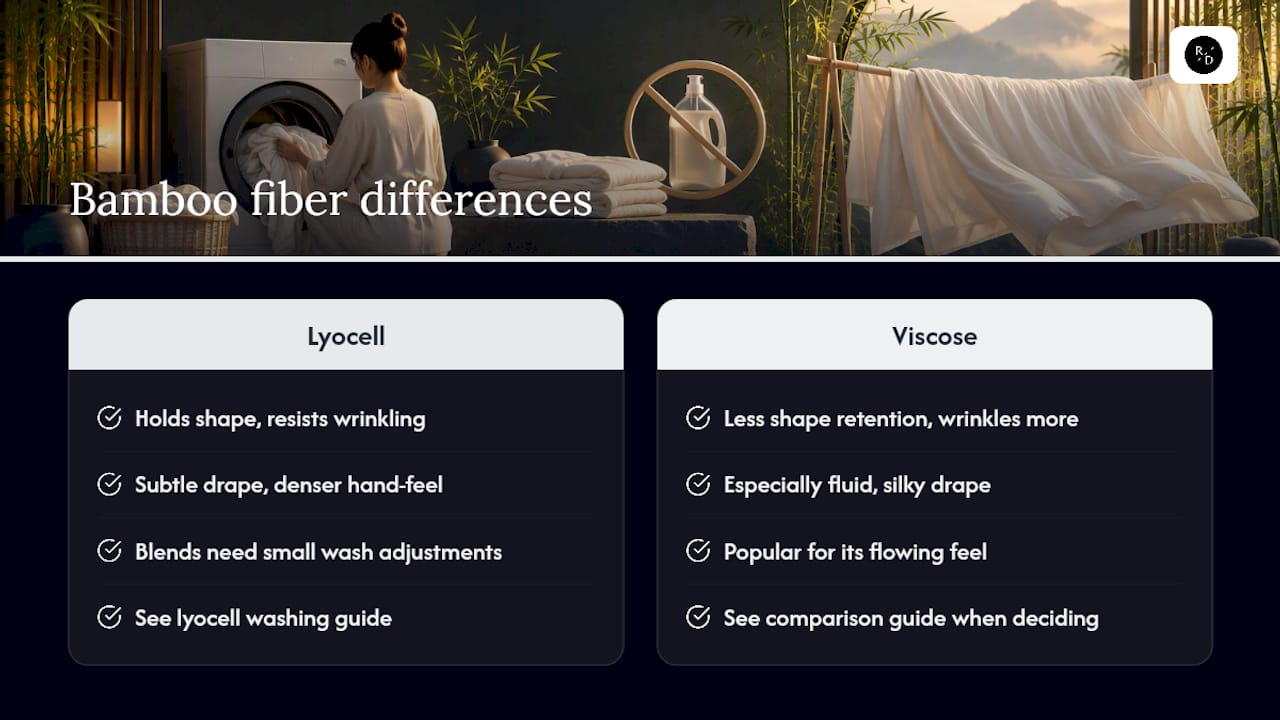
Care differs slightly depending on how the bamboo fibre is processed. Pure lyocell tends to hold its shape and resist wrinkling a touch better than viscose, while viscose brings an especially fluid, silky drape that many buyers choose bamboo bedding for in the first place. A guide on spotting real bamboo sheets and comparing lyocell versus viscose is worth a read if you’re deciding between the two.
Thread count plays into feel too. Higher thread-count bamboo weaves deliver a denser, more substantial hand-feel that many sleepers associate with hotel-grade luxury, while lighter weaves feel breezier against the skin. Both are premium choices; it comes down to the texture you personally find most comfortable. If your bedding blends bamboo lyocell with other fibres, Roomie Design’s lyocell-specific washing guide covers the small adjustments blended fabrics sometimes need.
Why gentle care is the whole philosophy
Bamboo bedding is genuinely more forgiving than people expect once you know the three rules, but it does punish shortcuts. Gentle-care guidance is recommended because a well-woven sheet, whichever thread count or weave you’ve chosen, represents a real investment in how your bedroom feels every single night.
The mistake we see most often isn’t ignorance, it’s impatience: someone tumbling a load on high heat because they’re short on time, or reaching for bleach on a stubborn stain instead of a cool soak. Slow down on laundry day and the fabric returns the favour for years. If you’ve got a question about a specific set or fabric blend, a customer support team specialized in the products can talk you through care for that exact product rather than a generic answer.
— Roomie Design
How Roomie Design supports easy, long-lasting bedding care
This is a shop where you can find bedding that rewards a bit of gentle care with years of use, rather than something that needs replacing after one hard season of washing. Product pages carry fabric-specific notes so you don’t have to guess how a particular weave or blend prefers to be treated.
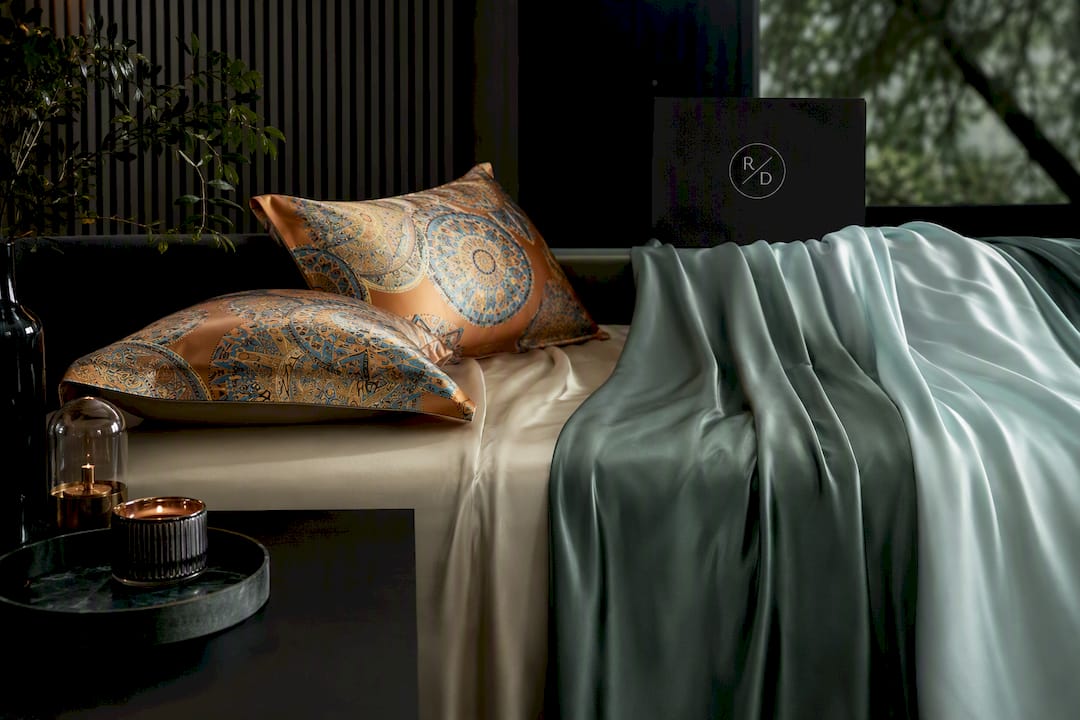
Browse the full sheets collection for bamboo, cotton, and linen options across a range of thread counts and finishes. If you’re drawn to something with even more drape, the mulberry silk bedlinen range, including the 25 Momme Mulberry Silk Bed Sheet, pairs beautifully with a matching set from the pillowcases range or the Mandala silk pillowcase set. Looking to refresh the whole bed? The duvet cover sets, duvets and bedspreads, and pillows and cushions collections round things out. Care questions or a return to sort out? Customer support teams are on hand to help, so visit the sheets collection and find your next set today.
Sources
FAQ
What is the downside to bamboo sheets?
Bamboo sheets need gentler handling than sturdier cotton, meaning no hot water, bleach, or high heat drying without risking pilling or shrinkage. The trade-off is a noticeably softer, silkier feel that many sleepers find worth the extra care.
How do you take care of bamboo sheets?
Wash on a cold or 30°C gentle cycle with a mild detergent, avoiding bleach and fabric softener, then dry on low heat or air-dry and remove while still slightly damp to finish on a rack. Store clean sheets in a breathable bag rather than sealed plastic.
How long do bamboo sheets typically last?
With proper gentle care, a well-made bamboo set typically lasts several years before fading, thinning, or persistent pilling signal it’s time to replace it. Rotating between two or more sets spreads out wear and extends that lifespan further.
Can bamboo sheets go in the washing machine?
Yes, bamboo sheets are machine washable as long as you use a gentle cycle, cold or 30°C water, and skip harsh detergents or bleach. Wash them alone or with other soft, delicate items rather than towels or zippered garments to avoid friction damage.


