

10 Image Led Minimalist Bedding Ideas Built Around the Power Throw
The minimalist bed that reads as finished, not bare, comes down to one edited stack: a duvet or cover, one folded throw, and either a single small cushion or none at all, held together by a tight two or three tone palette. Texture, fabric choice and warm lighting do the rest of the work. Skip the extra layers and the look holds together on its own.
Table of Contents
- Minimalist bedding ideas: 10 looks to copy
- How do you choose a minimalist colour palette?
- What fabrics work best for minimalist bedding?
- How do you layer a minimalist bed without overdoing it?
- Which bed frames suit a minimalist bedroom?
- How do you add warmth without clutter?
- Common minimalist bedding mistakes and a quick finishing checklist
- Roomie Design: curated minimal bedding picks and styling resources
- Tips for maintaining the minimalist bedding look over time
- Budget-friendly minimalist bedding options
- Seasonal minimalist bedding swaps
- The edited-bed rule most advice gets backwards
- Ready to build your edited bed?
- Sources
- FAQ
Minimalist bedding ideas: 10 looks to copy
A minimalist bed is not an empty bed. Every idea below relies on texture and restraint doing the visual work that pattern and clutter usually do.
- Single-tone linen. One shade of linen, top to bottom, reads as intentional rather than unfinished. Choose a slightly rumpled finish over a pressed one.
- Tonal cream with a boucle headboard. Cream layers against a textured headboard replace the need for cushions entirely.
- Ink-black contrast. A dark duvet against pale walls anchors a room without a single extra accessory.
- Warm taupe and raw wood. Pair taupe bedding with an unfinished wood frame for a grounded, lived-in feel.
- All-white with a chunky knit throw. The throw supplies the only texture contrast the bed needs.
- Stone grey with brushed cotton. Brushed cotton softens grey so it never feels cold.
- Soft blush with one lumbar cushion. A single cushion, not three, keeps this feminine palette restrained.
- Charcoal linen, no top sheet. Fewer layers, more visible texture.
- Sand and olive layering. Two muted tones, one throw, zero clutter.
- Pure white hotel-style tuck. Crisp corners and one folded blanket at the foot, nothing else.
Each idea works because it commits to a small number of tones and lets fabric texture stand in for decoration, a principle echoed in The Coolist’s minimalist bedding guide, which favours an edited bed over a heavily layered one.
How do you choose a minimalist colour palette?
Borrow the 60/30/10 rule from interior design: 60% dominant neutral (your duvet or sheets), 30% secondary tone (a throw or headboard), and 10% accent (a single cushion or piece of art). This stops a neutral room from tipping into flat or sterile territory.
Warm neutrals (oatmeal, sand, taupe) tend to feel cosier and suit rooms with cooler light or north-facing windows. Cool neutrals (stone, dove grey, soft white) suit brighter rooms and read as crisper. Warm neutrals and layered natural texture keep bedrooms from feeling sterile, particularly when linen and cotton are mixed rather than matched exactly.
- Oatmeal duvet + taupe throw + walnut frame
- Dove grey bedding + charcoal cushion + pale oak headboard
- Warm white sheets + rust lumbar cushion + rattan accents
Pro Tip: If you want one strong colour instead of a full neutral scheme, put it on the throw or a single cushion, never the duvet. That way you can change the accent without buying new bedding.
What fabrics work best for minimalist bedding?
Fabric choice replaces pattern in a minimalist room, so texture has to carry more visual weight than usual. A high thread count cotton brings a noticeably smoother hand feel and a subtle sheen that reads as quietly luxurious rather than busy. Linen brings the opposite: a slubbed, matte texture with visible weave that suits a relaxed, lived-in bedroom.
- Linen — breathable, textured, softens with every wash; best for a relaxed, undone finish.
- Cotton (higher thread count) — smooth, crisp, and durable, with a refined drape that suits a neater, more polished bed.
- Mulberry silk — a fluid, lustrous drape that adds quiet glamour to an otherwise plain palette.
- Lyocell — silky-soft with excellent drape, a good middle ground between linen’s texture and silk’s sheen.
- Brushed cotton — a napped, cosy finish that reads as warm rather than stark.
Matelassé weaves and slubbed linens create subtle dimension on their own, working like a pattern without adding a single motif, an approach several minimal bed-styling guides recommend for natural fibres. If you want a neat, hotel-style finish, lean towards higher thread count cotton or lyocell. If you prefer a relaxed, textural bed, linen wins every time. Roomie Design’s guide to textured bedding breaks down how each fibre behaves once it is actually on the bed.
How do you layer a minimalist bed without overdoing it?
The edited stack follows a specific order, and skipping steps is usually what makes a bed look unfinished rather than intentionally sparse.
- Fitted sheet and flat sheet (optional) in your base tone.
- Duvet or cover as the dominant colour block.
- Two to four sleeping pillows, stacked flat rather than fluffed into peaks.
- One folded throw, spread widely across the foot of the bed rather than draped in a narrow strip. Interior stylists call this the power throw technique, and it is one of the simplest ways to anchor a neutral scheme.
- One lumbar cushion, or none. Designers now favour limiting decorative cushions to a single lumbar shape or a restrained pillow stack rather than a full arrangement, according to interior designers interviewed by Vogue.
Rumple the throw slightly at one corner rather than pressing it flat. A perfectly flat throw can look staged; a gently folded one looks lived-in.
Pro Tip: For a two-minute morning finish, just straighten the duvet, re-fold the throw across the foot of the bed, and square off the pillow stack. That is genuinely all a minimalist bed needs. Roomie Design’s layering guide walks through the same sequence with more visual detail.
Which bed frames suit a minimalist bedroom?
The frame does more visual work than most people expect once the bedding is pared back.
- Low platform frames keep the room feeling open and work well in smaller spaces where a tall headboard would crowd the eye.
- Timber slat frames add warmth and grain texture, which is useful when your bedding palette is very pale.
- Soft upholstered headboards in boucle or linen can substitute entirely for cushions or wall art, since the texture itself becomes the focal point.
In a small room, keep the frame low and let the bedding carry the colour. In a larger room, a taller upholstered headboard gives the eye something to rest on so the space does not feel underfurnished.
How do you add warmth without clutter?
A minimalist bedroom tips into cold and clinical when lighting is flat and every surface is bare. Layered, warm lighting fixes this fastest.
- Use a dimmer or warm-toned bulb rather than a single overhead light.
- Add one bedside lamp for a soft pool of light at eye level.
- Choose one focal object, a piece of art, a plant, or a mirror, and leave every other surface clear.
- A textured rug and simple linen curtains add softness underfoot and at the window without introducing pattern.
Design guidance on minimalist bedrooms consistently points to warm lighting and a single considered focal piece as what separates an inviting room from a bedroom that feels more like a display than a place to sleep.
Common minimalist bedding mistakes and a quick finishing checklist
The most common mistake is stripping the bed of texture along with the clutter, which leaves it looking unfinished rather than calm. A close second is choosing a palette so cool and matched that the room reads as sterile instead of restful. Overloading the “one throw” rule with two or three blankets undoes the entire effect.
- Straighten the duvet or cover.
- Square off the pillow stack.
- Re-fold the throw across the foot of the bed.
- Fluff or reposition the single lumbar cushion.
- Clear the nightstands to one object each.
- Check the lighting is warm, not stark white.
Roomie Design: curated minimal bedding picks and styling resources
Three sets built for exactly this look:
- Core Egyptian Cotton Bedding Set (Beige) — a smooth, high thread count cotton in warm beige, suited to a polished, hotel-style edit.
- Nordic Elegance Brushed Cotton 4-Piece Bedding Set — a napped, cosy finish built for warm Nordic-style palettes.
For the full styling logic behind these picks, Roomie Design’s guide on how bedding transforms bedroom design and its top bedding design ideas cover palette and texture pairing in more depth.
Tips for maintaining the minimalist bedding look over time
A minimalist bed loses its finish gradually, not all at once. The first thing to slip is usually the throw, which drifts out of position after a few nights, followed by cushions that get shuffled into odd positions during sleep. Rehanging or re-folding both takes under a minute and is worth doing daily rather than weekly.
Washing matters more here than in a heavily patterned room, because any dulling or greying shows immediately against a tight neutral palette. Wash bedding on a gentle cycle in cool or warm water rather than hot, since high heat is what breaks down fibres and causes fading over time, whether you are caring for linen, cotton, or brushed cotton. Higher thread count cotton in particular tends to soften further with each wash while holding its colour well, so regular laundering actually improves the feel rather than wearing it out.
Avoid overloading the washing machine, since bedding needs room to move to rinse cleanly. Skip fabric softener on linen specifically, since it flattens the texture that gives linen its characteristic drape. A light steam or a few minutes in a cool tumble dryer will relax creases in cotton and lyocell without the flattened look ironing can leave.
Rotate two identical or near-identical sets so one is always fresh while the other launders. This is the simplest way to keep a single-palette bed looking consistently crisp rather than visibly aged between washes, and it protects your investment in higher thread count pieces by halving the wear each set takes on.
Budget-friendly minimalist bedding options
You do not need to buy an entirely new bedding wardrobe to get this look. The fastest, cheapest change is often subtraction: remove two or three decorative cushions you already own and see how much calmer the bed looks before spending anything.
If you are buying new, prioritise one good throw over several cheaper accessories. A single well-made throw does more visual work than four small cushions, and it is usually the cheapest single item in the edited stack. Buying one duvet cover in a neutral tone, rather than a full matching set with shams, sheets, and multiple cushion covers, also keeps costs down while still delivering the tonal look.
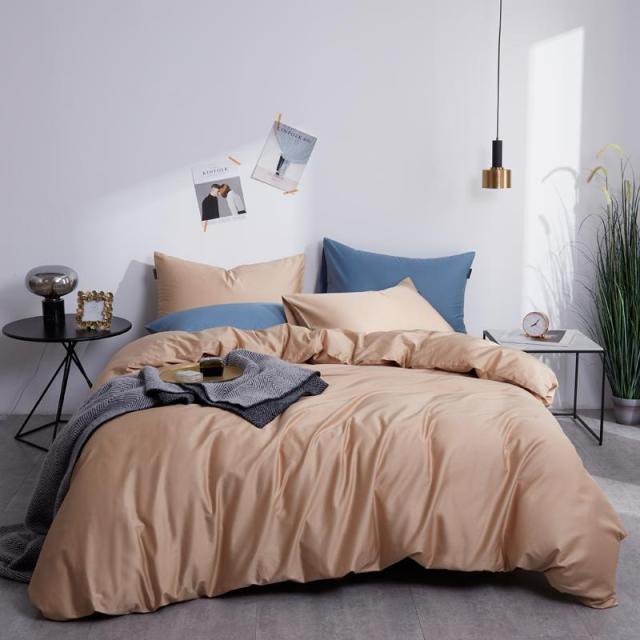
Stick to one colour family across everything you buy over time. A beige duvet bought this year and a beige throw bought next year will always coordinate, whereas mixing several accents colours forces you to replace more at once if your taste shifts. This also means you can build the look gradually rather than in one expensive purchase.
Pillowcases are the cheapest way to refresh a tired-looking bed, since they sit closest to the eye and show wear fastest. A pillowcase or two in a slightly different neutral tone can update the whole bed for a fraction of the cost of a new duvet set, and it is a sensible place to start if budget is the main constraint.
Seasonal minimalist bedding swaps
Minimalism does not mean the bed stays static all year. It means each seasonal change follows the same edited formula rather than adding extra layers on top of what is already there.
In colder months, swap a lighter linen or cotton duvet for a heavier fill, or add a second folded throw in a matching tone rather than a contrasting one, so the palette stays intact. Brushed cotton sheets are a natural winter swap, since their napped surface holds warmth without needing extra blankets piled on top. In warmer months, linen comes into its own: its breathable weave keeps the bed feeling cool while still supplying the texture a minimalist palette needs to avoid looking flat.
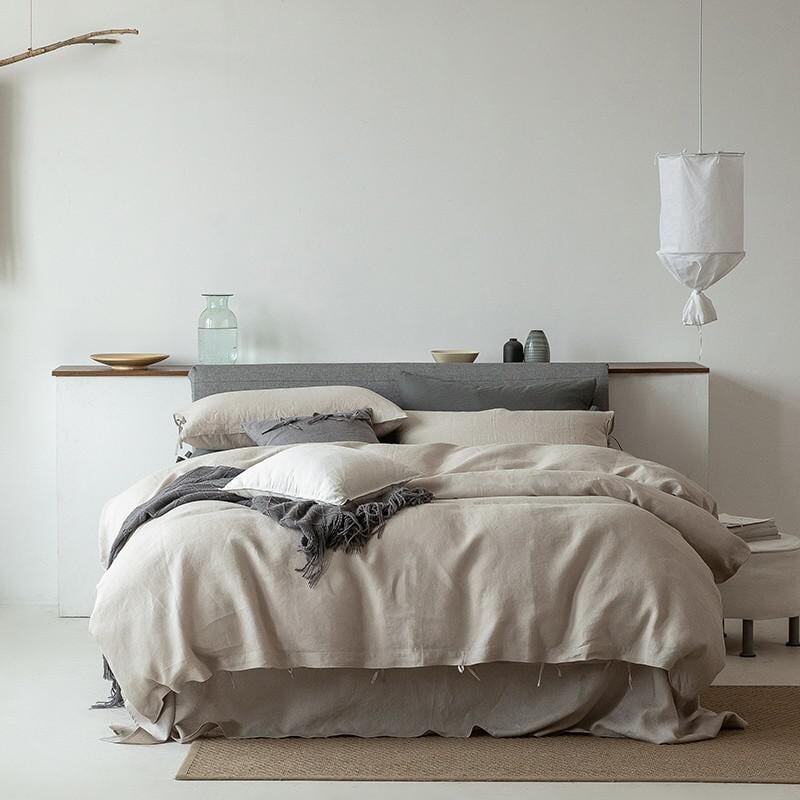
Rather than adding a whole new colour for each season, shift only the throw or the accent cushion. A warm taupe throw in winter and a lighter oatmeal one in summer keep the same base palette while marking the seasonal change. This is far more effective, and far cheaper, than reworking the entire bed twice a year.
Mulberry silk pillowcases are worth considering as a light seasonal layer too, since their smooth, temperature-regulating drape suits both warmer nights and the slightly more indulgent feel many people want heading into winter.
The edited-bed rule most advice gets backwards
Most bedding guides treat minimalism as subtraction: strip the bed down and call it done. That is where a lot of minimalist bedrooms go wrong. Take away too much texture along with the clutter and you get a bed that looks unfinished rather than calm, which is the opposite of the intended effect.
The edited stack works because it is additive within limits. It is not “fewer things,” it is “the right few things, in the right fabric.” A single power throw, one considered cushion, and a duvet in a fabric with genuine texture will always outperform a bare mattress with a flat sheet, even though both technically qualify as minimalist by cushion count alone.
If we had to pick one place to start, it would be the throw, not the duvet. It is the cheapest single item in the stack, it does the most visual work, and it is the easiest thing to swap seasonally without disturbing the rest of the palette. Get that right first, then build outward.
— Roomie Design
Ready to build your edited bed?
Roomie Design carries the three fabrics this whole approach depends on: higher thread count cotton for a polished finish, linen for texture, and brushed cotton for warmth, so you are choosing a feel rather than hunting across several retailers for the right weight or drape. If you are starting from the ground up, pick your dominant tone first and build the throw and cushion around it, not the other way round.
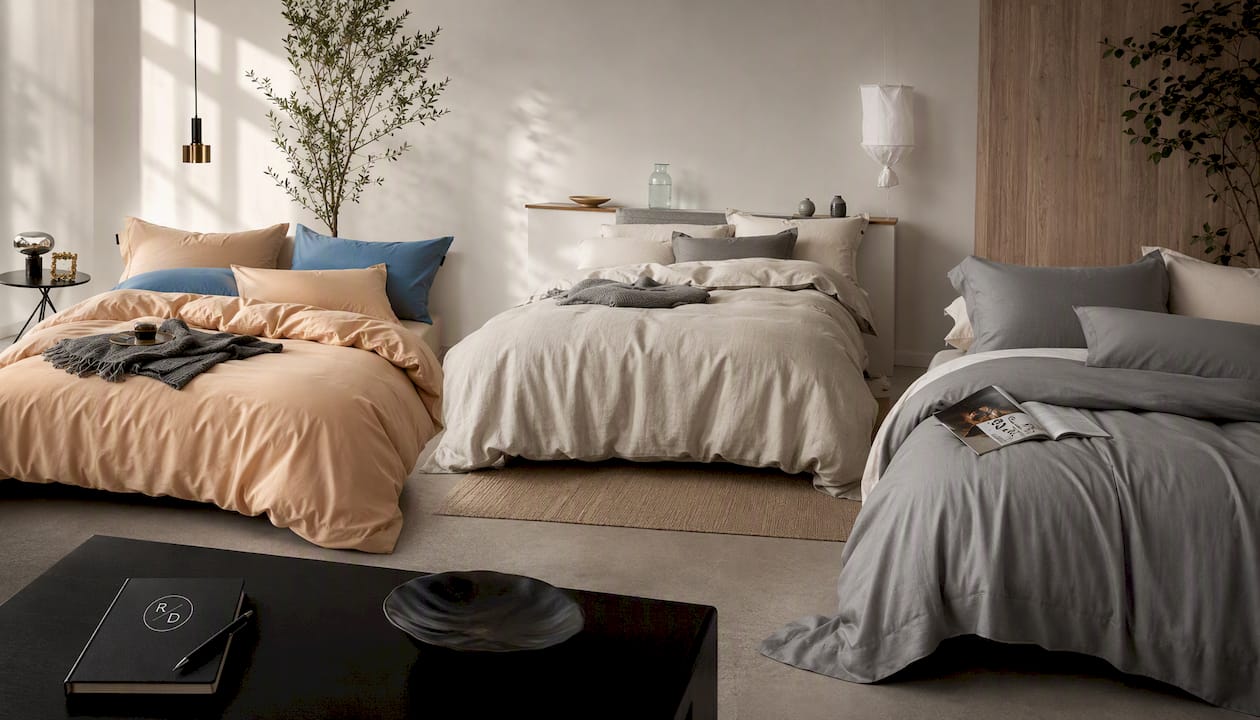
The Core Egyptian Cotton Bedding Set in beige is a solid starting point if you want the smooth, refined look described above, while the Natural 100% Linen Bedding Set suits a more relaxed, textured edit. Browse the full duvet cover collection to compare tones side by side, or check sheets and pillowcases if you only need to refresh one layer of an existing bed.
Sources
- Minimalist bedding ideas — The Coolist
- How to style a bed, according to interior designers — Vogue
- Neutral bedroom ideas — The Spruce
FAQ
What are common minimalist bedroom mistakes?
The biggest mistakes are stripping out texture along with clutter, which leaves the bed looking bare rather than calm, and matching every tone so exactly that the room reads as sterile. Overloading the throw rule with several blankets instead of one is another frequent slip.
What are the golden rules for minimalist bedroom design?
There is no single official list, but the consistent principles across styling guidance are: an edited bedding stack, a tight two or three tone palette, texture standing in for pattern, one focal object, warm layered lighting, and clear surfaces everywhere else.
What are some simple bedding ideas for my home?
Start with one neutral duvet, add a single folded throw across the foot of the bed, and keep cushions to one lumbar shape or none at all. A Natural 100% Linen Bedding Set or a brushed cotton set both deliver this with minimal extra styling.
What are some minimalist bedroom ideas beyond the bed itself?
Pair the bed with a low platform or timber slat frame, one focal art piece or plant, and a soft rug or linen curtains for texture. Keep nightstands to a single object each so the palette stays the visual focus.


