

Wrinkle-resistant bedding: what shoppers need to know
TL;DR:
- Wrinkle-resistant bedding can be achieved through fibre choice, weave, or chemical finishing, reducing ironing time. Naturally low-wrinkle fibres like TENCEL Lyocell and bamboo viscose maintain smoothness without treatments, while synthetics resist creases but sleep warmer. Choosing inherently low-wrinkle fibres and considering weave types, such as sateen or percale, helps maintain neater bedding with less upkeep.
Wrinkle-resistant bedding is bedding engineered to reduce visible creasing through fibre choice, weave construction, or a finishing treatment applied during manufacture. The result is a bed that looks neater after washing, with less time spent ironing or smoothing sheets.
Three things worth knowing before you shop:
- Treated cotton feels close to standard cotton but its crease-resistance can diminish after repeated washing, typically within 20–50 wash cycles.
- Synthetic blends (polyester, microfibre) resist creasing naturally without any chemical finish, though they tend to sleep warmer than natural fibres.
- Inherently low-wrinkle fibres such as TENCEL Lyocell and bamboo viscose hold their smooth appearance for the life of the sheet, with no finish to wash out.
Roomie Design’s Freya eucalyptus lyocell duvet cover sets sit in that third category. They appear later in this guide as a concrete example of naturally low-wrinkle bedding.
Table of Contents
- How wrinkle resistance is actually produced
- Common fabrics for low-wrinkle bedding: what to expect from each
- Why weave matters: sateen versus percale
- Are wrinkle-free sheets harmful? Health and safety for UK shoppers
- What hotels do to keep sheets smooth, and what works at home
- How to care for wrinkle-resistant bedding at home
- How to choose wrinkle-resistant bedding: a UK shopper checklist
- Roomie Design’s practical take on low-crease bedding
- Roomie Design’s Freya eucalyptus lyocell duvet cover sets
- Further reading and useful sources
How wrinkle resistance is actually produced
Three technical levers determine how a sheet behaves after washing: fibre properties, weave construction, and any finishing treatment applied at the mill.
Fibre properties are the most durable lever. Polyester and microfibre resist creasing because synthetic fibres do not swell when wet the way cotton does. Lyocell and high-quality bamboo viscose are naturally low-wrinkle for a different reason: their smooth, round fibre structure springs back into shape as it dries. Cotton, linen, and rayon wrinkle readily because water disrupts the hydrogen bonds in their cellulose chains, allowing fibres to shift and set in new positions.
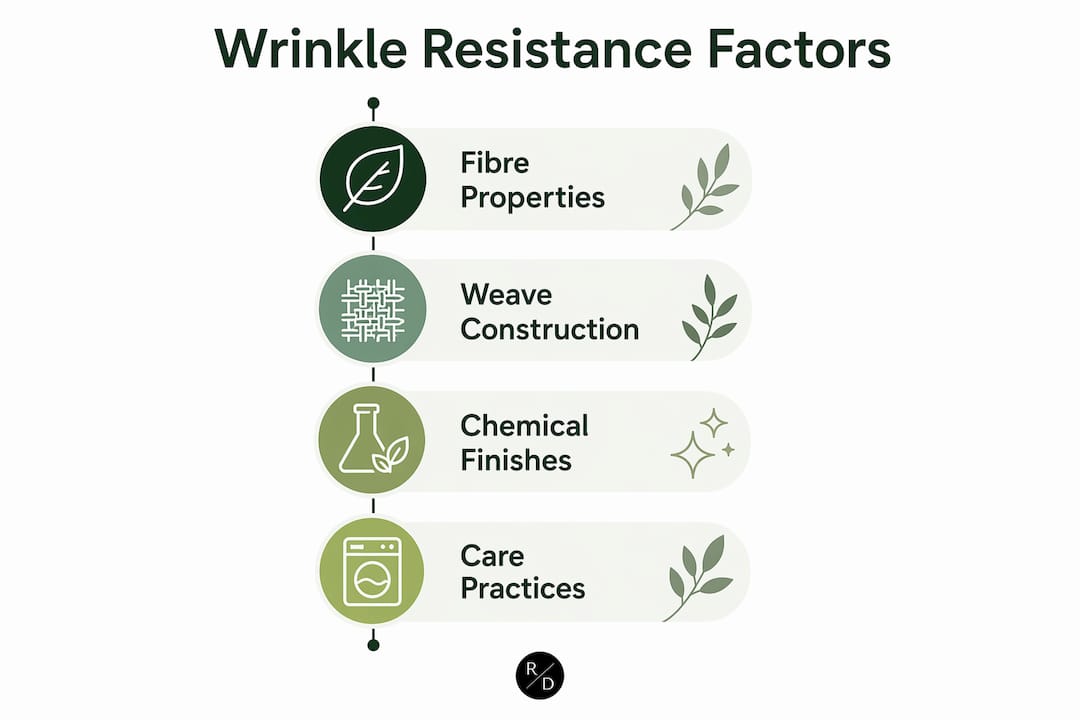
Weave construction changes how visible any creasing becomes. Sateen’s longer yarn floats lie flat against the surface and hide small creases; percale’s plain grid weave is crisper but shows creasing more readily.
Chemical finishes are the third route. The most common is a durable-press finish using DMDHEU, a resin that cross-links cellulose chains so they cannot shift when wet. A wrinkle-resistant pre-cure finish preserves a softer hand feel; a non-iron post-cure finish locks in a crisper, near-iron look but produces a slightly stiffer touch. Both are effective when new, but performance fades as the resin washes out.
Pro Tip: If you want crease resistance that lasts the full life of the sheet, choose an inherently low-wrinkle fibre rather than a chemically finished cotton. For more on how non-iron finishes differ, see Roomie Design’s guide on non-iron bedding.
Common fabrics for low-wrinkle bedding: what to expect from each
| Fabric | Wrinkle resistance | Breathability | Durability | Best for |
|---|---|---|---|---|
| Microfibre / polyester | Excellent | Lower | Good | Budget, low-maintenance |
| Polycotton blend | Good | Moderate | Good | Everyday use |
| Resin-treated cotton | Good (fades over time) | Good | Moderate | Cotton feel, short-term |
| TENCEL Lyocell | Excellent (permanent) | Excellent | Very good | Premium, sensitive skin |
| Bamboo viscose | Very good (permanent) | Very good | Good | Warm sleepers |
| Cotton sateen | Moderate | Good | Very good | Smooth hotel look |
| Cotton percale | Lower | Excellent | Very good | Crisp, cool feel |
## 1. Microfibre and polyester
Synthetic fibres do not absorb water the way cotton does, so they emerge from the dryer with far fewer creases. Affordability is the main draw. The trade-off is warmth: microfibre traps heat more than natural fibres, which can be uncomfortable in summer or for those who sleep hot.
## 2. Polycotton blends
A polycotton blend combines the softness of cotton with the crease-resistance of polyester. The higher the polyester percentage, the smoother the result. Hand feel sits between pure cotton and full synthetic, and breathability is reasonable for everyday use.
## 3. Resin-treated cotton
Treated cotton looks and feels close to standard cotton when new. The resin finish reduces creasing by cross-linking the cellulose fibres, but the effect gradually washes out. After roughly 20–50 washes the sheet may wrinkle as much as untreated cotton. Worth considering for the short-to-medium term, particularly if cotton hand feel is a priority. Roomie Design’s fabric blends guide covers blend options in more detail.
## 4. TENCEL Lyocell
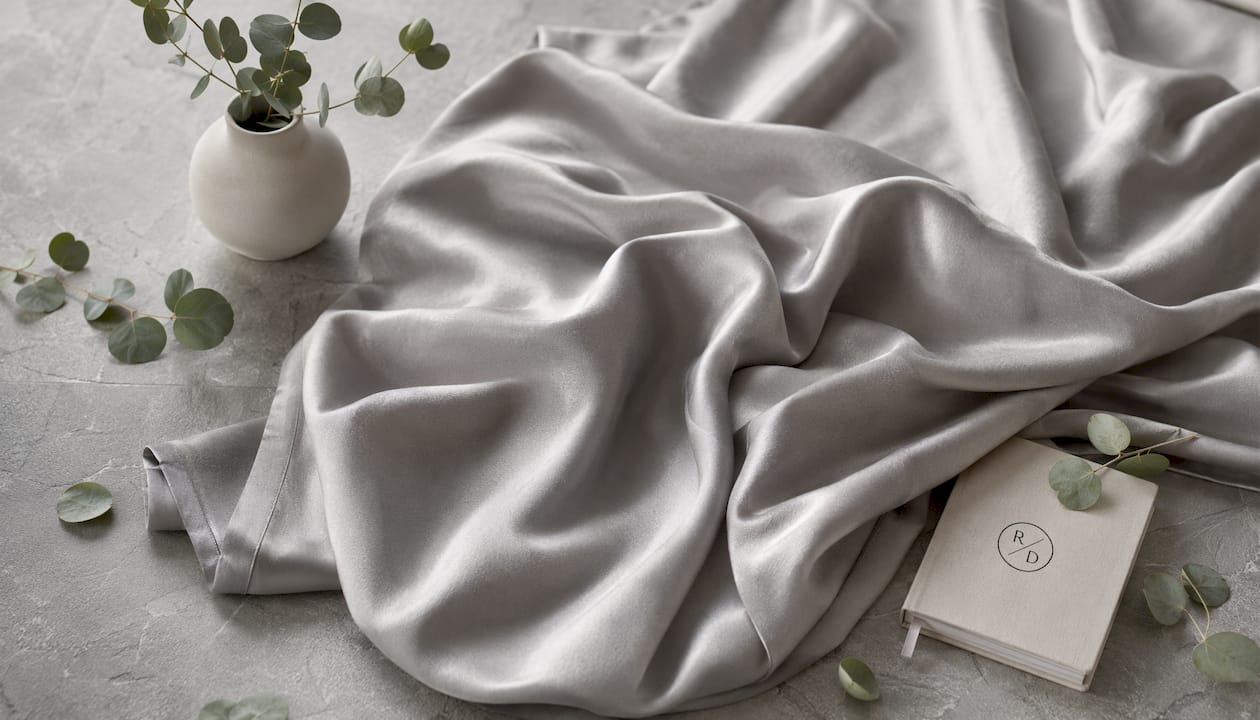
TENCEL Lyocell and bamboo viscose are the standout natural alternatives: inherently low-wrinkle, moisture-wicking, and soft without any chemical finish. Lyocell’s smooth fibre structure springs back into shape after washing and stays that way for the life of the sheet. Roomie Design’s Freya range uses eucalyptus lyocell for exactly this reason.
## 5. Bamboo viscose
Bamboo viscose shares many properties with lyocell: a smooth drape, good moisture management, and natural crease resistance. It tends to be slightly stretchier, which helps fitted sheets stay taut on the mattress and reduces the appearance of surface creasing.
## 6. Cotton sateen
Sateen is woven with longer yarn floats that lie flat on the surface, producing a subtle sheen and hiding small creases well. It is not wrinkle-free, but it looks noticeably smoother than percale after the same wash cycle. A good choice when visual neatness matters more than a crisp, matte finish.
## 7. Cotton percale
Percale’s plain one-over-one-under weave is breathable and cool, making it popular with hot sleepers. It shows creasing more readily than sateen, so it suits buyers who prioritise feel and temperature over appearance, or who are happy to iron occasionally.
Pro Tip: When appearance is the priority, choose sateen or lyocell. When tactile preference and cool sleep matter most, percale or a high-quality cotton blend is the better fit.
Why weave matters: sateen versus percale
A sateen weave produces a smoother surface because its longer yarn floats reduce the number of interlacing points where creases can form and set. Percale’s tight plain weave is crisper and more breathable, but those same interlacing points mean creases are more visible after washing.
Lab testing and bedding reviews consistently find that sateen weaves are preferred when a smooth, near-wrinkle look is the goal, while percale delivers a cooler, crisper sleep experience. The practical implication: if you want a hotel-style bed that looks neat with minimal effort, sateen is the more forgiving choice. If you run warm at night and do not mind the occasional iron, percale rewards you with better airflow.
Weave choice also interacts with fibre type. A lyocell sateen, for example, combines the inherent crease-resistance of the fibre with the surface-smoothing effect of the weave, producing a particularly neat result.
Pro Tip: In the UK’s cooler climate, sateen is a practical year-round choice. If you sleep in a warm room or use a heavy duvet, percale’s breathability may outweigh its tendency to show creases.
Are wrinkle-free sheets harmful? Health and safety for UK shoppers
The health question around wrinkle-resistant bedding centres on resin-based chemical finishes, specifically older formaldehyde-releasing agents used in durable-press treatments. Modern alternatives have largely moved away from the highest-release formulations, but trace levels can remain in finished fabric, particularly before the first wash.
For most people this is not a concern. For those with sensitive skin, respiratory sensitivities, or allergies, a few straightforward steps reduce any risk:
- Wash before first use. A single wash removes the majority of residual finish chemicals from treated sheets.
- Choose inherently low-wrinkle fibres. Lyocell, bamboo viscose, and polyester achieve crease resistance without any resin finish, making them suitable for sensitive skin. Experts recommend inherently low-wrinkle fibres such as TENCEL Lyocell specifically for this reason.
- Check the fibre content label. A label that lists only lyocell, bamboo, or polyester with no mention of a wrinkle-resistant finish indicates no chemical treatment has been applied.
- Test cautiously if concerned. If you have known skin sensitivities, use a new sheet set for a few nights and monitor for any reaction before committing to regular use.
- Avoid high-heat drying. High heat can bake residual chemicals further into the fibre; low-heat or air drying is preferable for treated sheets.
Hypo-allergenic options, including Roomie Design’s down alternative pillows, pair well with lyocell bedding for a fully low-irritant sleep setup.
What hotels do to keep sheets smooth, and what works at home
Commercial laundries achieve near-wrinkle-free linen through a combination of high-volume pressing, post-cure finishing treatments, and immediate handling after drying. Industrial flatwork ironers press sheets at high temperature and speed, producing a finish that is impossible to replicate with domestic equipment.
What is realistic at home is a smaller set of techniques, and they make a genuine difference:
The single most effective change for home use is prompt removal from the dryer. Sheets left sitting in a warm drum set their creases quickly. Pulling them out while still slightly damp and smoothing them flat, or putting them straight onto the bed, prevents most of the deep creasing that makes sheets look untidy. A handheld garment steamer handles any remaining creases in under two minutes, without the effort of a full iron. How you store sheets between uses also matters: clothes storage ideas that keep linen flat and uncompressed reduce the creasing that builds up in a crowded airing cupboard.
How to care for wrinkle-resistant bedding at home
A consistent laundry routine preserves low-crease appearance and extends the life of any finish. Follow these steps:
- Wash before first use. For treated sheets, this removes residual finish chemicals and gives you a truer sense of the fabric’s hand feel and crease behaviour.
- Use a cool or warm wash. Hot water accelerates the breakdown of resin finishes and can cause fibres to shrink, which worsens creasing. Cold or 30°C cycles are sufficient for regular cleaning.
- Dry on a low-heat setting. High heat is the primary cause of deep-set creases and shortens the life of chemical finishes. Low heat or a damp-removal cycle is preferable.
- Remove promptly. Take sheets out of the dryer while still very slightly damp. Smooth them by hand and either put them straight onto the bed or fold immediately.
- Fold or roll for storage. Rolling rather than folding reduces sharp crease lines in stored sheets. Keep linen in a cool, dry place with enough space to avoid compression.
- Steam for a quick refresh. A garment steamer passed over a made bed takes under two minutes and removes most surface creasing without the effort of ironing. For more on extending the life of your bedding, Roomie Design’s guide on extending bedding lifespan covers the full routine.
Pro Tip: Limiting high-heat drying is the single most effective way to extend the life of a resin finish. For inherently low-wrinkle fibres like lyocell, low heat also protects fibre integrity and keeps the fabric feeling soft wash after wash. Maintaining your washing machine in good condition matters too: washing machine care tips help prevent drum residue that can affect fabric performance over time.
How to choose wrinkle-resistant bedding: a UK shopper checklist
| Scenario | Best choice | Why |
|---|---|---|
| Hot sleeper who dislikes creases | TENCEL Lyocell or bamboo viscose | Inherently low-wrinkle, breathable, no chemical finish |
| Budget low-crease option | Polycotton blend or microfibre | Affordable, naturally crease-resistant synthetics |
| Premium hotel look | Cotton sateen or eucalyptus lyocell | Smooth surface, elegant drape, durable |
| Sensitive skin | TENCEL Lyocell | No resin finish; moisture-wicking and gentle |
| Cool, crisp feel with manageable creasing | Cotton percale | Breathable, improves with washing |
What to check before buying:
- Read the fibre content label. Lyocell, bamboo, or polyester with no finish mention means no chemical treatment.
- Note any “wrinkle-resistant finish” wording. This signals a resin treatment whose performance will fade over time.
- Check the weave. Sateen hides creases; percale shows them more readily.
- Consider your sleep temperature. Synthetics and sateen weaves sleep warmer; lyocell and percale are cooler.
- Factor in sustainability. Inherently low-wrinkle fibres such as eucalyptus lyocell require no chemical finishing process, making them a lower-impact choice. Resin treatments add chemical processing steps and the finish eventually washes into wastewater.
For a full decision workflow, Roomie Design’s bedding selection guide walks through each variable in sequence.
Roomie Design’s practical take on low-crease bedding
The most common mistake buyers make is treating “wrinkle-resistant” as a single category. It is not. A resin-finished polycotton and a eucalyptus lyocell duvet cover are both described by that label, but they behave very differently after 50 washes.
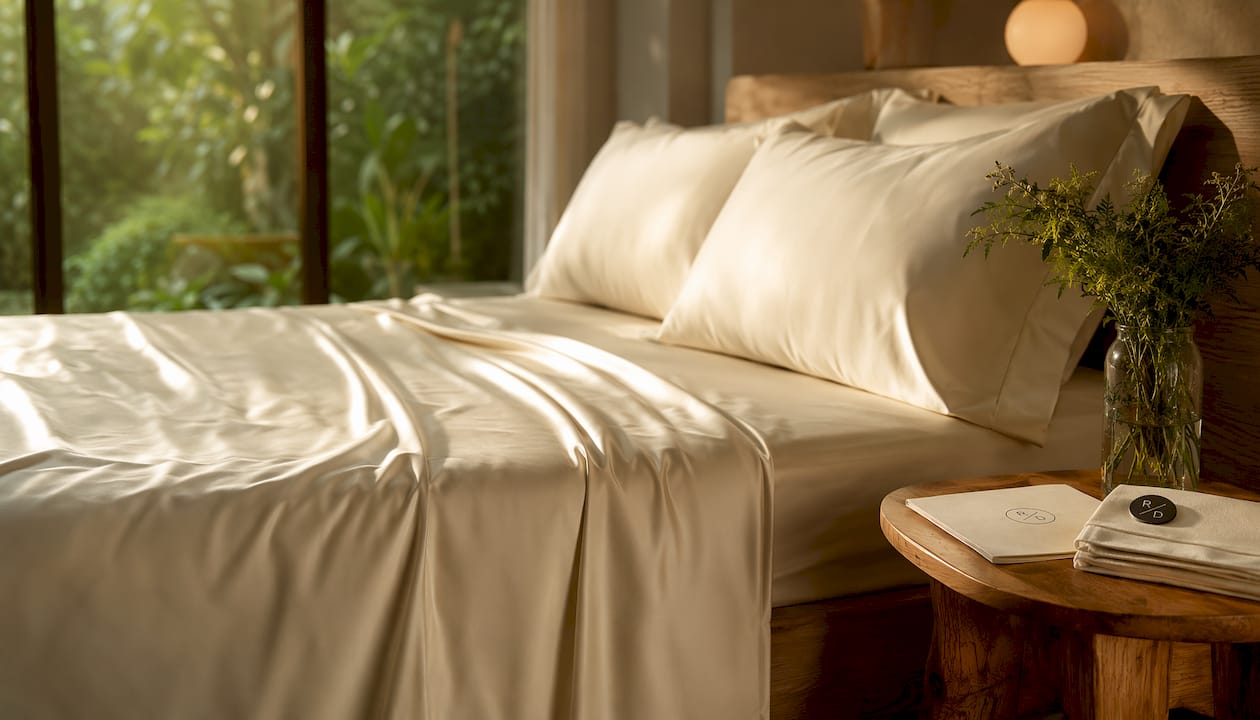
Roomie Design’s preference, reflected in the Freya range, is for inherently low-wrinkle fibres. Eucalyptus lyocell achieves a smooth, hotel-quality drape without any chemical finish, and that performance does not diminish over time. For buyers who prioritise feel alongside appearance, a high-quality cotton sateen is a strong alternative: it hides creases well and becomes softer with each wash.
The honest trade-off worth stating plainly: if budget is the primary constraint, a polycotton blend or microfibre set delivers reliable low-crease performance at a lower price point. Premium options exist across all fibre types and finishes. The right choice depends on sleep temperature, skin sensitivity, and how much maintenance you are willing to do. Choose by feel and sleep needs first; the crease-resistance follows from the fibre.
Roomie Design’s Freya eucalyptus lyocell duvet cover sets
Roomie Design’s Freya range offers a straightforward answer for shoppers who want inherently low-wrinkle bedding without chemical finishes. Each set is made from eucalyptus lyocell, a naturally smooth fibre that resists creasing for the life of the sheet and wicks moisture away during sleep.
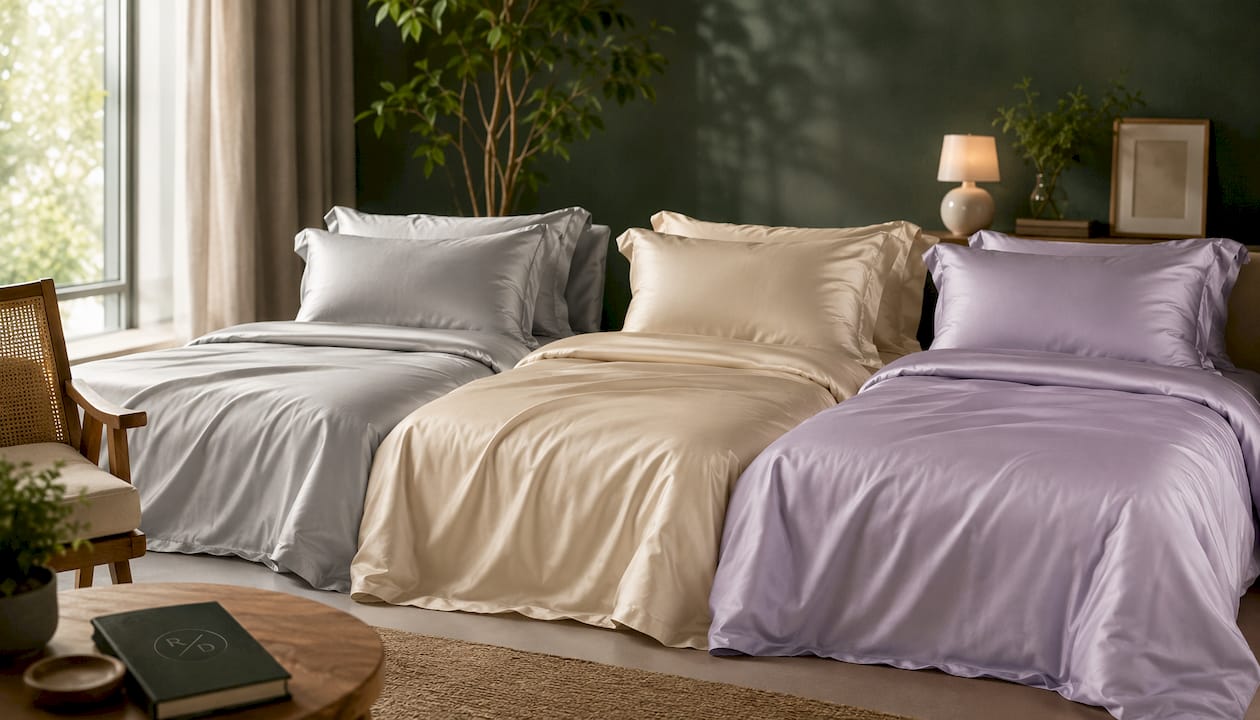
Three colourways are available to suit different bedroom aesthetics:
- Freya Light Grey — a cool, neutral tone that suits minimal and Scandinavian-style bedrooms.
- Freya Pearl Beige — a warm, versatile shade that works across most colour schemes.
- Freya Lavender — a soft accent colour for those who want a touch of warmth without bold contrast.
Each product page includes full care guidance. Wash on a cool cycle, remove promptly, and the lyocell fibre does the rest. View the full Freya range at Roomie Design to check available sizes and current stock.
Further reading and useful sources
| Source | What it covers |
|---|---|
| Good Housekeeping: sheet shopping guide | Weave types, fabric comparison, and practical buying advice |
| Wirecutter: best sheets | Lab-tested sheet reviews including wrinkle performance |
| Seattle Times: do wrinkle-free sheets deliver? | Consumer reporting on finish durability and wash-cycle performance |
| Jiangsu Futai Textile: wrinkle-resistant vs non-iron | Industry explanation of pre-cure vs post-cure finishing methods |
| Forbes: best wrinkle-free sheet sets | Synthetic fibre performance and product recommendations |
| Mattress Miracle: best wrinkle-free sheets | Lyocell and bamboo recommendations for sensitive skin |
| Roomie Design: non-iron bedding guide | How non-iron finishes differ from wrinkle-resistant treatments |
| Roomie Design: fabric blends guide | Fibre blend trade-offs and material selection |
| Roomie Design: bedding selection workflow | Step-by-step buying decision guide |


