
Deep pocket sheets: pick the right fit with Roomie Design
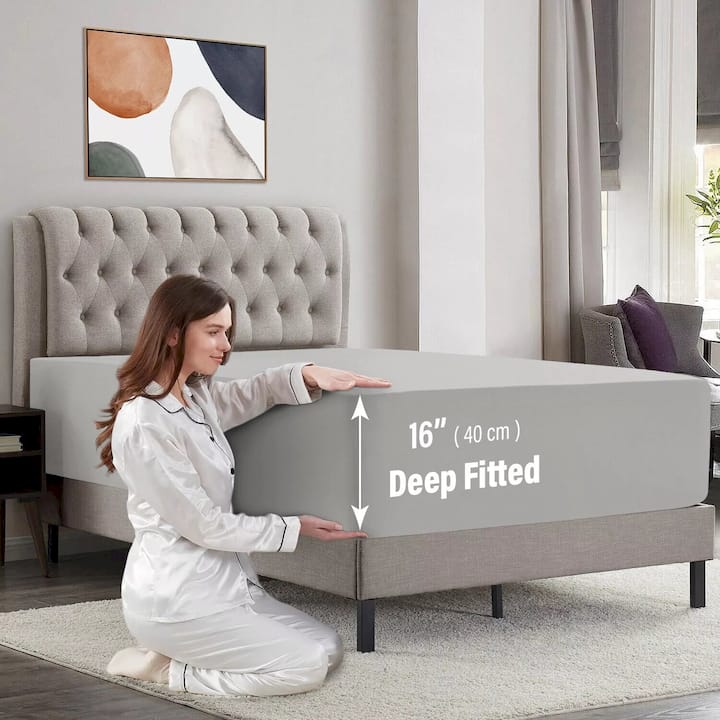
Deep pocket sheets are fitted sheets built with extra fabric depth at the corners to cover mattresses thicker than the standard 7 to 14 inches most flat sheets are cut for. For mattresses between roughly 15 and 24 inches, once a topper or pillow-top is involved, pocket depth needs to match the mattress rather than the other way round. Most shoppers with a modern hybrid or memory foam mattress plus a topper do best with Roomie Design’s 16” (40cm) Extra Deep Pocket fitted sheet, while beds over 18 inches, adjustable bases, or stacked toppers call for the Deep Fitted Sheet Upgrade | 18inches.
Here’s the quick breakdown by category:
- Standard pockets: 7 to 14 inches (18 to 36cm), fine for older or low-profile mattresses.
- Deep pockets: up to about 15 inches (38cm), the baseline for most modern mattresses.
- Extra-deep pockets: 16 to 24 inches (41 to 61cm), needed once you stack a topper or own a thick hybrid mattress.
Fit comes first. A gorgeous fabric on a pocket that’s too shallow will pop off the corners within days, no matter the thread count.
Table of Contents
- What Are Deep Pocket Sheets and Why Fit Comes First?
- Five Checks to Run Before You Buy Deep Pocket Sheets
- How Do You Measure a Mattress for Deep Pocket Sheets?
- Which Fabric Feels Right for Your Sleep Style?
- What Construction Details Keep a Fitted Sheet in Place?
- How Do You Keep the Fit After Washing?
- Which Roomie Design Sheets Suit Your Mattress?
- What Do Certifications and Eco Labels Actually Tell You?
- What Should You Expect Across Different Price Tiers?
- Find Your Perfect Fit at Roomie Design
- Frequently Asked Questions
- Sources
What Are Deep Pocket Sheets and Why Fit Comes First?
Deep pocket sheets differ from standard fitted sheets in one specific measurement: the depth of fabric sewn into the corner pocket, not the overall sheet size. A queen sheet retains its width and length regardless of pocket depth; only the corner drop measurement changes to accommodate mattress height.
This distinction trips up a lot of shoppers. People assume “deep pocket” means a bigger sheet overall, then wonder why a deep pocket set still feels tight lengthways on an oversized bed. It’s purely a corner-depth spec, and getting it right prevents the two most common fitted sheet complaints: corners that slip off in the night and fabric so loose it bunches under you.
Roomie Design builds its extra-deep range specifically for mattresses that standard sheets don’t fit well, such as those with pillow-tops, hybrid mattresses with thick comfort layers, and beds with additional foam or wool toppers. Getting the depth measurement right before considering fabric or thread count helps avoid returns and disappointment.
Five Checks to Run Before You Buy Deep Pocket Sheets
Run through this list before adding anything to your basket. It takes about five minutes and saves the hassle of a return.
- Measure total mattress height, topper included. Stand a tape measure at the corner and note the full stack height, not just the mattress spec sheet figure.
- Match that number to a pocket category. Under 14 inches, standard works; 15 to 16 inches, go deep; above 16 inches or with a topper, choose extra-deep.
- Check the construction details. Look for fully encased elastic around the whole hem rather than elastic only at the corners, plus reinforced corner seams.
- Decide on fabric and weave for your sleep style. Hot sleepers generally prefer percale or linen; those who want a cosier feel lean towards sateen, flannel, or a higher thread count.
- Confirm sizing and the returns policy. UK and US size names differ (a UK king isn’t a US king), so check dimensions against your own bed frame and confirm the seller will accept an exchange if the pocket still doesn’t sit right.
Pro Tip: Keep the tape measure reading on your phone. Pocket depth is the one spec you’ll need again every time you reorder sheets or buy a duvet cover set to match.
How Do You Measure a Mattress for Deep Pocket Sheets?
Getting the number right is a two-minute job, and it’s the single step that determines whether your new sheets last or end up back in a returns box.
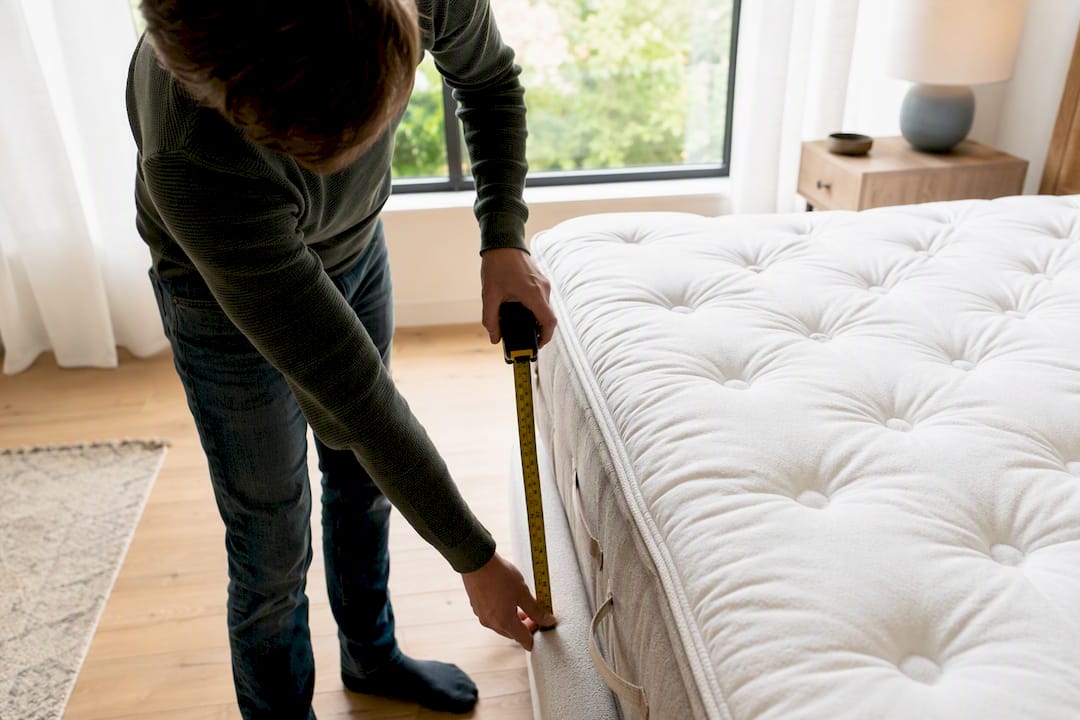
- Lay the tape measure flat against the side of the mattress, from the floor of the base (where a bottom sheet would sit) straight up to the very top of the mattress.
- Include everything that adds height: a mattress protector, a foam or wool topper, and any sewn-in pillow-top layer all count towards the total.
- Round up, not down. If your reading falls between two sizes, choose the deeper pocket. A slightly loose fit is easier to live with than one that won’t stretch over the corner at all.
- Add a topper allowance. A pillow-top or thick memory foam topper typically needs 3 to 4 inches added to the bare mattress figure, while a slimmer foam topper needs 1 to 3 inches.
- Cross-check against the size chart on the product page before ordering.
A 14 inch mattress with a 2 inch topper lands at 16 inches total, which points straight to Roomie Design’s 16” (40cm) Extra Deep Pocket. Editorial testing backs this logic directly: a 14 inch mattress with a 4 inch topper is a textbook case for an 18 inch pocket.
Pro Tip: Adjustable beds and platform frames with a deep base box often add 2 to 3 inches you won’t see on the mattress spec sheet. Measure the whole assembled bed, not just the mattress on its own.
Which Fabric Feels Right for Your Sleep Style?
Pocket depth solves the fit problem. Fabric solves the comfort problem, and the two decisions are independent of each other. A 1000 thread count sheet and a budget percale sheet can both come in the same 16 inch pocket depth.
Cotton remains the most versatile choice, and Egyptian and Supima cotton varieties in particular deliver a noticeably smoother, more durable hand-feel than standard cotton. Linen breathes exceptionally well and softens with every wash, though it wrinkles more visibly. Tencel and lyocell, both derived from wood pulp, offer a cool, silky drape with strong moisture-wicking, making them a favourite for warmer climates or hot sleepers. Bamboo shares similar cooling properties with a slightly heavier drape. Microfibre is budget-friendly and low-maintenance. Flannel brings warmth and texture for colder months, though its thicker weave means it can feel slightly bulkier at the corner seams than a lighter weave.
Weave matters as much as fibre. Percale is woven in a simple over-under pattern, giving a crisp, cool, matte finish, similar to a quality cotton shirt. Sateen uses a different weave that floats more yarn on the surface, producing a smoother, subtly lustrous fabric with a slightly heavier drape and a silkier feel against the skin.
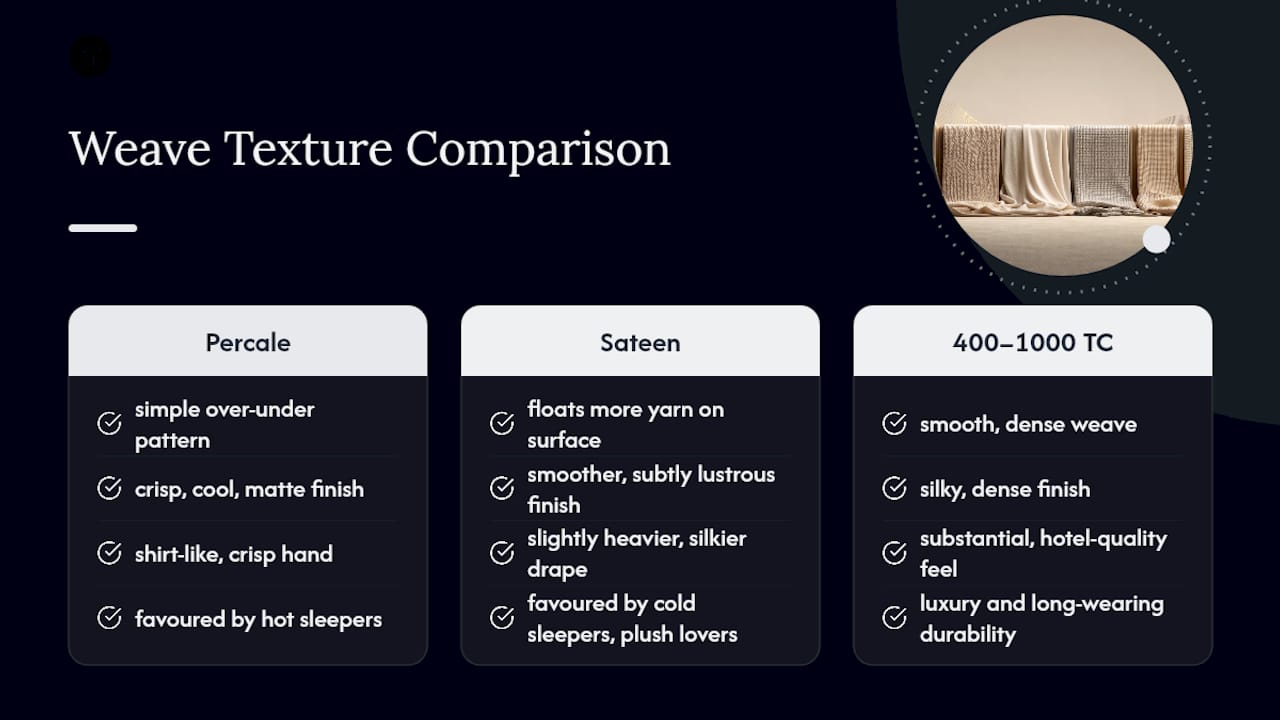
High thread count sheets in the 400 to 1000 TC range sit at the luxurious end of the spectrum, prized for their smooth, dense weave and long-wearing durability. Roomie Design’s Dea Luxury 1000 TC Sheet is built around exactly this appeal: a fabric that feels substantial and hotel-quality night after night. If you’re drawn to that dense, silky finish, our thread count guide walks through how the weave and yarn quality combine to create that feel. Hot sleepers tend to gravitate towards percale, linen, or Tencel; those who run cold or simply love a plush, hotel-style bed lean into sateen or a higher thread count; allergy-prone sleepers often do well with tightly woven cotton or bamboo.
What Construction Details Keep a Fitted Sheet in Place?
A beautiful fabric in the wrong pocket depth still won’t stay on the bed. Construction is what turns a correctly measured sheet into one that stays put through a full night of movement.
The non-negotiable feature is fully encased elastic running around the entire hem, not just at the four corners. Sheets with encased elastic and reinforced corner seams consistently outperform partial-hem designs in staying anchored to the mattress. Deep-set corner seams and dense, high-quality elastic (rather than thin, stretched-out elastic that loses tension after a few washes) do the actual holding.
Secondary features worth checking:
- Corner straps or tabs, mostly seen on adjustable bed sheets, add a second layer of security.
- Labelled top and bottom markers make remaking the bed faster, particularly on patterned sheets.
- Reinforced seams at stress points reduce the chance of tearing over repeated wash cycles.
- A slightly generous fabric allowance built into the pocket depth accounts for natural shrinkage over the sheet’s lifespan.
Pro Tip: Zoom into product photos on the corner seam before buying online. A visible double-stitch line and a clearly wide elastic band are good signs; a single thin seam usually means the elastic will loosen within a few months.
How Do You Keep the Fit After Washing?
Wash fitted sheets in warm rather than hot water where possible, and use a low or medium tumble-dry setting. High heat is what degrades elastic fastest, and loose elastic is the real reason a well-fitted sheet starts slipping off after a few months. Skip fabric softener too. It coats fibres and elastic fibres in particular, reducing their stretch-back over time.
Expect a small amount of shrinkage in the first two or three washes, which is entirely normal for cotton, linen, and bamboo fabrics. Roomie Design builds a slight allowance into its fitted sheet pocket depths specifically to absorb this early shrinkage, so a sheet measured for a 16 inch mattress still fits comfortably after its first laundry cycle.
If you’re genuinely torn between two pocket depths, or you’re using more than one topper, size up rather than down. A slightly deep pocket sits neatly; a slightly shallow one won’t stretch over the corner at all. Before you check out, take a moment to review the seller’s returns policy. Fitted sheets are a fit-dependent purchase, and a fair exchange window matters more here than with almost any other bedding item.
Which Roomie Design Sheets Suit Your Mattress?
Three products cover the vast majority of mattress profiles shoppers are matching sheets to right now.
- Deep Fitted Sheet Upgrade | 18inches: built for mattresses above 18 inches, stacked toppers, or adjustable bases with a deep base frame where the standard extra-deep option falls short.
- Dea Luxury 1000 TC Sheet: a 1000 thread count cotton sheet for shoppers who want the fit sorted alongside a dense, silky, hotel-quality feel, available across the brand’s deep pocket range.
Every product page carries a full size guide, fabric and thread-count specification, and access to order tracking and customer support if you’re unsure which depth applies to your bed.
Roomie Design’s premium bedding range is built on a simple principle: the right pocket depth first, then a fabric that suits how you sleep. Every fitted sheet ships with clear specs on pocket depth, material, and thread count, so there’s no guesswork before you buy.
What Do Certifications and Eco Labels Actually Tell You?
Shoppers browsing premium cotton, linen, or bamboo sheets often come across sustainability or quality labels stamped onto product pages during their research. These marks generally speak to how a fabric was grown, processed, or dyed, covering things like reduced chemical use in farming or dyeing, and traceability through the supply chain.
For deep pocket sheets specifically, these labels don’t tell you anything about pocket depth, elastic quality, or how the sheet will fit your mattress. That information sits entirely in the product specification: material, weave, thread count, and the pocket measurement itself. When you’re comparing bedding across different retailers, treat fit and construction specs as the primary decision points, and treat any eco or quality labelling as a secondary factor you weigh against your own priorities around fabric sourcing.
Roomie Design’s product pages focus on the details that actually determine comfort and longevity for the customer: fibre type, weave, thread count, and precise pocket measurements in both inches and centimetres. That’s the information that changes how a sheet performs on your specific bed, night after night, wash after wash.
What Should You Expect Across Different Price Tiers?
Price in the deep pocket sheet category tracks fairly closely with fabric quality and construction detail, and understanding that relationship helps you shop with realistic expectations rather than chasing the lowest number on the page.
At the entry level, microfibre and lower thread count cotton blends deliver reliable, easy-care sheets at accessible prices, a sensible option for guest rooms, children’s beds, or anyone furnishing a home on a tighter budget. The mid tier brings in higher-grade cotton, linen, and Tencel, where the jump in price buys a noticeably better drape, breathability, and a fabric that holds its colour and softness over more wash cycles.
At the top end, sheets like Roomie Design’s 1000 TC Egyptian cotton range sit alongside similarly positioned Prestige and Platinum lines, all built around dense, long-staple cotton fibres that produce that heavier, silkier, hotel-quality hand-feel. The higher price at this tier reflects the yarn quality and weave density rather than gimmicks, and it’s the tier shoppers return to once they’ve felt the difference in person. Wherever you land on that spectrum, pocket depth still needs checking first. A premium fabric in the wrong pocket size is still the wrong sheet for your bed.
A brand note on getting your fit right
Getting a mattress right on the first order matters more to us than upselling a fabric. If you’re unsure whether your bed needs the 16 inch extra-deep option or the 18 inch upgrade, our size guide walks through the measurement, and customer support can talk you through it directly. For unusually deep or heavily topped beds, the 16"/40cm extra-deep option covers the vast majority of cases we see. Get the depth right, and the fabric choice becomes the enjoyable part of the decision.
Find Your Perfect Fit at Roomie Design
Roomie Design solves the exact problem this guide walks through: matching pocket depth to your real mattress height before fabric ever enters the conversation. Where generic sheet shopping means guessing at size charts and hoping for the best, every product page here states the pocket depth, material, and thread count upfront, alongside a size guide built for this decision specifically.
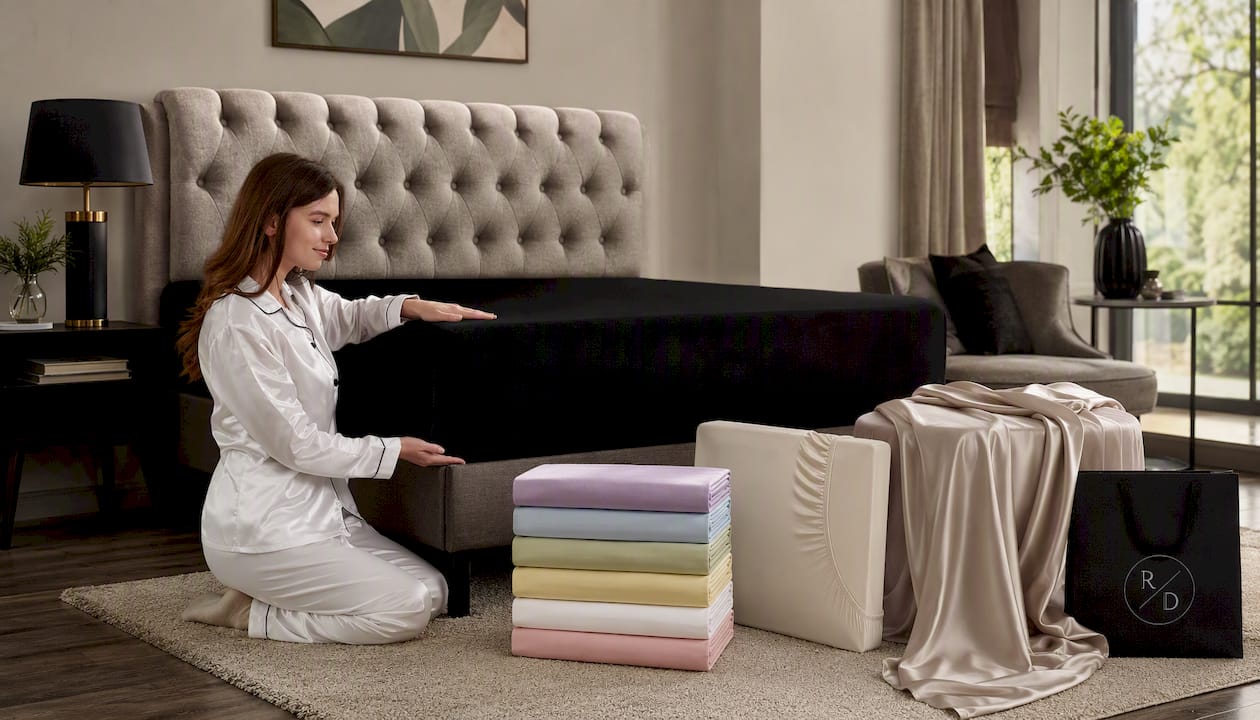
If your measurement landed between 15 and 17 inches, the 16” (40cm) Extra Deep Pocket is built for your bed. Measured above 18 inches or running an adjustable base? Go straight to the Deep Fitted Sheet Upgrade | 18inches. Want that dense, silky 1000 TC feel alongside the correct fit? The Dea Luxury 1000 TC Sheet delivers both. And if bedroom styling is next on your list once the sheets are sorted, our design partners have practical ideas on pairing art with your bedroom scheme and choosing colours for a child’s room. Check your mattress measurement against the size guide on any product page, then order the depth that matches.
Frequently Asked Questions
Do I need deep pocket sheets for my mattress? If your mattress plus any topper measures above 14 inches, yes. Anything from 15 inches upward will pull loose from a standard fitted sheet within days.
What’s the difference between deep pocket and extra-deep pocket sheets? Deep pocket typically covers up to about 15 inches, while extra-deep pockets extend from roughly 16 to 24 inches, built for hybrid mattresses, toppers, and pillow-tops.
How do I measure my mattress for the right pocket depth? Measure straight up from the base to the top of the mattress, including any protector or topper, then round up to the nearest available pocket depth rather than down.
Does a higher thread count affect how well a sheet fits? No. Thread count is entirely separate from pocket depth. A 1000 TC sheet and a lower thread count sheet can both be cut with an identical 16 inch pocket.
What if my measurement falls between two pocket sizes? Choose the deeper option. A slightly loose pocket is a minor inconvenience; a pocket that won’t stretch over the mattress corner is a returned order.
Will my deep pocket sheets shrink after washing? A small amount of shrinkage is normal in the first few washes. Roomie Design builds a slight allowance into its pocket measurements specifically to account for this.
Sources
- Best Deep Pocket Sheets of 2026: Expert Tested
- The 7 Best Deep Pocket Sheets of 2026, Tested and Reviewed


