

Role of bedding for sensitive skin: what to choose
For sensitive skin, the best bedding choice is smooth, breathable, moisture-wicking natural fibres: bamboo lyocell, high-quality cotton, or mulberry silk. These materials address the three main triggers for overnight flare-ups: mechanical friction, trapped heat and moisture, and chemical residues from manufacturing or laundry products. Wash new bedding before first use, switch your pillowcase to a smooth fabric, and consider a hypoallergenic pillow or encasement if dust mite allergy is a factor.
Top material families for sensitive skin:
- Bamboo lyocell — superior moisture absorption, breathable, gentle fibre surface
- Long-staple cotton (percale or sateen weave) — soft, durable, widely available
- Mulberry silk — ultra-smooth, low-friction, temperature-regulating
Pro Tip: Wash new bedding at least twice before sleeping in it. Manufacturing finishes and optical brighteners can linger after a single wash and are a common, overlooked cause of skin irritation.
Roomie Design stocks all three material families across its duvet cover sets, sheet sets, and pillowcases, with size guides and customer reviews to help you choose.
Table of Contents
- Which fabrics help or harm sensitive skin?
- How does bedding trigger or worsen eczema and psoriasis?
- What are the best hypoallergenic bedding options?
- How should you wash bedding to protect sensitive skin?
- Why does your pillowcase matter more than any other piece of bedding?
- What thread count and weave should you look for?
- Quick checklist for buying bedding for sensitive skin
- Roomie Design’s recommendations for sensitive skin
- Natural vs. chemically treated fabrics: what the difference means for your skin
- Good design and sensitive-skin function are not in conflict
- Sensitive-skin bedding at Roomie Design
- Authoritative sources and further reading
Which fabrics help or harm sensitive skin?
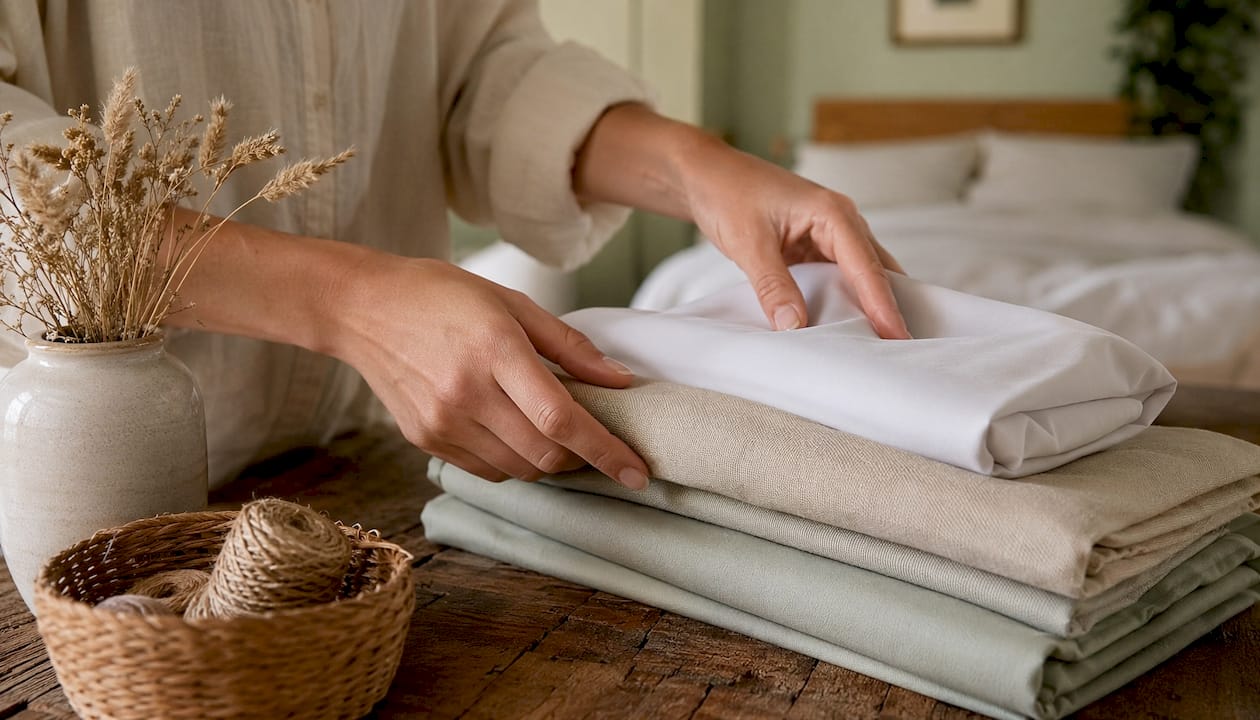
Fabric choice matters because of three physical properties: fibre surface texture, breathability, and moisture control. Each material performs differently across these dimensions.
| Material | Key benefit for sensitive skin | Best for | Watch out for |
|---|---|---|---|
| Bamboo lyocell | Moisture absorption and breathability | Heat-triggered flares, acne-prone skin | Low-quality viscose blends |
| Long-staple cotton | Softness, durability, low allergen risk | General sensitive skin, eczema | Heavy chemical finishes |
| Mulberry silk | Ultra-smooth surface, temperature regulation | Facial sensitivity, psoriasis | Delicate care requirements |
| Linen | Highly breathable, gets softer with washing | Warm sleepers, mild sensitivity | Coarser texture when new |
| Blended fabrics | Varies by blend ratio | Budget-conscious buyers | Synthetic content can trap heat |
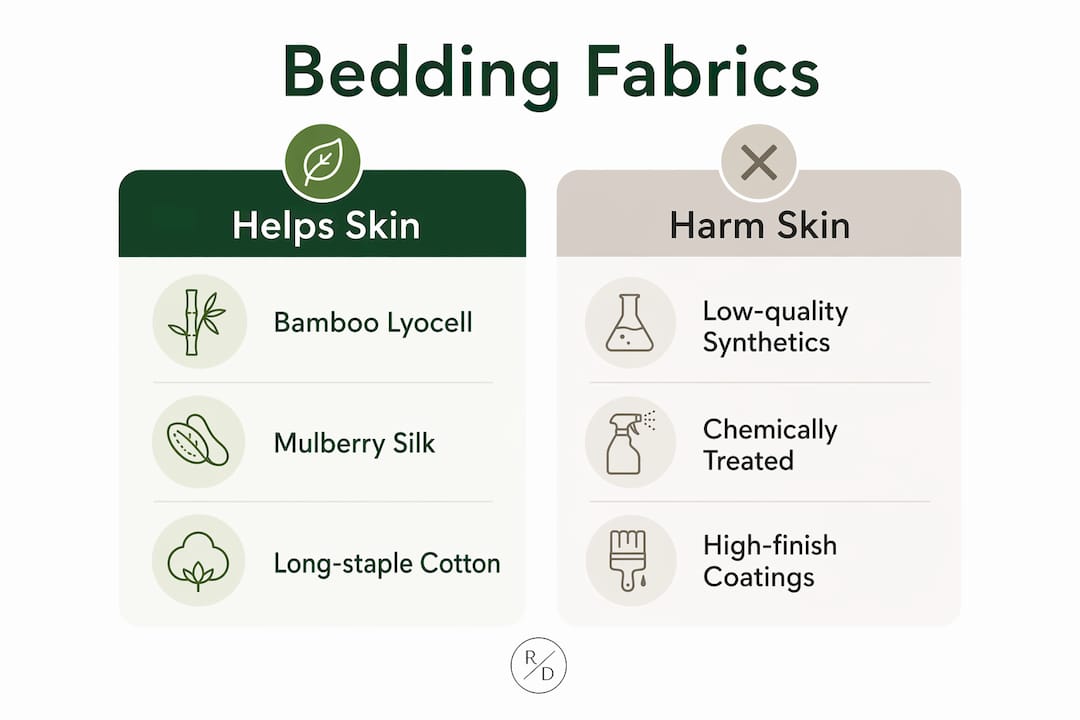
Bamboo lyocell stands out because of its fibre architecture. Bamboo fibres have a smooth, rounded cross-section that reduces micro-abrasion against skin overnight, whereas standard cotton fibres are more irregular at a microscopic level. This structural difference is why bamboo lyocell tends to feel gentler on compromised or reactive skin. Reviews and studies also report antimicrobial properties and strong moisture-wicking performance, which benefits acne-prone sleepers.
Long-staple cotton in a sateen or percale weave delivers reliable softness and durability. The key is minimal chemical processing: heavily finished cotton can leave residue that irritates reactive skin, so look for fabrics described as lightly processed or pre-washed.
Mulberry silk offers the smoothest surface of any natural fibre. Its low-friction properties make it a strong choice for facial sensitivity and for anyone whose skin reacts to even mild abrasion. The trade-off is care: silk requires gentle washing and is less forgiving of high temperatures.
Linen is highly breathable and becomes progressively softer with each wash. It suits warm sleepers with mild sensitivity well, though it can feel coarser than cotton or bamboo when new.
Blended fabrics vary widely. A cotton-bamboo blend can retain the benefits of both, but blends with a significant synthetic content risk trapping heat and moisture. Check the fibre composition before buying, and read the fabric blends guide for a fuller breakdown.
Pro Tip: Minimally processed, low-finish fabrics are consistently gentler on reactive skin. If a fabric feels stiff or has a chemical smell straight from the packaging, that is a signal to wash it thoroughly before use.
How does bedding trigger or worsen eczema and psoriasis?
Three mechanisms drive most overnight skin irritation: mechanical friction, trapped heat and moisture, and chemical or allergen residues. Understanding each one makes the recommendations easier to follow.
Mechanical friction accumulates because you move during sleep far more than you might expect. Adults shift position multiple times per night, and each shift creates a friction event between skin and fabric. Rough weaves, pilled surfaces, or stiff finishes multiply that irritation across hundreds of contact events every night.
Trapped heat and moisture create a warm, humid microclimate between your skin and the bedding. That environment promotes bacterial growth and inflammation, which are direct biological drivers of eczema and psoriasis flare-ups. Synthetics such as polyester hold heat and moisture against the skin, making them a poor choice for heat-triggered conditions. Breathable bedding that allows evaporative cooling reduces this risk considerably. For a detailed explanation of how breathability works, the Roomie Design guide on breathable bedding covers the mechanics clearly.
Chemical and allergen residues are the most commonly overlooked trigger. Dyes, optical brighteners, and finishing agents can remain in new fabrics and cause contact dermatitis. Fragranced detergents and fabric softeners add a second layer of chemical exposure. Unclean bedding accumulates oils, dead skin cells, and allergens that contact skin overnight, compounding the problem.
Statistic to know: Adults move position roughly 20–40 times per night. This frequent shifting multiplies skin contact events and potential friction, which can increase irritation if the fabric surface is rough.
Warning signs that your bedding may be the problem:
- Skin feels worse or itchier in the morning than at bedtime
- Flare-ups concentrate on areas that contact the mattress or pillow directly
- Symptoms improve after a night away from home
- Heat-related redness appears on the torso or legs where the duvet sits
- Persistent itching that starts shortly after getting into bed
What are the best hypoallergenic bedding options?
Encasements and appropriate fills reduce allergen exposure and simplify ongoing care. The right combination depends on the severity of your sensitivity and whether dust mite allergy is a confirmed factor.
Mattress and pillow encasements create a physical barrier between the sleeper and the allergen reservoir inside the mattress or pillow. Tightly woven covers prevent dust mite particles from passing through while remaining breathable. They are most useful for sleepers with confirmed dust mite allergy or severe eczema where every allergen source matters.
Duvet and pillow fills vary considerably in their suitability:
- Hypoallergenic down-alternative fills — washable, easy to maintain, and widely recommended for allergy sufferers. Consumer guides consistently recommend washable synthetic or specially treated fillings for allergen control.
- Synthetic hollow-fibre fills — affordable and machine-washable, though check that the outer fabric is a breathable natural fibre.
- Natural lightweight fills (wool, cotton) — breathable and moisture-wicking, though wool may not suit everyone with animal sensitivities.
- Traditional down — warm and luxurious, but harder to wash at home and can harbour allergens if not cleaned regularly.
When a surface-layer strategy is enough: If your sensitivity is mild and you have no confirmed dust mite allergy, switching the duvet cover and pillowcase to a smooth, breathable natural fabric is often sufficient. Full encasements become advisable when symptoms are severe, when a dust mite allergy is confirmed, or when the mattress or pillow is old and difficult to clean thoroughly.
Roomie Design’s hypoallergenic down-alternative pillows are washable and designed for easy maintenance, making allergen control straightforward.
Quick reference:
- Dust mite allergy confirmed → mattress and pillow encasements plus washable fills
- Mild sensitivity, no allergy diagnosis → smooth duvet cover and pillowcase change first
- Eczema or psoriasis → prioritise smooth surface fabrics and washable fills
- Pet household → indoor allergen management alongside bedding changes
How should you wash bedding to protect sensitive skin?
Wash new bedding before first use and follow a consistent laundering routine. Washing new textiles removes finishing agents and manufacturing residues that are a common cause of first-night irritation.
Step-by-step care routine:
- Wash new bedding at least twice before sleeping in it.
- Use a fragrance-free, gentle detergent. Avoid biological detergents if your skin reacts to enzymes.
- Wash sheets and pillowcases weekly at 40°C–60°C (check the care label; silk and bamboo lyocell typically require 30°C–40°C).
- Wash duvets every 3–6 months; pillows every 3 months or as the care label allows.
- Tumble dry on a low heat setting or air dry flat. High heat can damage fibres and set residues.
- Avoid fabric softeners. They leave a coating on fibres that can irritate sensitive skin and reduce moisture-wicking performance.
- Store clean bedding in a breathable cotton bag or on a dry shelf. Plastic bags trap moisture and encourage mildew.
Laundering temperature reference:
| Item | Recommended temperature | Frequency |
|---|---|---|
| Sheets and pillowcases | 40°C–60°C (check label) | Weekly |
| Duvet covers | 40°C (check label) | Every 2–4 weeks |
| Duvets | 40°C or as labelled | Every 3–6 months |
| Pillows | 40°C or as labelled | Every 3 months |
| Silk items | 30°C, gentle cycle | Weekly or as needed |
For stain removal, use a small amount of fragrance-free liquid detergent applied directly to the stain before washing. Avoid bleach or aggressive stain removers on natural fibres. For longer-term fabric care, the Roomie Design guide on extending bedding lifespan covers storage and maintenance in detail.
Pro Tip: Run a full rinse cycle after washing if your machine allows it. Detergent residue left in the fabric is a direct irritant for sensitive skin, and an extra rinse costs very little.
Why does your pillowcase matter more than any other piece of bedding?
The pillow is the single highest-contact surface for facial skin overnight. Your face rests against it for 7–9 hours, and the friction, moisture, and chemical exposure from that one surface can drive or resolve facial sensitivity, acne, and scalp irritation independently of everything else on the bed.
Pillowcase material comparison:
- Mulberry silk — lowest friction of any common pillowcase material. Smooth surface reduces mechanical irritation on facial skin and hair. Suits acne-prone skin and those with psoriasis on the scalp.
- Bamboo lyocell — moisture-wicking and breathable, with a smooth hand that sits gently against the face. A strong choice for oily or acne-prone skin because of its antimicrobial properties.
- High-thread-count sateen cotton — silky surface feel that reduces abrasion; suits most sensitive skin types and is easier to care for than silk.
- Standard percale cotton — breathable and crisp; good for warm sleepers, though slightly less smooth than sateen against the face.
Pillow filling choices follow the same logic as duvet fills. Hypoallergenic down-alternative or washable synthetic fills are the most practical for allergy sufferers. Natural fills such as wool or buckwheat suit those without animal sensitivities and prefer a firmer support.
Pillowcase do/don’t list:
- Do swap pillowcases every 2–3 days if you have acne-prone or very reactive facial skin
- Do choose a smooth fabric (silk, bamboo lyocell, or sateen cotton) for the side that contacts your face
- Do wash pillowcases weekly as a minimum
- Don’t use heavily fragranced fabric softener on pillowcases
- Don’t leave pillows unwashed for more than 3 months
- Don’t use decorative shams with rough embroidery directly against the face; keep them as display layers only
What thread count and weave should you look for?
Higher thread counts deliver a soft, luxurious hand and are a positive indicator of quality for sensitive skin when paired with a breathable weave. Thread count alone does not tell the whole story, but sheets in the 400–1000 TC range in a sateen or percale weave consistently offer the smooth, dense surface that reduces friction and feels comfortable against reactive skin.
Weave types and their effect:
- Sateen weave — a longer float construction that creates a silky, smooth surface. Sateen and bamboo-derived fabrics score highly for softness and low abrasion, making them a strong choice for facial sensitivity and eczema-prone skin.
- Percale weave — a crisp, cool hand with a matte finish. Highly breathable and durable; suits warm sleepers who prefer a lighter, fresher feel.
Both weaves work well for sensitive skin. The choice comes down to personal preference: sateen for a warmer, silkier feel; percale for a cooler, crisper one.
Surface finish matters too. Smooth finishes reduce mechanical irritation. Heavy coatings or stiff chemical finishes can leave residue and create a rougher surface texture over time. Pre-washed or enzyme-softened fabrics tend to feel immediately gentle and continue to soften with laundering.
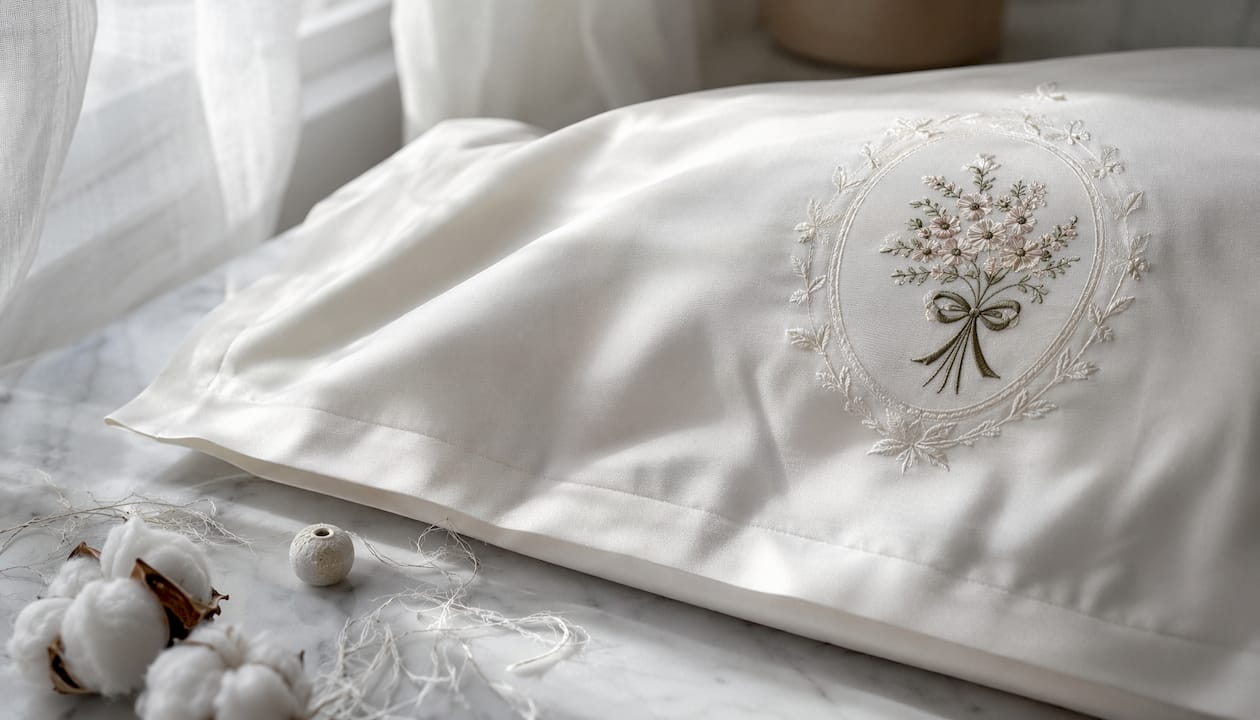
Pro Tip: Feel the fabric before you buy when possible, or read verified customer reviews that describe the hand feel. A smooth, almost silky surface against the back of your hand is the clearest indicator that the fabric will be gentle on facial skin.
Purchase checklist:
- Smooth hand feel, no stiffness or chemical smell
- Natural fibre content (bamboo lyocell, long-staple cotton, or silk)
- Sateen or percale weave depending on temperature preference
- Pre-washed or described as lightly processed
- Clear care label with washing instructions
Quick checklist for buying bedding for sensitive skin
Prioritise smoothness, breathability, and low-residue processing. Everything else is secondary.
Questions to ask before buying:
- What is the fibre content? (Aim for bamboo lyocell, long-staple cotton, or silk.)
- What is the weave? (Sateen or percale for sensitive skin.)
- Is the fabric described as pre-washed or minimally processed?
- Are the care instructions clear and compatible with regular washing?
- Does the set include a pillowcase in the same fabric?
- What is the return or exchange policy if the fabric causes irritation?
Matching fabric to specific problems:
- Heat-driven flares → bamboo lyocell or percale cotton for moisture-wicking and breathability
- Chemical sensitivity → minimally processed natural fibres, washed twice before use
- Dust mite allergy → add encasements; choose washable fills
- Facial acne or scalp sensitivity → silk or bamboo lyocell pillowcase as the first change
Red flags to avoid:
- Fabric described only as “microfibre” or “polyester blend” with no natural fibre content
- No care label or unclear washing instructions
- Heavy, stiff finish that does not soften after handling
- Strong chemical or perfume smell from the packaging
For a full step-by-step buying process, the Roomie Design bedding selection workflow covers each decision point in detail.
Roomie Design’s recommendations for sensitive skin
Roomie Design’s approach is straightforward: blend therapeutic performance with elevated design. Every fabric family in the range, from bamboo lyocell to mulberry silk and long-staple cotton, is selected for both skin comfort and aesthetic quality.
Recommended product categories:
- Bamboo lyocell and cotton sheet sets for breathability and softness
- Mulberry silk pillowcases for low-friction facial contact
- Hypoallergenic down-alternative pillows for washable, allergen-controlled support
- Lightweight duvet covers in smooth natural fabrics as the outer skin-contact layer
Featured products for sensitive-skin buyers:
The Evelyn Floral Embroidered Duvet Cover Set offers a refined outer surface layer in a design that suits both aesthetic and practical priorities. Its smooth fabric construction makes it a considered choice for those who want a decorative cover that does not compromise on skin comfort.
The Peony Luxury Black & Ivory Floral Embroidered Duvet Cover Set sits at the premium end of the range. The smooth, dense weave of this cover provides a low-friction surface, and the luxury construction means it holds its hand feel through repeated washing.
The Vintage Floral Green Duvet Cover Set brings a nature-inspired palette to a skin-friendly outer layer. For sensitive-skin buyers who want a complete bedroom aesthetic without switching to a plain cover, this set delivers both.
Pro Tip: Test one piece at a time. Swap your pillowcase first, sleep on it for a week, and assess the change before investing in a full sheet set. This isolates the variable and keeps the process manageable.
For further guidance on premium fabric choices, the Roomie Design premium bedding materials guide covers each material family in depth.
Natural vs. chemically treated fabrics: what the difference means for your skin
Untreated or minimally processed natural fabrics are consistently gentler on sensitive skin than chemically treated alternatives. The distinction matters because many fabrics undergo finishing processes during manufacturing that leave residues on the fibre surface.
Common chemical treatments include wrinkle-resistant finishes (often formaldehyde-based resins), optical brighteners that make fabrics appear whiter, anti-static coatings, and synthetic dyes. These agents can remain active on the fabric surface even after washing and are a recognised cause of contact dermatitis in people with reactive skin.
Natural fibres in their minimally processed state, such as undyed linen, unbleached cotton, or bamboo lyocell processed without heavy chemical finishing, carry a much lower residue load. The fibre itself is not the only variable; the processing route matters as much as the raw material. A heavily treated cotton sheet can be more irritating than a well-processed bamboo lyocell one, even though cotton is widely regarded as a safe choice.
The practical implication is straightforward. When buying bedding for sensitive skin, look for fabrics described as pre-washed, enzyme-softened, or lightly processed. Wash new items at least twice before use regardless of the fabric type. Avoid fabrics marketed primarily for their wrinkle-free or easy-iron properties, as these finishes are among the most likely to cause irritation.
Good design and sensitive-skin function are not in conflict
The assumption that skin-friendly bedding means plain white sheets is worth challenging. Smooth, breathable fabrics come in a full range of designs, colours, and weaves. The properties that make a fabric gentle on skin, a smooth surface, natural fibre content, and minimal chemical processing, are entirely compatible with decorative embroidery, rich colour palettes, and premium construction.
Practical styling for sensitive-skin bedrooms works on a layering principle. Use your smooth, skin-contact duvet cover and pillowcases as the functional base. Add decorative cushions or shams on top for visual interest, but keep them as display layers that are removed before sleep. This approach means you can use textured or embroidered decorative pieces without those surfaces ever contacting your skin overnight.
Colour choice also plays a role. Deeper tones and patterned designs hide the wear and slight discolouration that comes from frequent washing, which is a practical advantage when you are laundering bedding weekly. The Roomie Design floral collections, including the Evelyn, Peony, and Vintage Floral sets, are designed with exactly this balance in mind: decorative appeal on the outer surface, smooth construction where it counts.
Sensitive-skin bedding at Roomie Design
Roomie Design offers a curated range of premium bedding in bamboo lyocell, long-staple cotton, mulberry silk, and linen, all selected for softness, breathability, and skin comfort. Every product page includes fabric details, size guides, and customer reviews so you can make an informed choice before buying.
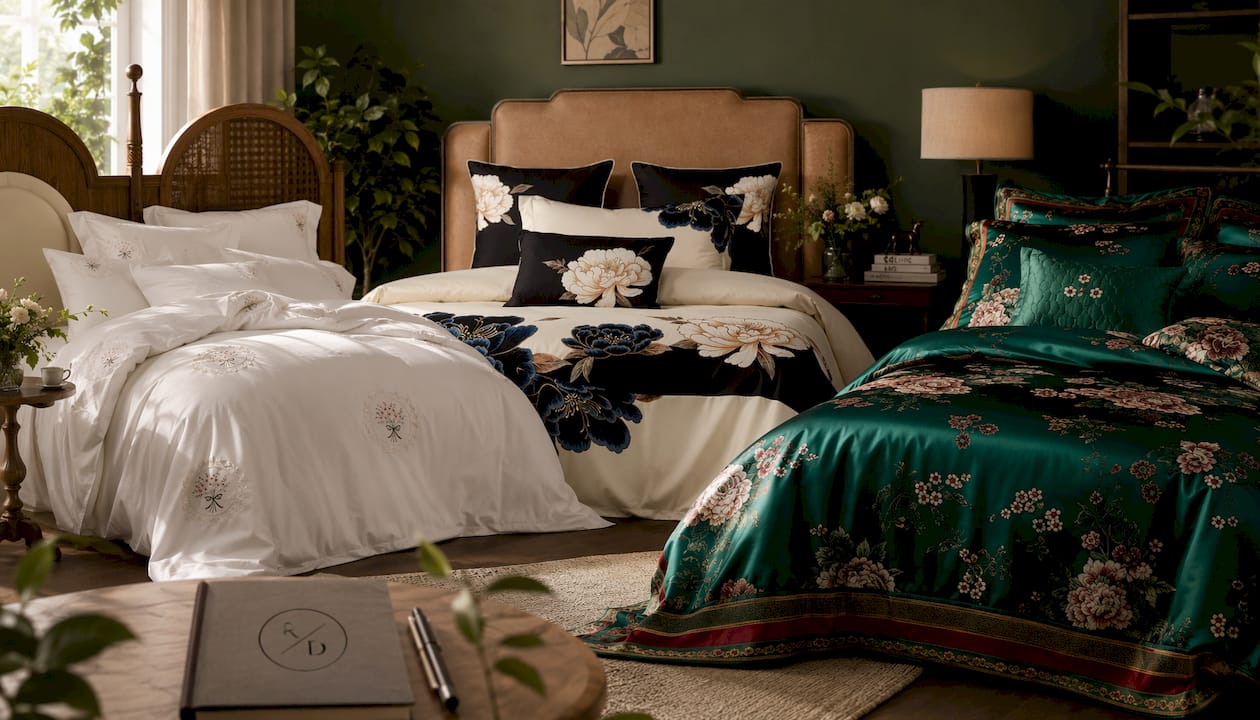
For sensitive-skin buyers, the bamboo lyocell sheet sets and mulberry silk pillowcases are the most requested starting points. The duvet cover sets, including the Evelyn Floral, Peony Luxury, and Vintage Floral Green options, provide a smooth outer layer that works as both a skin-friendly surface and a design statement. If you have questions about fabric composition or which option suits your specific skin concern, the Roomie Design customer service team is available to help. Browse the full collection and use the on-site size guide to find the right fit for your bed.
Authoritative sources and further reading
The following sources informed this article and are worth consulting directly for additional detail.
- Eczema Society bedding guidance — the National Eczema Society’s own resource on eczema-friendly bedding choices, covering fabric types and allergen control.
- Sleep Foundation: best sheets — expert-tested reviews covering weave, surface feel, and suitability for sensitive and hot sleepers.
- Bamboo vs cotton for sensitive skin — a detailed comparison of fibre properties, moisture absorption, and breathability figures.
- Dermatologist sheet recommendations — dermatologist-backed guidance on which sheet materials are safest for reactive skin.
- Bedding tips for eczema and psoriasis — practical advice from a UK bedding specialist covering fabric, fill, and care for skin conditions.
- Roomie Design: best bedding materials guide — an overview of material performance across cotton, silk, bamboo, and linen.
- Roomie Design: troubleshooting bedding issues — a checklist for identifying and resolving common bedding-related sleep and skin problems.
Note: This article is general information, not medical advice. For severe or persistent skin conditions, consult a dermatologist or your GP for guidance specific to your situation.


