

5 Shoppable Texture First Farmhouse Bedding Looks to Layer
Layer neutral stonewashed linens as your base, add a textured mid-layer like a quilt or coverlet, then finish with a chunky knit throw folded loosely at the foot. That sequence, in that order, is the entire trick to a farmhouse bed. For a ready-made start, the Natural 100% Linen Bedding Set gives you the breathable base, the Vintage Floral Luxury Duvet Cover Set brings heirloom pattern, and the Blush Pink 100% Linen Bedding Set softens the palette further. Linen only gets better with washing, so the bed improves the longer you own it.
Table of Contents
- Five farmhouse bedding looks to try
- How to layer farmhouse bedding step by step
- Materials and fabrics that create authentic farmhouse texture
- Colour palettes and the 70-20-10 rule for bedding
- Styling details and accessories that finish the look
- Buying guide: where to purchase farmhouse bedding sets and individual pieces
- Price range overview and budgeting tips for farmhouse bedding
- Care and maintenance tips specific to farmhouse bedding materials
- Roomie Design perspective: why premium materials matter
- Shop Roomie Design farmhouse pieces
- Sources
- FAQ
Five farmhouse bedding looks to try
Farmhouse bedding isn’t one look. It’s a family of related looks, all built on the same idea: stonewashed linen and layered textures doing the visual work while the palette stays quiet in the background. Pick the one that matches your room’s light and your own tolerance for pattern.
- Modern farmhouse. A warm white linen base, a tonal quilt in the same colour family, and brass or aged iron accents on the frame or lamp base. Clean, restrained, slightly architectural.
- Vintage farmhouse. A floral or quilted mid-layer over a plain linen base, with faded, sun-bleached tones and one or two heirloom-style accents, an old ceramic jug, a wooden stool. The Vintage Floral Luxury Duvet Cover Set is built exactly for this.
- Coastal farmhouse. Airy blues and driftwood greys, crisp cotton sheets underneath, and a lightweight linen or cotton throw rather than anything heavy or knitted. Suits a room that gets strong natural light.
- Tonal linen look. Two or three stonewashed linens in oat, cream, and putty, stacked so the only variation is texture and the faintest shift in shade. The Blush Pink and Natural linen sets pair beautifully here, one warming the palette, one cooling it.
- Winter cosy farmhouse. A flannel or wool mid-layer instead of linen, topped with a heavier duvet and a substantial cable-knit throw. This is the version for a bedroom with a fireplace view and cold mornings.
None of these require matching every piece from a single collection. The strongest farmhouse bedrooms mix two or three fabric weights against each other rather than competing patterns, so a plain linen duvet under a patterned quilt reads as intentional, not chaotic.
How to layer farmhouse bedding step by step
The layering formula behind almost every farmhouse bedroom photo you have ever admired follows the same five moves.
- Start with fitted and flat sheets. Choose a soft, breathable cotton or linen sheet that fits the mattress snugly, no bunching, no gaping corners.
- Add a lightweight quilt or coverlet, folded at the foot of the bed. This is the layer that gives farmhouse bedding its slightly undone character. It should sit loosely, not squared off like a hotel corner.
- Top with a duvet suited to the season. A lighter linen duvet works through spring and summer; a heavier fill suits colder months without changing the look.
- Arrange pillows using a 1:2:3 ratio. One lumbar cushion, two standard pillows, and either two or three Euro shams behind them for depth.
- Finish with a throw folded in a loose, slightly asymmetric drape, never perfectly straight. That small imperfection is what separates farmhouse from formal.
Pro Tip: Leave one corner of the quilt or throw slightly turned back, as if someone just got out of bed. It reads as lived-in rather than staged, and it is the single easiest detail to get right.
Materials and fabrics that create authentic farmhouse texture
Farmhouse bedding lives or dies on fabric choice, because the whole style depends on texture doing the visual work that pattern would otherwise carry.
- Stonewashed linen has a relaxed drape and a slightly rumpled hand-feel straight out of the wash, and it works across every season because it breathes in summer and layers well in winter.
- Organic cotton and percale bring a crisp, cool touch that contrasts nicely against linen’s softness, useful under a heavier mid-layer.
- Chunky knits, wool, and faux fur are best kept to accents, a throw, a bench runner, a cushion, rather than the whole bed, since wool and faux fur work well as accent layers rather than a base fabric.
Thread count guidance: Farmhouse bedding tends to favour a slightly looser weave for that relaxed drape, but sheets across the 400 to 1000 thread count range all deliver a genuinely premium feel, just with different personalities. A lower count in that band tends to feel crisper and cooler, while a higher count feels denser, silkier and more substantial against the skin. Neither is the “better” choice; it’s a matter of which hand-feel you prefer on a given night. Wash on a gentle warm cycle and skip high heat in the tumble dryer, since linen in particular develops its best softness through air-drying over time. Explore the full range in Roomie Design’s sheet collection to find the weight and finish that suits your room.
Colour palettes and the 70-20-10 rule for bedding
The 70-20-10 rule keeps a farmhouse bedroom from tipping into either blandness or visual clutter: 70% base neutrals across sheets and duvet, 20% secondary tone in a quilt or throw, and 10% accent colour in a cushion or trim.
- Warm cream and oat. The safest, most universally flattering base, works with almost any wood tone.
- Warm grey and ecru, lifted with sage. Slightly cooler, good for north-facing rooms that need warming up.
- Muted navy with terracotta accents. The boldest of the three, best kept to a single cushion or the smallest textile in the room.
Introduce colour through one item only, never two competing accents, and keep any pattern small-scale so texture stays the focal point rather than print. For deeper combinations, Roomie Design’s colour guide walks through seasonal swaps within this same formula.
Styling details and accessories that finish the look
Resist the urge to add five small decorative items. One bold texture piece, a woven basket at the foot of the bed, a sheepskin thrown over a chair, or an oversized chunky throw, does more for a room than a shelf full of trinkets.
- Choose a single statement texture accessory rather than several small ones.
- Light the room with warm bedside bulbs around 2700K, which brings out the depth in linen and knit fabrics far better than cool white light does.
- Match the bed frame finish to your bedding tones; natural wood or aged iron tends to sit best with the farmhouse palette.
Pro Tip: If you’re deciding between adding a second cushion or upgrading your bedside lamp, choose the lamp. Warm light does more for the texture of your linens than another accessory ever will.
Coordinating the room around your bedding rather than the other way round is the fastest route to a finished look, and it’s covered in more depth in Roomie Design’s styling guide.
Buying guide: where to purchase farmhouse bedding sets and individual pieces
Buying farmhouse bedding piece by piece almost always looks better than buying one boxed set, because the layered look depends on subtle variation between pieces, not uniformity.
Start with your base layer. Sheets in linen or cotton, sold individually so you can match weight to season, sit in Roomie Design’s sheet collection. Your mid-layer, a quilt or coverlet, comes from the duvets and bedspreads range, and your top duvet cover, whether that’s a plain linen set or a patterned one like the vintage floral design, lives in the duvet cover sets collection.
Pillows and shams deserve their own attention rather than an afterthought purchase, since the 1:2:3 arrangement only works if you have enough of the right sizes on hand, browse pillows and cushions and pillowcases together so textures match. If you want a cooler, more lustrous contrast against your linen base, a mulberry silk pillowcase adds an unexpected but effective touch of polish against a rustic quilt.
Buying pieces separately also means you can build the bed in stages, starting with sheets and a duvet, then adding a quilt and throw once you’ve settled on a palette, rather than committing to a full look before you’ve lived with it.
Price range overview and budgeting tips for farmhouse bedding
Farmhouse bedding spans a genuinely wide price range, and where you spend matters more than how much you spend overall.
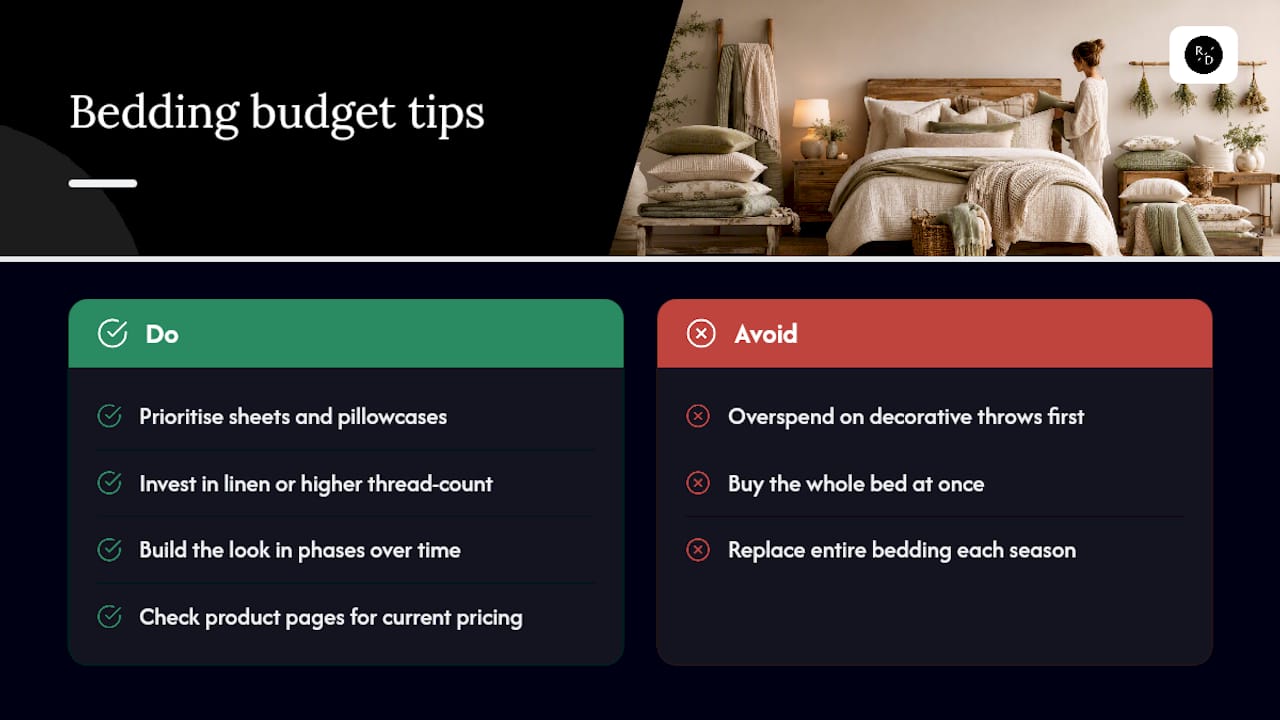
Prioritise the layers closest to your skin. Sheets and pillowcases get the most direct contact and the most frequent washing, so investing in linen or a higher thread count here pays off in daily comfort more than spending on a decorative throw will. A duvet cover or quilt, which you touch less often and wash less frequently, is a reasonable place to economise slightly if your budget is tight.
Build the look in phases rather than buying everything at once. A base linen set, a mid-layer quilt, and a throw purchased across a few months will look just as intentional as a bed furnished in a single order, and it lets you test how each fabric ages before committing to more. Linen in particular rewards patience: it improves in softness with every wash, so an early purchase often ends up being the most comfortable piece on the bed within a year.
Watch for seasonal shifts in your budgeting too. A wool or knit throw for winter cosiness and a lighter cotton throw for summer both extend the life of the same base bedding, which is often more cost-effective than replacing an entire set twice a year. Current pricing across sizes and fabrics is listed directly on each product page, so checking the duvet cover collection and sheet collection gives the clearest picture for your specific size and fabric choice.
Care and maintenance tips specific to farmhouse bedding materials
Farmhouse bedding is meant to look slightly relaxed, which works in your favour when it comes to care, since this style forgives minor imperfections that other aesthetics wouldn’t.
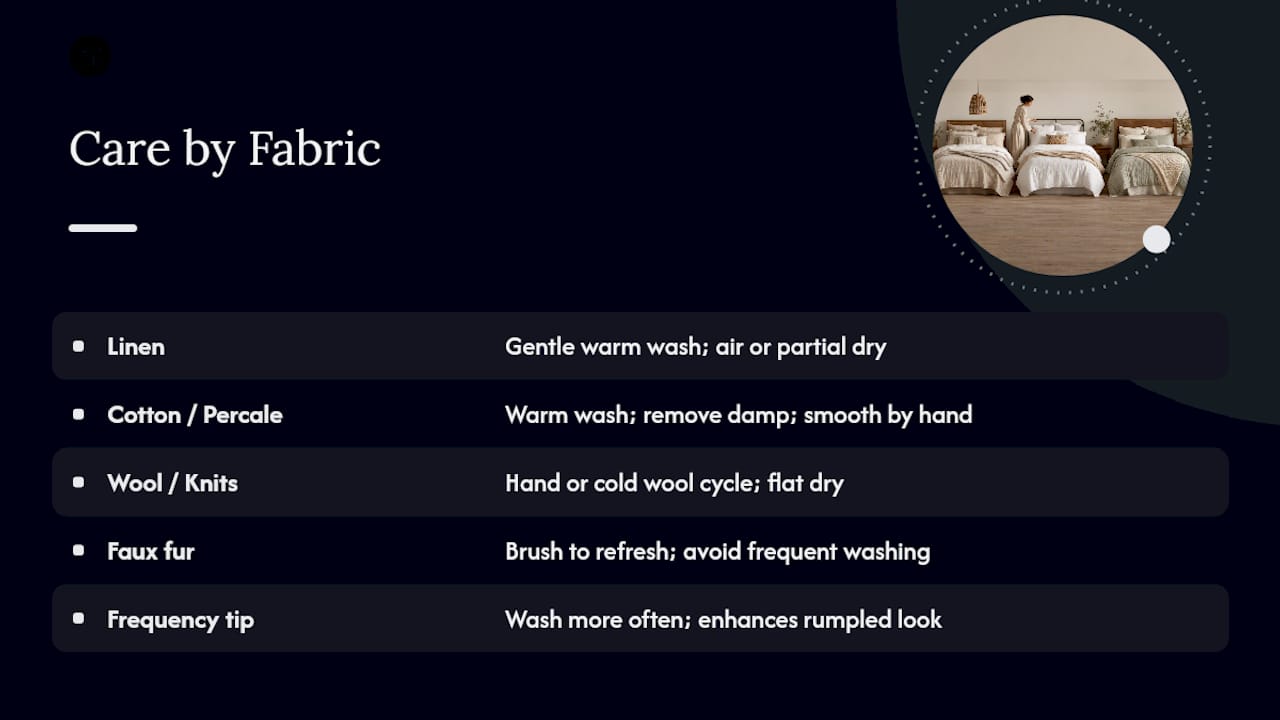
Wash linen on a gentle, warm cycle rather than hot, and resist the tumble dryer’s high-heat setting. Linen actually improves with wear and washing, softening further with every cycle rather than wearing out the way some fabrics do, so regular gentle washing is part of what makes it look better over time rather than something to avoid. Air-drying, even partially, helps it keep that slightly rumpled drape that defines the farmhouse look.
Cotton and percale sheets tolerate warm washes well and benefit from being removed from the dryer while still faintly damp, then smoothed by hand rather than ironed, which keeps the crisp feel without the stiffness a hot iron can introduce.
Wool and chunky knit throws need the gentlest treatment of the group. Hand washing or a wool-specific machine cycle in cold water, followed by flat drying rather than hanging, keeps the knit structure intact and prevents stretching. Faux fur accents generally do best with a light brush rather than frequent washing.
Whatever the fabric, washing farmhouse bedding slightly more often than a formal, tightly pressed style actually reinforces the aesthetic rather than working against it. A well-loved linen set looks more authentically farmhouse at month six than it did fresh out of the packaging.
Roomie Design perspective: why premium materials matter
A premium farmhouse collection is built around the belief that fabric quality is the design. Curated sets, size guides, and customer resources help shoppers match material to the look they want, not just the photo they’re chasing. Premium linen and cotton don’t just feel better on night one; they soften, drape, and settle into the bed over months, which is precisely the ageing process that gives farmhouse bedding its lived-in charm. That’s a material advantage, not a styling trick.
— Roomie Design
Shop Roomie Design farmhouse pieces
Building the farmhouse looks above doesn’t require guesswork about where to start. The Natural 100% Linen Bedding Set suits the modern farmhouse and tonal linen looks, with a warm white base that softens further every wash. The Vintage Floral Luxury Duvet Cover Set is the fastest route to the vintage farmhouse aesthetic, bringing pattern and heirloom character in one piece. The Blush Pink 100% Linen Bedding Set rounds out the tonal linen palette with a gentle warmth that pairs easily against oat and cream.
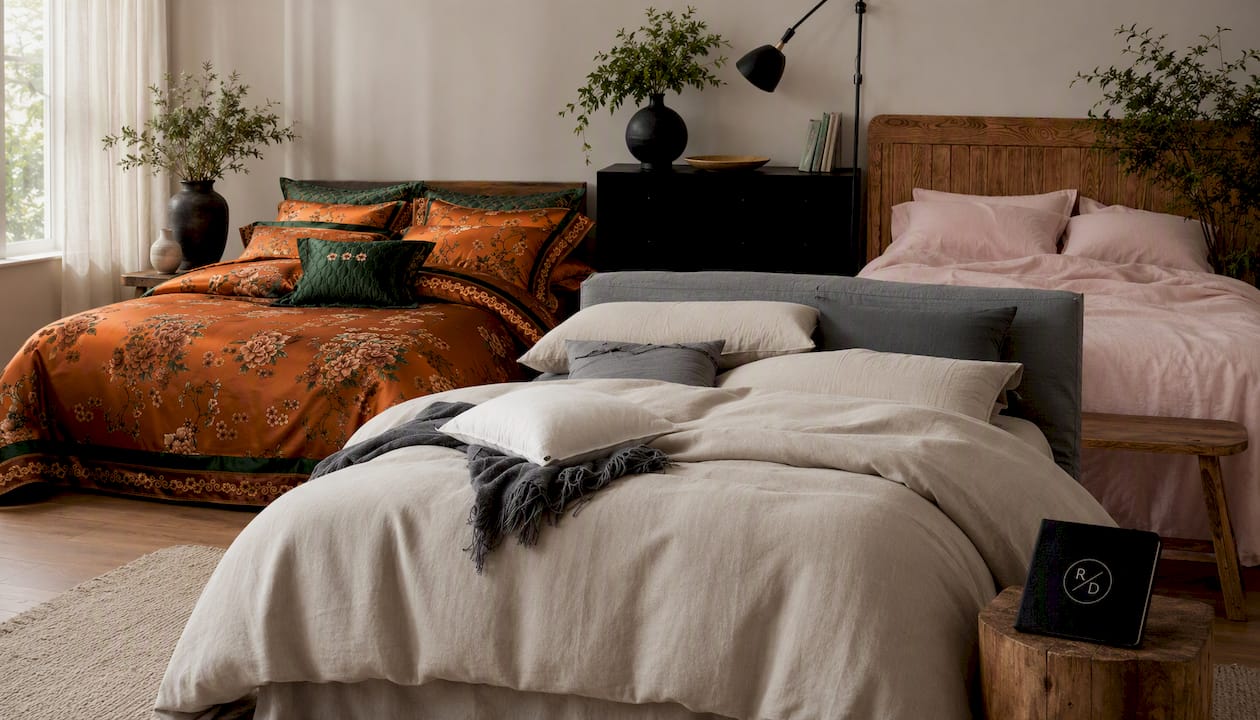
Roomie Design is the practical alternative to hunting across multiple retailers for pieces that never quite match in weight or tone, since every set here is designed with the same layered, texture-first farmhouse approach in mind. Browse the full duvet cover sets collection to compare fabrics side by side, and check current sizing and pricing on each product page before adding your base layer to the basket.
Sources
- Find the Best Bedding for Your Farmhouse Bedroom
- Transform Your Bedroom: Cozy Rustic Bedding Ideas for a Serene Escape
- 15 Farmhouse Bedroom Decor Ideas That Feel Lived-In - Remodel Gang
- Rustic Bedroom Design Ideas: 12 Examples (2026) | GenRoom
FAQ
What are some ideas for farmhouse style bedding?
Layer a neutral stonewashed linen base with a textured quilt or coverlet, then finish with a chunky throw folded loosely at the foot. The Natural 100% Linen Bedding Set and Vintage Floral Luxury Duvet Cover Set both work as ready-made starting points for this approach.
What bedding is trending for 2026?
Texture-led, neutral-palette bedding continues to dominate, with layered linens and mixed fibres favoured over heavily patterned sets, a direction confirmed by broader interior design trend forecasting for 2026. Farmhouse and tonal linen looks sit comfortably within this wider trend rather than against it.
Is farmhouse style still in for 2026?
Yes. Farmhouse’s reliance on natural fibres and layered neutrals aligns closely with the broader shift toward texture-first, low-pattern bedrooms that design forecasters are tracking for 2026. Its focus on ageing gracefully rather than chasing seasonal colour also gives it more staying power than trend-driven styles.
What are some ideas for farmhouse style decor?
Keep decor sparse and let one bold texture piece, a woven basket, a sheepskin throw, do the work rather than several small accessories. Pair that with warm 2700K bedside lighting and a natural wood or aged iron bed frame to keep the whole room cohesive with the bedding.
How do I choose between linen and cotton for a farmhouse bed?
Both work well within the farmhouse aesthetic; linen gives a more relaxed, textured drape while cotton feels crisper and cooler against the skin. Many farmhouse beds combine both, using linen for the duvet or quilt and cotton for the base sheets underneath.


