

Queen vs King Bedding: Find Your Perfect Size for Comfort (North American Sizes Guide)

TL;DR:
- Queen and king bedding differ significantly in width, with king being 16 inches wider.
- Proper bedding fit depends on room size, sleep habits, and personal comfort needs.
- Correct sizing ensures better sleep, appearance, and avoids costly mismatches.
Key Takeaways
| Point | Details |
|---|---|
| Size impacts comfort | King bedding provides more space and comfort, especially for couples and families. |
| Fit is essential | Always match bedding size to your mattress for the best look and function. |
| Check dimensions | Bedding sizes vary by brand, so always review the measurements before buying. |
| Budget and space matter | King bedding costs more and needs a larger room; queen is better for smaller spaces or tighter budgets. |
Understanding queen and king bedding dimensions
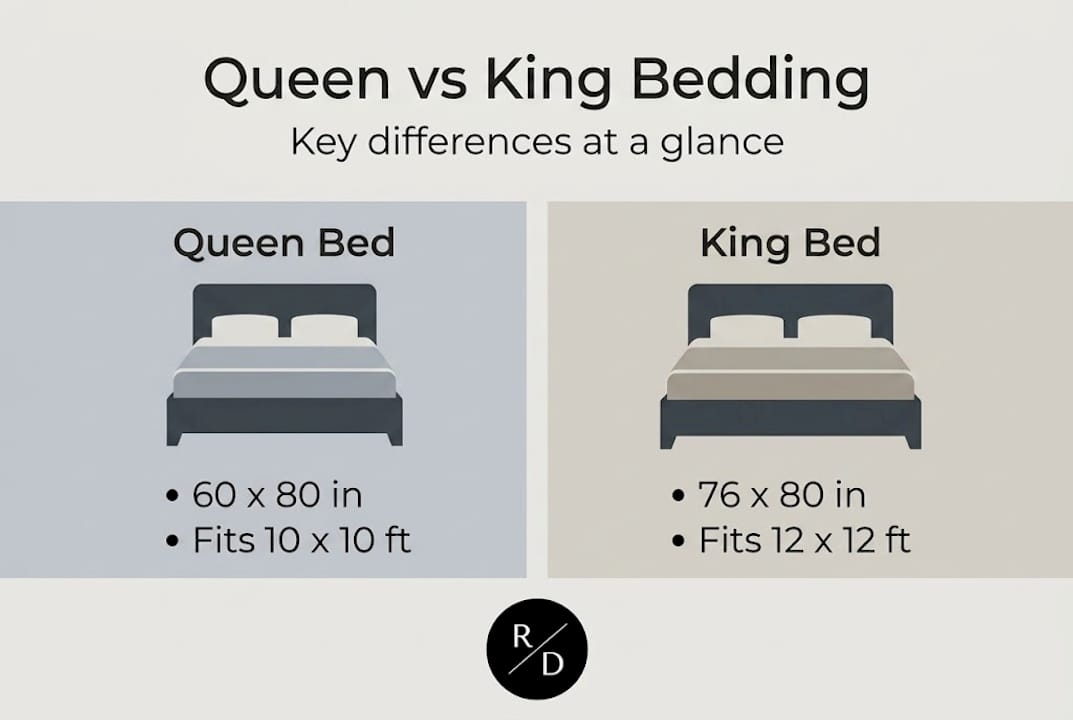
Getting the numbers right is the foundation of any good bedding decision. A standard queen mattress measures 60 inches wide by 80 inches long. A standard king mattress measures 76 inches wide by 80 inches long. That 16-inch width difference is significant, and it carries through to every piece of bedding you buy.
When it comes to comforters and duvet covers, the gap widens further. Queen comforters typically measure 88 to 94 inches wide by 90 to 96 inches long, while king comforters range from 102 to 112 inches wide by 90 to 100 inches long. That is a considerable difference in fabric coverage, and it directly affects how well your bedding drapes over the sides and foot of the mattress.
| Bedding item | Queen size | King size |
|---|---|---|
| Mattress | 60" x 80" | 76" x 80" |
| Fitted sheet | 60" x 80" | 76" x 80" |
| Flat sheet | 90" x 102" | 108" x 102" |
| Duvet cover | 88" x 90" | 104" x 90" |
| Comforter | 88-94" x 90-96" | 102-112" x 90-100" |
Drape, sometimes called overhang, refers to how far the bedding hangs over the sides and foot of the mattress. A well-dressed bed typically has 10 to 16 inches of drape on each side. This is why many buyers choose oversized options within each size category. For choosing bedding for comfort, correct drape is just as important as the right thread count or fabric.
Key points to note about dimensions:
- Width is the most impactful measurement. The 16-inch difference between queen and king mattresses affects fit more than length does.
- Flat sheets are significantly wider for king beds, which matters for tucking.
- Duvet covers labelled “king” are not universal. Always check the actual centimetre or inch measurements listed by the manufacturer.
- Brand sizing varies. Two king duvet covers from different manufacturers can differ by several inches.
Choosing the best size for your lifestyle and space
With the basic size facts in mind, it is time to think about your unique home and routine. The right bedding size is not just about the mattress. It is about how you sleep, who you share the bed with, and how much floor space your bedroom actually offers.
Room size is a practical starting point. A queen bed fits comfortably in a room of at least 10 by 10 feet, leaving enough space to move around and open wardrobe doors without difficulty. A king bed, however, requires a minimum room size of around 12 by 12 feet to avoid a cramped layout. Placing a king bed in a smaller room can make the space feel congested and limit furniture placement options.
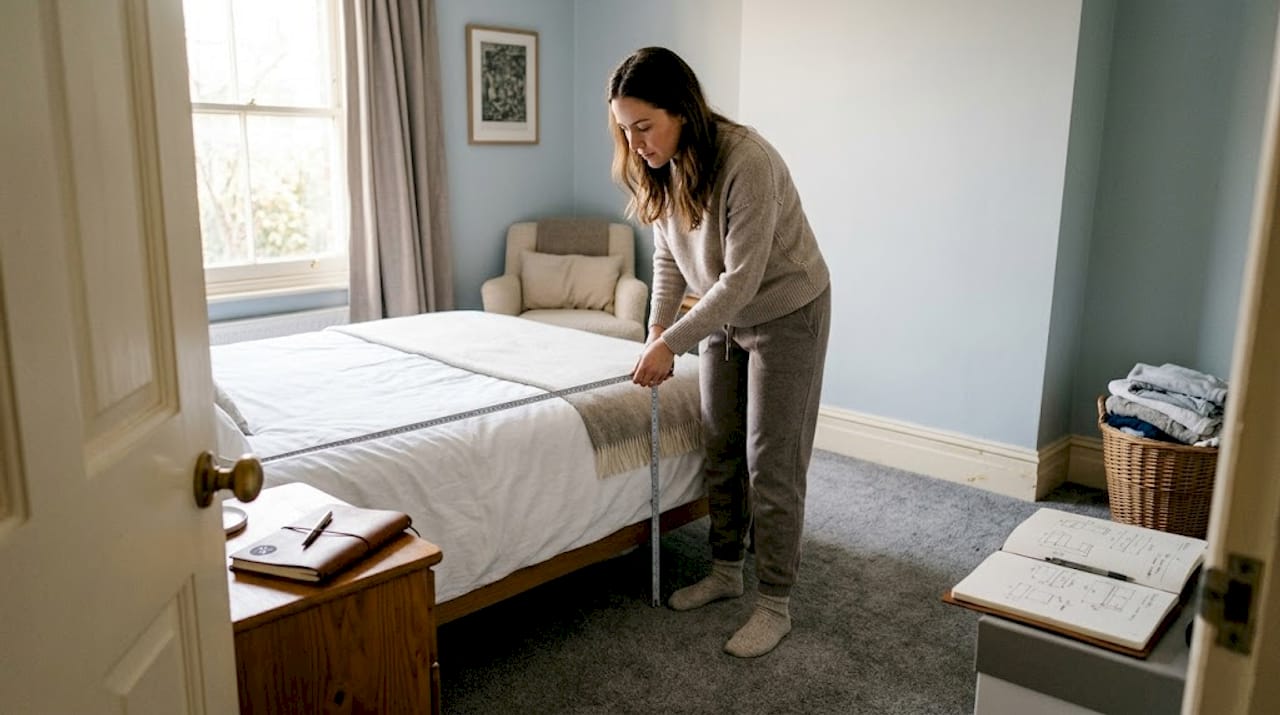
Sleep habits matter just as much as room dimensions. For couples, a king bed offers approximately 38 inches of personal width per person, compared to just 30 inches on a queen. That extra 8 inches per person is genuinely noticeable, particularly for restless sleepers or those who share the bed with children or pets. If you frequently wake up because your partner moves around, king bedding is worth considering seriously.
| Factor | Queen | King |
|---|---|---|
| Minimum room size | 10 x 10 ft | 12 x 12 ft |
| Personal width (per person) | 30" | 38" |
| Best for | Singles, couples in smaller rooms | Couples, families, restless sleepers |
| Bedroom aesthetic | Balanced, versatile | Bold, spacious feel |
| Budget impact | Lower | Higher |
Understanding designer vs standard bedding also plays a role here. Premium king bedding in luxury fabrics can transform a large bedroom into a genuinely hotel-quality space, but only if the room dimensions support it.
Pro Tip: Queen beds work well in the majority of UK and European bedrooms. If your room is under 12 feet wide, a queen setup will give you a cleaner, more proportionate look than forcing a king into a tight space.
Practical differences in cost, fit and compatibility
After personal lifestyle considerations, it is important to look at what these choices mean for your wallet, storage, and day-to-day comfort.
King bedding consistently costs more than queen bedding. More fabric means higher material costs, and that applies to every item in your bedding set: fitted sheets, flat sheets, duvet covers, and comforters. The price difference can range from modest to substantial depending on the fabric type and thread count. Over time, replacing a full king bedding set costs noticeably more than replacing a queen set.
Here are the critical compatibility rules to follow:
- Never mix sizes. Queen sheets will not fit a king mattress properly. The fitted sheet will pull off the corners overnight, and the flat sheet will fall short on the sides. If you need a custom size, reach out to info@roomie-design.com and we’ll make the set exactly how you need it.
- Check the California King separately. A California King mattress measures 72 by 84 inches, which is narrower and longer than a standard king. It requires its own specific bedding. Do not assume standard king bedding will fit.
- Duvet inserts and covers must match. A king duvet insert placed inside a queen duvet cover will bunch and shift. Always buy matching sizes.
- Storage space increases with size. King duvets and comforters take up considerably more space in your airing cupboard or wardrobe. Factor this in if storage is limited.
- Washing machine capacity matters. A king duvet typically requires a washing machine with a drum capacity of at least 8 to 9 kilograms. Check your machine before buying.
“King bedding is not interchangeable with queen. Sheets, duvet covers, and comforters are all sized differently, and using the wrong size leads to poor fit, reduced comfort, and a less polished bedroom look.”
Exploring reversible bedding options is one practical way to get more value from your investment at either size, effectively giving you two looks from a single purchase.
Pro Tip: Always check the product dimensions listed in centimetres or inches before purchasing, not just the size label. Labels like “king” can mean different things across brands and countries.
Expert advice: real-world bedding fit and function
All the technical information aside, here are some practical and expert takeaways for real-life use and enjoyment.
Drape is the detail most buyers overlook. A comforter or duvet that sits flush with the mattress edges looks flat and unfinished. Aim for 10 to 16 inches of overhang on each side and at the foot of the bed. This gives the bed a full, well-dressed appearance and also means the bedding stays in place during the night without slipping off.
Brand sizing varies widely, and this is where many buyers run into problems. A “king” duvet cover from one brand may be several inches narrower than a “king” cover from another. The label is a starting point, not a guarantee. Measuring your mattress and calculating the drape you want before shopping is the most reliable approach.
Some buyers consider using a queen comforter on a king bed to reduce costs. While this is possible, the coverage will fall short on the sides, and the bed will look noticeably underdressed. The trade-off between saving money and achieving a well-fitted, polished look rarely favours the budget option in this case.
Practical checks before you buy:
- Measure your mattress width and length, including any mattress topper if you use one.
- Add your desired drape (at least 10 inches per side) to calculate the minimum comforter or duvet width you need.
- Check the manufacturer’s actual measurements, not just the size label.
- Confirm your washing machine can handle the load before purchasing a king duvet.
“Fit and drape should always be prioritised over label alone. A well-fitted duvet that hangs correctly will always outperform an oversized or undersized option, regardless of price.”
Why the right bedding size makes all the difference
Many people treat bedding size as a minor detail to sort out after the mattress purchase. In practice, it is one of the most consequential decisions in the bedroom. Ill-fitting bedding disrupts sleep, creates a visually untidy space, and often ends up being replaced sooner than expected.
Trying to save money by buying a smaller size or skipping proper measurements tends to backfire. The cost of replacing poorly fitting bedding, combined with the cumulative effect of disrupted sleep, outweighs any short-term saving. Investing in correctly sized, quality bedding from the outset is simply the more practical choice.
The bedroom is a functional space first. Bedding that fits well, drapes correctly, and suits the room’s dimensions contributes directly to how rested and comfortable you feel each morning.
Create your dream bed with Roomie Design
If you are ready to upgrade your bedding with the right size and quality, Roomie Design offers a carefully curated range for both queen and king beds.
The Oriental Jacquard bedding set at 600 thread count and the PureComfort luxury bedding set are both available in multiple sizes, combining precise fit with premium materials. Browse the full premium bedding collection to find duvet cover sets, fitted sheets, and comforters sized correctly for your bed, your room, and your sleep style. 🛏️
Frequently asked questions
Will king bedding fit on a queen bed?
No, king bedding is significantly wider than queen bedding, making it too loose and untidy on a queen bed, with excess fabric bunching on the sides.
Is there a big comfort difference between queen and king bedding?
King bedding gives noticeably more personal space. King provides 38 inches per person for couples compared to 30 inches on a queen, which is especially beneficial for restless sleepers, children, and pets sharing the bed.
Do all brands size queen and king bedding the same way?
No, sizing varies across manufacturers. Always check the actual measurements listed in the product details, as brand sizing varies widely and labels alone are not a reliable guide.
Can I use a queen comforter on a king bed to save money?
It is possible, but the coverage will be noticeably short on the sides and the bed will look underdressed. Fit is poor when using a queen comforter on a king mattress, and the visual result rarely justifies the saving.
Recommended
- How to choose bedding for stylish comfort at home – Roomie Design
- Royal Crown Duvet Cover Set (Egyptian Cotton, 1000 TC) Luxury Designer Bedding Set – Roomie Design
- PureComfort™ Luxury Soft Designer Bedding Set – Roomie Design
- What distinguishes designer bedding: quality vs standard sets – Roomie Design


