

Bedding selection workflow: a step-by-step guide
TL;DR:
- A structured bedding selection workflow helps you choose sheets, duvets, and covers that match your comfort, style, and practical needs. Defining thermal and tactile preferences before purchasing ensures better sleep quality and aesthetic harmony, while considering fiber type and weave structure influences durability and feel. Building a layered bedding system and prioritizing care requirements ensures long-lasting comfort, adaptability, and an attractive bedroom ensemble.
A bedding selection workflow is a structured, layered process for choosing sheets, duvets, and covers that match your comfort needs, sleep preferences, and bedroom style. Most people approach bedding as a single purchase decision, but the most satisfying results come from working through a clear sequence: establish your preferences, evaluate materials and construction, build a layering system, and plan for practical care. This guide covers each stage in full, drawing on expert-tested insights to help you make confident, lasting choices.
How do personal comfort and style preferences shape the bedding selection workflow?
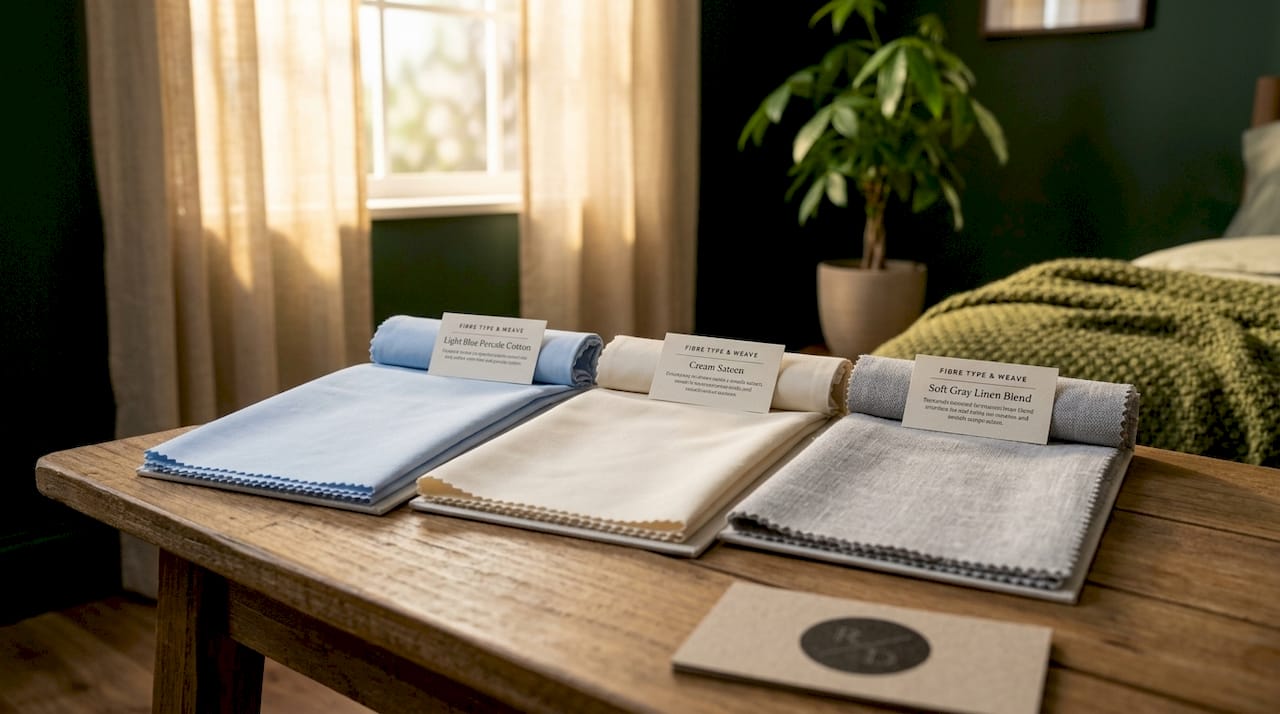
The bedding selection workflow begins with two questions: how do you sleep thermally, and what does your bedroom need to look like? These are not secondary concerns. Good Housekeeping’s 2026 guide confirms that defining heat sensitivity and tactile preferences before choosing fabric type is the correct starting point. Skipping this step leads to purchases that feel wrong from the first night.
Thermal preference divides most sleepers into two clear groups. Hot sleepers benefit from breathable, lighter-weight fabrics that allow air circulation. Cold sleepers or those who prefer a warmer, more enveloping feel will find heavier, denser constructions more satisfying. Tactile preference is equally personal: some people want the crisp, cool sensation of a tightly woven sheet, while others prefer a smooth, silky drape against the skin.
Style goals matter just as much as comfort. Your bedding is the visual centrepiece of the bedroom, so the colour palette, pattern, and texture you choose must work with your existing furniture, wall colour, and lighting. A neutral, minimal bedroom calls for plain-dye or tonal bedding. A more expressive space can carry floral, reversible, or textured designs with confidence.
Before selecting any fabric, answer these questions:
- Are you a hot sleeper, a cold sleeper, or somewhere in between?
- Do you prefer a crisp, cool feel or a smooth, warm drape?
- What is the dominant colour palette in your bedroom?
- Do you prefer a minimal, classic, or decorative aesthetic?
- How much time are you willing to spend on laundering and ironing?
Pro Tip: Write your answers down before browsing. Having a clear preference profile prevents impulse purchases that look appealing online but feel wrong in use.
What roles do fibre type and weave structure play in evaluating bedding options?
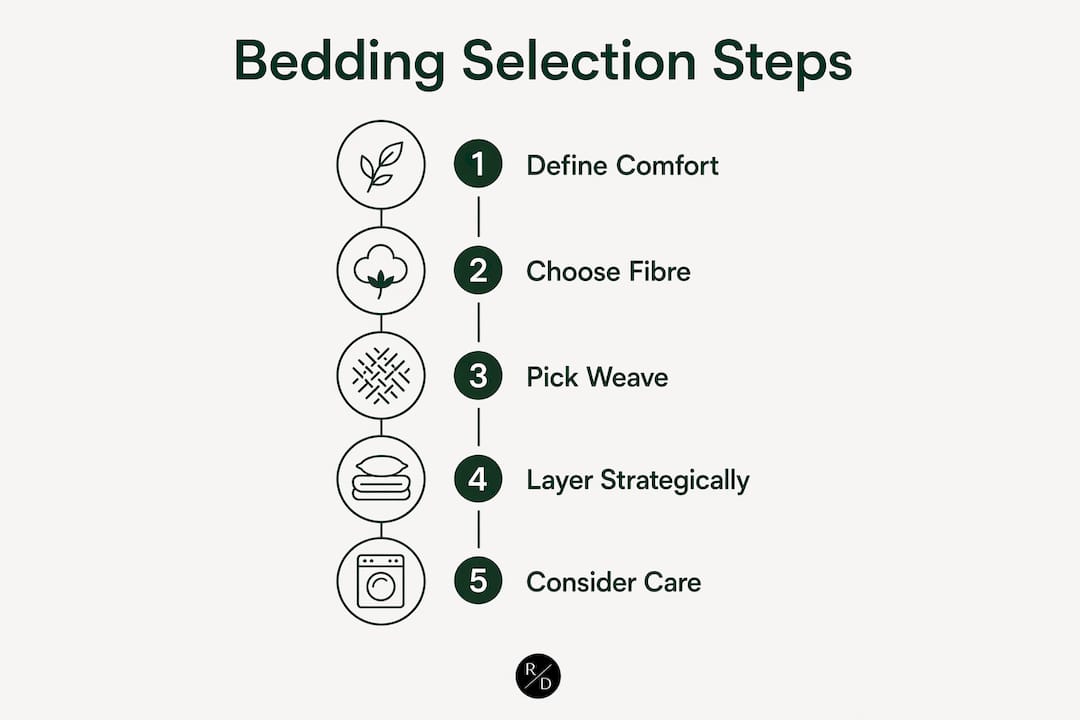
Fibre type and weave structure are the two most reliable indicators of how bedding will perform. The Sleep Foundation’s 2026 overview details how weave ratio and fabric construction explain far more about sheet feel and performance than thread count alone. This is the single most useful insight in any bedding buying guide.
The table below summarises the main fibres and weaves by key attributes:
| Material | Breathability | Texture | Care | Best for |
|---|---|---|---|---|
| Cotton (percale) | High | Crisp, cool | Machine washable | Hot sleepers, summer use |
| Cotton (sateen) | Moderate | Smooth, warm drape | Machine washable | Year-round, luxury feel |
| Linen | Very high | Textured, relaxed | Machine washable | Hot climates, casual style |
| Mulberry silk | Moderate | Ultra-smooth, cool | Delicate wash | Sensitive skin, premium feel |
| Lyocell/bamboo | High | Soft, fluid | Machine washable | Temperature regulation |
Weave structure determines how a fabric feels even when the fibre is identical. Sateen uses a higher thread ratio with more yarn surface exposed, producing a smooth, warm drape with a subtle sheen. Percale uses a plain one-over-one-under weave, creating a crisp, matte finish with a cooler feel. Both are premium constructions; the choice depends entirely on your tactile and thermal preferences.
Thread count is a useful reference point within a single fibre and weave type, but it does not define quality across different constructions. Good Housekeeping notes that multi-ply yarns can inflate thread counts without improving the fabric. A 1000 TC Egyptian cotton sateen sheet delivers genuine softness, durability, and a rich hand-feel because of the quality of the fibre and the construction method, not the number alone. For a deeper look at material differences, Roomie-design’s material guide covers each fibre in detail.
Pro Tip: When comparing two sheets with similar thread counts, always check the fibre first. Long-staple Egyptian cotton at 400 TC will outperform a short-staple blend at 800 TC in both softness and longevity.
How to build a bedding layering system for comfort and style
A well-constructed layering system gives you precise control over warmth, texture, and visual appeal throughout the year. The Sleep Foundation advises treating sheets and duvets as an integrated thermal system rather than separate purchases. This prevents the common problem of beautiful sheets paired with a duvet that makes the bed too warm or too cold.
Follow this layering order for a complete, adaptable bed:
- Fitted sheet. This is your base layer and the one in direct contact with your skin. Choose a fibre and weave that matches your thermal and tactile preferences.
- Flat sheet (optional). The flat sheet adds a protective layer between you and the duvet, reducing how often the duvet cover needs washing. European-style bedding often omits this layer for a cleaner look.
- Light blanket or quilt. A lightweight layer placed over the flat sheet provides adjustable warmth without the full weight of a duvet. Useful for transitional seasons.
- Duvet with cover. The duvet is your primary thermal layer. Match the tog rating to your climate and sleeping temperature. The duvet cover protects the duvet and defines the visual style of the bed.
- Throw. A folded throw at the foot of the bed adds texture, colour contrast, and an extra layer of warmth on cold nights.
- Decorative pillows. These are purely aesthetic. Use them to introduce pattern, colour, or texture that ties the bedding to the wider room scheme.
For detailed guidance on styling each layer, Roomie-design’s layering guide covers combinations for every season and style. The Home Goode layering guide also recommends testing thermal comfort over several nights before treating the arrangement as final.
What practical care considerations influence the bedding selection workflow?
Laundering realities are a genuine factor in bedding options evaluation, not an afterthought. Bedding that looks and feels exceptional in the shop but loses its texture after three washes is a poor investment. Hostaway’s 2026 guide recommends duvet covers over bulky comforters specifically because covers are far easier to remove, wash, and replace. This principle applies equally in a home setting.
Practical care considerations to factor into your bedding shopping checklist:
- Washing temperature tolerance. Cotton and linen withstand regular warm washes well. Silk and lyocell require cooler, gentler cycles to maintain their texture and drape.
- Duvet covers over bare duvets. A duvet cover extends the life of the duvet itself and allows you to refresh the bed’s appearance without replacing the entire set.
- Stocking multiple sets. Hostaway highlights the value of maintaining at least two to three complete sets per bed. This prevents shortages during laundry cycles and reduces wear on any single set.
- Ironing requirements. Linen and percale cotton wrinkle more than sateen. If low-maintenance care is a priority, sateen or lyocell constructions are the better choice.
- Tumble dryer compatibility. Most cotton and linen sets tolerate a low-heat tumble dry. Silk requires air drying to preserve the fibre.
The Telegraph’s 2026 sleep test of 42 bedding sets included multi-cycle washing and drying as a core part of the evaluation. Sets that maintained their fit, colour, and texture through repeated laundering scored significantly higher. This confirms that wash performance is as important as initial feel when making a final selection.
Pro Tip: Rotate between two or three sets on a regular schedule. Consistent rotation reduces the number of wash cycles each set goes through, extending the life of all your bedding.
What I’ve learnt from refining a bedding selection workflow over time
The most common mistake I see is treating bedding as a one-time decision rather than a system that evolves. The right fitted sheet for July is rarely the right choice for January. A genuinely comfortable bed uses a flexible layering structure where individual pieces can be swapped in and out as seasons and preferences change.
Testing matters more than most people expect. Sleeping on a new set for several nights before committing to the full arrangement reveals thermal issues that no product description will mention. Invest in quality staples: a well-constructed duvet cover set in Egyptian cotton or mulberry silk will outlast several cheaper alternatives and hold its appearance through years of washing. Add accent pieces like throws and decorative pillows to introduce seasonal colour or texture without replacing the core set. The bedding selection process is not finished when you make the purchase. It is finished when the bed feels right every night.
— Roomie
Explore Roomie-design’s premium bedding collections
Roomie-design offers a curated range of bedding built for exactly this kind of structured selection process. Whether you are working through a full bedding buying guide or adding a single premium layer, the collections cover every material and style discussed above.
The Terracotta Super Hero 1000 TC Egyptian cotton duvet cover set delivers the rich softness and durability that high thread count long-staple cotton provides. For a silk option, the Dusty Rose Mulberry Silk 22mm duvet cover set offers an ultra-smooth, refined feel suited to both warm and cool sleepers. Each set is designed to layer cleanly with coordinating pieces, making it straightforward to build a complete, cohesive bed from a single collection.
FAQ
What is a bedding selection workflow?
A bedding selection workflow is a step-by-step process for choosing bedding by working through comfort preferences, fibre and weave options, layering structure, and care requirements in sequence. Following this process produces a bed that balances sleep quality, style, and practical maintenance.
Should thread count be the main factor when choosing sheets?
Thread count is one indicator of quality within a specific fibre and weave type, but fabric construction and fibre quality are more significant overall. A high thread count in long-staple Egyptian cotton reflects genuine softness and durability.
What is the difference between sateen and percale weaves?
Sateen uses a higher thread ratio that exposes more yarn on the surface, producing a smooth, warm drape. Percale uses a plain weave that creates a crisp, cool, matte finish. Both are premium constructions suited to different thermal and tactile preferences.
How many bedding sets should I own per bed?
Owning two to three complete sets per bed is the practical standard. This allows one set to be in use, one in the wash, and one in reserve, reducing wear on each set and preventing gaps during laundry cycles.
Why are duvet covers recommended over bare comforters?
Duvet covers are easier to remove and launder than full comforters, and they allow you to change the visual style of the bed without replacing the duvet itself. This makes them the more practical and cost-effective choice for long-term bedding management.


