
Is linen good for summer bedding? What hot sleepers should know
Linen bedding is one of the best choices for summer sleep, thanks to its breathable open weave and natural ability to wick moisture from the skin. University of Sydney sleep researcher Chin Moi Chow has pointed to linen’s wicking action as a way to reduce thermal stress during sleep, and linen can absorb around 20% of its own weight in moisture before it feels damp.
Three things make it work for hot sleepers:
- Breathability from its naturally open weave
- Moisture wicking that pulls sweat away from your skin
- Durability, softening with every wash rather than wearing thin
Pro Tip: Heavier or densely woven linen can trap warmth. Choose a lighter, open-weave linen and point a fan across the bed for the coolest night’s sleep.
Table of Contents
- Why linen in summer sleeps cooler than most fabrics
- Linen versus cotton for summer sleep
- How to choose linen sheets for summer: a practical checklist
- Caring for linen in summer: washing, drying and storage
- Benefits of linen clothing in summer, not just bedding
- Is linen good for the environment?
- Styling linen fashionably through the summer months
- If you want linen now: a recommended Roomie Design option
- Sources
Why linen in summer sleeps cooler than most fabrics
Linen cools you by doing two things at once: pulling moisture off your skin and letting air move freely through the fabric. The flax fibre itself is naturally more porous than cotton, which is why sheets made from it feel dry even when a bedroom feels sticky and still.
The wicking effect is measurable. Linen can hold a notable portion of its own weight in moisture before it starts to feel wet against your skin, moving sweat outward so it evaporates rather than pooling.
Chin Moi Chow, a sleep researcher at the University of Sydney, has described linen’s capacity to draw moisture away from the body as a direct way of reducing the thermal stress that disturbs sleep on warm nights.
Weave and weight matter as much as fibre type. A loosely woven, lightweight linen sheet lets air pass through with every turn of the body. A dense, heavier linen weave still breathes better than most synthetics, but it will feel noticeably warmer than an open weave, so check the construction, not just the fibre content.
There’s real sleep data behind this too. A Japanese nap study reported by ABC News found participants slept more deeply on linen than on cotton in hot conditions, with cotton sleepers waking more often through the night.
A few practical things follow from the science:
- Position a fan so air moves across the bed, not just around the room
- Keep windows or vents open for cross airflow where climate allows
- Choose a lighter linen weight if your bedroom regularly holds heat overnight
Linen versus cotton for summer sleep
For most hot sleepers, linen has the edge because of its breathability and wicking. If you want an immediately soft, low-fuss sheet with easier care, good-quality cotton, particularly percale, is a fair alternative.
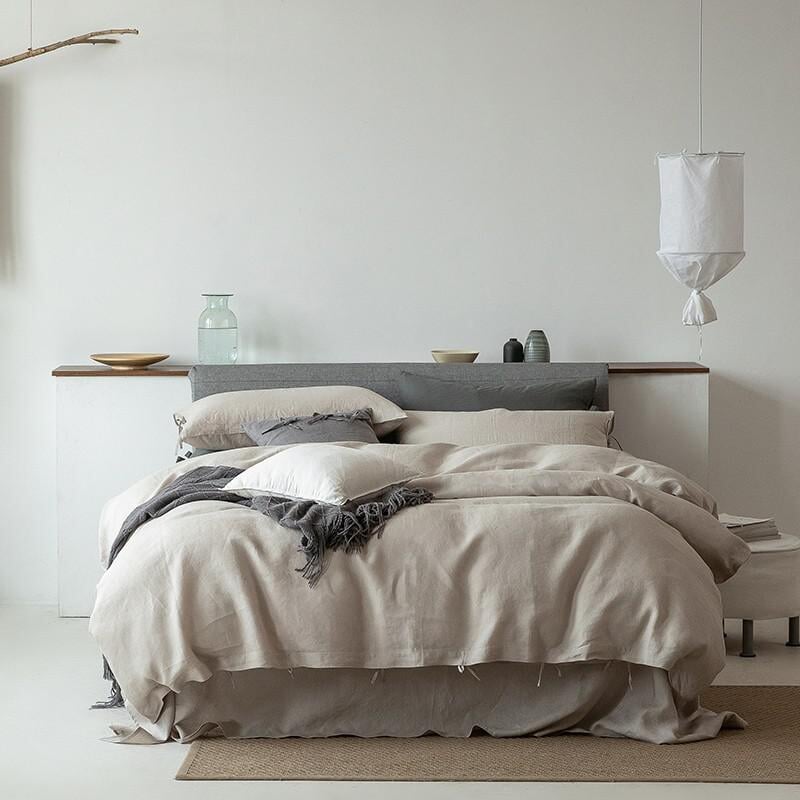
Wirecutter’s testing rates both cotton percale and linen among the most reliably cool options for hot sleepers, crediting linen’s looser weave for its cooler feel. The two fabrics simply solve the heat problem in different ways.
| Factor | Linen | Cotton (percale) |
|---|---|---|
| Breathability/cooling | Excellent, especially open weave | Very good, crisp weave aids airflow |
| Moisture-wicking | Strong, absorbs up to ~20% of weight | Good, but slower to release moisture |
| Feel/texture | Textured, relaxed hand, softens with wash | Smooth and soft from the first night |
| Durability/lifespan | Long-lasting, improves with age | Durable, particularly at higher thread counts |
| Care/maintenance | Cool wash, low heat drying preferred | Easy care, tolerates regular machine washing |
| Price/value | Higher upfront cost, long lifespan | Lower entry cost, reliable performance |
The trade-off in plain terms:
- Choose linen if you sleep hot, live somewhere humid, or want a set that lasts years and gets better with use.
- Choose cotton if you want immediate softness, simpler laundering, or you’re working to a tighter budget.
Pro Tip: If you love the cooling reputation of linen but aren’t sure about the texture, read our linen versus cotton comparison before you buy — it walks through weave and finish in more depth.
How to choose linen sheets for summer: a practical checklist
Work through this checklist before you buy:
- Check the fibre content. Look for 100% flax rather than a linen blend if breathability is your priority.
- Feel for openness in the weave. A looser weave lets more air through; hold the fabric up to light if you can.
- Think about weight, not thread count. Linen is measured by weight rather than thread count, and a mid-weight linen usually balances durability with airflow better than an ultra-heavy one.
- Look for a prewashed or stonewashed finish. Prewashed linen has a softer hand straight away, without sacrificing breathability.
- Check what’s included in the set. A fitted sheet, flat sheet or duvet cover, and pillowcases should all be specified, along with fitted sheet depth for deep mattresses.
Roomie Design’s linen range gives you a straightforward way to apply this checklist. For a full bedroom refresh, the Natural 100% Linen Bedding Set and White 100% Linen Bedding Set both bring the same flax construction across duvet cover and pillowcases, so the whole bed breathes evenly rather than mixing fabrics with different cooling properties.
A quick decision flow helps here: if you’re a hot sleeper in a humid climate, linen is worth the higher upfront cost, because it becomes softer and more comfortable with each wash rather than wearing out. If you’d rather have immediate softness at a lower price point, a good percale cotton set is the sensible alternative.
Pro Tip: Side sleepers who want a smoother hand against the skin often do well with a lighter-weight linen or a linen-cotton blend. You get much of the cooling benefit with a touch more softness on first use.
Caring for linen in summer: washing, drying and storage
Simple, gentle care is what keeps linen breathable and helps it last for years rather than seasons. The routine is easier than most people expect.
- Wash on a cool or warm cycle, never hot, using a gentle detergent.
- Skip fabric softener. It coats the fibres and blunts linen’s natural wicking ability.
- Line-dry where possible, or tumble dry on low heat and remove while still slightly damp.
- Smooth or fold sheets promptly to reduce deep creasing.
- Iron on a cool setting only if you prefer a crisper finish; linen’s texture looks intentional even unironed.
A few extra habits make a real difference through the warmer months:
- Avoid leaving linen in direct sun for extended drying sessions, as prolonged exposure can make fibres brittle over time.
- Store spare sets in a breathable cotton bag rather than sealed plastic.
- Rotate two sets so each gets a proper airing between uses.
- Air the bed itself each morning before making it, letting overnight moisture escape.
- Spot-clean sweat marks rather than washing the whole set after one warm night.
Cooler washes and shorter cycles also suit linen’s lower environmental footprint, using less energy per wash than a hot, long cycle would.
Sizing, set components and what to expect
Linen typically has a relaxed, slightly textured fit rather than the taut, glassy smoothness of high thread count sateen. That’s part of its character, not a flaw. Check the fitted sheet depth against your mattress, particularly if you sleep on a deep or pillow-top mattress, and confirm what’s included: most bedding sets pair a duvet cover, a fitted sheet, and pillowcases.
Expect linen to feel a touch crisper on the very first night, then noticeably softer after two or three washes as the fibres relax. That shift plays directly into summer comfort. For styling, pair linen sheets with a lighter-tog duvet insert and let the linen itself be the visible layer on the bed rather than piling on heavier decorative throws.
- Check fitted sheet depth against your mattress height before buying
- Confirm what’s included: duvet cover, fitted sheet, pillowcases
- Expect a softer feel after two to three washes
- Choose a lighter duvet tog to match linen’s breathable character
Benefits of linen clothing in summer, not just bedding
The same fibre properties that make linen sheets breathable carry straight over to linen clothing, which is why it’s a longstanding warm-weather wardrobe staple. Flax fibres are naturally hollow and more porous than cotton, so air moves through a linen shirt or dress in a way it simply can’t through tighter synthetic weaves.
Linen clothing wicks sweat away from the skin in the same way linen bedding does, which is part of why it dries quickly after a hot day or a sudden downpour. It also tends to feel less clingy than cotton in humidity, because the fibre doesn’t hold onto moisture the same way. Add to that its natural crease, which has become a style signature rather than something to fight against, and linen clothing offers a rare combination: it looks relaxed and it performs practically in heat.
Durability plays a role here too. Well-made linen garments soften and mould to you over repeated wears and washes, much like linen bedding does, rather than breaking down. That means a linen shirt or pair of trousers bought for one summer can reasonably be expected to see several more, ageing into something more comfortable rather than more worn out.
For anyone building a warm-weather wardrobe or refreshing a bedroom for the season, the throughline is the same: flax fibre does the work, whether it’s wrapped around your body during the day or covering your bed at night.
Is linen good for the environment?
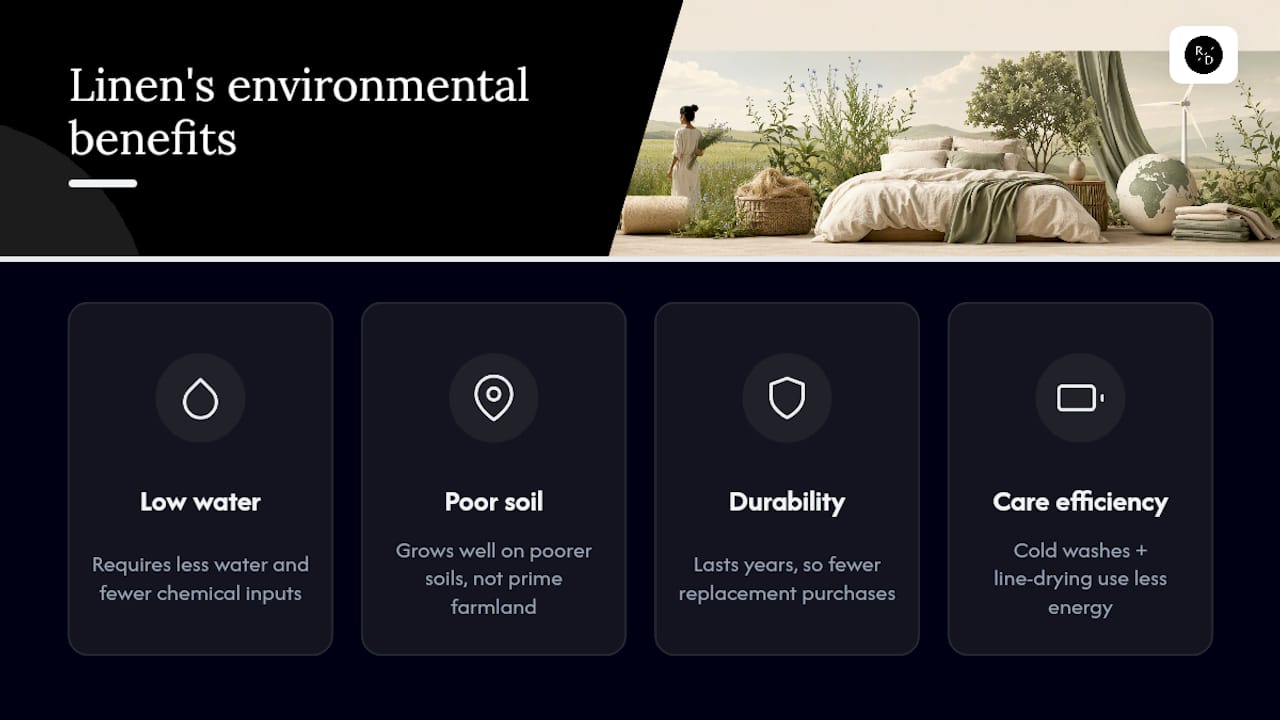
Flax, the plant linen comes from, generally requires less water and fewer chemical inputs to grow than many other fibre crops, which is part of why linen has built a reputation as one of the more sustainable natural fabric choices. Flax plants also tend to grow well in poorer soil conditions, meaning cultivation doesn’t always compete with higher-value farmland.
Linen’s durability adds another layer to its environmental case. A well-made linen sheet or bedding set that lasts for years, growing softer with wear rather than wearing out, replaces fewer sets over its lifetime than fabrics that degrade faster. Fewer replacement purchases means a smaller footprint over time, even before accounting for how the fibre was grown.
The way you care for linen also feeds into this. Washing on cooler cycles and skipping the tumble dryer in favour of line-drying, both of which suit linen’s fibre structure anyway, use less energy per wash than a hot cycle and high-heat drying would. That pairing of a naturally lower-impact fibre with genuinely gentler care requirements is fairly unusual. Most fabrics that need careful handling do so because they’re delicate, not because gentle care happens to be the right approach anyway.
Choosing linen for summer, then, isn’t purely a comfort decision. It’s one of the more straightforward ways to make a bedroom or wardrobe choice that leans lighter on resources, without asking you to compromise on how the fabric performs when temperatures climb.
Styling linen fashionably through the summer months
Linen’s relaxed texture is part of its appeal, and the best summer styling leans into that rather than fighting it. A slightly wrinkled linen shirt or a bedroom finished in visibly textured linen sheets both read as intentional, not unfinished, when the rest of the styling supports that mood.
For clothing, natural, muted tones such as sand, white, sage and soft blue tend to suit linen’s texture better than sharp, saturated colours, which can make the fabric’s characteristic crease look messy rather than relaxed. Looser, unstructured cuts also work with linen’s drape instead of against it; overly fitted linen garments tend to crease unevenly and lose the fabric’s natural ease.
The same principle carries into bedroom styling. Let linen sheets and a linen duvet cover be the visible finish on the bed, rather than layering multiple heavier textiles over the top. A lightweight duvet insert paired with something like the Solaire duvet cover set keeps the whole bed looking crisp and considered without adding bulk or trapping heat. For wider bedroom styling ideas that pair well with a linen-led summer look, this home decor guide on affordable bedroom upgrades is worth a look.
Texture, not colour intensity, is what makes linen look fashionable in both wardrobe and bedroom. Once you stop trying to make it look pressed and smooth, it starts working in your favour.
Roomie Design’s perspective on linen for summer
Linen is a core part of our range at Roomie Design, and it’s consistently one of our top recommendations for hot sleepers. We curate our 100% flax offerings specifically for breathability and long-term comfort, not just appearance on a shelf. If you’re weighing linen against cotton for your own bedroom, our linen versus cotton guide walks through the practical differences in more depth.
If you want linen now: a recommended Roomie Design option
Every set starts with premium flax, woven openly enough to move air properly and finished with a prewash that softens the hand before it even reaches your bed.
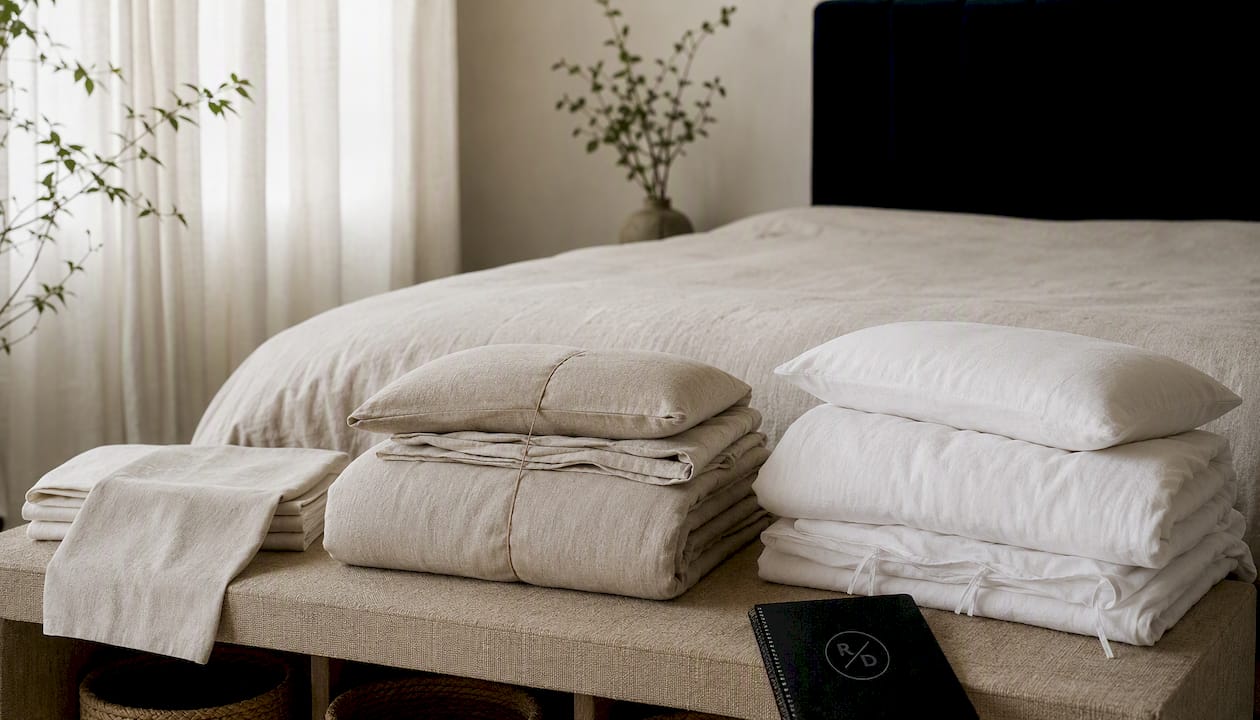
The Natural Flax Linen Sheet is the simplest way to add linen’s cooling properties to a bed you already love, without changing anything else in the room. All three are prewashed for softness from the first night and built to soften further with wear rather than wear out. Browse the linen sheet or either full set and choose the one that matches your bed size and colour preference.
Sources
- Which bed sheets are coolest on hot summer nights? Polyester, linen or cotton? - ABC News
- Experts share whether linen bedding is better than cotton | The Independent
- The 4 Best Sheets for Hot Sleepers | Reviews by Wirecutter


