

The ultimate bedding layering guide for comfort and style
TL;DR:
- Layering bedding with carefully chosen components creates a polished and comfortable look.
- Using quality fabrics and deliberate placement enhances both style and comfort.
- Avoid common mistakes like excess layers in summer and mismatched textures for a cohesive finish.
A flat, uninspiring bed is one of the most common complaints among homeowners who invest in quality bedding but still cannot get the look or feel quite right. The problem is rarely the products themselves. It is usually the order, combination, and choice of materials that lets the whole setup down. Proper bedding layering solves both problems at once: it creates a bedroom that looks pulled-together and polished, while also giving you the flexibility to sleep comfortably across every season. This guide covers everything from essential components and materials to step-by-step assembly, texture mixing, and common mistakes to avoid.
Key Takeaways
| Point | Details |
|---|---|
| Layer in order | Build your bed from fitted sheet to decorative cushions for maximum comfort and aesthetics. |
| Choose quality materials | Selecting breathable and luxurious fabrics like percale or sateen improves look and sleep quality. |
| Mix textures and patterns | Combine smooth, crisp, and textured pieces for a designer-inspired bedscape. |
| Adapt for your needs | Use lighter layers and cooling options if you sleep hot for custom comfort. |
What you need to start layering your bedding
Once you understand why layering matters, the next step is gathering the right foundation pieces. A well-layered bed is built from specific components, each serving a clear purpose.
The standard layers, from bottom to top, include:
- Fitted sheet — sits directly on the mattress, protects it, and provides the first layer of comfort
- Flat sheet — sits between you and the duvet, adds warmth and keeps the duvet cover clean
- Duvet or comforter — the primary insulating layer
- Quilt or coverlet — an optional mid-layer that adds texture and visual depth
- Throw blanket — draped across the foot of the bed for style and extra warmth
- Pillows — sleeping pillows plus decorative cushions for a finished look
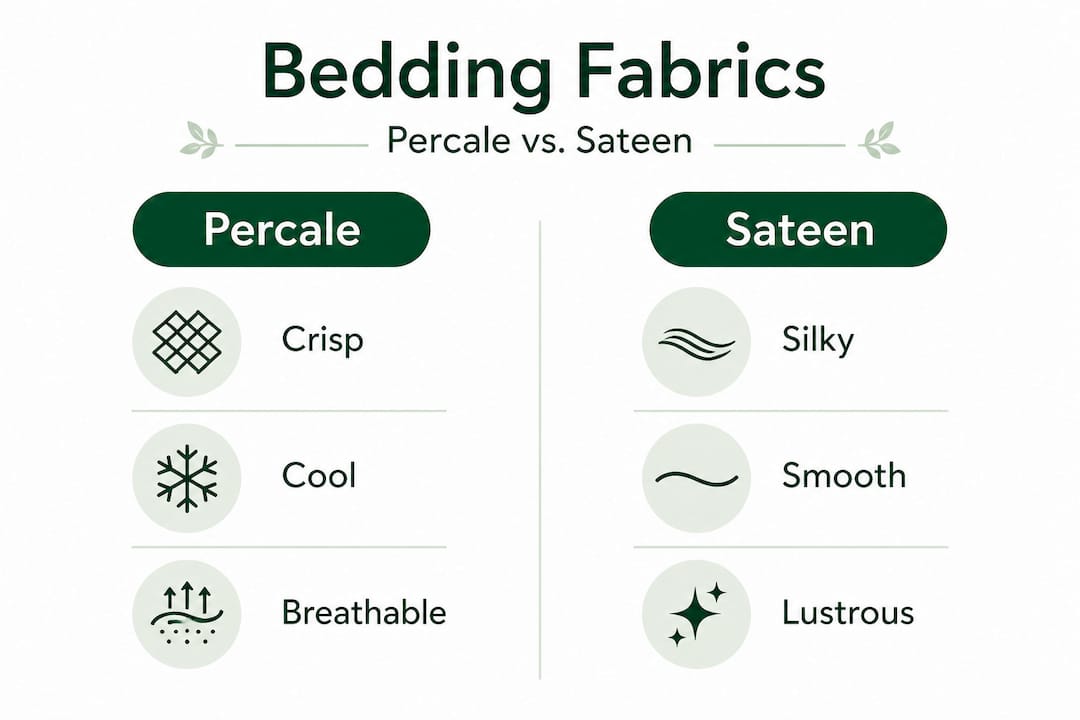
Choosing the right bedding for comfort starts with understanding your materials. The two most common sheet fabrics are percale and sateen, and they suit very different sleepers.
| Material | Weave type | Feel | Best for |
|---|---|---|---|
| Percale | Plain weave | Crisp, cool, breathable | Hot sleepers, warm climates |
| Sateen | Satin weave | Smooth, silky, lustrous | Those who prefer a luxurious feel |
| Linen | Loose weave | Textured, airy | Summer use, natural look |
| Bamboo/Lyocell | Fine weave | Soft, moisture-wicking | Sensitive skin, temperature regulation |
| Mulberry silk | Filament fibre | Ultra-smooth, lightweight | Luxury finish, year-round comfort |
As material benchmarks show, percale is the go-to for breathability and a crisp finish, while sateen delivers a smooth, luxurious hand feel. Knowing this distinction before you shop saves you from buying something that looks right but sleeps wrong.
Before building your layers, confirm these basics:
- All pieces are the correct size for your mattress
- Colours and tones are complementary, not clashing
- Fabrics are freshly laundered and free of wrinkles
- Your mattress has a good-quality protector underneath
Pro Tip: Invest in high-quality fitted sheets and duvet inserts first. These are the backbone of the whole setup. Cutting corners here shows immediately in both comfort and appearance.
Step-by-step: How to layer your bedding like a designer
With everything prepared, it is time to build your bedding in the correct order for both comfort and visual impact.
- Fitted sheet — Pull it tightly over all four corners of the mattress. Smooth out any creases.
- Flat sheet — Lay it face-down so the decorative side faces you when folded back. Tuck it in at the foot using hospital corners for a clean, tailored look.
- Duvet in its cover — Shake the insert into the cover evenly and lay it over the flat sheet. Leave a fold-back of around 30 cm at the top to reveal the flat sheet beneath.
- Quilt or coverlet — Fold this across the lower third of the bed for a layered effect without bulk.
- Throw blanket — Drape it casually across the foot of the bed, slightly off-centre for a relaxed, styled look.
- Sleeping pillows — Prop them upright against the headboard in their pillowcases.
- Decorative cushions — Arrange in front of the sleeping pillows, mixing sizes from large at the back to small at the front.
For a truly plush result, the insert matters enormously. High-loft fill, double inserts, or daily shaking are the most effective ways to achieve that cloud-like fullness you see in hotel rooms. A single flat insert will always look deflated, no matter how good the cover is. Explore fluffy duvet options if your current insert is letting the whole look down.
| Approach | Layers used | Pros | Cons |
|---|---|---|---|
| Minimalist | Fitted sheet, duvet, 2 pillows | Quick to make, clean look | Less visual depth, fewer warmth options |
| Luxury multi-layer | All 7 layers listed above | Rich look, adaptable warmth | Takes longer to assemble, more washing |
Pro Tip: Tuck your flat sheet using hospital corners at the foot of the bed. It takes 30 seconds and immediately gives the bed a boutique hotel finish.
How to mix textures and patterns for a stylish finish
After mastering the core layering, the next step is using textures and patterns to add visual interest and personality to the space.
Recommended texture combinations:
- Sateen sheets paired with a chunky knit throw at the foot
- Linen duvet cover layered with a quilted coverlet in a tonal colour
- Silk pillowcases alongside velvet or cotton decorative cushions
- Percale base sheets with a waffle-weave blanket for contrast
When it comes to patterns, the rule is simple. Scale patterns from large at the base to small accents on pillows and throws. A large floral or geometric print on your duvet cover reads well from across the room. Smaller motifs on cushions or a throw add detail without competing.
“The most successful bedding looks combine smooth base layers with textured top layers, and anchor the whole scheme with a consistent colour palette of two to three tones.”
For colour, pick a dominant tone from your duvet cover and echo it in one or two accent pieces. A navy duvet works well with white sheets, a grey throw, and a single navy cushion. You do not need to match exactly. Tonal variation within the same colour family looks far more considered than a perfectly matched set. Understanding designer bedding qualities helps you make these decisions with confidence rather than guesswork.
Troubleshooting: Common layering mistakes and how to avoid them
Great designs sometimes go wrong. Here are the most frequent errors and how to correct them quickly.
Common layering mistakes:
- Too many heavy layers in warm months — Swap out your duvet for a lightweight coverlet in summer
- Mismatched textures that compete — Stick to one statement texture per layer; keep others simple
- Ignoring scale — Oversized throws on a small bed look cluttered; scale your pieces to the bed size
- Skipping the flat sheet — This is what keeps your duvet cover clean and extends its life significantly
- Pillow overload — More than five decorative cushions on a standard double bed looks excessive and takes too long to manage daily
For hot sleepers, the approach needs to be different from the start. Breathable percale or linen bedding and cooling pillows are the most practical solution. Heavy duvets and multiple blankets will disrupt sleep regardless of how good they look. Focus on fewer, lighter layers that still create visual interest through texture rather than bulk.

Good bedding comfort selection also means thinking about your room environment. Pairing breathable bedding with proper bedroom air flow makes a measurable difference to sleep quality, especially in summer.
Pro Tip: If you sleep hot, choose percale or linen as your base and use a lightweight cotton or bamboo throw instead of a heavy quilt. You get the layered look without the heat.
An expert perspective on bedding layering that most miss
Most layering guides focus on adding more. More pillows, more throws, more texture. The assumption is that a fuller bed always looks better. In practice, this is rarely true.
The beds that genuinely impress are not the ones with the most layers. They are the ones where every piece has been chosen deliberately. A single high-quality linen duvet cover on crisp percale sheets, finished with two well-chosen cushions, will consistently outperform a bed piled with mismatched layers in varying qualities.
The real differentiator is material quality and placement, not quantity. Understanding designer bedding wisdom confirms this: premium fabrics with considered placement always read as more luxurious than volume alone. A throw draped with intention looks styled. The same throw thrown on carelessly looks like an afterthought.
Start with fewer pieces than you think you need. Add one at a time and assess. You will often find the bed looks best two steps before you planned to stop.
Bring your dream bedding to life with Roomie Design
If you are ready to transform your bedroom, Roomie Design has the products to make it straightforward.

The range includes everything needed for a well-layered bed, from the silk duvet cover set in 100% mulberry silk for a true luxury finish, to the Annabelle luxury sheet set for a crisp, hotel-quality base layer. Collections span cotton, linen, lyocell, bamboo, and silk across minimalist, floral, reversible, and farmhouse styles. Whether you are building a full layered setup or upgrading a single key piece, the full catalogue covers every size, fabric, and design preference.
Frequently asked questions
What is the ideal order of bedding layers?
Start with a fitted sheet, add a flat sheet, then your duvet or comforter, followed by optional coverlets or throws, and finish with pillows and decorative cushions.
How can I make my duvet look fluffy?
Use a high-loft fill insert, consider double inserts, and shake your duvet daily for maximum fluffiness.
What bedding material is best if I am a hot sleeper?
Percale or linen bedding and cooling pillows provide the best breathability and comfort for hot sleepers, as confirmed by material benchmarks that rate percale as the top choice for temperature regulation.
Can I mix patterns and textures in my bedding?
Yes. Combine smooth sheets with textured quilts or throws, and pair large-scale patterns on the base with smaller patterns as accents on cushions and throws.


