
Linen vs cotton sheets: which fabric suits you best?
For hot sleepers, linen is the stronger choice. For those who want immediate softness straight out of the packaging, cotton wins. Both are premium natural fibres, but they suit different priorities, budgets, and bedroom aesthetics.
Quick match-ups to guide your decision:
- Hot sleeper or humid climate: Linen. Its breathable fibre structure and looser weave allow superior airflow.
- Softness first, budget-conscious: Cotton. Percale and sateen weaves deliver a polished, smooth feel from night one.
- Long-term investment: Linen. It softens with every wash and typically outlasts standard cotton by several years.
Roomie Design stocks both fibres across multiple weaves and finishes, so every recommendation below reflects hands-on product knowledge.
Table of Contents
- How do linen and cotton compare side by side?
- What is linen and why does it matter for bedding?
- What is cotton and what weaves will you find in bedding?
- How does each fabric feel, and how does that change over time?
- Which fabric sleeps cooler?
- How do linen and cotton handle sweat and moisture?
- How long does each fabric last?
- How do you wash, dry, and care for linen and cotton bedding?
- Is linen worth the higher price?
- Which fabric is more sustainable?
- When do linen–cotton blends make sense?
- How to choose: a buyer checklist before you purchase
- Roomie Design’s recommended picks for each buyer type
- Why Roomie Design stocks both linen and cotton
- Sources
How do linen and cotton compare side by side?
The table below covers the eight decision axes that matter most for bedding. Deeper explanations for each row follow in the sections below.
| Axis | Linen | Cotton |
|---|---|---|
| Feel / texture | Textured, slightly coarse at first; softens with washes | Smooth and soft from the start; varies by weave |
| Breathability / temperature | Excellent; suits hot sleepers and warm months | Good; percale weaves perform best for cooling |
| Absorbency / wicking | Wicks and releases moisture rapidly | Absorbs well but releases moisture more slowly |
| Durability / lifespan | 10–20 years with good care | 5–10 years; longer for long-staple varieties |
| Care / maintenance | Machine-washable; air-dry recommended; wrinkles naturally | Machine-washable; tumble-dry friendly; easier to iron |
| Price / value | Higher upfront; strong price-per-year value | Lower upfront; wide price range available |
| Sustainability | Flax needs less water and pesticide than conventional cotton | Organic cotton reduces impact; conventional farming is water-intensive |
| Best for | Hot sleepers, humid climates, relaxed aesthetics | Immediate softness, hotel-style finish, year-round versatility |
What is linen and why does it matter for bedding?
Linen is a natural fibre spun from the stalks of the flax plant (Linum usitatissimum). The fibres are longer and coarser than cotton staples, which produces a yarn with a distinctive texture and superior airflow. Three fibre traits define how linen performs in bedding:
- Length and strength. Flax fibres are among the strongest natural fibres available, which is why linen bedding holds its structure wash after wash.
- Breathability. The looser weave typical of linen fabric, combined with the fibre’s natural hollow structure, allows heat and moisture to escape freely.
- Texture that changes over time. New linen feels noticeably textured. After several washes, it softens considerably while retaining its durability.
In bedding, linen suits sheets, duvet covers, and pillowcases particularly well. Its relaxed, slightly rumpled appearance also makes it a natural fit for farmhouse, minimal, and nature-inspired bedroom aesthetics.
What is cotton and what weaves will you find in bedding?
Cotton is a staple fibre harvested from the seed pods of the cotton plant. Unlike linen’s long continuous fibres, cotton fibres are shorter and spun together to form yarn. Fibre length matters: long-staple cotton varieties, such as Egyptian and Pima, produce smoother, stronger yarns that feel softer and last longer than standard short-staple cotton.
Three weaves dominate the cotton bedding market:
Percale is a plain, one-over-one-under weave with a crisp, cool hand. It suits warm sleepers who prefer cotton and tends to feel lighter than sateen.
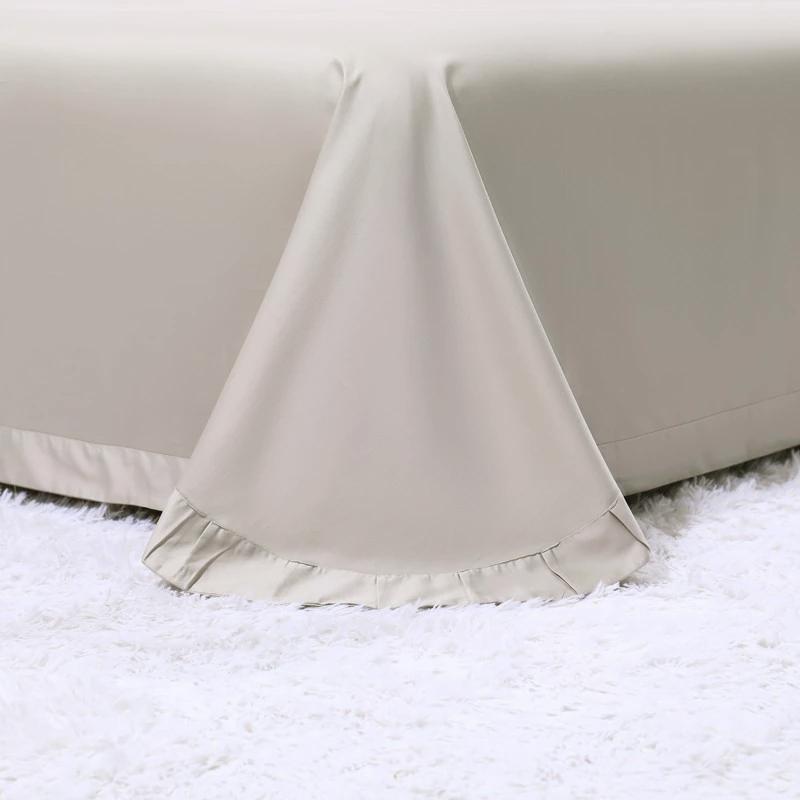
Sateen uses a four-over-one-under weave, which pushes more yarn to the surface and creates a smooth, lustrous finish. Higher thread counts in sateen, such as 400–500 TC, deliver a noticeably silky, weighty feel that many buyers associate with luxury hotel bedding.
Flannel is a brushed cotton weave that traps warmth. It is the go-to choice for cold sleepers and winter months.
Understanding weave is as important as understanding fibre when you are reading a cotton bedding product page.
How does each fabric feel, and how does that change over time?
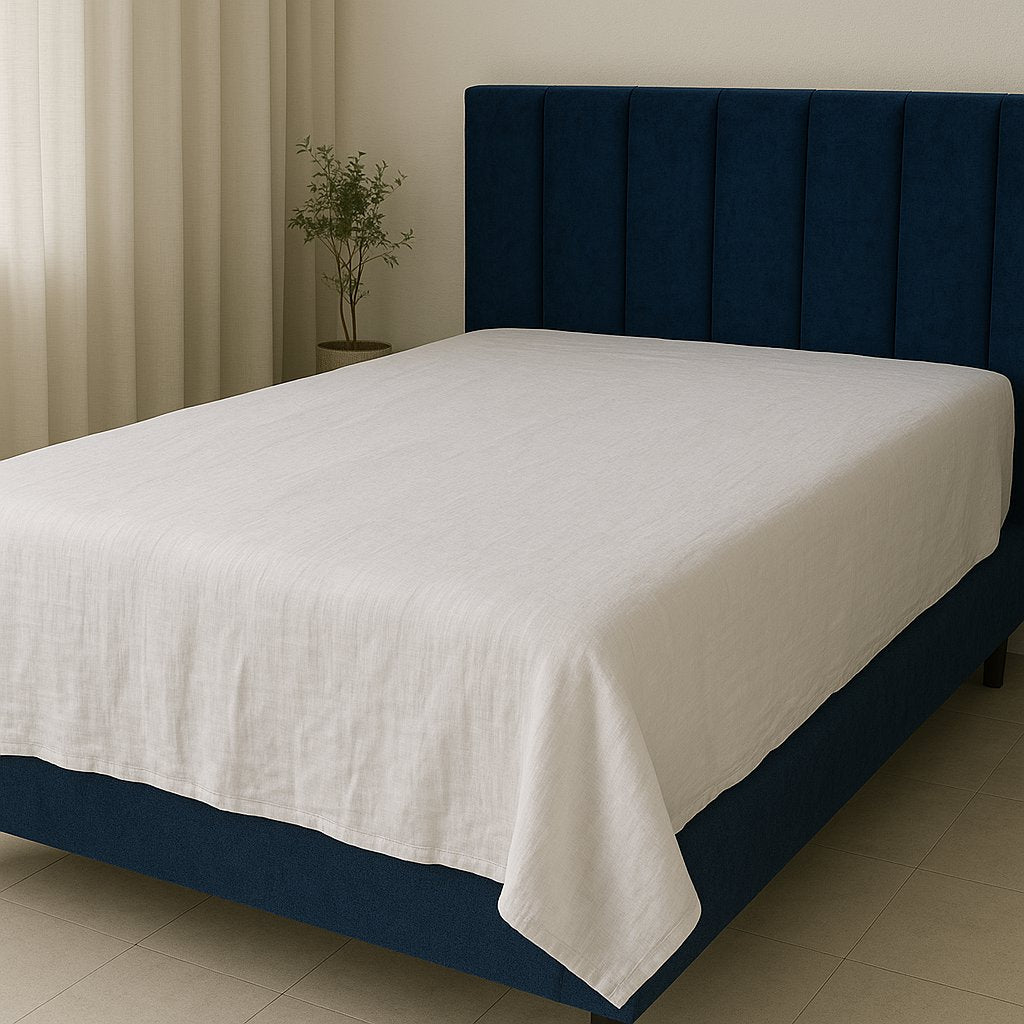
The tactile difference between linen and cotton is most pronounced on the first night. Cotton, particularly sateen or a well-finished percale, feels smooth and soft immediately. Linen feels textured and can seem stiff by comparison.
- Cotton: Soft from night one. Sateen weaves feel silky; percale feels crisp. Mercerisation (a finishing process that treats cotton fibres under tension) adds extra sheen and softness to some ranges.
- Linen: Noticeably textured at first. After five to ten washes, the fibres relax and the fabric develops a soft, lived-in quality that many buyers find more comfortable than its initial feel.
Who each suits comes down to patience and preference. Sensitive-skin sleepers or those furnishing a guest room where first impressions count will likely prefer cotton. Buyers who want a fabric that improves with age, or who love the relaxed, textured aesthetic of natural linen, will find the initial texture worth tolerating.
Linen also wrinkles readily. That crumpled look is part of its appeal for many buyers, but if a smooth, neat finish matters to you, cotton holds its appearance more easily, especially in sateen weaves.
Which fabric sleeps cooler?
Linen typically sleeps cooler than cotton. The reason is structural: flax fibres produce a coarser yarn and linen is woven more loosely than most cotton fabrics, which allows heat to dissipate and air to circulate freely around the body. Cotton is also a breathable natural fibre, but its tighter weave structures tend to trap more warmth.
Weave makes a real difference within cotton, though. A light percale cotton sheet can feel noticeably cooler than a heavy sateen, so hot sleepers who prefer cotton should prioritise percale over heavier weaves. Flannel cotton, designed for warmth, is best reserved for winter use.
For year-round hot sleepers or anyone in a humid climate, bedding guides consistently recommend linen as the cooler option. Cotton in a light percale weave is a solid alternative for those who want a smoother feel without sacrificing too much airflow.
How do linen and cotton handle sweat and moisture?
Linen wicks moisture away from the body and releases it into the air quickly. Cotton absorbs moisture well but holds onto it longer before releasing it, which can make sheets feel damp during a warm night.
Linen can absorb up to 20% of its own weight in moisture before it begins to feel wet — a property that makes it particularly effective for night sweaters and humid climates.
The practical difference for night sweaters:
- Linen: Moisture moves away from the skin rapidly, keeping the sleeping surface drier.
- Cotton: Absorbs sweat effectively but can feel clammy if moisture accumulates before it evaporates.
For buyers in warmer parts of the UK or those who sleep hot through summer, linen’s wicking speed is a genuine advantage. Cotton remains a good choice for cooler climates where moisture management is less of a priority.
How long does each fabric last?
Linen is generally the more durable of the two. Flax fibres are inherently strong, and linen becomes softer with repeated washing rather than breaking down. Well-maintained linen bedding can last 10–20 years. Standard cotton bedding typically lasts 5–10 years, though quality varies considerably by fibre grade.
Long-staple cotton closes the gap. Egyptian cotton and Pima cotton, both long-staple varieties, produce stronger yarns that resist pilling and wear better than short-staple alternatives. A well-made Egyptian cotton sheet set at 400–500 TC will outlast a budget short-staple cotton set by several years.
Pilling is more common in lower-grade cotton than in linen. Linen’s longer fibres mean loose ends are less likely to ball up on the surface. For buyers who want to extend bedding lifespan, choosing long-staple cotton or pure linen, and following proper care instructions, makes the biggest difference.
How do you wash, dry, and care for linen and cotton bedding?
Both fabrics are machine-washable, but they respond differently to heat and handling.
For linen bedding:
- Wash at 30°C–40°C on a gentle cycle. Higher temperatures can cause shrinkage, particularly in the first few washes.
- Use a mild, pH-neutral detergent. Avoid bleach and fabric softener, which can weaken flax fibres over time.
- Remove promptly from the machine to reduce creasing.
- Air-dry flat or on a line where possible. Tumble-drying on a low heat setting is acceptable but can shorten fibre life with repeated use.
- Iron while slightly damp on a medium-high setting if a smoother finish is wanted, or leave the natural wrinkles as part of the aesthetic.
For cotton bedding:
- Wash at 40°C for standard cotton; 60°C is suitable for white cotton when hygiene is a priority.
- Use a standard detergent. Fabric softener is compatible with most cotton weaves.
- Tumble-dry on a medium heat setting. Cotton tolerates machine drying better than linen.
- Iron on a medium setting; sateen weaves benefit from ironing while slightly damp to restore their sheen.
Pro Tip: Wash new linen bedding two or three times before judging its feel. The fabric softens noticeably with each wash, and the initial stiffness is not representative of how it will feel after a few laundry cycles.
Both fabrics can shrink on the first wash. Pre-washing before use, or buying bedding labelled as pre-washed, reduces this risk.
Is linen worth the higher price?
Linen typically costs more upfront than cotton. A quality pure linen duvet cover set will often sit at a higher price point than a comparable cotton set. The case for linen’s value rests on lifespan: if linen lasts 15 years and cotton lasts 7, the annual cost of ownership can favour linen even at double the purchase price.
A simple way to compare: divide the purchase price by the expected years of use. A £120 linen set lasting 15 years costs £8 per year. A £70 cotton set lasting 7 years costs £10 per year. The numbers shift depending on quality, but the principle holds.
For buyers with a tighter upfront budget, premium cotton options in long-staple Egyptian cotton offer a middle ground: better durability than standard cotton, a softer feel from the first night, and a lower entry price than pure linen. Roomie Design’s Botanical Sheet (Egyptian Cotton, 500 TC) is a strong example of this position in the range.
Which fabric is more sustainable?
Neither fibre is automatically the greener choice. The environmental impact of both linen and cotton depends heavily on farming practices, processing methods, and end-of-life disposal.
Flax, the plant linen comes from, generally requires less water and fewer pesticides than conventionally farmed cotton. Cotton farming, particularly in water-scarce regions, has a well-documented water footprint. Organic cotton reduces that impact considerably.
Questions to ask when evaluating sustainability claims on a product page:
- Where was the fibre grown, and under what farming conditions?
- Is the cotton organic or conventionally farmed?
- What processing and dyeing methods were used?
- Is the fabric biodegradable at end of life?
Both linen and cotton are natural fibres and will biodegrade, unlike synthetic alternatives. For buyers who want to go further on sustainability, the Roomie Design guide on organic bedding covers what to look for on product pages in more detail.
When do linen–cotton blends make sense?
A linen–cotton blend, typically 55% linen / 45% cotton, often delivers a practical compromise between the two fibres. The cotton component softens the initial hand of the fabric and reduces linen’s tendency to crease heavily, while the linen content retains useful breathability and moisture-wicking properties.
Blends suit buyers who want linen’s temperature benefits without committing to its full texture and wrinkling behaviour. They also tend to be easier to care for than pure linen, as the cotton content stabilises the fabric in the wash.
Beyond blends, two other fibres are worth a brief mention for buyers comparing options:
Lyocell (often sold under the Tencel brand) is a semi-synthetic fibre derived from wood pulp. It is exceptionally smooth, moisture-wicking, and temperature-regulating, making it a strong alternative for hot sleepers who want a softer feel than linen provides.
Bamboo is another popular alternative. When comparing bamboo vs cotton sheets, bamboo tends to be softer and more moisture-wicking than standard cotton, though it varies by processing method. Cotton vs bamboo sheets is a common comparison for hot sleepers who find linen too textured.
How to choose: a buyer checklist before you purchase
Work through these questions before committing to a fabric or product:
- Sleep temperature. Do you sleep hot or wake up sweating? If yes, prioritise linen or a linen blend. If you sleep cool or neutral, cotton is a comfortable choice year-round.
- Feel preference. Do you want softness from night one, or are you happy for the fabric to improve over time? Cotton for immediate softness; linen for long-term feel.
- Budget. What is your upfront spend, and how long do you want the bedding to last? Calculate price-per-year rather than purchase price alone.
- Care tolerance. Do you want low-maintenance bedding that tumble-dries easily? Cotton. Prepared to air-dry and embrace natural wrinkles? Linen.
- Aesthetic. Hotel-polished and crisp? Cotton sateen. Relaxed, nature-inspired, farmhouse? Linen.
- Return policy. Check the retailer’s return window before buying, particularly for linen, which needs a few washes to show its true character.
On the product page, look for: weave type (percale, sateen, flannel for cotton; plain or twill for linen), fibre origin, thread count for cotton (400–500 TC is a reliable premium range), and whether linen is described as stonewashed or pre-washed.
For a more detailed bedding selection framework, Roomie Design’s step-by-step guide walks through each decision point in sequence.
Roomie Design’s recommended picks for each buyer type
The clearest guidance: hot sleepers and those in humid climates suit linen; buyers who want softness from the first night suit Egyptian cotton. Both are premium choices, and the right one depends on your priorities.
Three Roomie Design products that match specific buyer needs:
- Natural 100% Linen Bedding Set: Pure flax linen in a full duvet cover set. Best for hot sleepers, those who prefer a relaxed farmhouse aesthetic, and buyers making a long-term investment in bedding that softens with age.
- Botanical Sheet (Egyptian Cotton, 500 TC): Long-staple Egyptian cotton at 500 TC. The go-to for buyers who want a smooth, luxurious feel from the first night, with the added durability that long-staple fibres provide. The 500 TC delivers a noticeably rich, weighty hand that suits a polished, hotel-style bedroom.
- Natural Flax Linen Sheet: A single-sheet linen option that lets you try linen’s texture and breathability at a lower entry point before committing to a full set.
Size guides and customer reviews are available on each product page. Care instructions are listed in the product details tab, and Roomie Design’s customer service team can advise on sizing or fabric questions before you order.
Why Roomie Design stocks both linen and cotton
Roomie Design’s range includes both linen and cotton because no single fibre suits every sleeper or every bedroom. Some customers want the crisp, polished finish of a high-thread-count Egyptian cotton sheet. Others want the breathable, lived-in quality of pure flax linen. Stocking both means the right choice is always available, whether the priority is temperature regulation, immediate softness, a specific aesthetic, or long-term value.
If you are unsure which fabric fits your needs after reading this guide, Roomie Design’s customer service team is available to give personalised recommendations based on your sleep preferences and bedroom style.
Sources
- Experts share whether linen bedding is better than cotton | The Independent
- Cotton Vs. Linen Sheets: Which Is Best for You? - Business Insider
- What Is Cotton and What Is Linen? | MasterClass
- Linen vs Cotton Sheets: Which Should You Choose? (2026) - Mattress Clarity
- Cotton vs Linen: What’s the Difference & Which Fabric Works Best for Each Garment? | Tellar
Recommended
- Why prioritise cotton sheets for better sleep quality – Roomie Design
- Cotton bedding benefits for stylish, comfortable sleep – Roomie Design
- Discover the best bedding materials for comfortable sleep – Roomie Design
- Concentric Sheet (Egyptian Cotton, 600 TC) Luxury Designer Bedding Set – Roomie Design


