Roomie Design picks: linen, percale, Tencel to keep hot sleepers cool
The best summer bedding materials are linen, percale cotton, and Tencel or lyocell, each chosen for how well they wick moisture and move air across the skin. Switch to a lower tog duvet, ideally 4.5 tog or less, and pair it with one of these three fibres. Premium versions of all three fibres are available, making the upgrade closer than it feels.
Table of Contents
- Which summer bedding materials work best for hot sleepers?
- Percale vs sateen: does thread count actually matter?
- Choosing a summer duvet: tog, fill, and cooling tech
- Pillows and toppers that stop you overheating at night
- How to choose summer bedding: a practical checklist
- Caring for summer bedding so it keeps performing
- Recommended picks for hot summer nights
- Do synthetic fabrics like microfiber and polyester belong in summer bedding?
- Why the “just buy anything breathable” advice misses the point
- Ready to upgrade your summer bed?
- Sources
Which summer bedding materials work best for hot sleepers?
Every fibre on this list solves the same problem in a different way: getting heat away from your body fast enough that you stay asleep past 3am.
Linen is the benchmark for warm-weather bedding. Its fibre structure is naturally thermo-regulating and pulls moisture away from the skin quickly, and it gets noticeably softer with every wash rather than wearing thin. If you sleep hot most of the year, linen is worth trying first. Roomie Design’s guide on linen for summer sleep covers the texture learning curve some new linen owners notice in the first few washes.
Percale cotton gives you a crisp, airy weave that feels closer to a hotel bed than a hug. Because the yarns are woven in a simple over-under pattern rather than packed tightly, air moves through the fabric more freely, which is why so many hot sleepers reach for percale first.
Sateen uses a different weave, one that floats more yarn on the surface, giving it a silkier hand and a subtle sheen. It’s a beautiful option for anyone who prioritises that lustrous, hotel-luxury feel, and premium sateen woven from long-staple cotton remains an excellent year-round choice, particularly for sleepers who like a smoother touch against the skin.
Tencel and lyocell are regenerated-cellulose fibres, made by dissolving wood pulp and re-spinning it into fibre. This process gives the yarn a very fine, even structure that wicks moisture well, often outperforming standard cotton on sheer cooling feel. Some products marketed simply as “bamboo” are actually this same regenerated-cellulose process, so Tencel is frequently the clearer, more consistent version of that fibre family to look for.
Mulberry silk is cool to the touch from the first second you lie down, thanks to its smooth, flat fibre structure, and it carries a genuinely luxurious drape. It needs a gentler laundering routine than cotton or linen, which suits shoppers who want an elevated feel and don’t mind a little extra care.
- Linen: best all-round breathability and durability for regular summer use
- Percale cotton: crisp, hotel-style coolness with a matte finish
- Sateen: smoother hand and soft sheen, ideal for those who prefer a silkier feel
- Tencel/lyocell: strongest moisture-wicking among the group
- Mulberry silk: coolest to the touch, most premium feel
Pro Tip: Blends of linen and cotton give you linen’s breathability with a softer break-in period, a good middle ground if pure linen’s texture feels too textured at first. For a side-by-side on the two most popular choices, Roomie Design’s linen versus cotton comparison is worth a read before you buy.
Percale vs sateen: does thread count actually matter?
Weave decides coolness more than the number printed on the label. Percale’s tighter, plain weave creates a crisp, breathable surface, which is why it’s the default recommendation for anyone who runs warm at night, while sateen’s weave produces that smoother, slightly heavier-feeling drape many sleepers love for its softness and shine.
Thread count itself is a genuine mark of quality across the entire 400 to 1000 TC range, not a warmth dial. A 1000 TC Egyptian cotton sheet, woven with fine long-staple yarns, delivers exceptional softness and durability, and can absolutely be part of a comfortable summer bed when the weave is right. What matters for temperature is the weave structure and yarn fineness, not simply the count.
- Want crisp and matte? Look for “percale” on the product description.
- Want smooth and lustrous? Sateen is your weave.
- Either way, long-staple cotton (Egyptian or Pima) gives you a finer yarn and a better hand, regardless of finish.
- Ask for fabric swatches or close-up photos before buying if breathability is your top priority.
Roomie Design’s explainer on what makes bedding breathable breaks down exactly how weave density and yarn type interact, useful reading before you commit to a set.
Choosing a summer duvet: tog, fill, and cooling tech
Lighter construction, not just a lower fill amount, is what separates a genuinely cool summer duvet from one that just feels less warm on paper. A 4.5 tog duvet is a sensible upper limit for most warm nights, with some hot sleepers preferring as low as 2.5 tog in peak summer.
Fill choice matters just as much as tog rating. Lower down fill power keeps loft, and therefore trapped heat, in check, while still giving you that soft, cloud-like feel down is known for. Down alternative fills offer a similar lightweight experience for anyone who prefers a non-down option, and both routes work well as long as the overall construction stays thin.
Cooling technologies like Outlast and 37.5 approach the same problem differently. Outlast uses phase-change materials that absorb and release heat, while 37.5 is triggered by humidity near the skin to actively pull moisture away. Both can genuinely help, but testing consistently shows that a thin build and a moisture-wicking cover fabric matter just as much as the branded technology itself.
- A lightweight duvet inside a breathable cotton or linen cover is usually enough on its own.
- Skip the top quilt in high summer and let the duvet cover do the work.
- If you sleep very hot, a Tencel-covered duvet with a down-alternative fill is worth testing first.
Pillows and toppers that stop you overheating at night
Your pillow sits closest to your face, so its breathability has an outsized effect on how hot you feel. Low-loft down or a quality down alternative allows more airflow than a densely packed pillow, and a natural fibre cover, cotton, Tencel, or silk, adds another layer of moisture management right where you need it most.
Latex and open-cell foam pillows breathe better than traditional memory foam because their structure allows air to pass through rather than trapping it. If you use a mattress topper, look for the same open, breathable structure and avoid dense, solid memory foam layers that hold body heat against you all night.
- Choose low-loft down or down alternative fills for maximum airflow.
- Pick natural covers (cotton, Tencel, silk) over synthetic satin for hot nights.
- Latex or open-cell foam toppers breathe better than solid memory foam.
- Avoid thick, unventilated foam layers if night sweats are a regular problem.
How to choose summer bedding: a practical checklist
Work through fibre and weave first, then construction, then care requirements, in that order, and you’ll rarely make a purchase you regret.
- Pick the fibre. Linen, percale cotton, or Tencel should be your shortlist for genuine summer performance.
- Check the weave, not just the thread count. Percale for crispness, sateen for smoothness, both work in premium constructions.
- Match the tog to your climate. Aim for 4.5 tog or lower for a standard summer, lower still if you run hot.
- Read the fill details on any duvet or pillow. Fill power and construction thickness tell you more than marketing copy does.
- Confirm the care instructions. Machine-washable, tumble-dry-friendly fabrics suit most households; silk needs gentler handling.
- Check the returns policy before buying, especially for a fibre you haven’t slept on before.
Be wary of listings with vague fibre claims (“cooling fabric” with no named material) or a heavily brushed, fleece-like finish marketed for summer, that combination usually signals synthetic fill dressed up in cooling language rather than genuine breathable construction.
Pro Tip: If you’re torn between two fibres, order a pillowcase in each before committing to a full set. It’s the cheapest way to test hand-feel and breathability against your own skin.
Caring for summer bedding so it keeps performing
Wash linen and cotton on a gentle, cool-to-warm cycle and skip the fabric softener, it coats moisture-wicking fibres and blunts the exact quality you bought them for. Tumble dry on low or line dry to preserve loft in any down or down-alternative fill.
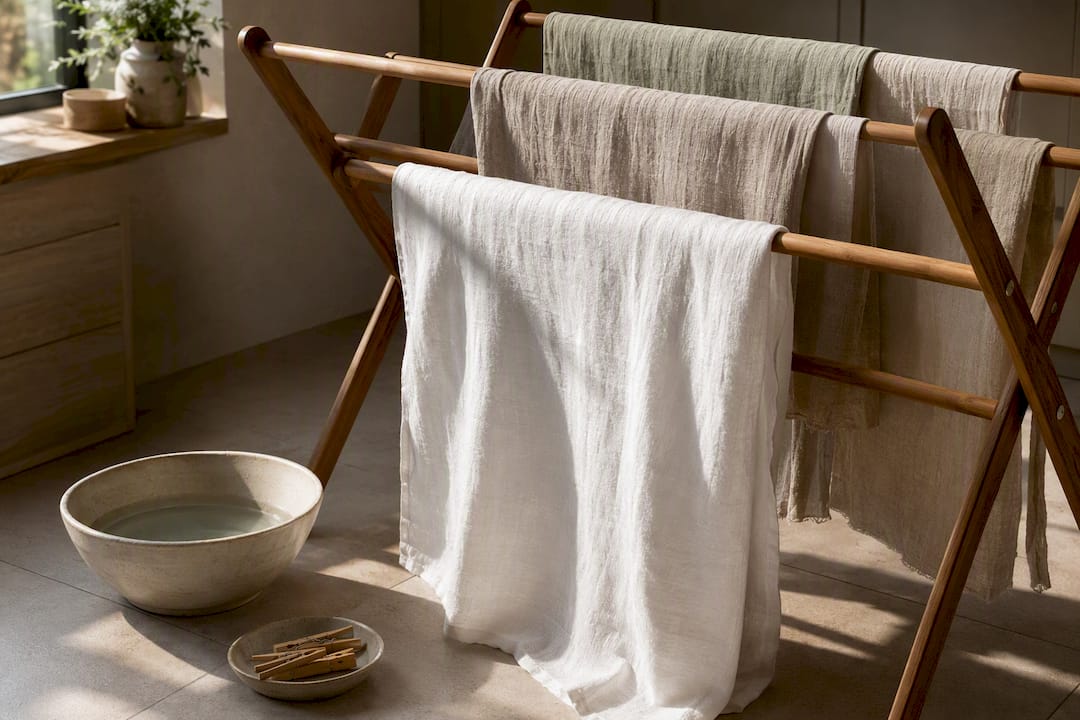
Store linen and silk folded loosely in a breathable bag rather than sealed plastic, which can trap moisture and dull the fabric over time. If a sheet or duvet cover feels noticeably less absorbent or slower to dry than it used to, that’s usually residual detergent buildup, and a plain rinse cycle without any additives often restores it. When that no longer works, it’s a sign the fibres themselves have worn down and it’s time to replace the piece. Roomie Design’s bedding troubleshooting guide covers more of these fixes in detail.
Recommended picks for hot summer nights
Matching the guidance above to an actual shopping list makes the decision easier. The Reverie Luxury Duvet Cover Set and Triplo Bourdon Classic Duvet Cover Set in Egyptian cotton both suit shoppers after that crisp percale coolness in a premium construction. The Arielle Luxury Duvet Cover Set offers a softer, more textured alternative for anyone drawn to a different hand-feel.
For sheets, the 1000 TC Egyptian Cotton Flat Sheet delivers that fine, long-staple softness discussed earlier, while the Oriental Jacquard and Nocturne Jacquard luxury sheets bring pattern and texture to the same premium cotton base. On the pillow side, the Hypo-allergenic Down Alternative Pillows suit anyone following the low-loft advice above, while the Signature 100% Goose Down Pillow set gives down lovers a genuinely soft, breathable option.
| Preference | Recommended Roomie Design product |
|---|---|
| Crisp, cool percale feel | Triplo Bourdon Classic Duvet Cover Set |
| Soft, textured cotton | Arielle Luxury Duvet Cover Set |
| Fine long-staple sheet | 1000 TC Egyptian Cotton Flat Sheet |
| Low-loft, allergy-friendly pillow | Hypo-allergenic Down Alternative Pillows |
| Classic down softness | Signature 100% Goose Down Pillow |
Each product page carries a size guide and customer reviews, so you can check dimensions and real feedback before checkout.
Do synthetic fabrics like microfiber and polyester belong in summer bedding?
Microfiber and polyester sheets have real advantages: they’re inexpensive, resist wrinkling, and hold up to frequent washing without much fuss. For a guest room or a child’s bed that needs to survive heavy use, that durability and low price genuinely make sense.
The trade-off shows up at night. Synthetic fibres don’t absorb or move moisture the way linen, cotton, or Tencel do, so the fabric can feel clammy against the skin once you start sweating. They also tend to trap heat rather than releasing it, which works against you on a warm night specifically. Some blended synthetics with wicking finishes narrow this gap, but a natural or regenerated-cellulose fibre still outperforms most synthetic options for anyone whose main complaint is overheating after midnight. If budget and durability are the priority, synthetic bedding has its place. If summer comfort is the goal, it’s usually a secondary choice rather than a first pick.
Why the “just buy anything breathable” advice misses the point
Most guides tell you to “choose breathable fabric” and stop there, as if one swap fixes a hot bed. The research says otherwise: weave, construction thickness, and fill density each move the needle almost as much as the fibre itself. A linen sheet paired with a heavily brushed, high-loft duvet will still leave you overheating, because the fibre did its job and the construction undid it.
The advice most worth prioritising, in order, is fibre first, weave second, then fill and tog. Skip that order and you’ll end up chasing marketing names like “cooling technology” instead of asking what the construction actually does. Higher thread counts get unfairly blamed for warmth when the real culprit is almost always a dense weave or heavy finish, not the yarn count itself. A 1000 TC sheet woven for softness and a 1000 TC sheet woven for airflow can feel completely different in the heat.
Start with the fibre, check the weave, then look at fill and tog. That order rarely fails.
— Roomie Design
Ready to upgrade your summer bed?
The selection specialises in fibres pointed to by this guide: linen, long-staple Egyptian cotton, Tencel, and mulberry silk, all finished to a premium standard rather than a budget one. Unlike generic bedding shops, sets come with clear fabric details, a size guide, and customer reviews so you know what you’re getting before it arrives.
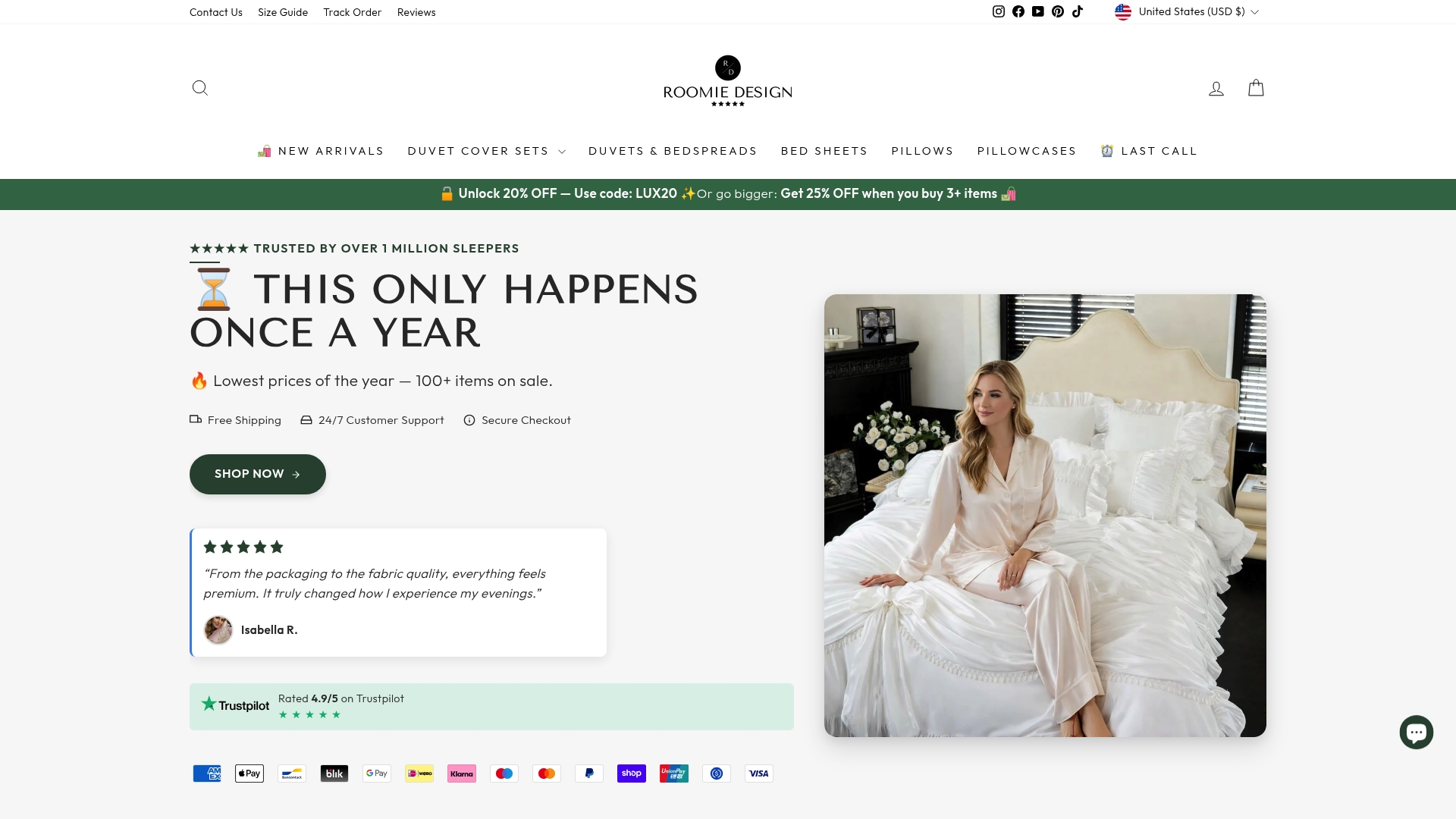
If cool, crisp percale is your priority, the Triplo Bourdon Classic Duvet Cover Set is a strong starting point. If you want that cool-to-the-touch silk feel discussed earlier, the Premium Champagne Mulberry Silk 22 mm Bedding Set delivers it in a genuinely premium construction. Browse the current range, check the size guide against your bed, and place your order today to have cooler nights sorted before the next heatwave hits.
Sources
- Best cooling comforters for hot sleepers, tested by bedding pros — Good Housekeeping
- 26 summer bedding ideas, from lightweight quilts to linen sheets — Vogue
- Best cooling comforter — Sleep Foundation
- Best cooling comforters — CNET


