

Brocade bedding: fabric, style, and what to look for
What is brocade bedding?
Brocade bedding is richly patterned bed linen woven with raised, three-dimensional motifs that sit proud of the fabric surface. The patterns are not printed or embroidered on top. They are built directly into the cloth during weaving, which gives brocade its distinctive, embossed-like appearance and lasting visual depth.
The name comes from the Italian broccato, meaning “embossed cloth,” and the fabric’s origins trace back to ancient China, where the earliest silk brocades were produced. Today, brocade is woven on computerised jacquard looms using a supplementary weft technique, where an extra, non-structural thread creates the raised pattern on top of the base weave.
Key characteristics of brocade bedding at a glance:
- Pattern construction: Woven in, not printed or stitched on top
- Texture: Raised, tactile surface with a three-dimensional effect
- Common fibres: Silk, cotton, polyester, and blended compositions
- Weight: Medium to heavy, denser than standard flat-weave bed linen
- Aesthetic: Formal, ornate, and traditionally associated with luxury interiors
- Heritage: Historically a prestige textile used in ceremonial and high-status contexts
How brocade fabric is made and what it feels like
Brocade is a supplementary weft fabric, meaning the decorative pattern is created by an additional weft thread woven alongside the structural threads that hold the fabric together. This extra thread produces the raised surface detail without compromising the base cloth. Modern production uses computerised jacquard looms, which can execute highly complex, repeat patterns with precision.
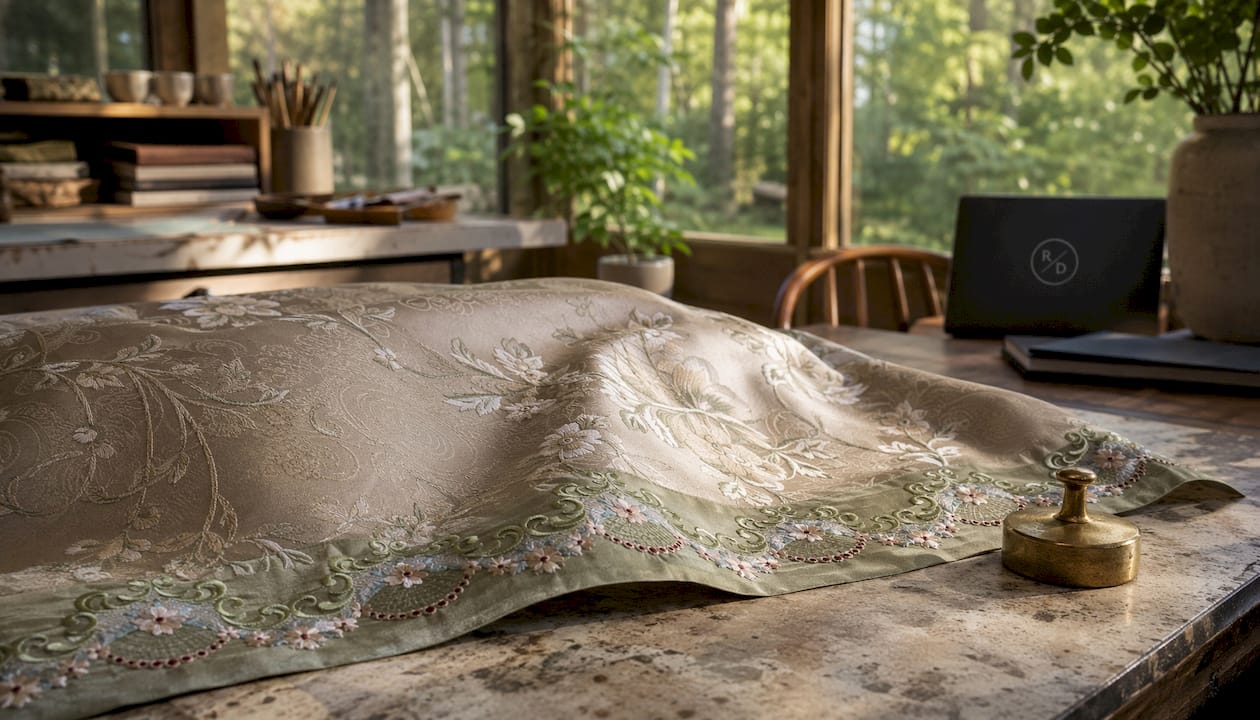
The result is a fabric that sits in the medium-to-heavy weight range. Brocade bedding fabrics feel dense and substantial in the hand, with a textured surface that varies between smooth ground cloth and raised motif areas.
Fibre types and their qualities:
- Silk: Delivers a natural sheen, smooth hand feel, and a luxurious drape. Historically the most prized brocade fibre.
- Cotton: Adds breathability and a softer, more relaxed touch. Cotton brocade suits year-round use.
- Polyester and synthetic blends: Improve durability, wrinkle resistance, and colour fastness, making brocade more practical for everyday settings.
- Blended compositions: Silk-cotton and cotton-polyester blends balance luxury feel with practicality.
How brocade differs from related fabrics:
- Damask uses contrasting weave structures within a single set of threads to create its pattern. True brocade adds a supplementary, non-structural weft thread, which is what creates the raised relief.
- Jacquard is the loom technique. Brocade is one style of jacquard fabric, distinguished by its bold, raised patterns and heavier construction.
Care requirements:
- Dry cleaning is the safest option to preserve raised patterns and fabric structure.
- If machine washing, use a gentle cycle with cold water and a mild detergent.
- Never wring or twist brocade fabric. Lay flat or hang to dry away from direct heat.
How brocade bedding transforms a bedroom
Brocade bedding creates a formal, sumptuous bedroom aesthetic that flat-weave linens cannot replicate. The raised patterns add physical depth to the bed surface, catching light differently across the motif and ground cloth, which produces a layered visual effect even in a simply styled room.
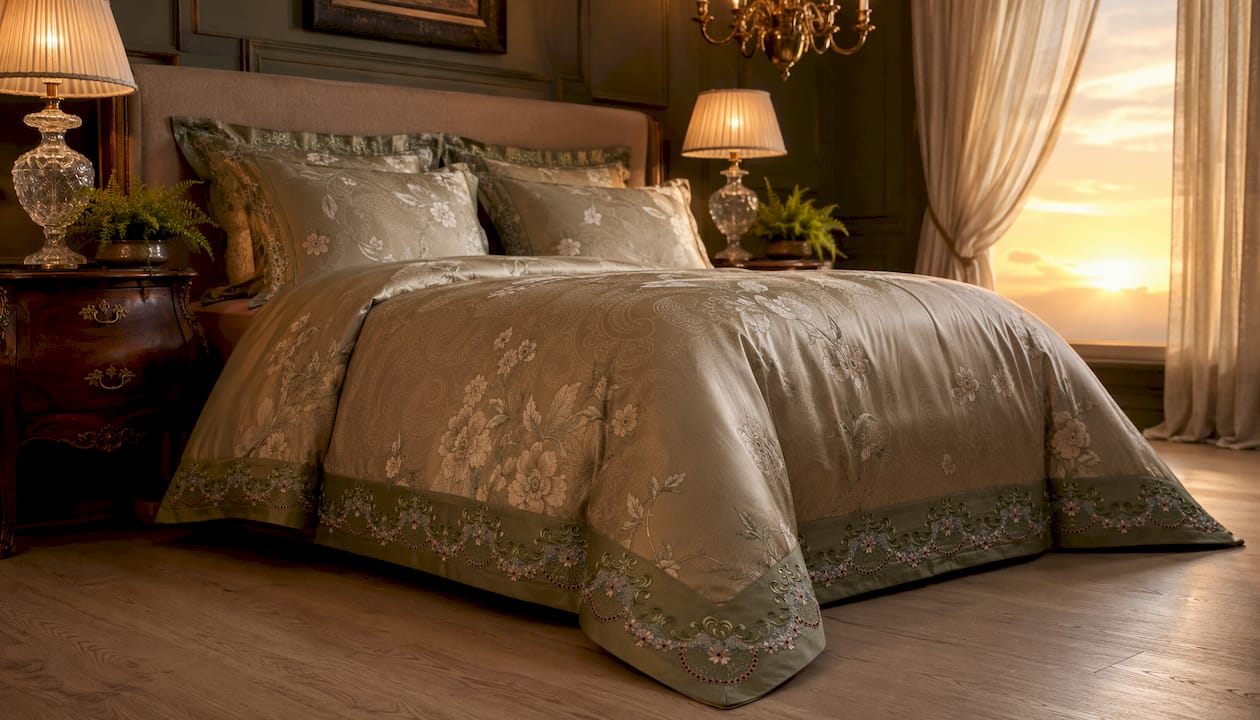
Because of its weight and ornate character, brocade works best as statement bedding rather than everyday linen. It suits traditional and Victorian-inspired interiors particularly well, where its elaborate patterns complement carved furniture, rich colour palettes, and layered soft furnishings. For a more contemporary bedroom, a single brocade duvet cover or bedspread used against plain, neutral bedding creates a focal point without overwhelming the space. Pairing brocade with custom bedroom design choices amplifies its impact considerably.
The tactile quality of brocade is a genuine draw. Running a hand across the surface reveals the contrast between the smooth ground weave and the raised motifs, a sensory detail that buyers of artisan textiles consistently value. For more on how textured bedding shapes both style and comfort, Roomie Design’s guide covers the topic in depth.
Luxury brocade bedding: what premium quality looks like
Premium brocade bedding combines high-grade fibres, precise jacquard weaving, and refined finishing to produce bed linen that functions as both a comfort product and a design statement.
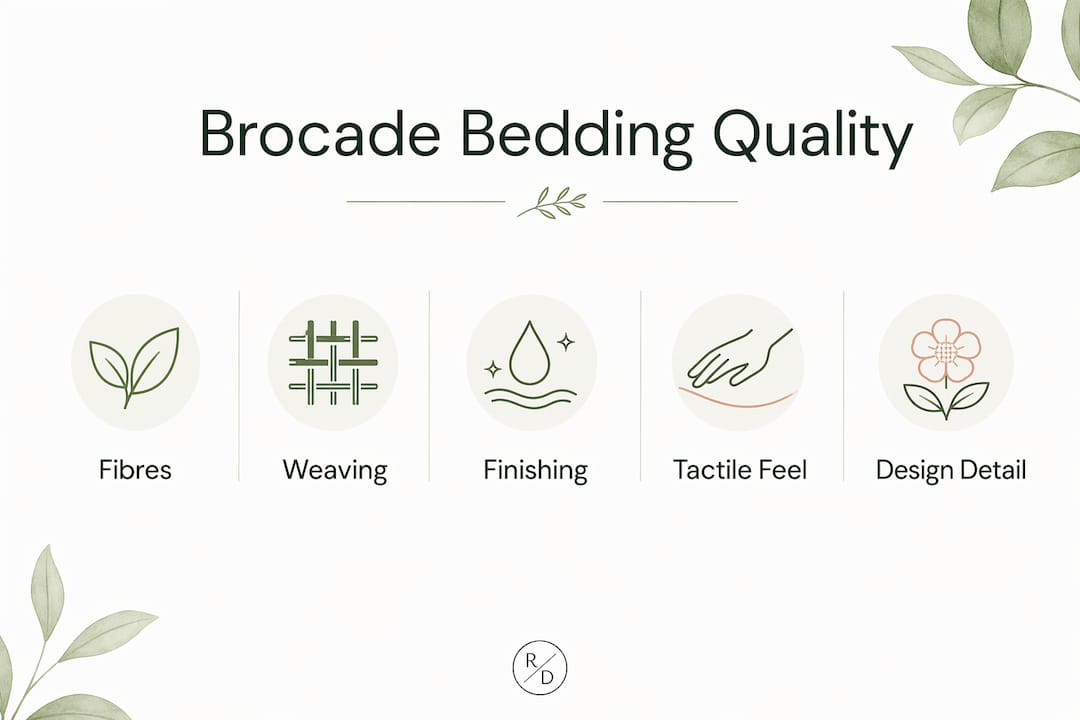
What to look for in a quality brocade set:
| Feature | What it means in practice |
|---|---|
| Fibre composition | Egyptian cotton or silk blends for softness and durability |
| Thread count | Higher thread counts deliver a silkier, more refined hand feel |
| Pattern precision | Clean, sharp motif edges indicate accurate jacquard programming |
| Embroidered accents | Adds a second layer of decorative detail to the woven base |
| Set components | Duvet cover, pillowcases, and bedspread for a coordinated look |
| Care labelling | Clear dry-clean or delicate-wash guidance protects fabric integrity |
Roomie Design’s Rose Brocade Duvet Cover Set is a strong example of what premium brocade bedding delivers. It combines high thread count cotton with intricate jacquard weaving and vintage-inspired floral motifs, producing a set that reads as genuinely crafted rather than mass-produced. The embroidered detailing adds surface interest beyond the woven pattern itself.
Pro Tip: When buying brocade bedding, hold the fabric up to natural light. The raised motifs should cast a subtle shadow against the ground cloth. If the pattern looks completely flat in light, the fabric is likely printed rather than woven.
For shoppers exploring how premium fabrics translate into bedroom design, Roomie Design’s premium bedding materials guide covers fibre qualities and construction details across the full range of luxury options.
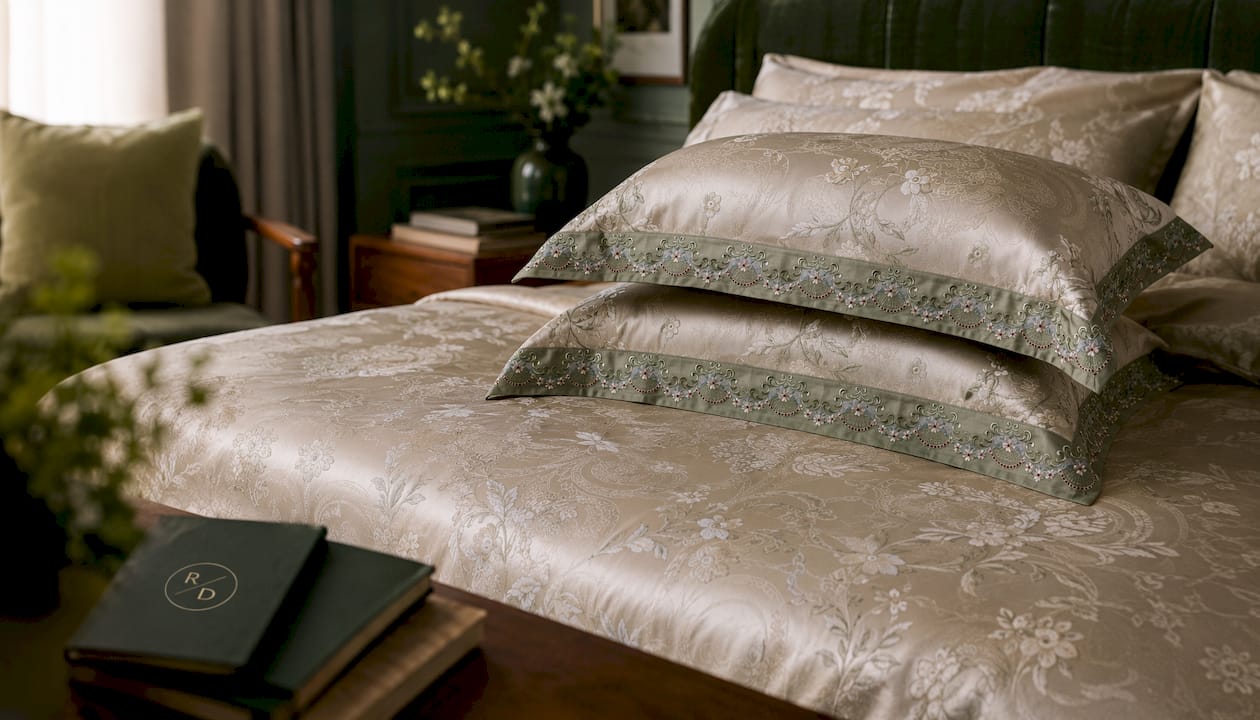
Brocade bedding sits at the intersection of textile craft and interior design. Whether you are furnishing a traditionally styled bedroom or adding one statement piece to a contemporary space, the fabric’s woven-in patterns and tactile depth offer something that printed or plain linens simply do not.


