
What is non-iron bedding: your complete 2026 guide
TL;DR:
- Non-iron bedding is treated with a chemical resin finish that prevents wrinkles and maintains a crisp appearance without ironing. Naturally wrinkle-resistant materials like TENCEL Lyocell, bamboo, and microfiber offer chemical-free alternatives that also resist creasing easily. Proper washing and low-heat care extend the durability of non-iron sheets while reducing formaldehyde exposure, especially for sensitive individuals.
Non-iron bedding is fabric that has been chemically treated with a resin finish to resist wrinkling, eliminating the need for ironing while maintaining a smooth, crisp appearance. The industry term for this treatment is “permanent press finish,” and it applies most commonly to cotton and cotton-blend sheets. Naturally wrinkle-resistant materials such as TENCEL Lyocell, bamboo sateen, and microfiber offer an alternative route to the same low-maintenance result, without chemical processing. Understanding the difference between these two approaches helps you choose non-iron bed sheets that suit your lifestyle, health considerations, and comfort preferences.
What is non-iron bedding and how does the resin process work?
Permanent press finish involves baking a formaldehyde-based resin onto cotton fibres at approximately 150°C. This heat treatment creates covalent bonds between the resin and the cotton cellulose. Those bonds override the natural hydrogen bonding in cotton fibres, which is the mechanism responsible for wrinkle formation during drying.
The result is a sheet that emerges from the tumble dryer smooth and ready to use. The resin is permanently bonded to the fabric, so the wrinkle resistance does not wash out over time.
Here is what the process involves at each stage:
- Resin application: A formaldehyde-based solution is applied to the fabric before finishing.
- Heat curing: The fabric is baked at around 150°C to bond the resin to cotton cellulose fibres.
- Cross-linking: The resin cross-links with the fibres, preventing the hydrogen bonds that cause creasing.
- Washing reduction: New non-iron textiles initially contain 800–1,000 ppm of free formaldehyde, which reduces after washing to around 100 ppm. The resin itself, however, remains chemically bonded and cannot be removed.
One detail many buyers overlook is off-gassing. Formaldehyde off-gassing continues at low levels through gradual resin breakdown, and body heat and moisture during sleep accelerate this process. Exposure is higher when the bedding is in use than when it is stored in a linen cupboard.
Pro Tip: Wash new non-iron sheets two to three times before first use. This significantly reduces free formaldehyde levels and lowers your initial exposure without affecting the wrinkle-resistant finish.
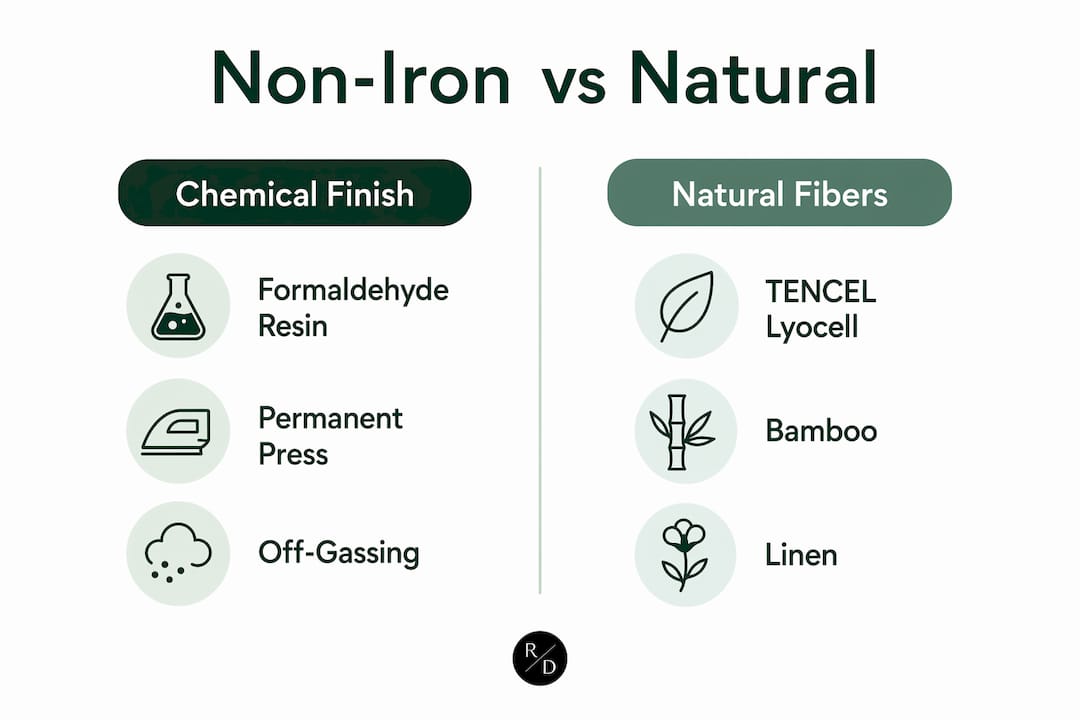
Non-iron versus regular bedding: chemical vs natural wrinkle resistance
Not all wrinkle-resistant bedding relies on chemical treatment. Several materials resist creasing through their natural fibre structure, making them a strong alternative for those who want low-maintenance sheets without resin finishing.
TENCEL Lyocell retains 85% tensile strength when wet, which prevents the hydrogen bonding that causes cotton to wrinkle during drying. Bamboo sateen and microfiber behave similarly, drying smooth without any chemical intervention.
| Feature | Chemically treated non-iron | Naturally wrinkle-resistant (TENCEL, bamboo, microfiber) |
|---|---|---|
| Wrinkle resistance | Resin bonded at 150°C | Natural fibre structure |
| Chemical exposure | Formaldehyde off-gassing | None |
| Moisture-wicking | Moderate | High (especially TENCEL and bamboo) |
| Durability | Good, finish is permanent | Good to excellent |
| Care requirements | Cold/warm wash, low tumble dry | Gentle wash, low heat |
| Suitable for sensitive skin | With caution | Generally well-tolerated |
| Environmental profile | Chemical processing involved | Lower chemical footprint |
Linen is another natural option worth considering. Linen absorbs up to 20% of its weight in moisture before feeling damp, which supports evaporative cooling during sleep. It becomes softer with each wash and requires no chemical finishing to maintain its smooth, relaxed appearance.
The right choice depends on your priorities:
- Convenience with minimal fuss: Chemically treated non-iron cotton or cotton-polyester blends deliver a crisp, pressed look with no effort.
- Sensitive skin or respiratory conditions: People with asthma, eczema, or contact dermatitis may notice sensitivity to formaldehyde off-gassing. Naturally wrinkle-resistant materials are the more suitable choice.
- Eco-conscious buyers: TENCEL Lyocell and linen carry a lower chemical processing footprint and are produced from sustainably sourced fibres.
You can explore a full breakdown of premium bedding materials to compare options across cotton, linen, lyocell, and bamboo in more detail.
Benefits and considerations of non-iron bedding
The benefits of non-iron bedding are straightforward and practical. The finish delivers a consistently smooth appearance without any ironing, which saves time and effort after every wash. The resin treatment also adds a degree of durability to the fabric, helping sheets hold their shape over repeated laundering.
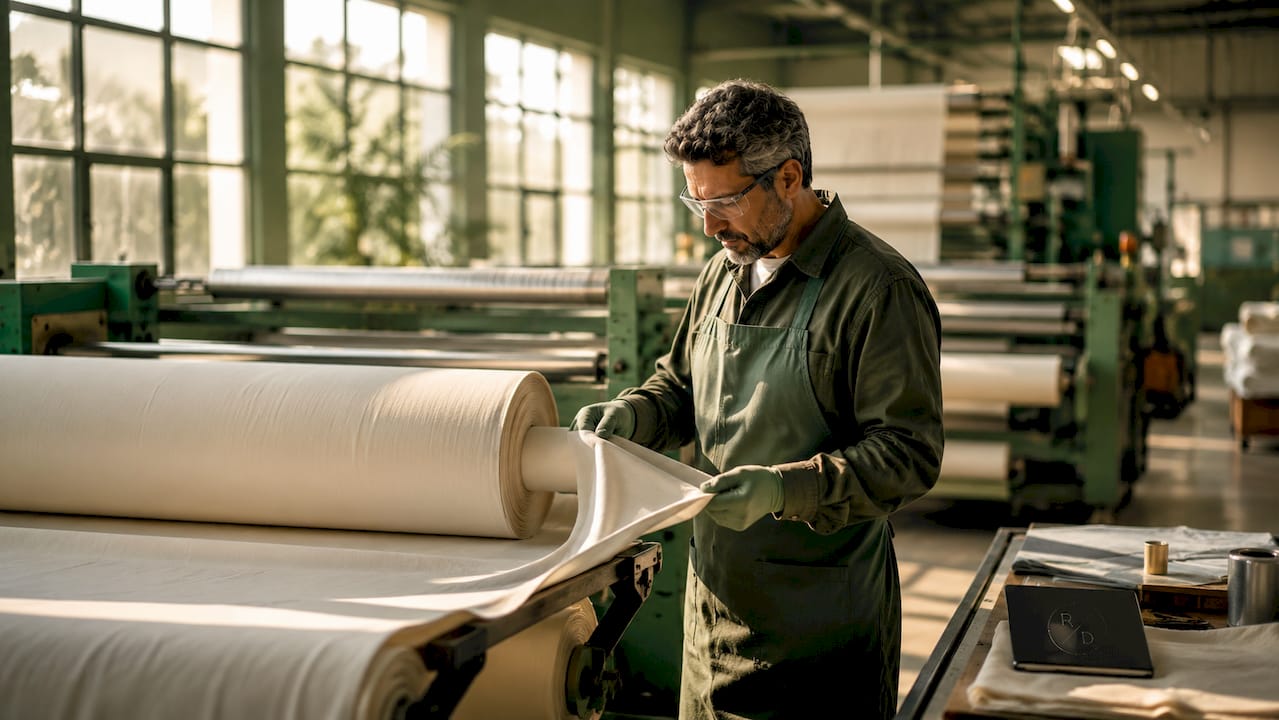
Cotton blends with polyester improve wrinkle resistance and drying speed without creating a stiff, cardboard-like feel. Modern permanent press finishes produce a noticeably soft result, which addresses the older perception that non-iron fabric feels harsh or uncomfortable.
The key considerations centre on chemical exposure:
- Initial formaldehyde levels are high. New non-iron sheets contain 800–1,000 ppm of free formaldehyde before washing. This is substantially above the levels permitted in many textile safety frameworks, though it reduces significantly after laundering.
- Off-gassing continues during use. Body heat and moisture accelerate the release of residual formaldehyde from the resin. Sleeping directly on untreated new sheets increases exposure.
- Sensitive individuals should take precautions. Those with asthma, eczema, or chemical sensitivities benefit from washing sheets multiple times before use, or from choosing naturally wrinkle-resistant alternatives entirely.
- The resin cannot be fully removed. Washing reduces free formaldehyde but the bonded resin remains in the fabric permanently. This is a structural feature of the finish, not a defect.
Pro Tip: If you or a family member has a known chemical sensitivity, consider TENCEL Lyocell or linen bedding as your primary option. Both offer excellent wrinkle resistance and breathability without any resin treatment.
For further guidance on creating a healthier sleep environment, the Roomie-design guide on bedding issues and sleep covers off-gassing concerns and practical solutions in detail.
How to care for non-iron bedding to maximise its lifespan
Correct care preserves both the wrinkle-resistant finish and the overall quality of the fabric. The most common mistake is washing at high temperatures, which degrades the resin bond and causes shine marks on the surface.
Washing in cold or warm water, tumble drying on low heat, and hanging immediately after the cycle ends preserves the finish and reduces creasing. High heat is the primary cause of premature fibre ageing in resin-treated fabrics.
Follow these care steps for best results:
- Wash temperature: Use a cold or warm cycle (30–40°C). Avoid hot washes, which break down the resin bond faster.
- Tumble drying: Dry on a low heat setting. Remove sheets promptly when the cycle ends to prevent creasing from setting in.
- Ironing: Non-iron sheets should not require ironing. If you do press them, use a low heat setting to avoid damaging the finish.
- Storage: Fold and store in a cool, dry place. Avoid compressing sheets tightly in storage, as this can create permanent fold lines.
- New sheets: Wash two to three times before first use to reduce free formaldehyde levels. This is the single most effective step for reducing initial chemical exposure.
Naturally wrinkle-resistant materials such as linen and TENCEL require similar low-heat care but without any concern about resin degradation. Linen in particular benefits from line drying, which softens the fabric naturally over time. You can find detailed fabric-specific advice in the Roomie-design guide on best bedding materials.
My take on choosing between non-iron and natural bedding
Non-iron sheets solve a real problem. For busy households, the appeal of pulling sheets from the dryer and putting them straight on the bed is genuine. The convenience is not trivial.
That said, the formaldehyde off-gassing detail is one I think deserves more attention than it typically receives. Most buyers do not realise that exposure is higher during sleep than during storage. Washing new sheets before use is a simple step that makes a meaningful difference, and I would consider it non-negotiable.
For anyone with sensitive skin, asthma, or young children sharing a bed, I would point directly to naturally wrinkle-resistant options. TENCEL Lyocell and linen deliver comparable ease of care without the chemical trade-off. The feel of quality linen, which softens progressively with each wash, is also difficult to match.
The choice ultimately comes down to lifestyle and sensitivity. Both categories offer genuine quality. Knowing what sits behind the label helps you choose with confidence rather than guesswork.
— Roomie
Premium bedding collections at Roomie-design
Roomie-design stocks a curated range of bedding sets built around natural, high-quality materials that combine comfort with straightforward care.
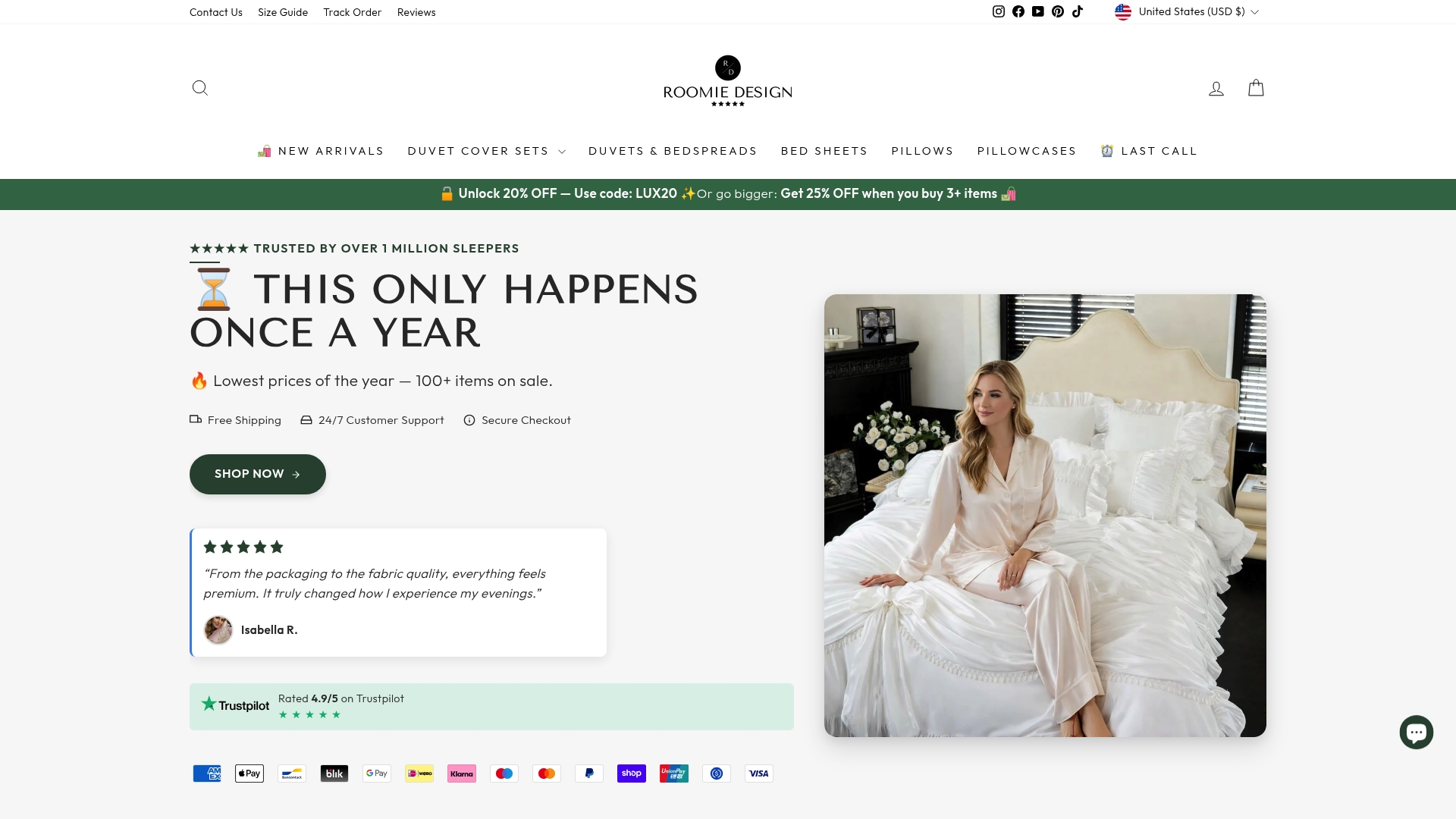
The natural 100% linen bedding set is a strong choice for anyone seeking wrinkle resistance without chemical finishing. Linen’s natural fibre structure resists creasing, wicks moisture effectively, and softens beautifully over time. For a refined, classic look, the white 100% linen bedding set delivers the same easy-care performance in a clean, versatile colourway. Both sets are designed for lasting quality and require no ironing to look their best. Browse the full Roomie-design collection to find the right material, size, and design for your bedroom.
FAQ
What is non-iron bedding made from?
Non-iron bedding is most commonly made from cotton or cotton-polyester blends treated with a formaldehyde-based resin finish. Some non-iron bed sheets use naturally wrinkle-resistant fibres such as TENCEL Lyocell, bamboo sateen, or microfiber, which require no chemical treatment.
Is non-iron bedding safe to use?
Non-iron bedding is generally considered safe for most people when washed before first use. Washing reduces free formaldehyde from 800–1,000 ppm to around 100 ppm, though the bonded resin remains permanently in the fabric.
Who should avoid chemically treated non-iron sheets?
People with asthma, eczema, or contact dermatitis may be sensitive to formaldehyde off-gassing from resin-treated bedding. Naturally wrinkle-resistant materials such as TENCEL Lyocell or linen are the recommended alternative for sensitive sleepers.
Does the non-iron finish wear off over time?
The resin is chemically bonded to the cotton fibres and does not wash out. However, repeated high-heat washing and tumble drying can degrade the resin bond over time, reducing the wrinkle-resistant effect.
How often should I wash new non-iron bedding before use?
Wash new non-iron sheets two to three times before sleeping on them. This reduces free formaldehyde levels significantly and lowers initial chemical exposure without affecting the permanent press finish.


