Duvet covers explained: style, comfort, and upgrade tips
TL;DR:
- Duvet covers are removable shells that protect inserts and allow easy style changes.
- Choosing the right fabric, closure, and size ensures comfort, durability, and ease of care.
- Using duvet covers is cost-effective, simplifies cleaning, and offers versatile bedroom styling options.
Many homeowners assume a duvet and a duvet cover are the same thing. They are not. Understanding the difference changes how you shop, how you style your bedroom, and how you care for your bedding. A duvet cover is one of the most practical and cost-effective tools for refreshing a room without a full redesign. This guide explains exactly what a duvet cover is, how it works, what features to look for, and how to choose the right one for your home.
Key Takeaways
| Point | Details |
|---|---|
| What a duvet cover is | It is a removable shell that protects and styles your duvet or insert easily. |
| Key construction features | Look for covers with secure closures, internal corner ties, and the right fabric for your needs. |
| Benefits for style and care | Duvet covers let you refresh your décor and clean your bedding conveniently. |
| Choosing the perfect cover | Match size exactly and prioritise breathable, durable materials for the best results. |
What exactly is a duvet cover?
A duvet cover is a removable fabric shell that fits over a duvet insert, much like a pillowcase fits over a pillow. It has two main jobs: protecting the insert inside and giving your bed its visual character. Change the cover, and you change the entire look of the room. Keep the insert, and you save money on the expensive part.
Duvet covers differ from comforters in one fundamental way: covers are removable shells designed to wrap around a separate insert, making cleaning and style swaps straightforward, while comforters are a single quilted piece with the filling stitched inside permanently.
Here is what a standard duvet cover includes:
- A fabric outer shell, usually two panels sewn together on three sides
- A closure along the open end (buttons, a zip, or press studs)
- Internal corner ties or loops to anchor the insert in place
- A range of fabric options from cotton percale to linen to mulberry silk
The practical advantage is significant. Wash the cover regularly without having to launder the bulky insert every time. Swap it seasonally for a fresh look. Store inserts long-term while rotating covers to suit different moods or occasions.
“A duvet cover gives you the flexibility to transform your bed without replacing your insert. It separates the comfort layer from the style layer, which means you can invest in a quality insert once and update the look as often as you like.”
This distinction matters most when shopping. Many consumers buy a comforter thinking it offers the same versatility, then find cleaning it is difficult and changing the style means buying an entirely new piece. Duvet covers, especially embroidered duvet options with detailed surface texture, deliver design variety without the added cost of replacing the full bedding system.
Key features and how duvet covers work
Understanding the basic definition, let’s explore what makes a duvet cover practical and functional day to day.
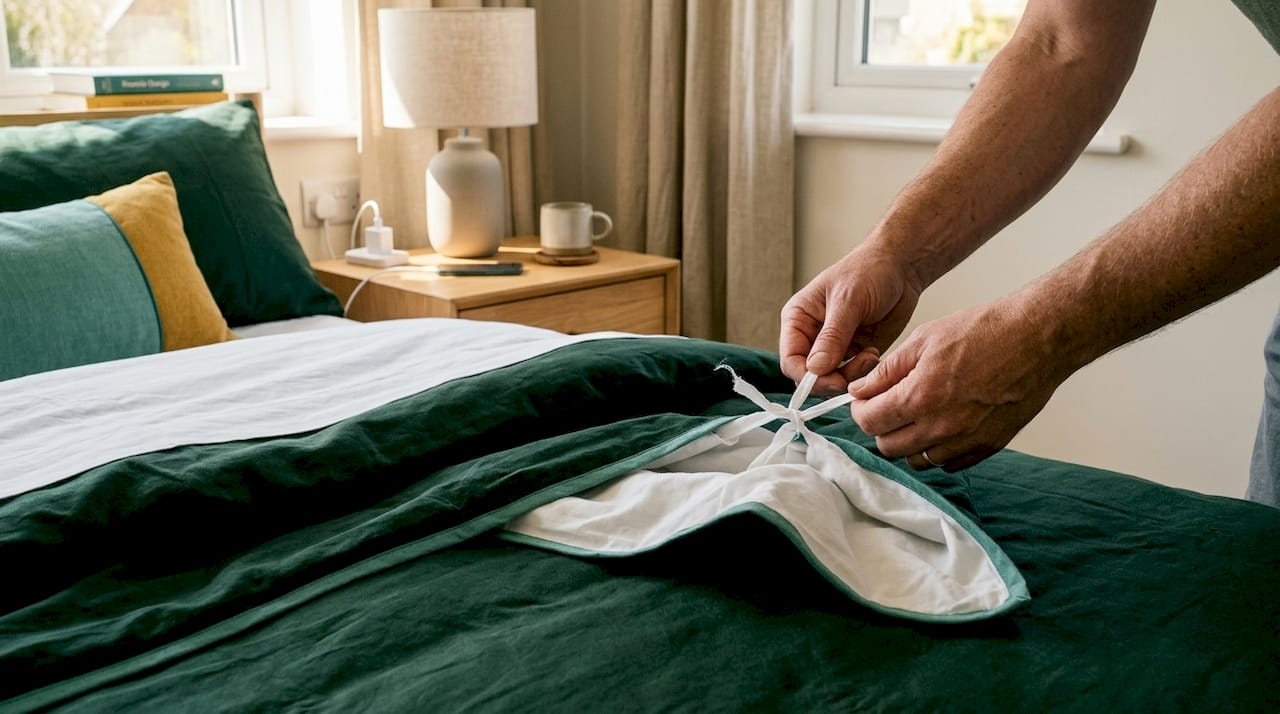
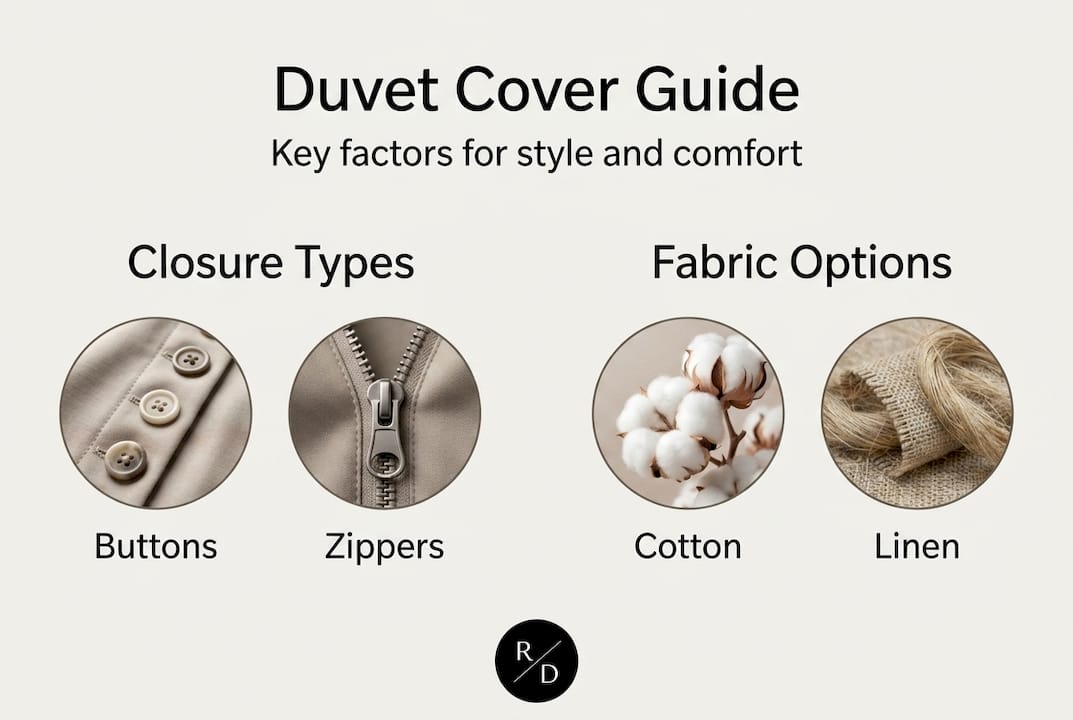
The closure is the first thing most people notice. Closures include buttons, snaps, zippers, or ties; many also feature internal corner ties or loops that secure the insert and prevent shifting or bunching during sleep. Each closure type has trade-offs. Buttons look clean and traditional but can take more time to fasten. Zippers are fast but can snag delicate fabrics. Press studs (snaps) are quick and flat, ideal for smooth cotton covers. Ties give a relaxed aesthetic, common in linen and farmhouse styles.
Internal corner ties are often overlooked but are genuinely important. Without them, the insert migrates to one side of the cover overnight, leaving you with an uneven, lumpy surface. Quality covers include four ties minimum, one at each corner.
The fabric defines the feel and performance:
| Fabric | Breathability | Feel | Care |
|---|---|---|---|
| Cotton percale | High | Crisp, cool | Machine washable |
| Linen | Very high | Textured, relaxed | Machine washable (cold) |
| Mulberry silk | Moderate | Smooth, luxurious | Dry clean or hand wash |
| Lyocell | High | Soft, silky | Machine washable (gentle) |
| Bamboo | High | Soft, lightweight | Machine washable |
Choosing the right fabric depends on your sleep temperature, skin sensitivity, and how much maintenance you want to commit to. Cotton percale suits most people year-round. Linen improves with every wash and suits warmer climates or summer bedrooms. Silk offers a premium feel but requires more careful handling.
For bedding for stylish comfort, the combination of closure type and fabric weight will determine both the look and the long-term practicality of your choice.
Pro Tip: Always match your cover to your insert size exactly. A cover that is too large allows the insert to slide around, even with corner ties. A cover that is too small compresses the fill and reduces loft and warmth.
Why choose duvet covers? Style, function, and cleaning
Now that you know how duvet covers are constructed, let’s see why they are the first choice for many design-led homes.
The single biggest advantage is style flexibility. Duvet covers enable easy aesthetic changes without replacing the insert, making them ideal for interior enthusiasts who prioritise quality materials and want to refresh their bedroom regularly. Buying three different covers at varying price points costs significantly less than buying three complete comforters.
Here is a straightforward comparison:
| Feature | Duvet cover + insert | Comforter |
|---|---|---|
| Style flexibility | High (swap covers freely) | Low (full replacement needed) |
| Ease of washing | Easy (cover only) | Difficult (bulky, one piece) |
| Cost over time | Lower | Higher |
| Insert longevity | Extended (protected) | Reduced (exposed to wear) |
| Design options | Wide range | Limited to comforter prints |
Cleaning is also far simpler. Follow these steps for regular care:
- Remove the cover and place it in the washing machine alone or with similar light items.
- Use a gentle, colour-safe detergent on a cool or warm cycle (follow the label).
- Tumble dry on low or line dry to preserve fabric quality.
- Re-attach the insert using the corner ties before closing the cover.
- Smooth the cover flat, aligning corners for a neat finish.
For allergy sufferers, this regular washing routine is particularly valuable. Removing and laundering the cover weekly keeps dust mite levels low without the effort of washing the full insert each time.
Frequent style updates are more practical than most people realise. Keeping two or three covers in rotation means your bedroom can shift from a cool, minimal grey palette in winter to a warmer linen or floral look in spring without any furniture changes. The Linear Grey Duvet Cover Set is a strong example of a versatile, year-round option that pairs with multiple colour palettes.
How to pick the right duvet cover for your home
Equipped with the benefits, let’s walk through picking the ideal duvet cover for your space.
Material is the starting point. Cotton percale (a weave, not a brand) offers a crisp, cool feel with high durability. Linen adds texture and breathes exceptionally well. Silk delivers a smooth surface with temperature-regulating properties, though it needs more careful handling. Consider what matters most: easy care, warmth, a cool sleep surface, or visual texture.
Sizing is critical and non-negotiable. Mismatched sizes cause bunching and shifting; slippery fabrics such as silk need more internal ties; and changing a king-size cover alone is easier using the burrito method on the floor. The burrito method involves turning the cover inside out, laying the insert on top, rolling both together from the closed end, then feeding the open ends of the cover over each side before unrolling. It sounds unusual but works reliably.
Use this checklist when selecting a cover:
- Size: Match your insert exactly. King, super king, double, and single all have specific dimensions.
- Fabric: Choose based on your sleep temperature and preferred feel.
- Closure type: Buttons for a traditional look, zip for speed, press studs for a flat finish.
- Thread count (for cotton): 200 to 400 is the practical sweet spot for durability and softness.
- Design: Consider your existing furniture tones, wall colour, and how much pattern the room can carry.
- Care requirements: Confirm the fabric suits your washing routine before buying.
Pro Tip: If you plan to use a silk or heavyweight cover solo, add extra duvet clips at the midpoint of each long edge in addition to the corner ties. This prevents the insert from pulling diagonally, which is a common issue with slippery fabrics or oversized beds.
Style coordination matters too. A plain dye cover in a neutral tone works with almost any bedroom scheme and allows flexibility when you change other elements such as cushions or curtains. Textured or embroidered options add visual interest without committing to a bold print. When you choose bedding based on both material and design criteria, the result is a cohesive, considered room rather than a collection of mismatched pieces.
Our take: what most overlook about duvet covers
Most buyers focus on colour or pattern first and treat fabric as a secondary consideration. This is the wrong order. Fabric determines how the cover feels every night, how long it lasts, and how well it launders. A beautifully patterned cover in a poor-quality cotton will pill, fade, and lose its shape within a season.
Changing covers frequently is not extravagant. It is practical. With a quality insert protected inside, the cost per use across multiple covers is low, and the impact on your sleep environment is real. Embroidery and texture options add depth and visual interest that plain prints cannot replicate. Exact sizing and quality fabric will always outperform brand name or trend-led colour choices. That is the standard worth setting before any purchase.
Upgrade your sleep experience with designer duvet covers
Ready to put this into practice? Roomie Design offers a curated range of premium duvet cover sets built around quality materials, precise sizing, and design variety to suit different bedroom styles.

The Linear Cream Duvet Cover Set is a versatile, minimal option that suits neutral and warm bedroom palettes. For a premium upgrade, the Dusty Rose Mulberry Silk Duvet Cover delivers a smooth, luxurious surface in a flattering, on-trend tone. Both are available in standard UK sizes with full product specifications to support confident purchasing decisions.
Frequently asked questions
What is the difference between a duvet and a duvet cover?
A duvet is the filled insert, while a duvet cover is the protective, removable layer you place over it for comfort and design flexibility. Duvet covers are removable shells for inserts, whereas comforters are a single, one-piece product.
How do I stop my duvet from bunching inside the cover?
Secure all internal corner ties and ensure the cover matches your insert size exactly for a smooth, no-bunch result. Internal corner ties and loops are specifically designed to keep the insert in position and prevent overnight shifting.
Are duvet covers good for allergy sufferers?
Yes. They can be removed and washed regularly, which helps reduce dust mites and allergens more effectively than laundering a full comforter each time.
Which fabric is best for duvet covers year-round?
Cotton percale and linen are both strong year-round choices, offering breathability and durability. Quality materials also allow easy aesthetic changes without needing to replace the insert.
Recommended
- How to choose bedding for stylish comfort at home – Roomie Design
- The Simple Embroidered Duvet Cover Set (White/Brown) Luxury Designer Bedding Set – Roomie Design
- The Simple Embroidered Duvet Cover Set (Grey/Beige) Luxury Designer Bedding Set – Roomie Design
- The Simple Embroidered Duvet Cover Set (Silver/Grey) Luxury Designer Bedding Set – Roomie Design


