Sheet Shoppers: Choose Fibre, Not Thread Count, Percale vs Sateen
Percale suits sleepers who run warm and want a crisp, hotel-fresh feel against the skin, while sateen suits those who want a silky, cocooning surface with a soft sheen. Long-staple cotton, not an inflated thread count, is what actually determines how either weave performs over years of use. Premium options are available in both.
Table of Contents
- Percale vs sateen: what makes percale distinct?
- Percale vs sateen: what makes sateen distinct?
- Percale vs sateen comparison: how do they stack up?
- What should you check before buying sheets?
- How do you wash and care for percale or sateen sheets?
- Why does long-staple cotton matter more than thread count?
- Which Roomie Design sheets match your sleep style?
- Our closing thought on percale vs sateen
- Sources
- FAQ
Percale vs sateen: what makes percale distinct?
Percale comes from a simple one-over-one-under weave, the same structure used in a classic cotton shirt. That tight, even grid is what gives it a matte finish and a cool, papery hand-feel the moment you unfold it. Most quality percale uses long-staple cotton, including Egyptian and Pima varieties, because longer fibres spin into smoother yarns that hold up to that dense weave without feeling rough.
The structure is also why percale breathes so well. Air moves easily through the tight over-under grid, which is why percale is prized for its airflow and why sleep specialists frequently point hot sleepers toward it.
New percale can feel firm, even slightly stiff, straight out of the packet. That is normal, not a flaw. It softens with every wash and typically reaches its best feel after a handful of cycles, so the sheet you sleep on in month three feels noticeably different from the one you first put on the bed.
A few things worth knowing before you buy:
- Weave: plain, one-over-one-under construction.
- Common fibres: long-staple cotton, Egyptian cotton, Pima cotton.
- Feel: crisp, matte, cool to the touch.
- Thread-count sweet spot: roughly 200 to 400, where fibre quality does the real work.
- Ageing pattern: stiffer at first, softer and more supple after repeated washing.
Percale vs sateen: what makes sateen distinct?
Sateen uses a four-over-one-under (sometimes three-over-one-under) weave, which puts far more yarn on the visible face of the fabric. That surface density is exactly what gives sateen its signature lustre and its fluid, almost liquid drape across a mattress.
Because more thread sits on top, sateen tends to retain a touch more warmth than percale, and its denser surface resists wrinkling and needs less ironing to look polished. Many people find sateen feels immediately soft and silky from the very first night, with none of the initial crispness percale carries.
That satin-like surface does ask for a little more care over time. Sateen sheets can feel luxuriously soft from the start but benefit from careful washing to keep their sheen looking its best and to avoid pilling, particularly on the areas that see the most friction, like the pillowcase edge.
Key points to note when shopping:
- Weave: sateen, typically three or four over one under.
- Common fibres: long-staple cotton, often Egyptian cotton for the smoothest lustre.
- Feel: silky, glossy, with a heavier, more fluid drape.
- Thread-count sweet spot: roughly 300 to 600, again driven by fibre length rather than the number alone.
- Ageing pattern: soft immediately, with sheen best preserved through gentle laundering.
Percale vs sateen comparison: how do they stack up?
Set side by side, the two weaves solve different problems rather than competing on a single scale of “better.”
| Dimension | Percale | Sateen |
|---|---|---|
| Feel/finish | Crisp, matte | Silky, glossy sheen |
| Breathability/temperature | Highly breathable, runs cool | Denser surface, retains slightly more warmth |
| Weight/drape | Light, crisp drape | Heavier, fluid drape |
| Durability/ageing | Softens gradually with washing | Soft from day one, holds up well with proper care |
| Wrinkle resistance | Wrinkles more, benefits from ironing | Naturally smooth, resists creasing |
| Maintenance | Low fuss, tumble-dry friendly | A little more attentive laundering to protect sheen |
| Typical price range | Often mid-range, fibre-driven | Similar range, fibre-driven, sheen adds perceived luxury |
Textile experts tend to agree there is no universal winner here. The right choice comes down to whether you want the crisp, hotel-like snap of percale or the fluid, opulent feel of sateen, and both weaves can deliver years of comfortable use when the underlying cotton is genuinely long-staple.
A quick way to place yourself:
- Runs hot at night? Percale’s open weave keeps air moving.
- Feels the cold or likes a warmer bed? Sateen’s denser surface holds a touch more heat.
- Dislikes ironing? Sateen resists wrinkles better straight out of the wash.
- Wants a glossy, hotel-suite sheen? Sateen delivers that lustre; percale stays deliberately matte.
- Prioritises a crisp, breathable feel above all else? Percale is built for exactly that.
Price-wise, both weaves span a similar range, and within bedding collections that spend is best directed toward fibre length and yarn quality rather than chasing the highest number printed on the label.
What should you check before buying sheets?
A good decision starts with knowing your own sleep habits, not with memorising weave names. Work through this before you add anything to your basket:
- Confirm your sleep temperature. Hot sleepers lean percale; those who feel the cold lean sateen.
- Decide the hand-feel you want. Crisp and matte, or silky and glossed.
- Check the fibre type. Look specifically for long-staple or extra-long-staple cotton, since fibre quality predicts comfort and durability more reliably than thread count alone.
- Measure your mattress pocket depth. Deep mattresses and toppers regularly exceed 14 inches, and an ill-fitting pocket causes constant corner slippage.
- Look for a prewashed or pre-shrunk finish, which shortens the break-in period on percale in particular.
On the product page itself, ask: where is the cotton grown, is the yarn single-ply or multi-ply, what is the exact pocket depth, has the fabric been prewashed, and what does the returns policy cover if the fit or feel isn’t right?
Treat a vague fibre description, or a thread count that sounds implausibly high paired with multi-ply yarns, as a red flag rather than a selling point.
Pro Tip: If you genuinely cannot decide, buy one set of each in a single size and rotate them by season. Percale for warmer months, sateen when the nights turn cooler, is a longstanding household habit for good reason.
How do you wash and care for percale or sateen sheets?
Both weaves reward gentle handling, and the routine is nearly identical for either.
- Wash on a gentle cycle at 30 to 40°C with a mild detergent, which helps preserve the cotton fibre’s integrity and finish in both weaves.
- Dry on low heat, or air-dry where possible, to avoid shrinkage and to protect sateen’s natural sheen.
- Iron or steam percale while still slightly damp for that signature crisp finish; sateen rarely needs ironing, but a light steam refreshes its lustre without stressing the fibres.
- Handle pilling or snags by trimming loose threads rather than pulling them, and wash sateen inside out to reduce surface friction.
- Speed up percale’s softening by adding a splash of white vinegar to an early wash cycle, which helps relax the fibres faster.
Why does long-staple cotton matter more than thread count?
Thread count makes for an easy number to print on packaging, but it tells you far less than most shoppers assume. Long-staple and extra-long-staple cotton fibres spin into smoother, stronger yarns that hold their shape, resist pilling, and feel refined against the skin in both percale and sateen constructions. A rope made from short, choppy fibres will always feel coarser than one spun from long, continuous strands, and cotton yarn behaves the same way.
That is the philosophy behind how Roomie Design builds its range. Rather than compete purely on an inflated number, the focus stays on sourcing genuine long-staple cotton that performs the way premium bedding should:
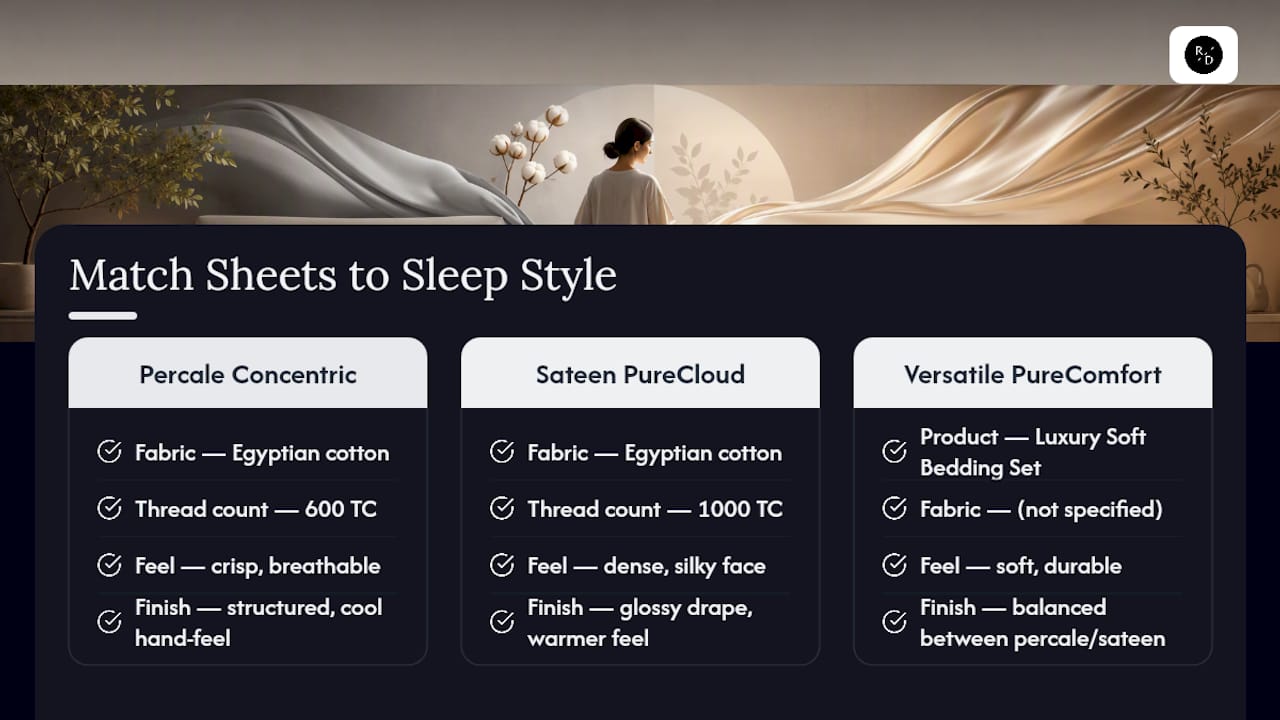
- The Concentric Sheet (Egyptian Cotton, 600 TC) exemplifies percale-style crispness for shoppers who want that cool, structured feel.
- The Pure Cloud Sheet (Egyptian Cotton, 1000 TC) delivers the dense, silky drape sateen fans are chasing, with the extra loft that comes from a heavier, luxurious construction.
- The PureComfort™ Luxury Soft Bedding Set works as a balanced middle ground for anyone who wants softness without committing fully to one weave’s character.
Whichever you choose, double check pocket depth and the returns window before checkout.
Which Roomie Design sheets match your sleep style?
If percale’s crisp, breathable finish is what you are after, the Concentric Sheet (Egyptian Cotton, 600 TC) is built around exactly that structured, cool hand-feel, ideal for anyone who sleeps warm or simply prefers a fresher, less clingy surface.
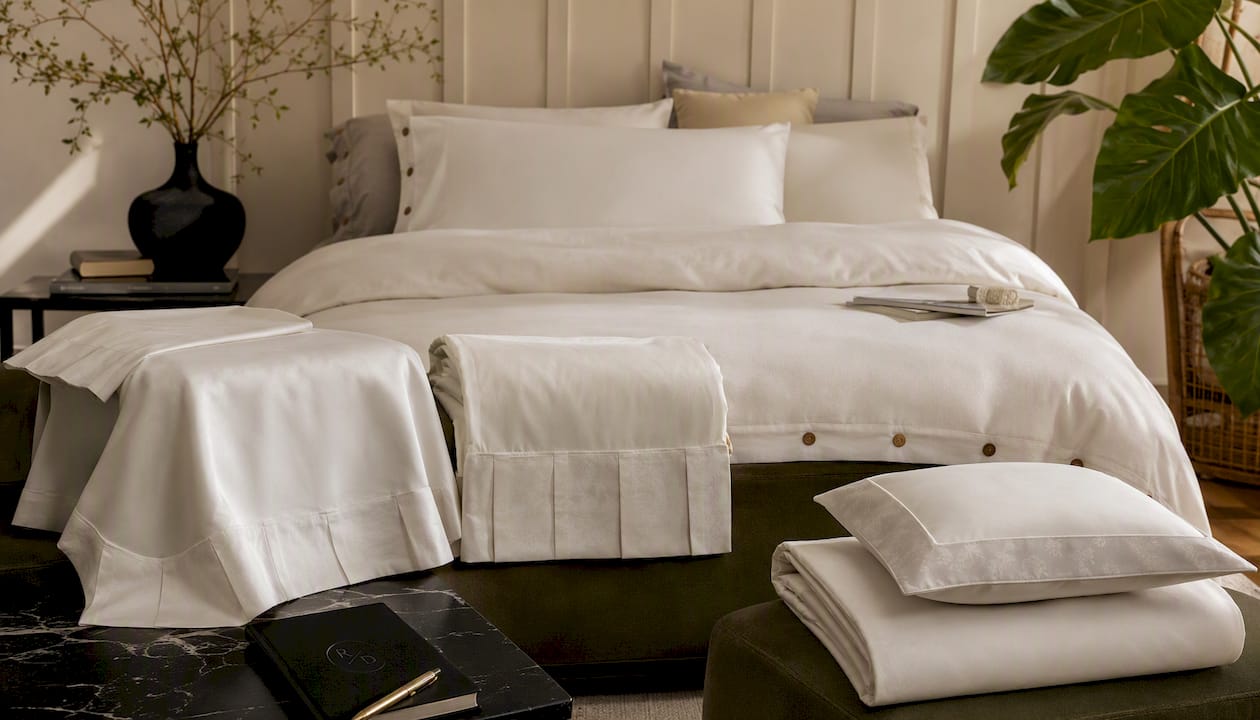
For shoppers drawn to sateen’s glossy drape and warmer feel, the Pure Cloud Sheet (Egyptian Cotton, 1000 TC) delivers that dense, silky face fabric with the substantial, opulent weight that makes a bed feel like a suite. Undecided shoppers, or anyone furnishing a guest room where two different sleepers might share the space, tend to do well with the PureComfort™ Luxury Soft Bedding Set, a versatile set that leans into softness and durability without forcing a choice between the two finishes.
Pairing the right sheet with the right bedroom is worth thinking through too. If you are updating more than just the linens, this guide to matching interior doors with your home’s style is a useful companion piece for the wider room. And if you want a broader look at fabric options beyond these two weaves, Roomie Design’s guide to the best bedding materials for comfortable sleep covers linen, Tencel and silk alongside cotton.
Check your mattress pocket depth carefully before ordering, and take advantage of the returns policy if the feel isn’t quite right on the first night. Browse the current collection and request a swatch if you would rather feel the fabric before committing to a full set.
Our closing thought on percale vs sateen
Pick the weave that matches whatever bothers you most at 2am, whether that’s overheating or a bed that feels flat and cold. Confirm long-staple cotton and the correct pocket depth before you buy, and don’t be afraid to own both and rotate them with the seasons. Explore Roomie Design’s swatches and guides if you want to feel the difference before you decide.
— Roomie Design
Sources
- Sateen vs Percale Sheets | Sleep Foundation
- Bed sheet buying guide | Consumer Reports
- Percale vs. sateen sheets | Architectural Digest
FAQ
What is better, sateen or percale?
Neither weave is objectively better; percale suits sleepers who want a cool, crisp, breathable feel, while sateen suits those who want a silky, warmer, lustrous surface.
Do high-end hotels use percale or sateen sheets?
Many hotels favour percale for its crisp, fresh feel and easy laundering at scale, though plenty of luxury properties also stock sateen for guests who prefer a softer, glossier finish.
What is the healthiest sheet to sleep on?
There is no single “healthiest” weave; what matters most is choosing genuine long-staple cotton, like the fibres used in Roomie Design’s Concentric Sheet and Pure Cloud Sheet, and washing it regularly at 30 to 40°C.
What sleeps cooler, percale or sateen?
Percale sleeps cooler because its plain, open weave allows more airflow, while sateen’s denser, glossier surface tends to hold slightly more warmth.


