Why choose mulberry silk bedding for better sleep
TL;DR:
- Mulberry silk bedding is a natural, hypoallergenic fabric known for its thermal regulation and low friction. It improves sleep quality by controlling temperature and reducing skin and hair irritation. Proper care extends its lifespan to 10–15 years, making it a worthwhile long-term investment.
Mulberry silk bedding is defined as a natural, protein-based luxury textile woven from the long, uniform fibres produced by Bombyx mori silkworms fed exclusively on mulberry leaves. The result is the finest grade of silk available, prized across the bedding industry for its thermal regulation, sericin protein composition, and hypoallergenic properties. Choosing mulberry silk bedding means selecting a fabric that improves your sleep micro-environment by managing temperature, reducing friction, and resisting common allergens. Few bedding materials combine those three functions in a single, naturally derived fibre.
Why choose mulberry silk bedding for sleep comfort?
Mulberry silk’s dual thermal regulation is its most distinctive physical property. The fibre’s microscopic triangular cross-section creates tiny air pockets that draw heat away from the body when you are warm and trap warm air when the room is cool. No synthetic fabric replicates this passive temperature control without added chemical treatments.
The practical result is a stable core body temperature throughout the night. Stable temperature is directly linked to deeper, more restorative sleep cycles. Restless nights caused by overheating or sudden chills become far less common once the sleep surface itself regulates the micro-environment.
Mulberry silk’s smooth surface also reduces friction on skin and hair far more effectively than woven cotton. Cotton fibres have a rougher texture that tugs at skin and hair during movement. Silk’s continuous filament structure glides, which means less disruption to sleep and less physical irritation by morning.
Key comfort advantages at a glance:
- Temperature control: draws heat away in summer, retains warmth in winter
- Moisture management: wicks moisture without feeling damp or clammy
- Low friction: smooth surface reduces tossing and turning
- Lightweight feel: high momme weight silk drapes without adding bulk
- Breathability: natural fibre structure allows air circulation throughout the night
Pro Tip: If you sleep hot, look for mulberry silk bedding rated at 19–25 momme. Higher momme weight means a denser weave with better durability, while still maintaining the fabric’s natural breathability.
What are the health and skin benefits of silk bedding?
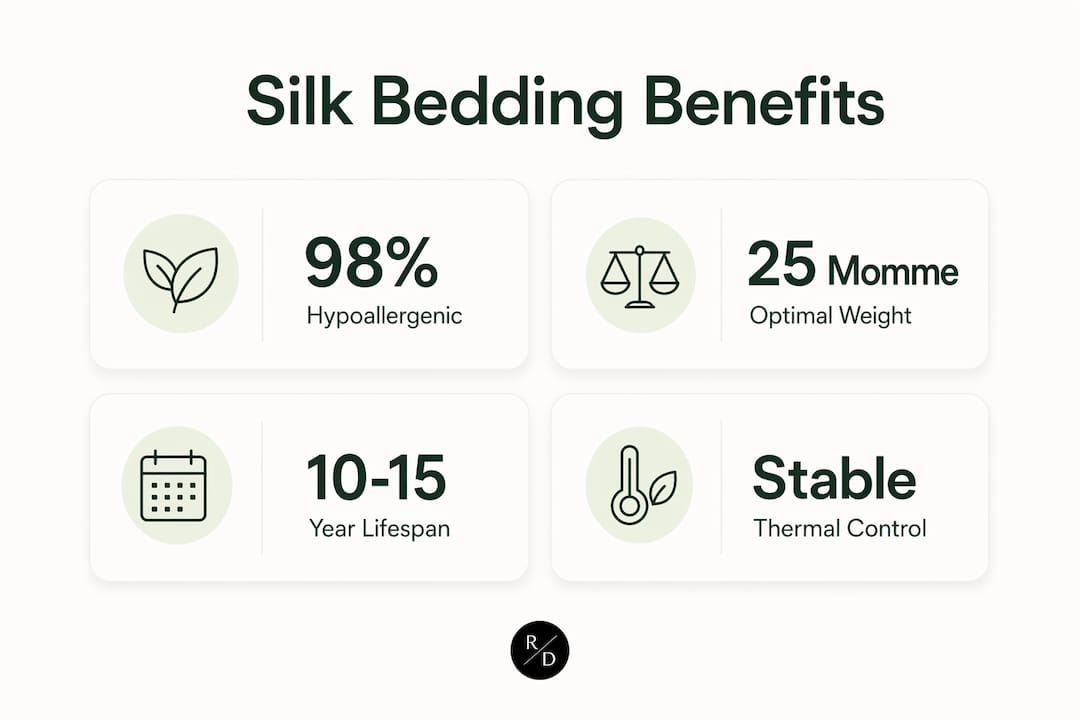
Mulberry silk’s sericin protein naturally resists dust mites and mould, making it one of the most hypoallergenic bedding materials available. Dust mites thrive in warm, humid environments rich in shed skin cells. Silk’s protein structure and low moisture retention create conditions that mites find inhospitable. For households managing allergies, pairing silk bedding with a professional mattress cleaning routine addresses allergens at every layer of the sleep surface.
Skin and hair benefits are equally well established. The low-friction surface means reactive or eczema-prone skin experiences less mechanical irritation overnight. Cotton pillowcases, by contrast, create repeated micro-abrasion with every movement. Silk’s gentle contact allows skin to recover without additional stress.
Hair benefits follow the same logic. Silk reduces hair breakage and frizz by eliminating the roughness that causes cuticle damage. Waking with smoother, less tangled hair is one of the most immediately noticeable changes new silk bedding owners report.
Mulberry silk also retains moisture differently from cotton. Cotton absorbs moisture readily, which means it can draw skincare products away from your face overnight. Silk’s lower absorbency keeps those products where they belong: on your skin. This makes silk particularly valuable for anyone following a consistent skincare routine.
- Hypoallergenic surface: sericin protein resists dust mites, mould, and common allergens
- Eczema-friendly: gentle on reactive and sensitive skin types
- Hair protection: reduces frizz, breakage, and cuticle damage
- Skincare retention: low absorbency keeps overnight products on skin, not fabric
- Mould resistance: natural protein composition inhibits mould growth
Pro Tip: Pair a pure silk pillowcase with your existing bedding as a low-cost entry point. The skin and hair benefits are most noticeable at the point of direct contact, making the pillowcase the highest-impact first purchase.
How does mulberry silk compare to other bedding materials?
Mulberry silk stands apart because of fibre consistency. Silkworms fed exclusively on mulberry leaves produce longer, uniform, stronger fibres than silkworms raised on mixed diets. That uniformity translates directly into higher tensile strength and a natural sheen that does not fade with washing. Lower-grade or blended silks use shorter, less consistent fibres that produce a duller finish and wear more quickly.
The comparison with other common bedding materials is equally clear:
| Material | Breathability | Friction on skin | Hypoallergenic | Durability |
|---|---|---|---|---|
| Mulberry silk | Excellent | Very low | Yes | 10–15 years with care |
| Cotton | Good | Moderate | Moderate | 3–5 years |
| Linen | Excellent | Low to moderate | Good | 5–10 years |
| Synthetic satin | Poor | Low | No | 2–3 years |
Synthetic satin is frequently confused with silk because of its sheen. The difference is fundamental. Synthetic satin’s smoothness comes from a weave pattern, not fibre quality. Unlike mulberry silk’s natural smoothness, which improves with age and gentle use, synthetic satin degrades with washing and loses its surface quality quickly.
Linen is a strong natural alternative for breathability, but its texture is noticeably coarser. Cotton remains the most widely used bedding material for good reason: it is durable, washable, and comfortable. Mulberry silk surpasses cotton specifically on friction reduction, allergen resistance, and thermal responsiveness. For those prioritising those three qualities, the case for silk is straightforward.
Mulberry silk is also biodegradable and renewable, produced without the harsh chemical processing required by many synthetic fabrics. That gives it a smaller environmental footprint than polyester or nylon-based bedding options.
How do you care for mulberry silk bedding properly?
Mulberry silk requires more considered care than cotton, but the process is straightforward once you understand the fabric’s needs. The sericin protein that gives silk its hypoallergenic and structural properties is sensitive to alkaline conditions. Harsh detergents strip sericin rapidly, degrading both the fabric’s integrity and its sheen.
Follow these steps to keep mulberry silk in excellent condition:
- Wash in cool water. Use a temperature no higher than 30°C. Hot water weakens silk fibres and causes shrinkage.
- Use a pH-neutral detergent. Products formulated for delicate fabrics preserve sericin proteins and maintain the fabric’s natural properties.
- Select a gentle machine cycle or hand wash. A delicate or silk-specific machine cycle reduces mechanical stress on the fibres.
- Never tumble dry. Heat from a dryer degrades silk rapidly. Lay flat or hang in a shaded area away from direct sunlight.
- Store in a breathable fabric bag. Airtight plastic storage traps moisture and can cause yellowing over time.
- Iron on the lowest setting if needed. Iron while slightly damp and always on the reverse side of the fabric.
Pro Tip: Add a tablespoon of white vinegar to the rinse cycle. It neutralises any residual alkalinity from the wash water and helps restore the fabric’s natural sheen without damaging the fibres.
With proper care, high-quality mulberry silk can last 10–15 years or more, becoming softer and more supple with each wash. That longevity makes the higher upfront cost considerably more reasonable when calculated on a cost-per-year basis. Most cotton bedding requires replacement every 3–5 years. Silk, maintained correctly, outlasts it by a significant margin.
The most common mistake first-time owners make is treating silk like cotton. Tossing it into a hot wash with standard detergent causes irreversible damage within a few cycles. Understanding the fabric’s needs from the start protects the investment entirely.
Roomie Design’s view on mulberry silk as a long-term investment
Mulberry silk bedding is not for everyone, and that is precisely what makes it worth discussing honestly. The fabric rewards those who are prepared to care for it properly. For those who are, the return is exceptional.
The sleep quality difference is real and immediate. The thermal regulation alone changes the character of a night’s rest in a way that is difficult to attribute to anything else once you have experienced it. Skin and hair improvements follow within weeks, not months.
What surprises most people is how the fabric improves over time. Unlike cotton, which softens initially and then gradually roughens, mulberry silk becomes more supple with careful washing. A well-maintained set feels noticeably better after two years than it did on the first night.
The individuals who benefit most are those with sensitive skin, allergy-prone households, anyone serious about hair health, and those who simply value a refined sleep surface. Mulberry silk is not a luxury for its own sake. It is a fabric that performs in ways other materials do not, and the performance is measurable night after night.
— Roomie Design
Mulberry silk bedding from Roomie Design
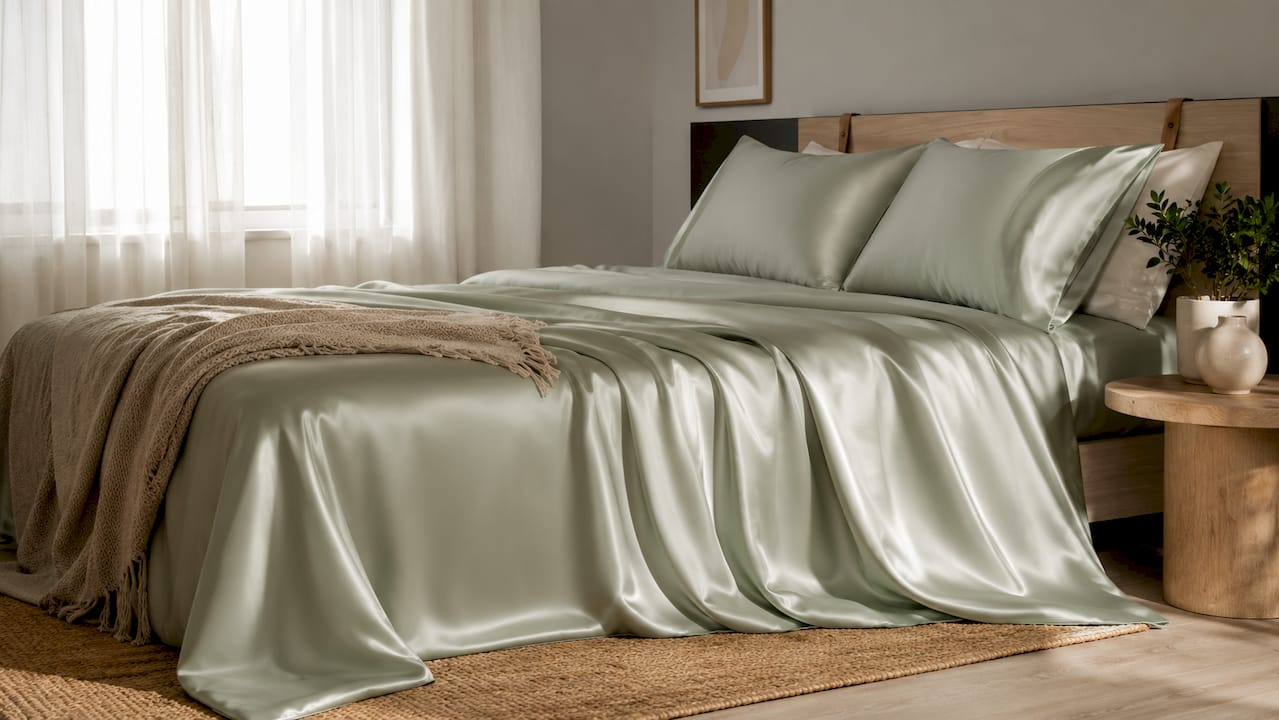
Roomie Design offers a curated selection of 25 momme mulberry silk bedding sets designed for those who want the full performance of premium silk without compromise.
The Black 25 Momme Silk Set and the Grey 25 Momme Silk Set both use 100% pure mulberry silk at a weight that balances durability with the fabric’s characteristic drape and breathability. Each set reflects the thermal regulation, hypoallergenic properties, and low-friction surface discussed throughout this article. For those starting with a single piece, the 22 momme silk pillowcase set of two offers an accessible entry point with immediate skin and hair benefits. Browse the full range at Roomie Design to find the right weight, colour, and size for your bedroom.
FAQ
What is mulberry silk bedding?
Mulberry silk bedding is a luxury textile made from the long, uniform fibres of Bombyx mori silkworms fed exclusively on mulberry leaves. It is the highest grade of silk used in bedding, valued for its softness, thermal regulation, and hypoallergenic sericin protein composition.
Is mulberry silk bedding worth the cost?
Mulberry silk bedding is a long-term investment. With proper care using pH-neutral detergents, high-quality mulberry silk lasts 10–15 years, making the cost per year competitive with frequently replaced cotton bedding.
What momme weight should I choose for silk bedding?
A momme weight of 19–25 is the standard range for bedding. Higher momme weight, such as 25 momme, offers greater durability and a denser feel while retaining the fabric’s natural breathability and drape.
Does mulberry silk help with allergies?
Mulberry silk’s sericin protein naturally resists dust mites and mould, making it one of the most hypoallergenic bedding materials available. It is widely recommended for those with eczema, reactive skin, or household allergies.
How is mulberry silk different from synthetic satin?
Mulberry silk’s smoothness comes from its long, consistent natural fibres, which improve with age. Synthetic satin achieves its sheen through a weave pattern and degrades with washing, losing surface quality within a few years.
Recommended
- Extra Bedding Pieces Luxury Designer Bedding Set – Roomie Design
- Premium Sky Blue Mulberry Silk 22 mm Luxury Designer Bedding Set – Roomie Design
- Premium Pink Mulberry Silk 22 mm Luxury Designer Bedding Set – Roomie Design
- Premium Green Mulberry Silk 22 mm Luxury Designer Bedding Set – Roomie Design


