Bed sheet thread count guide for true sleep comfort
TL;DR:
- Thread count measures the total number of threads woven into one square inch of fabric, but manufacturers often inflate this number using multi-ply yarns. Higher thread counts do not necessarily mean better quality or comfort, as factors like fiber type and weave are more significant. Choosing sheets based on appropriate fiber, weave, and a realistic thread count ensures better sleep quality rather than relying solely on marketing figures.
You buy a set of sheets labelled “1000 thread count,” expecting the kind of softness you get in a five-star hotel. They arrive, you make the bed, and within a week you’re sleeping hot, waking sticky, and wondering what went wrong. Thread count is one of the most misunderstood figures in bedding, and manufacturers know it. This guide explains what thread count actually measures, what it doesn’t, and how to use it as one tool among several when choosing sheets that genuinely improve your sleep.
Key Takeaways
| Point | Details |
|---|---|
| Thread count is only one factor | Material and weave usually matter more for softness and breathability than thread count alone. |
| Don’t trust ultra-high counts | Counts above 600-800 are often marketing tactics and may lead to less comfortable, denser sheets. |
| Choose sheets by use | Opt for single-ply, mid-range counts for everyday comfort and breathability. |
| Consider fabric and weave | Egyptian cotton, linen, and percale/sateen blends provide excellent comfort; don’t pick on count alone. |
What is thread count and why does it matter?
Thread count is the total number of threads woven into one square inch of fabric. It adds together the vertical threads (the warp) and the horizontal threads (the weft). A sheet with 200 warp threads and 200 weft threads per square inch carries a thread count of 400. Simple in principle, but the number shown on the packaging is frequently not that straightforward.
The core problem is yarn construction. A single-ply yarn is made from one strand of fibre. A multi-ply yarn twists two or three strands together. Some manufacturers count each individual strand within a multi-ply thread, which can artificially inflate the count far beyond what the weave actually contains. A 600 thread count sheet made with three-ply yarn may only have the physical density of a genuine 200 thread count single-ply sheet.
“Higher thread count does not always mean better quality; manufacturers inflate counts using multi-ply yarns.” — Wirecutter Advice Spec Sheet
What thread count can tell you: a rough sense of fabric density and, to a limited degree, softness. What it cannot tell you: the fibre quality, the finishing process, the weave structure, or whether the sheet will breathe well on a warm night. Understanding sleep and comfort benefits requires looking at a wider set of factors, not just one number on a label.
| Thread count range | Typical feel | Common use |
|---|---|---|
| 200 to 300 | Crisp, lightweight | Everyday cotton, percale |
| 300 to 500 | Smooth, balanced softness | Premium cotton, bamboo |
| 500 to 600 | Dense, silky | Sateen, luxury sets |
| 600 and above | Often inflated | Marketing-heavy, check ply |
How to choose the best thread count for your needs
Once you understand what thread count measures, the next step is matching it to your specific sleeping needs and preferred material. The best thread count explained varies considerably by fabric type, and that context changes everything.
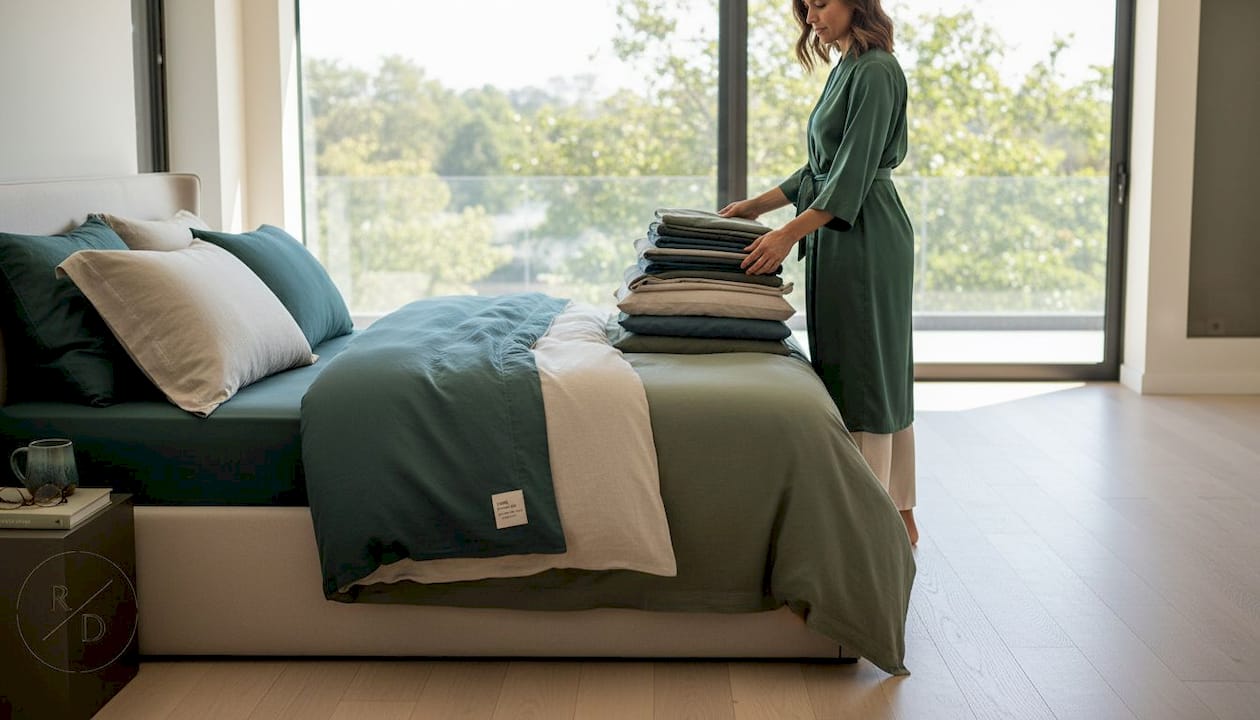
Ideal thread count ranges by fabric:
| Fabric | Recommended thread count | Notes |
|---|---|---|
| Egyptian cotton | 400 to 600 | Single-ply only for accurate count |
| Pima cotton | 300 to 500 | Naturally fine fibres; lower counts still soft |
| Bamboo | 300 to 400 | Higher counts can reduce breathability |
| Linen | 80 to 150 | Lower counts are standard; weave matters more |
| Mulberry silk | Not applicable | Measured in momme weight, not thread count |
For cotton sheets, thread counts above 600 to 800 are often the result of multi-ply inflation and produce a denser, less breathable fabric that retains more body heat. Single-ply construction at a genuine 400 to 500 thread count typically outperforms a multi-ply “800 thread count” sheet in both softness and airflow.
Step-by-step checklist for thread count shopping:
- Check whether the thread count is single-ply or multi-ply. Look for “single-ply” on the label or product description.
- Identify the fibre type before comparing thread counts. A 300 thread count Egyptian cotton sheet and a 300 thread count polyester blend feel nothing alike.
- Cross-reference thread count with weave type. Percale sits around 200 to 400; sateen typically runs 300 to 600.
- Consider your sleep temperature. If you sleep warm, prioritise lower thread counts in breathable fabrics over dense, high-count sheets.
- Read verified reviews that mention feel and breathability, not just the thread count number.
Pro Tip: If a sheet is marketed above 800 thread count without specifying single-ply yarn, treat the number as a marketing figure rather than a quality indicator. Focus instead on choosing bedding for comfort based on fibre and weave.
Beyond thread count: What really affects sheet comfort
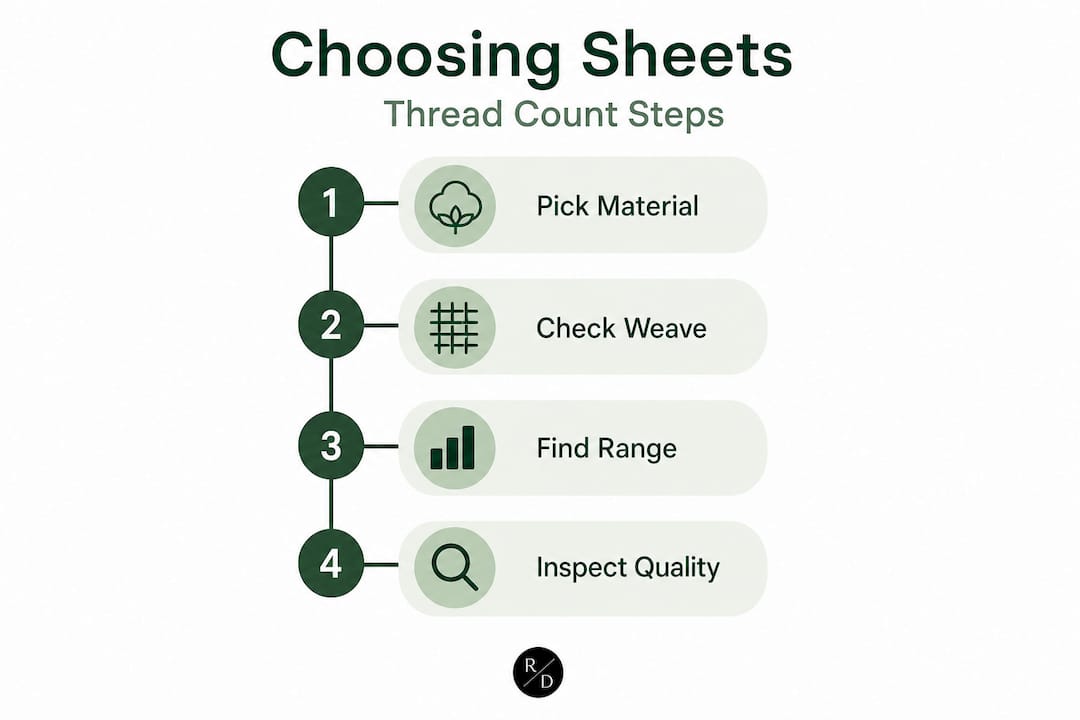
Thread count is a single variable in a much larger equation. Experts agree that material and weave have a greater impact on overall comfort and sleep quality than thread count alone. If the fabric is low grade, no amount of thread count will save it.
Material types and their comfort impact:
- Egyptian cotton: Long-staple fibres produce a smooth, strong, and exceptionally soft sheet. It gets softer with each wash without losing durability.
- Pima cotton (Supima): Similar long-staple quality to Egyptian cotton. Slightly more accessible in price. Resistant to pilling.
- Linen: Breathable, moisture-wicking, and ideal for warm sleepers. Feels slightly textured at first but softens over time. Thread count is less relevant here.
- Mulberry silk: Naturally temperature-regulating and hypoallergenic. Measured in momme rather than thread count. Best for sensitive skin.
- Bamboo: Soft, sustainable, and moisture-wicking. Works well in moderate to warm climates.
Weave types matter just as much:
Percale is a plain one-over-one-under weave. It produces a matte, crisp finish with a cool feel. It suits hot sleepers and those who prefer a hotel-style, structured sheet. Sateen uses a four-over-one-under weave, which creates a smooth, lustrous surface that feels warmer and more luxurious to the touch. It suits cooler climates or those who run cold at night.
Pro Tip: When comparing two sheets at the same thread count, check the weave first. A percale at 300 thread count will sleep cooler than a sateen at the same count, even though the number is identical. Knowing the difference is one of the key factors in distinguishing designer bedding quality from standard options.
Common mistakes with thread count (and how to avoid them)
Retailers invest heavily in thread count marketing because it gives shoppers a simple number to compare. That simplicity works against you if you don’t know the traps.
The five most common thread count mistakes:
- Paying a premium for inflated counts. A “1200 thread count” sheet priced at a significant markup may deliver less comfort than a genuine 400 thread count single-ply alternative. Check the yarn construction before the price tag.
- Ignoring fabric type entirely. Thread count on a synthetic blend is nearly meaningless. The fibre determines the base quality; thread count only fine-tunes it within that quality tier.
- Confusing multi-ply and single-ply counts. Two sheets both labelled 600 thread count can have very different densities depending on whether the count is based on single or multi-ply threads. Always ask.
- Overlooking breathability. A very high thread count creates a tighter weave that limits airflow. If you sleep hot or live in a warmer climate, this matters considerably more than how smooth the fabric feels in your hand.
- Not checking when to replace. Even the best sheets lose their qualities over time. Knowing when to upgrade sheets prevents you from sleeping on worn fabric long after it has stopped performing.
“Higher thread count does not always mean better quality; manufacturers inflate counts using multi-ply yarns.” — Wirecutter Advice Spec Sheet
What to prioritise instead: fibre quality first, weave type second, then thread count within a sensible range for that material. This order of priority gives you better results than chasing the highest number on the packaging.
Why thread count matters less than you think
Thread count became a shorthand for quality because shoppers needed something tangible to compare. Retailers noticed, and the number was never quite the same again. The reality is that two sheets with an identical thread count can feel completely different depending on the cotton grade, the finishing treatment, and whether the yarns are single or multi-ply. The number tells you very little on its own.
True comfort comes from balance. The right fibre for your sleep temperature, the right weave for your preferred texture, and then, within that context, an appropriate thread count. That order matters. When you reverse it and start with the number, you often end up overpaying for density you don’t need or losing breathability you do.
Transforming sleep quality is less about finding the highest number and more about understanding how each variable works together. A 400 thread count Egyptian cotton percale sheet, woven well and finished properly, will outperform a 1000 thread count multi-ply sheet in softness, durability, and airflow. That is not a minor distinction. It is the difference between sheets that perform and sheets that merely market well.
Upgrade your sleep experience with luxury bedding
Applying what you now know about thread count, fibre, and weave is straightforward when the products are selected with these principles in mind.
Roomie Design offers bedding that balances all three variables for genuine comfort. The Aristocrat Gold luxury set combines premium construction with a refined finish for those who want both style and sleep quality. For a richer, warmer option, the Oriental Jacquard Red set is woven at 600 TC with verified single-ply construction. If Egyptian cotton at a full 1000 TC interests you, the Prestige Beige Egyptian cotton duvet cover set is worth exploring. Each product is chosen to reflect the quality criteria covered in this guide, not just the headline number.
Frequently asked questions
Is a 1000 thread count sheet really better than 600 thread count?
Not necessarily. Thread counts above 600 to 800 are frequently inflated using multi-ply yarns, making the fabric denser and less breathable rather than genuinely more comfortable.
What is the best thread count for cotton bed sheets?
For most cotton sheets, a single-ply count of around 300 to 500 offers the best balance of softness, breathability, and durability without multi-ply inflation.
Should I consider material or thread count first?
Material and weave have a larger impact on comfort than thread count. Assess the fibre type and weave structure before comparing counts across products.
Are high thread count sheets hotter to sleep in?
Yes. Denser, less breathable fabric results from very high thread counts, which reduces airflow and can cause sheets to retain more body heat during the night.
Recommended
- Why high-quality sheets improve your sleep and home – Roomie Design
- Why upgrading your bedding transforms sleep and style – Roomie Design
- Luxurious 1200-Thread-Count Grey Duvet Cover Set (Egyptian Cotton) Luxury Designer Bedding Set – Roomie Design
- Luxurious 1200-Thread-Count Light Blue Duvet Cover Set (Egyptian Cotton) Luxury Designer Bedding Set – Roomie Design


