
How to style duvet covers for a designer bedroom
TL;DR:
- Duvet cover styling involves layered textures and coordinated colors to create a polished bedroom look. Proper arrangement, securing techniques, and color coordination are essential for a neat, hotel-like finish. Reversible covers offer versatile options, with each side styled separately for seasonal or aesthetic variation.
Duvet cover styling is the practice of combining precise placement, layered textures, and coordinated colours to create a polished, designer-quality bed. The duvet cover is the most visually dominant bedding element in any bedroom, making it the single most effective tool for personalising your space. Whether you are a homeowner refreshing a master bedroom or a renter working within a neutral palette, mastering how to style duvet covers transforms the entire feel of a room. This guide covers everything from preparation and securing techniques to colour coordination and reversible cover styling.
What tools and materials do you need to style duvet covers?
Good results start with the right preparation. Before you arrange a single layer, gather the items below to give yourself the best foundation.
| Item | Purpose | Options |
|---|---|---|
| Fitted sheet | Base layer, wrinkle-free | Cotton, linen, lyocell |
| Flat sheet | Visible layer beneath duvet fold | 400–1000 TC cotton or linen |
| Duvet insert | Structure and warmth | Microfibre, down, alternative |
| Duvet cover | Main design element | Plain dye, reversible, patterned |
| Decorative pillows | Focal point and depth | Velvet, knit, cotton |
| Throw blanket | Texture and colour accent | Chunky knit, linen, faux fur |
| Iron or steamer | Wrinkle removal | Handheld or standing steamer |
| Duvet clips or ties | Securing insert | Corner ties, safety clips |
Sizing is the most overlooked factor in duvet cover styling. Buying duvet and cover from the same brand or in identical dimensions reduces shifting and bunching inside the cover. A mismatched insert will bunch to one side regardless of how carefully you arrange it. Fabric choice also affects the final look. Linen and cotton covers drape with natural texture, while higher thread count cotton sets deliver a smooth, crisp surface that holds its shape well throughout the day. For a full overview of how duvet cover sizing affects both fit and aesthetics, it is worth reviewing a dedicated size guide before purchasing.
How to arrange and secure a duvet cover for a hotel-like finish
A smooth, pulled-together bed depends as much on the insertion method as on the cover itself. Follow these steps for a result that holds its shape all day.
- Lay the duvet cover flat on the bed, inside out, with the opening at the foot of the bed.
- Place the duvet insert on top, aligning all four corners precisely with the cover corners.
- Use the burrito method. Roll both layers together tightly from the head of the bed toward the foot, then feed the roll through the opening and unroll. This distributes the insert evenly and prevents lumping.
- Secure corner ties or clips at each corner inside the cover. Securing inserts with ties is the most reliable way to prevent bunching during sleep.
- Shake and spread the duvet across the bed, smoothing from the centre outward to remove air pockets.
- Fold the top quarter back toward the foot of the bed. Folding back one quarter reveals the flat sheet beneath and creates a deliberate layered effect rather than a flat, uniform surface.
- Tuck the bottom edge neatly under the mattress for a clean, tailored finish.
Pro Tip: Iron or steam your duvet cover before making the bed. Puffy recommends this step specifically for achieving a hotel-style surface. A wrinkle-free cover makes every other styling detail look more intentional.
Symmetry matters throughout this process. The duvet should overhang the mattress evenly on both sides. Uneven overhang is one of the most common reasons a well-made bed still looks untidy.

How do you coordinate colours, patterns, and textures stylishly?
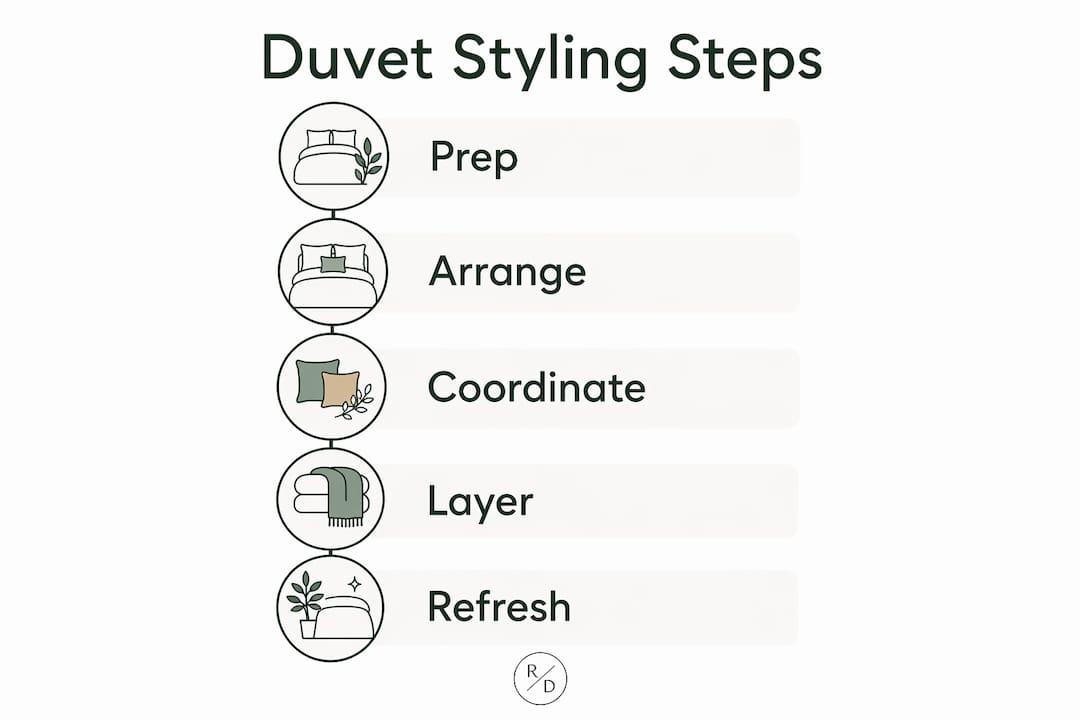
Colour and pattern coordination is where duvet cover styling shifts from neat to genuinely designed. The anchor colour strategy is the most reliable starting point. Using an anchor colour means choosing one dominant tone for the duvet cover and building all other layers around it. This grounds the scheme even when you mix patterns and textures across pillows and throws.
Architectural Digest interior designers describe the duvet cover as the piece to “have fun” with, using patterns like gingham, stripes, or colour blocking while keeping surrounding layers quieter. The practical rule is to limit the bed to two or three patterns at most. More than three creates visual noise rather than intentional design.
Texture mixing is equally important and often underused. Consider these combinations for adding depth without clutter:
- Cotton duvet cover with a linen throw and velvet cushions for a warm, layered feel
- Plain dye cover in a neutral tone with a chunky knit throw for contrast in weight and texture
- Patterned cover with solid-colour pillowcases in one of the pattern’s secondary colours
- Linen duvet cover with silk or high thread count cotton pillowcases for a tactile contrast
Seasonal swaps are a low-cost way to keep the look current. Rotating pillowcases and throws with the seasons, moving from warm ochres and deep greens in autumn to soft whites and pale blues in spring, refreshes the entire bedroom without replacing the duvet cover itself. For more inspiration on combining textiles, the bedding layering guide from Roomie-design covers fabric combinations in detail.
What common mistakes undermine a styled duvet cover?
Most styling problems trace back to a small number of avoidable errors. Recognising them early saves time and keeps your bed looking its best.
- Misaligned insert. A shifting insert creates lumps and uneven drape. Insert shifting is the leading cause of a messy-looking bed, not pillow arrangement.
- Too many decorative pillows. Limit decorative pillows to three to five. More than five creates a cluttered surface that is difficult to style consistently each morning.
- Ignoring wrinkles. A creased cover undermines every other effort. Steam or iron before making the bed, and use a fabric spray for a quick refresh between washes.
- Skipping daily fluffing. Fluffing the duvet daily restores volume and smooths the surface after sleep. It takes under a minute and makes a visible difference.
- Neglecting rotation. Rotating the duvet insert monthly prevents uneven wear and keeps the fill distributed evenly across the cover.
- Infrequent washing. Duvet covers benefit from regular washing to maintain freshness and colour vibrancy. Airing the duvet between washes also helps.
Pro Tip: Add two or three drops of lavender or eucalyptus essential oil to a small spray bottle filled with water and mist the duvet lightly after making the bed. This keeps the cover smelling fresh between washes without any chemical residue.
How to style reversible duvet covers for versatile bedroom looks
Reversible duvet covers are one of the most practical creative duvet cover ideas available, offering two distinct looks from a single purchase. The key to making the most of them is treating each side as a separate scheme rather than simply flipping the cover at random.
- Coordinate accessories to the displayed side. If the bold side is showing, use solid-colour pillowcases in one of the cover’s accent tones. When the quieter side faces up, introduce more textured or patterned cushions for interest.
- Use seasonal logic. Many reversible covers pair a warm, rich tone with a cooler, lighter one. Reserve the deeper side for autumn and winter, and flip to the lighter side for spring and summer.
- Layer with solids. A reversible cover with two strong patterns works best when the surrounding layers, throws and pillowcases, are plain or subtly textured. This prevents the bed from feeling overloaded.
- Try neutral plus bold combinations. A cover with a soft grey on one side and a deep navy or forest green on the other gives you a genuinely different bedroom aesthetic without buying two covers.
Pro Tip: Store the unused side folded neatly in a linen bag labelled by season. This makes swapping quick and keeps covers in good condition between uses.
Reversible covers also work well as a testing ground for colour schemes you are considering more permanently. Spending a season with a bold colour before committing to curtains or paint is a practical way to assess whether the tone suits the room.
What I have learned from styling duvet covers
Duvet cover styling is one of the quickest ways to change how a bedroom feels without any renovation. What I have found, after working with hundreds of bedding combinations, is that alignment and securing are the unglamorous details that make the biggest difference. A beautifully patterned cover on a lumpy, shifting insert looks worse than a plain cover fitted correctly.
The other thing worth saying plainly: personal taste outperforms any design rule. The anchor colour strategy and the two-to-three pattern limit are useful starting points, not fixed constraints. If a maximalist, layered bed with five textures and four colours makes you happy every morning, that is the right choice for your space. The goal is a bed you want to return to, not one that photographs well but feels clinical to live with. Experiment with layers, swap throws with the seasons, and treat the duvet cover as the most changeable, most expressive part of your bedroom.
— Roomie
Upgrade your bedroom with Roomie-design bedding
Styling techniques only reach their full potential when the bedding itself is worth showcasing. Roomie-design offers a curated range of premium duvet cover sets in linen, cotton, and luxury fabrics designed to hold their shape, drape beautifully, and complement every styling approach covered in this guide.

The natural linen bedding set and white linen bedding set are particularly well suited to layered, texture-led styling, while the Annabelle silver grey lace set works as a statement anchor piece. For a hotel-inspired finish, the Hotel Luxe contrast border set delivers the crisp, tailored look that the burrito method and corner securing techniques are designed to achieve. Browse the full collection at Roomie-design to find the set that fits your style and bedroom.
FAQ
What is the best method for inserting a duvet into its cover?
The burrito method is the most effective technique. Lay the cover inside out, place the insert on top, roll both together tightly, feed through the opening, then unroll. This distributes the fill evenly and prevents bunching.
How many decorative pillows should you use when styling a bed?
Three to five decorative pillows is the recommended range. Fewer than three can look sparse, while more than five creates clutter that is difficult to maintain consistently each morning.
How do you keep a duvet cover looking fresh between washes?
Fluff the duvet daily to restore volume, air it regularly, and use a light mist of water with a few drops of essential oil for a pleasant scent. Rotating the insert monthly also prevents uneven wear.
How do you style reversible duvet covers effectively?
Treat each side as a separate scheme. Coordinate pillowcases and throws to match the displayed side, and use seasonal logic to decide which side faces up. Pair bold sides with solid accessories to avoid visual overload.
What is the anchor colour strategy for duvet cover styling?
The anchor colour strategy means choosing one dominant tone for the duvet cover and building all surrounding layers around it. Architectural Digest recommends this approach to keep mixed patterns and textures feeling intentional rather than chaotic.


