

How to troubleshoot bedding issues for better sleep
TL;DR:
- Damp bedding often results from high humidity, improper drying, or night sweats, requiring prompt cleaning and thorough drying. Managing bedroom microclimate by controlling humidity, airing bedding, and using breathable protectors can significantly reduce allergens and improve sleep comfort. Regular maintenance, such as tightening bed frame joints, rotating or flipping mattresses, and choosing moisture-wicking fabrics, addresses common support, temperature, and hygiene issues effectively.
Waking up damp, overheated, sneezing, or simply uncomfortable is a sign your bedding setup needs attention. Knowing how to troubleshoot bedding issues — what sleep hygiene professionals call bed comfort troubleshooting — is about identifying root causes rather than just swapping out products. Most problems come down to moisture, allergens, mattress condition, or hygiene. All of them are fixable. This guide covers each category with practical steps you can act on today, whether you rent or own your home.
Table of Contents
- Managing moisture and dampness in bedding
- Controlling dust mites and allergens
- Fixing mattress comfort and overheating
- Resolving hygiene issues: stains, mildew, and bed bugs
- My take on bedding care that actually works
- Upgrade your bedding for lasting comfort
- FAQ
Managing moisture and dampness in bedding
Damp bedding is one of the most common complaints. The causes range from high bedroom humidity and night sweats to bedding that was not dried properly after washing.
Signs to look for:
- A persistently musty smell, even after washing
- Bedding that feels clammy or cool to the touch in the morning
- Visible discolouration or mould spots on mattress edges or pillow seams
- Condensation on nearby windows, indicating excess humidity
Any of these points to a moisture problem that needs resolving at the source. Damp bedding requires prompt washing and thorough drying. Leaving it will lead to mould growth and persistent allergen build-up, neither of which improves with time.
Effective drying methods:
| Method | Best for | Notes |
|---|---|---|
| Tumble dryer (medium heat) | Duvets, pillows, thick sheets | Add dryer balls to prevent clumping |
| Air drying outdoors | All bedding | Best on dry, breezy days |
| Indoor rack with open window | Sheets, pillowcases | Pair with dehumidifier for speed |
| Dehumidifier in bedroom | Ongoing humidity control | Set to 50–55% relative humidity |
A breathable mattress protector adds a further layer of defence. It keeps body moisture from reaching the mattress itself, which is far harder to dry once damp.
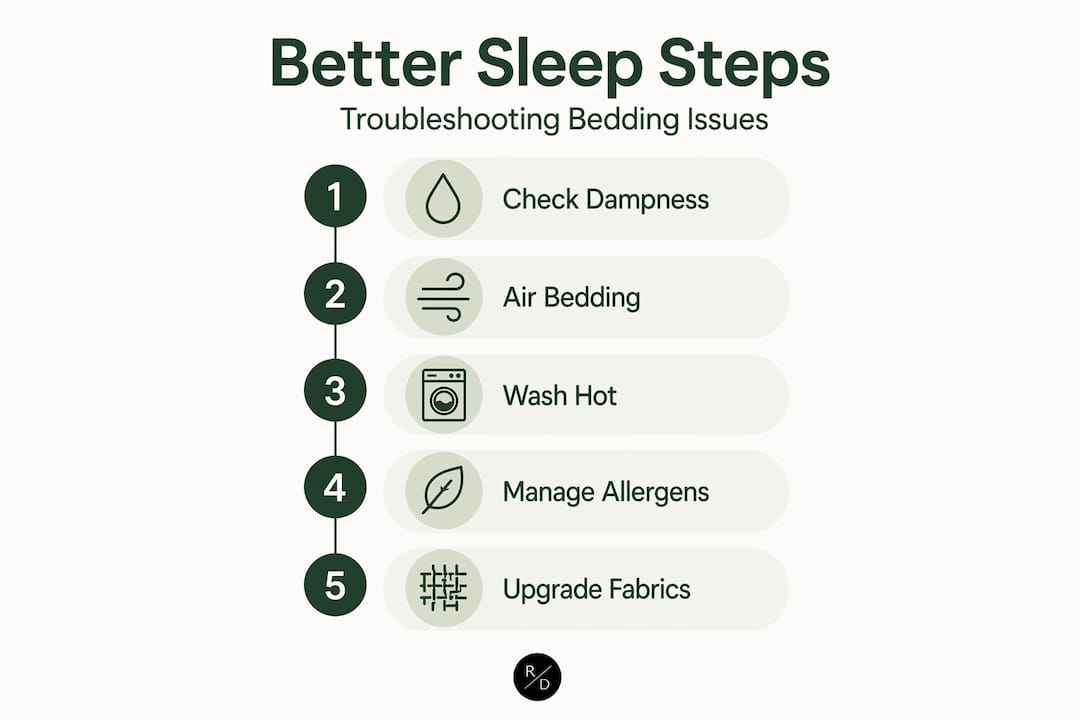
Pro Tip: Air your bed immediately after waking. Pull back the duvet completely and leave it for at least 20 minutes before making the bed. This allows moisture to evaporate rather than becoming trapped.
Controlling dust mites and allergens
If you wake with a stuffy nose, itchy eyes, or a scratchy throat, dust mites are the likely culprit. They thrive in warm, humid bedding and shed allergens continuously.
The most effective approach is controlling the bedroom microclimate rather than relying on sprays or chemical treatments. Keeping humidity between 50 and 60% suppresses mite populations significantly. Below 50%, their survival collapses within days.
Follow this routine to reduce allergen load systematically:
- Wash sheets and pillowcases weekly at 60°C or above. Washing at 60°C kills dust mites and bacteria that cold cycles leave behind.
- Do not make the bed straight away. Leaving it open after sleep reduces mite populations by allowing moisture to escape.
- Fit allergen-proof encasements on your mattress and pillows. Encasements with pores under 10 microns block mite access entirely.
- Vacuum the mattress surface every two weeks using an upholstery attachment.
- For delicate items that cannot be washed at high temperatures, freezing at −20°C for 24 hours kills mites effectively, though a cold rinse afterwards is needed to remove the allergen residue.
Pro Tip: Frequent airing and hot washing together are more effective than either habit alone. Pair both consistently for the clearest improvement in sleep quality.
Reviewing how to choose bedding materials that resist allergen build-up is a worthwhile next step once your routine is in place.
Fixing mattress comfort and overheating
Mattress and frame issues cause more poor nights’ sleep than most people realise. The good news is that several of the most common problems have straightforward fixes.
Squeaks and uneven support are typically a bed frame issue, not the mattress. Tightening bolts and lubricating joints on the frame and slats resolves most noise and restores even weight distribution. Check every join before concluding the mattress is at fault.
Sagging is harder to ignore. Run your hand across the mattress surface while it is stripped. If you feel a noticeable dip in the centre or on one side, the mattress is losing structural support. Flipping a double-sided mattress can extend its life by 12 to 18 months. Single-sided mattresses cannot be flipped, so rotating them 180° end to end redistributes wear instead.
Overheating is where many buyers are misled. Many cooling bedding products offer limited relief unless the fabric prioritises moisture-wicking and quick drying. The label matters less than the performance. Fabrics that pull sweat away from the body and release it quickly keep you drier, which is what actually regulates temperature through the night.
| Fabric type | Moisture management | Feel |
|---|---|---|
| Egyptian cotton (high TC) | Excellent absorption, soft and durable | Smooth, luxurious |
| Lyocell / Tencel | High wicking, fast drying | Cool, silky |
| Linen | Good airflow, moderate wicking | Textured, relaxed |
| Bamboo | Soft wicking, gentle on skin | Light, breathable |
Premium cotton at 400 TC and above delivers both comfort and durability, making it a sound long-term investment for anyone who runs warm at night.
Resolving hygiene issues: stains, mildew, and bed bugs
Hygiene problems need prompt attention. Leaving them unaddressed does not make them easier to treat.
For mildew on a mattress, follow these steps:
- Strip all bedding immediately and wash at 60°C.
- Mix a mild solution of white vinegar and water (equal parts) and apply lightly to the affected area with a cloth.
- Do not soak the mattress. Blot, do not rub.
- Dry using a fan, open window, or dehumidifier until the area is completely dry. Insufficient drying is the primary reason mildew returns after treatment. Stronger cleaning products are not the answer. Thorough drying is.
- If mould reappears within a week despite correct treatment, the mattress likely needs replacing. Recurring mould deep within the layers cannot be treated from the surface.
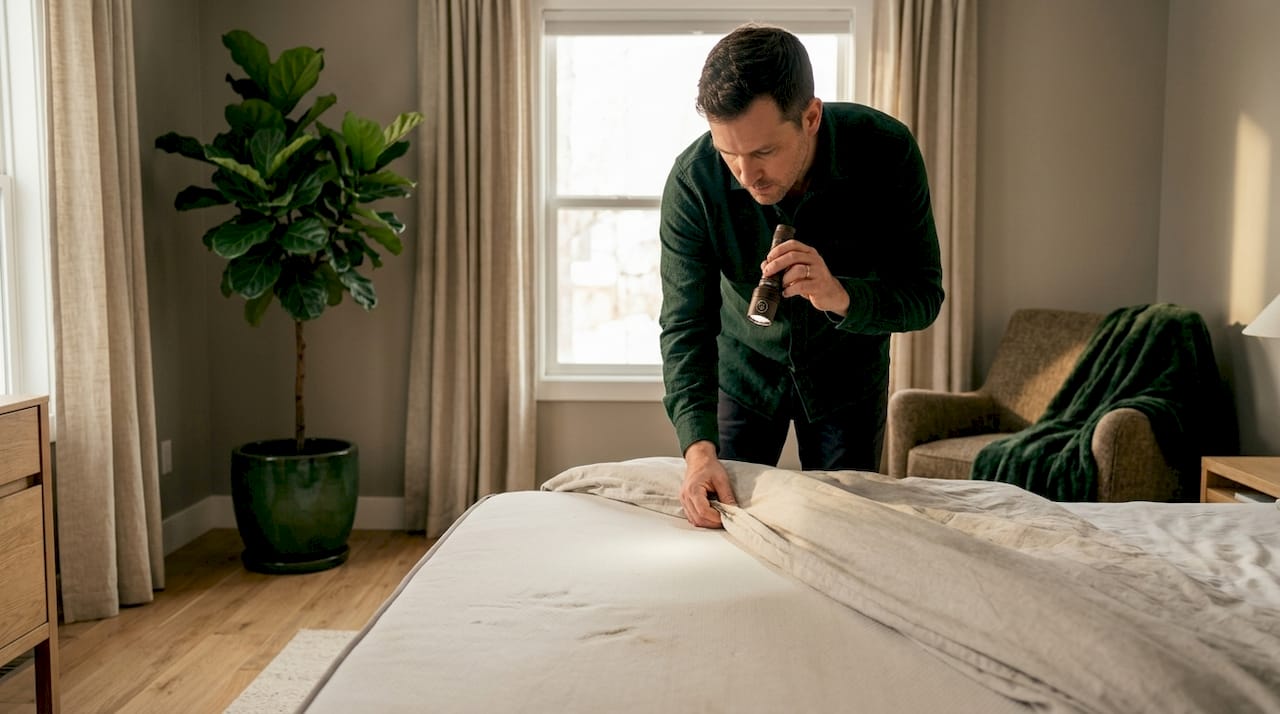
For suspected bed bugs, inspect seams, piping, and folds of the mattress, headboard, and bed frame using a torch. Tiny rust-coloured spots, shed skins, or live insects confirm their presence. Washing bedding at 60°C and tumble drying on high heat for 30 minutes eradicates them from fabric. For a detailed natural inspection process, the guidance from Apex Pest Control covers what to look for before committing to costly treatments.
Pro Tip: Fit mattress and pillow encasements and place interceptor cups under each bed leg. These allow you to monitor for bed bugs and confirm their presence before escalating to professional treatment.
My take on bedding care that actually works
I’ve seen a lot of people replace their entire bedding setup when the real problem was a simple daily habit. Or rather, the absence of one.
In my experience, airing the bed every morning does more for sleep comfort and allergen control than rewashing sheets twice a week. Most people make the bed straight away and unknowingly seal in overnight moisture. That moisture feeds mites, softens mattress foam, and creates the conditions for mildew. It is a slow problem that builds over months until it becomes impossible to ignore.
What I’ve also learned is that the bedroom microclimate matters more than the products inside it. Managing humidity, airflow, and drying timing consistently outperforms chemical sprays, allergen-marketed products, and expensive gadgetry. Get the environment right first.
My caution on “cooling” bedding: the claim alone means very little. Look at the fabric, the weave, and the weight. Premium materials like quality bedding fabrics that genuinely wick moisture and dry quickly make the real difference. Invest there, and the comfort follows.
— Roomie
Upgrade your bedding for lasting comfort

Troubleshooting gets you far, but the right bedding makes maintenance easier and comfort consistent. Roomie-design offers premium duvet cover sets crafted from high-quality Egyptian cotton, including luxury options at 1000 TC that combine exceptional softness, durability, and ease of care. The Terracotta Super Hero 1000 TC duvet set is a strong choice for anyone seeking bedding that holds its quality wash after wash. Pair it with the Floral Fantasy pillowcase set for a complete upgrade that looks and feels premium every night.
FAQ
Why does my bedding feel damp in the morning?
Damp bedding in the morning is usually caused by body moisture trapped during sleep, high bedroom humidity, or bedding that was not fully dried before use. Airing the bed immediately after waking and using a breathable mattress protector reduces this consistently.
How often should I wash my sheets to reduce allergens?
Wash sheets and pillowcases weekly at 60°C or above. This temperature kills dust mites and bacteria that cooler cycles leave active, improving sleep hygiene noticeably over time.
What is the most effective way to fix mattress noise?
Check and tighten all bolts on the bed frame and slats before assuming the mattress is the source. Lubricating frame joints resolves most squeaking without any cost.
How do I know if I have bed bugs or another issue?
Inspect mattress seams and the headboard with a torch for rust-coloured spots, shed skins, or live insects. Wash all bedding at 60°C and tumble dry on high heat for 30 minutes to treat confirmed cases.
Does higher thread count bedding help with night sweats?
Premium high thread count cotton, such as 400 TC and above, offers excellent moisture absorption and durability. Pairing quality fabric with good bedroom airflow and regular washing gives the best results for managing warmth and moisture through the night.


