
The secrets of luxurious bed linens for better sleep
TL;DR:
- Luxury bed linens are distinguished by fibre quality, weave construction, and finishing rather than thread count.
- Choosing the right fabric and weave based on individual sleep needs ensures comfort, durability, and lasting value beyond marketing claims.
Luxury bed linens are one of the most misunderstood purchases in home interiors. Most buyers fixate on thread count, assuming a four-digit number signals quality. It does not. What actually determines comfort, longevity, and that unmistakable hotel-grade feel comes down to fibre, weave, and construction. This guide cuts through the marketing noise to explain what genuinely sets expensive bed linens apart, which numbers actually matter, and how to match your selection to your sleep style and bedroom aesthetic.
Key Takeaways
| Point | Details |
|---|---|
| Mid-range thread count wins | Sheets with a thread count of 300-600 offer optimal softness, breathability, and durability. |
| Weave impacts comfort | Choose percale for coolness or sateen for warmth depending on your sleep needs. |
| Fibre quality trumps brand | Luxury comes from high-grade fibres and thoughtful finishes, not just from a recognisable brand. |
| Practical selection framework | Use a checklist based on weave, fibre, and sleep habits to pick your ideal linens. |
Why luxury bed linens command a premium
Expensive bed linens are not simply about a recognisable label or a high price tag. The premium reflects specific decisions made at every stage of production: raw material sourcing, yarn spinning, weave construction, and finishing.
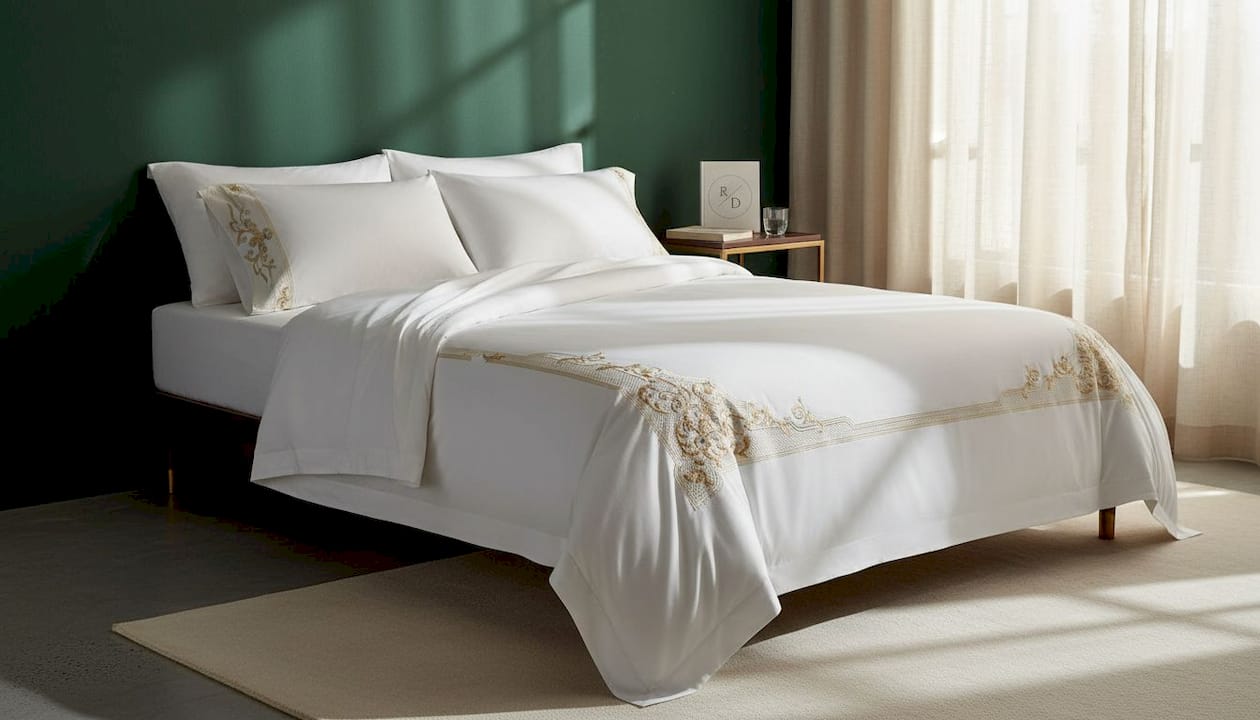
Premium fibres are the starting point. Long-staple Egyptian cotton, for instance, produces finer, stronger, smoother yarns than short-staple alternatives. The result is a fabric that resists pilling, softens with washing, and holds its structure over years of use. Understanding Egyptian cotton fibre secrets helps clarify why the source and staple length of cotton matters far more than the thread count printed on the packaging.
Craftsmanship also plays a significant role. Artisan-level finishing, precise hemming, and consistent dye processes all contribute to cost. Poorly finished sheets may feel acceptable in the shop but deteriorate quickly at home.
“The optimal thread count for luxury sheets sits between 300 and 600. Counts exceeding 1,000 typically rely on multi-ply yarns, which reduce breathability and durability over time.”
Design also adds to the price. Intricate patterns, colourfast dyes, and considered colourways require additional production steps. When you compare designer bedding quality against standard alternatives, the differences in finish and material specification become clear quickly.
Key reasons luxury linens carry a premium:
- Long-staple fibres for superior softness and durability
- Precise weave construction for consistent texture and performance
- Colourfast finishing to maintain appearance after repeated washing
- Artisan-level hemming and detail work for longevity
- Ethical sourcing and certifications that ensure material integrity
Understanding thread count: myth vs reality
Thread count measures how many threads are woven into one square inch of fabric. Horizontal threads (weft) and vertical threads (warp) are counted together. In theory, more threads means a denser, smoother fabric. In practice, inflated thread counts are often achieved by separating multi-ply yarns and counting each ply individually, which artificially boosts the number without improving the fabric.
Good Housekeeping testing found that sheets in the 300 to 500 TC range scored best overall, while 1,000 TC sheets were strong but performed poorly on pilling and softness. This confirms what textile experts have long maintained: the quality of the yarn matters more than the quantity of threads.
| Thread count range | Typical feel | Best use case |
|---|---|---|
| 200–300 | Crisp, lightweight | Summer/warm climates |
| 300–500 | Soft, balanced | Year-round, most sleepers |
| 500–600 | Smooth, substantial | Cooler climates, luxury preference |
| 800–1,000+ | Dense, heavy | Often multi-ply; limited breathability |
The table above shows a clear pattern. Mid-range counts offer the best balance for most households. High-count options are not automatically superior, and in warmer months they can feel stifling.
Pro Tip: When evaluating sheets, ask about the yarn ply. Single-ply yarns at 400 TC will almost always outperform two-ply or three-ply yarns at 800 TC. Look for this detail on the product description or contact the retailer directly.
Knowing how to choose bedding for stylish comfort begins here: do not let an inflated thread count number override the more meaningful specifications.
Fibres, weaves, and finishes: what sets expensive linens apart
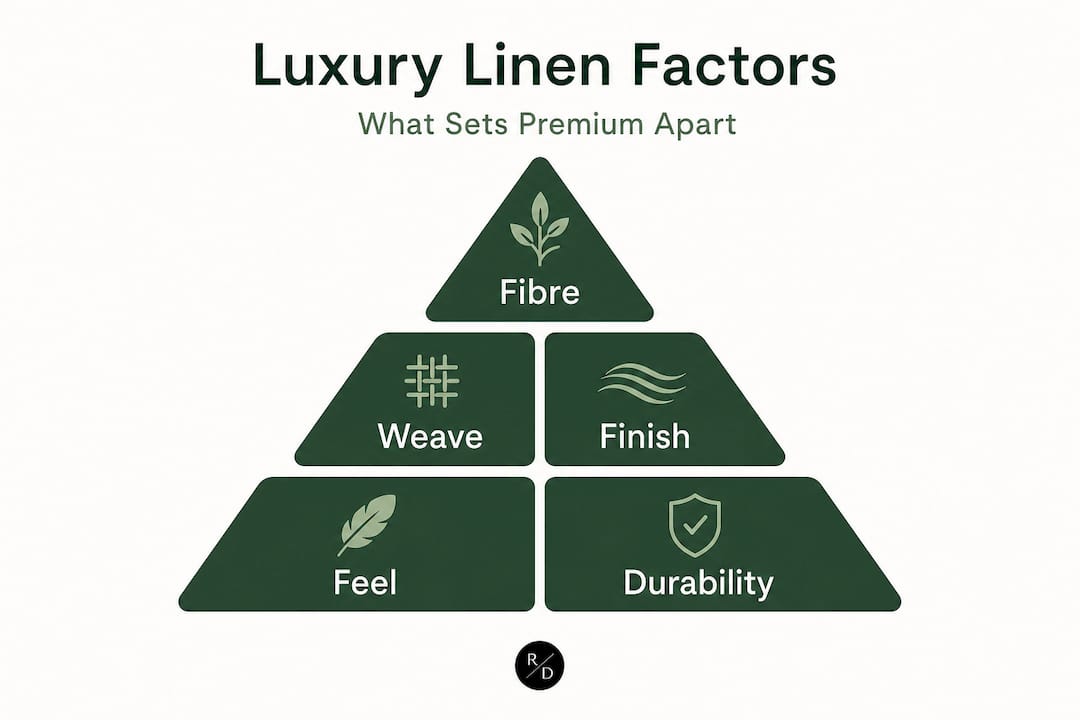
Once you move past thread count, the real differentiators become clear. Fibre type and weave structure determine how a sheet feels against skin, how it performs in different temperatures, and how it holds up to regular laundering.
Main fibre options:
- Egyptian cotton: Long-staple, smooth, durable. Softens over time. Premium standard for luxury bedding.
- Linen: Breathable, slightly textured, and exceptionally durable. Ideal for hot climates. Improves with every wash.
- Mulberry silk: Naturally temperature-regulating, hypoallergenic, and smooth. Best suited to those with sensitive skin.
- Bamboo: Soft, moisture-wicking, and sustainably sourced. Excellent for warm sleepers.
Each fibre has a distinct performance profile. The benefits of cotton bedding extend beyond softness to include durability and ease of care, making it the most practical choice for daily use. Linen, by contrast, requires slightly more attention, and good linen care guidance ensures your investment lasts years rather than months.
Weave comparison:
| Weave type | Construction | Feel | Best for |
|---|---|---|---|
| Percale | 1-over-1-under | Crisp, matte, breathable | Hot sleepers |
| Sateen | 4-over-1-under | Silky, lustrous, warmer | Cold sleepers |
| Twill | Diagonal pattern | Durable, soft | Everyday use |
| Jacquard | Woven pattern | Decorative, textured | Aesthetic focus |
According to testing published by Architectural Digest, sateen weave (4-over-1-under) provides a silky, lustrous, and warmer feel, making it ideal for cold sleepers. Percale (1-over-1-under) is crisp, breathable, and matte, which suits hot sleepers far better.
There is also a practical thermal point worth noting. High thread count fabrics trap heat, with some ultra-dense weaves offering 25% less airflow compared to standard 300 TC percale. If you sleep warm, this is not a minor consideration.
Finishes add a further layer of distinction. Mercerisation strengthens cotton fibres and adds a subtle sheen. Enzyme washing pre-softens linen for immediate comfort. Stone-washing creates a relaxed, lived-in texture. These processes reflect genuine investment in the product’s performance and feel.
Choosing the perfect luxurious linens for your bedroom
With the right knowledge, narrowing your selection becomes straightforward. The following steps provide a practical framework for choosing luxury bed linens that match your actual needs.
- Identify your sleep temperature. Hot sleepers should prioritise percale weave or bamboo fabric. Cold sleepers will benefit from sateen or silk. Combination sleepers often find percale and bamboo options the most adaptable across seasons.
- Choose your fibre first. Egyptian cotton suits most sleepers and lifestyles. Linen is best for hot, humid climates. Silk and bamboo serve specific sensory and thermal needs.
- Select thread count within the 300–600 range. This range covers all quality tiers without the drawbacks of inflated multi-ply counts.
- Check for certifications. OEKO-TEX Standard 100 and GOTS certifications indicate tested, responsibly produced materials.
- Evaluate the brand’s transparency. Reputable suppliers disclose fibre origin, yarn ply, and finishing process. Vague descriptions should prompt further questions.
- Review care requirements. Knowing when to refresh your bedding helps you plan for longevity and budget accordingly.
Understanding what distinguishes designer bedding features from standard alternatives means you can identify genuine quality without relying solely on price.
Pro Tip: Before purchasing, request fabric samples where possible. A small swatch will immediately tell you more about hand feel, weight, and drape than any thread count figure on the label.
The uncomfortable truth: why most buyers get luxury linens wrong
Most people shopping for premium bed linens still make the same mistake. They see a four-digit thread count and assume it means quality. Research shows that 60% of buyers prioritise thread counts between 400 and 1,000, despite textile experts consistently emphasising weave, fibre quality, and staple length as the true indicators of luxury.
The problem is that high thread count is easy to market. It is a single, legible number. Staple length, single-ply yarn construction, and weave density require more explanation, so brands that prioritise marketing over product quality exploit that gap.
Even at premium price points, some bedding products are built around perceived value rather than genuine performance. Branding, packaging, and retail positioning can all substitute for actual material investment. The uncomfortable reality is that a mid-range product from a transparent, quality-focused supplier will often outperform a heavily marketed product at twice the price.
The focus should stay on fibre and weave. These two variables determine how a sheet feels on night one, how it performs after 200 washes, and whether it merits the premium it charges. The long-staple Egyptian cotton story illustrates this clearly: the fibre’s length, not its country of origin label, is what drives the result.
Find your dream bed linens at Roomie Design
Applying the principles above becomes straightforward when the products themselves are built around quality specifications rather than marketing.
Roomie Design offers a curated selection of premium bedding in Egyptian cotton, mulberry silk, and natural linen, all specified with transparent fibre and weave detail. The Aristocrat Gold luxury bedding set delivers refined cotton construction for those seeking long-lasting everyday luxury. For silk enthusiasts, the premium Mulberry silk bedding set provides 22mm silk weight with temperature-regulating properties. The natural linen bedding set is a strong choice for warm sleepers who prioritise breathability and texture. Each product is designed to match real sleep needs with verified material quality.
Frequently asked questions
Is higher thread count always better in luxury bed linen?
No. Mid-range thread counts between 300 and 600 typically deliver optimal softness and durability, while counts exceeding 1,000 often use multi-ply yarns that reduce breathability.
Which weave is best for hot sleepers?
Percale weave is best for hot sleepers. Its 1-over-1-under construction produces a crisp, breathable, matte fabric that promotes airflow throughout the night.
What fibres are most common in expensive bed linen?
Egyptian cotton, linen, mulberry silk, and bamboo are the dominant fibres in premium bedding, each offering distinct performance and tactile qualities.
How often should luxury bed linen be replaced?
Luxury bed linens generally last between two and five years with proper care, though higher-quality fibres and correct laundering can extend that range further.
Does weave or fibre matter more than brand?
Yes. Weave and fibre determine comfort and durability far more than brand reputation alone. As testing confirms, quality fibres and weaves deliver the genuine luxury experience, not inflated thread counts or marketing claims.


