What is yarn-dyed bedding: a complete guide
TL;DR:
- Yarn-dyed bedding is made from threads dyed before weaving, ensuring patterns are embedded into the fabric.
- This process results in sharper designs, longer-lasting color, and a softer, more durable feel compared to alternatives.
When you shop for new bedding, the label “yarn-dyed” appears often, yet few descriptions explain what it actually means. What is yarn-dyed bedding? Put simply, it is fabric woven from threads that were dyed before the weaving process began. This is the opposite of piece-dyed or printed fabrics, where colour is applied after the cloth is already made. The distinction matters far more than it sounds. It affects how your bedding looks, how it feels against your skin, and how well it holds up after dozens of washes.
Table of Contents
- Key takeaways
- What is yarn-dyed bedding and how it is made
- The premium benefits of yarn-dyed bedding
- Yarn-dyed vs piece-dyed and printed bedding
- Caring for yarn-dyed bedding
- My take on yarn-dyed bedding
- Explore premium yarn-dyed bedding at Roomie-design
- FAQ
Key takeaways
| Point | Details |
|---|---|
| Colour applied before weaving | Yarn is dyed first, then woven, so colour penetrates every thread fully. |
| Superior colour longevity | Dye throughout the thread means patterns fade less and stay vibrant longer than piece-dyed fabrics. |
| Softer feel, better for skin | Yarn-dyed fabrics avoid harsh post-weave chemical treatments, giving a refined, skin-friendly finish. |
| Often reversible design | Consistent colour on both sides allows for versatile, double-sided styling of duvet covers. |
| Higher production complexity | Loom setup and colour planning happen before manufacture begins, reflecting the craft behind each piece. |
What is yarn-dyed bedding and how it is made
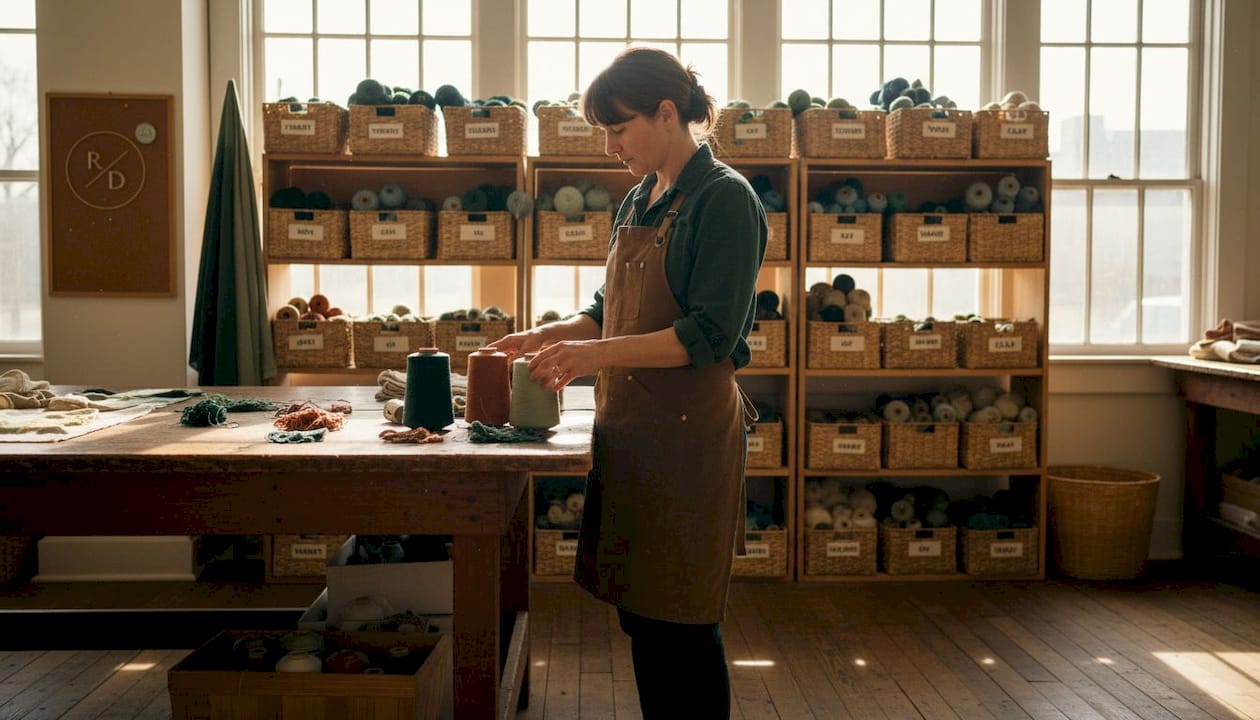
The yarn-dyeing process starts long before any fabric exists. Raw yarn, whether cotton, linen, or a cotton blend, is dyed in controlled colour baths. Each thread absorbs the dye through its full diameter, not just on the surface. Once the yarn has dried and the colour is set, it is loaded onto a loom, where the weaving begins.
Because the weaving process uses pre-coloured threads, patterns such as stripes, checks, plaids, and intricate jacquards are built directly into the fabric’s structure. There is no printing on top. The pattern is the weave. Manufacturers must plan every colour position, thread count, and pattern repeat before the loom starts. There is no room for last-minute changes, which is precisely why yarn-dyed fabrics carry a mark of high craftsmanship.
This is where yarn-dyed fabrics differ from both piece-dyed and printed options:
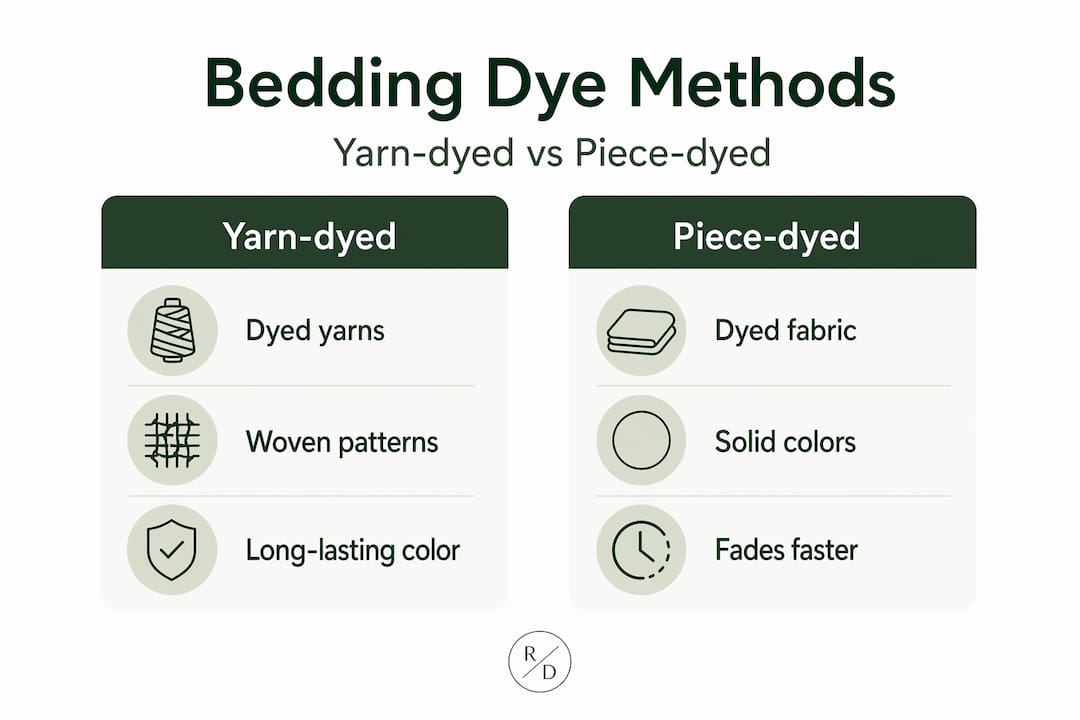
- Piece-dyed: Fabric is woven in its natural, undyed state and then submerged in a dye bath after weaving. Colour sits on the outer fibres of the thread.
- Printed bedding (what is printed bedding): A design is applied to finished white or off-white fabric using inkjet, screen, or roller printing. Colour sits on the surface only.
- Yarn-dyed: Colour runs through the full depth of every thread, then the fabric is constructed around it.
Common yarn materials used in quality yarn-dyed bedding include long-staple Egyptian cotton, combed cotton, and cotton-linen blends. Each brings a different weight and drape, but all benefit from the yarn-dyeing process when colour depth and longevity matter.
Pro Tip: To confirm whether a fabric is truly yarn-dyed, pull a single thread and examine it closely. Uniform colour throughout the thread length confirms yarn-dyeing. Pale or white areas within the thread suggest piece-dyeing or surface printing.
The premium benefits of yarn-dyed bedding
The benefits of yarn-dyed bedding follow directly from the production method. Because dye penetrates the entire yarn, colour depth and resistance to fading are both significantly higher than in piece-dyed alternatives.
Here is what that translates to in practical terms:
- Lasting vibrancy. Stripes, checks, and woven patterns retain their sharpness after repeated washing. The colour does not sit on the surface waiting to be stripped away.
- Softer handle. Yarn-dyed fabrics skip the harsh chemical finishing treatments that printed fabrics often require. The result is a softer, more refined feel that is noticeably pleasant for sensitive skin.
- Reversible design. Because colour runs throughout the thread and the pattern is woven into the structure, both sides of a yarn-dyed duvet cover look equally finished. This gives you genuine flexibility in how you style your bedroom.
- Structural integrity. Pre-dyeing yarn produces a more stable, tightly structured weave. The fabric holds its shape better over time and resists pilling more effectively than fabrics dyed or treated after weaving.
- Refined aesthetics. Yarn-dyed fabrics create sharper, more consistent patterns because the design is part of the fabric’s architecture, not applied on top of it.
Textile experts consistently observe that consumers value yarn-dyed textiles for both their visual quality and enhanced tactile experience. This is not just a manufacturing detail. It is a tangible difference you notice from the first night.
Yarn-dyed vs piece-dyed and printed bedding
Understanding how yarn-dyed fabrics compare to alternatives makes it easier to recognise the value you are getting. The table below summarises the core differences.
| Feature | Yarn-dyed | Piece-dyed | Printed |
|---|---|---|---|
| When colour is applied | Before weaving | After weaving | After weaving |
| Colour penetration | Throughout thread | Surface of thread | Surface of fabric only |
| Pattern sharpness | High, built into weave | Solid only, no pattern | Variable, surface only |
| Reversibility | Yes, both sides match | Generally yes | No, clear right side and wrong side |
| Fade resistance | High | Moderate | Lower over time |
| Fabric handle | Soft, natural | Can vary | May feel stiffer due to printing agents |
| Relative cost | Higher | Moderate | Lower to moderate |
Piece-dyed bedding can produce solid, uniform colour very efficiently, and it suits customers who prefer a clean, single-tone look. Printed bedding offers the widest range of decorative patterns at a lower production cost. However, printed fabrics have a visible “right side” and a pale or plain reverse, and surface colours can fade or crack with repeated washing.
Yarn-dyed fabrics sit at the quality end of this spectrum. Their patterns are integrated within the fabric’s structure rather than applied as a surface treatment. For discerning buyers, that difference is worth understanding before choosing.
Pro Tip: When comparing bedding labels, look for terms like “yarn-dyed jacquard” or “woven stripe” as these confirm the pattern was constructed during weaving. Labels that read “printed design” or show a plain reverse confirm a surface-applied pattern.
If you are still weighing your options, the guide on how to choose bedding covers fabric selection in helpful detail.
Caring for yarn-dyed bedding
Yarn-dyed bedding is built to last, but the right care routine makes a genuine difference in how long it stays looking and feeling premium.
- Wash at 30°C to 40°C. Cool to warm water preserves the dye bond within the thread and prevents unnecessary fibre stress. High temperatures accelerate colour migration and can weaken the weave structure over time.
- Use a gentle, colour-safe detergent. Harsh detergents and bleach break down the dye molecules even in yarn-dyed fabrics. A mild, pH-neutral detergent keeps colour rich wash after wash.
- Avoid overloading the machine. Bedding needs space to move freely in the drum. Overcrowding causes friction that abrades the surface fibres and dulls the pattern over time.
- Tumble dry on a low heat setting or air dry flat. High heat can cause cotton fibres to contract unevenly, distorting the woven pattern. Air drying is the gentlest option, particularly for jacquard or textured weaves.
- Iron on a medium setting if needed. Because yarn-dyed fabrics tend to hold their structure well, they generally require less ironing than printed fabrics that can feel stiff after washing.
For reversible duvet covers, simply flip the cover between washes to distribute any minor surface wear evenly. Both sides are designed to look good, so you can extend the life and appearance of each piece without any additional effort.
My take on yarn-dyed bedding
I’ve spent years looking at bedding collections, and the gap between yarn-dyed and printed fabrics is one of the most consistently underappreciated differences in the category.
Most people pick up a printed duvet cover because the pattern is bold and appealing on the shelf. Within a year, the design fades and the fabric feels flat. A quality yarn-dyed piece, by contrast, tends to get better with washing. The weave relaxes, the hand softens, and the pattern keeps its definition. That is not something you read on the label. It is something you notice over time.
What I find genuinely compelling about yarn-dyed fabrics is the planning they demand. Manufacturers must calculate exact colour sequences and pattern repeats before a single thread is woven. That constraint creates discipline. It results in a finished product where every detail was considered before production began. For anyone upgrading their bedding with longevity and refined aesthetics in mind, yarn-dyed fabrics are the straightforward choice.
— Roomie
Explore premium yarn-dyed bedding at Roomie-design
If you are ready to experience the quality described above, Roomie-design offers a curated selection of luxury bedding sets that showcase expert yarn-dyed craftsmanship.
The Oriental Jacquard Red bedding set at 600 TC features intricate woven patterns built into every thread, delivering sharp colour definition and a refined double-sided design. For those seeking cotton luxury at the highest thread count, the Terracotta Super Hero 1000 TC duvet cover set combines 100% Egyptian cotton with deep, enduring colour. Both sets reflect the production standards that make yarn-dyed bedding worth choosing.
FAQ
What does yarn-dyed mean in bedding?
Yarn-dyed means the individual threads were dyed before the fabric was woven. This produces colour that penetrates the full depth of each thread, resulting in sharper patterns, better fade resistance, and a softer finish compared to piece-dyed or printed alternatives.
Is yarn-dyed bedding worth the higher price?
Yes. The additional planning and controlled dyeing required before weaving produces a fabric with longer-lasting colour, superior structural integrity, and a noticeably softer feel, all of which add up to better value over time.
How can I tell if my bedding is yarn-dyed?
Pull a single thread and examine the colour along its full length. Uniform colour throughout confirms yarn-dyeing. If the thread shows pale or undyed sections, the fabric is most likely piece-dyed or printed.
Does yarn-dyed bedding fade after washing?
Far less than printed or piece-dyed alternatives. Because dye is absorbed through the entire thread, patterns remain vibrant through repeated washing when cared for correctly with cool water and gentle detergent.
What is the difference between yarn-dyed and printed bedding?
Yarn-dyed fabrics are woven from pre-coloured threads, creating patterns within the fabric’s structure itself. Printed bedding has colour applied to the surface of finished fabric, producing a distinct right side and wrong side, with less durability and fade resistance over time.


