
Role of textured bedding: style and sleep comfort guide
TL;DR:
- Textured bedding plays a crucial role in regulating temperature, breathability, and visual appeal. Understanding weave structures and fiber choices allows for better control over sleep comfort and bedroom style. Prioritizing functional textile properties alongside aesthetics leads to a more restful and visually cohesive space.
Most people judge bedding by one measure: softness. But the role of textured bedding goes well beyond how smooth a fabric feels against your fingers in a shop. Texture determines how your sheets breathe, how they drape, how they regulate your body temperature overnight, and how your bedroom looks when you make the bed in the morning. Understanding what texture actually does, at the level of weave structure and fibre choice, gives you far more control over your sleep quality and your room’s visual character than simply chasing a high thread count ever will.
Table of Contents
- How bedding texture influences sleep comfort and bedroom style
- The science of textiles: temperature regulation and texture benefits
- Exploring popular textured bedding styles and their unique benefits
- Choosing textured bedding: practical tips for sleep comfort and stylish decor
- Textured bedding in home design: elevating bedroom style and comfort
- Rethinking textured bedding: blending science and style for better sleep
- Find your perfect textured bedding with Roomie Design
- Frequently asked questions
How bedding texture influences sleep comfort and bedroom style
Texture in bedding is not just a surface quality. It is built into the construction of the fabric itself. The way threads are interlaced, whether tightly or loosely, at angles or straight, creates the tactile experience you feel and the visual depth you see.
Different weaves create distinct feels that affect comfort and temperature in measurable ways. A percale weave, for example, uses a simple one-over-one-under construction that produces a crisp, cool hand feel. A sateen weave, where more threads sit on the surface, feels silkier and drapes more heavily. Neither is objectively better. They simply suit different sleepers and different bedroom aesthetics.
Understanding how bedding transforms bedroom comfort is the first step toward making choices that work for both your body and your room. Here is how texture specifically contributes to each:
- Comfort: Raised or open weaves create more air between fabric layers, reducing heat build-up for warm sleepers
- Drape and movement: Looser constructions move with the body more fluidly, reducing the sensation of being restricted during sleep
- Visual depth: Textured surfaces catch light differently, adding dimension to a bed that flat, plain fabrics simply cannot replicate
- Style cohesion: Different textures, waffle, ribbed, jacquard, work within specific interior design themes, from farmhouse to contemporary minimal
Textural variety means you can tailor your bedding to your personal sleep preferences and your room’s design theme simultaneously.
The science of textiles: temperature regulation and texture benefits
Temperature is one of the most critical factors affecting sleep quality. Bedroom temperature and humidity directly affect how quickly you fall asleep and how often you wake. Moisture-wicking and cool-touch fabrics are not marketing language. They reflect genuine physiological needs.
Texture plays a direct role here. Open weave structures create small air channels within the fabric, allowing heat and moisture to dissipate rather than accumulate against the skin. The importance of textured bedding for temperature regulation becomes especially clear when you compare a flat, tightly woven synthetic sheet with a loosely woven linen or waffle cotton alternative on a warm night.
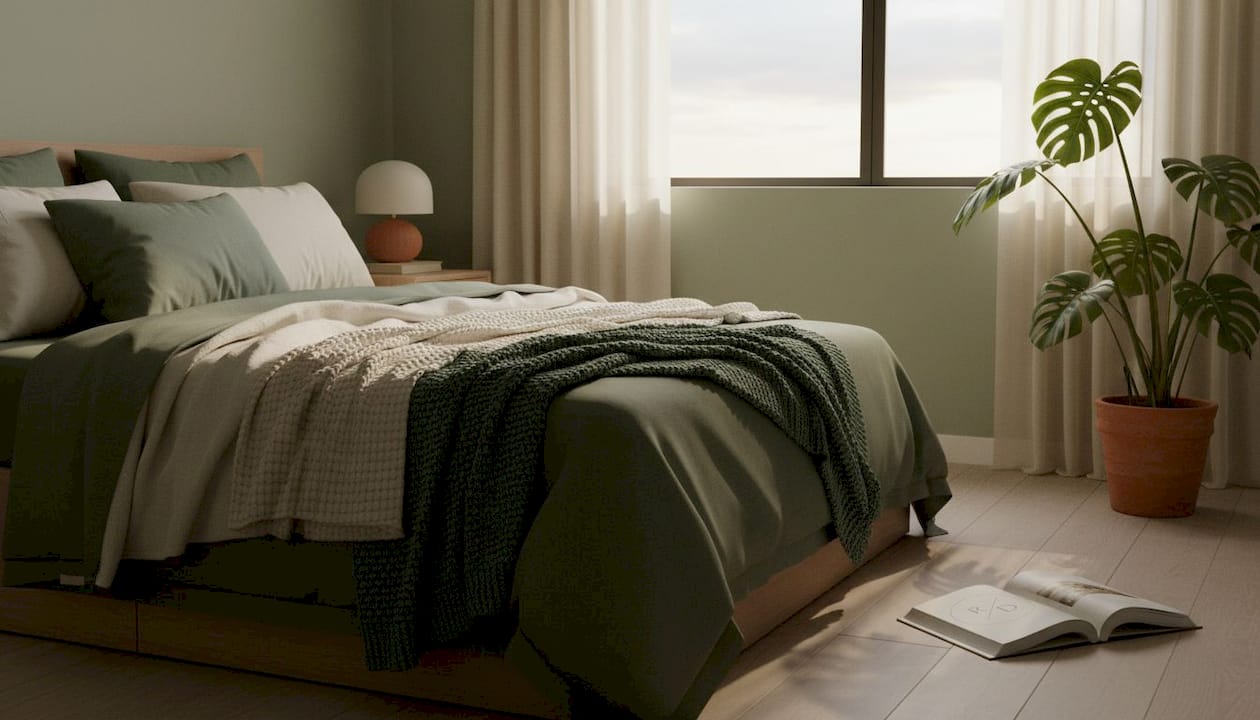
Research into specialised textiles adds another layer to this. Far-infrared textiles reduce thermal load and mid-sleep sweating, and have been shown to increase the proportion of REM sleep without changing total sleep time. While not every textured bedding product uses far-infrared technology, understanding its effects underscores the point: the physical construction of a textile influences sleep physiology, not just perceived comfort.
Consider these key mechanisms by which texture affects your sleep microclimate:
- Air circulation: Open weave structures allow airflow close to the skin, reducing trapped heat
- Moisture transport: Textured fibres with natural crimp, such as cotton or linen, wick moisture away from the surface more effectively than smooth synthetics
- Thermal balance: Phase-change materials and far-infrared-treated fibres embedded within textured constructions help stabilise body temperature across sleep cycles
Choosing high-quality sheets with a considered weave structure is one of the most direct, practical improvements you can make to your sleep environment.
Exploring popular textured bedding styles and their unique benefits
Knowing that texture matters is useful. Knowing which textures to choose for specific needs is actionable. Here are the main textured bedding styles available to homeowners, and what each genuinely delivers.
| Texture style | Key feel | Temperature profile | Best suited for |
|---|---|---|---|
| Waffle weave | Raised grid, soft | Breathable, moderate warmth | Year-round use, sensory comfort |
| Sateen | Smooth, silky | Warm, low airflow | Cool sleepers, luxury aesthetic |
| Percale | Crisp, cool | Breathable, light | Warm sleepers, minimal style |
| Jacquard | Structured, patterned | Variable by fibre | Decorative use, formal bedrooms |
| Linen weave | Slightly rough at first | Highly breathable | Hot climates, relaxed aesthetic |
Waffle bedding’s raised texture promotes relaxation in a way that resembles the sensory effect of weighted blankets, supporting serotonin and melatonin release. The grid pattern creates gentle, distributed pressure across the skin that many sleepers find calming. It is a practical choice for anyone who finds heavy blankets uncomfortable but still wants sensory reassurance.
Satin’s smooth, glossy weave reduces friction against skin and hair, helps maintain skin moisture levels, and provides a cooling surface feel. For anyone with sensitive, dry, or reactive skin, this is not a luxury preference. It is a functional one.
- Waffle: ideal for layering as a throw or top sheet with tactile warmth
- Sateen: best as a duvet cover or pillowcase where skin contact is sustained
- Jacquard: strongest design impact as a duvet cover in formal or curated bedrooms
When choosing bedding styles, match the texture to the layer’s job. Skin-contact layers benefit most from breathable or smooth textures. Outer decorative layers can prioritise visual interest.
Pro Tip: If you share a bed with a partner who has different temperature preferences, use a textured waffle or percale duvet cover over individual lightweight inners. You each get independent thermal control without mismatching the bedroom’s visual style.
Choosing textured bedding: practical tips for sleep comfort and stylish decor
Selecting textured bedding with confidence means looking past marketing claims and focusing on construction details. Texture affects comfort more than thread count alone. Weave type and material quality determine breathability and how long a product holds its feel after repeated washing.
Here is what to assess when choosing textured bedding:
- Feel the weave: Run your hand across the fabric in different directions. A quality waffle or sateen should have consistent texture without pilling or snagging
- Check the fibre: Egyptian cotton, bamboo, lyocell, and linen all behave differently. Natural fibres generally outperform synthetics for moisture management and long-term comfort
- Consider care requirements: Some textured weaves, particularly jacquard or satin, require cooler washing cycles. Factor this into your choice if convenience matters
- Use texture seasonally: A waffle throw adds warmth and depth in autumn and winter. A lightweight percale or linen layer suits summer. Switching textures seasonally is one of the most cost-effective bedding selection tips available
Pro Tip: If you are buying online, search for the thread count alongside the weave type. A 400tc percale will feel crisper and cooler than a 400tc sateen at the same count. The number alone tells you very little.
Textured bedding in home design: elevating bedroom style and comfort
Texture is the quickest way to add visual warmth and depth to a bedroom without repainting or buying new furniture. Flat, plain bedding can look clean and minimal. But it rarely looks inviting. Textured bedding adds tactile and visual interest, turning an ordinary bed into a focal point.
For interior design purposes, the creative uses for textured bedding are considerable:
- Layering: Stack a waffle blanket over a smooth sateen duvet cover to create contrast that photographs well and feels genuinely cosy
- Complementing themes: Linen textures suit rustic, Scandinavian, or coastal interiors. Jacquard patterns work in traditional or formal bedroom schemes
- Colour enhancement: Textured surfaces diffuse light differently, making even a simple white or terracotta tone appear richer and more dimensional
- Coordinating across pieces: Matching a textured duvet cover with a contrasting smooth pillowcase creates a considered, layered look without visual clutter
Browse bedding design ideas to see how different textures combine across full bedroom schemes.
Rethinking textured bedding: blending science and style for better sleep
Here is an opinion worth considering: most buyers still treat texture as a finishing touch rather than a functional specification. That is a mistake that costs them both comfort and money.
Textured bedding should be viewed as engineered textile construction that affects feel, temperature management, and moisture handling. It is not simply a surface pattern or a decorative choice. The weave structure, fibre type, and finishing process all interact to determine what the fabric actually does to your sleep environment.
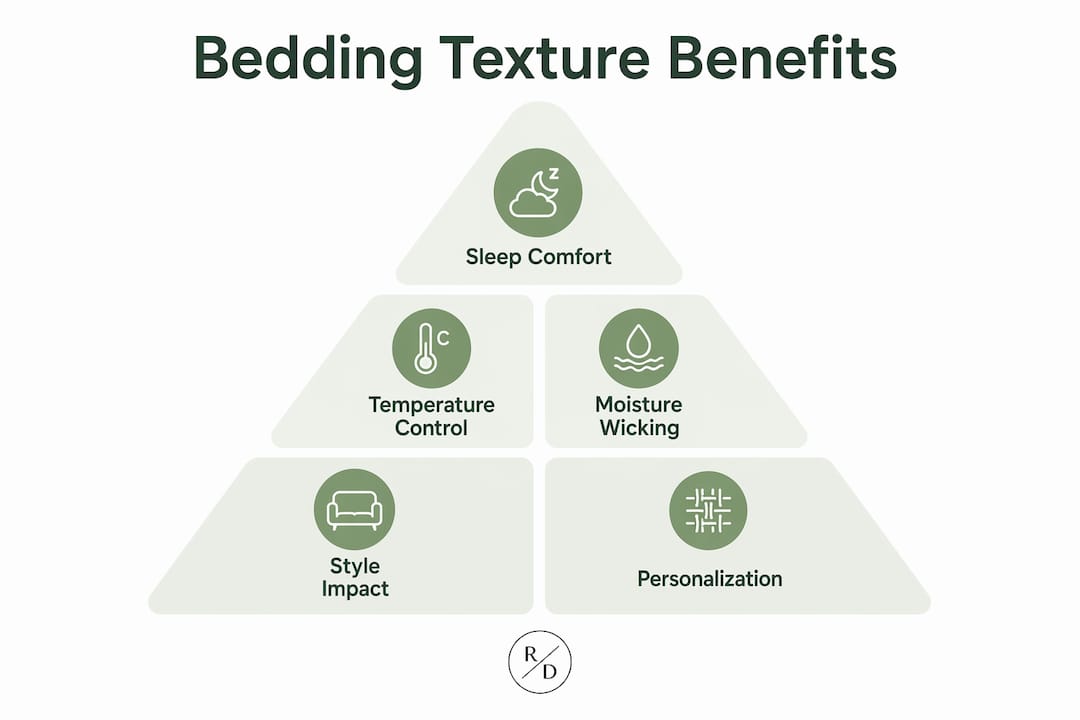
A common error is buying a heavily textured decorative throw for its visual appeal and expecting it to solve a temperature problem. For hot sleepers, functional textile properties in the skin-contact layers matter far more than decorative texture alone. A beautiful waffle throw on top of poorly breathable fitted sheets will not fix an overheating issue.
The practical approach is to separate the two functions. Skin-contact layers, fitted sheets and pillowcases, should prioritise thermoregulation and moisture wicking. Outer layers, duvet covers and decorative throws, can then serve both a sensory and aesthetic purpose. See how upgrading your bedding in this structured way delivers results that purely aesthetic changes never achieve.
Texture is not superficial. Treat it as a specification, and your bedroom will work better on every level.
Find your perfect textured bedding with Roomie Design
Applying these principles is straightforward when the product range is built around the same thinking. Roomie Design offers a curated selection of textured bedding crafted from premium Egyptian cotton at 1000 thread count, combining tactile comfort with durable construction.

The Terracotta Superfine Duvet Cover Set brings colour depth and fine-weave texture together in a single piece. For a raised weave option with the drape and brightness of Egyptian cotton, the Glowing Weave Sheet Set offers a strong choice for everyday sleep comfort. If you want a complete layered look in one selection, the PureComfort Luxury Bedding Set covers duvet, sheets, and pillowcases in a coordinated set designed for both sleep quality and bedroom style.
Frequently asked questions
How does textured bedding improve sleep quality?
Textured bedding influences sleep by affecting temperature regulation, moisture wicking, and tactile sensation. Weave and material determine breathability more than thread count, creating a sleep microclimate that supports uninterrupted rest.
Is waffle bedding suitable for all seasons?
Yes. Waffle weave creates air pockets that balance breathability with warmth, making it comfortable in both cooler and milder temperatures without causing overheating.
What makes satin sheets beneficial for sensitive skin?
Satin reduces friction against skin and hair, helps maintain moisture levels, and provides a cooling surface effect, making it a practical choice for sensitive or dry skin.
How do far-infrared-emitting textiles enhance sleep?
FIR textiles reduce tympanic temperature and mid-sleep sweating, increasing the proportion of REM sleep without altering total sleep duration. The effect is passive and requires no change to sleep habits.
How should I choose textured bedding if I sleep hot?
Prioritise moisture-wicking and thermoregulating fabrics for skin-contact layers such as fitted sheets and pillowcases. Heat-retention management starts there, with decorative textured layers added for style or seasonal warmth on top.


