
How to Wash High Thread Count Sheets So They Stay Soft
Wash high thread count sheets on a gentle or sheets cycle, on their own, with a mild detergent at the temperature on the care label, then dry them on low heat or on a line and take them out as soon as they are dry. That routine keeps a tightly woven 400 to 1000 TC sheet smooth, soft and fresh for years. The sections below cover each step, the mistakes that cause pilling, creasing and dullness, and what changes for silk and linen.
Key Takeaways
- Follow the sewn-in care label first. Thread count alone does not set the wash temperature, the fibre and finish do.
- Wash sheets separately, loosely loaded, on a gentle or sheets cycle with a mild liquid detergent.
- Low heat or line drying, and removing sheets promptly, protects the smooth hand of a dense weave.
- Wash new sheets before the first night. Finishes and excess dye come out, and the softness shows.
- Silk needs its own routine: cool water, delicate detergent and a gentle cycle.
Table of Contents
- Why high thread count sheets reward good washing
- Step 1: Read the care label
- Step 2: Wash new sheets before you use them
- Step 3: Load the machine properly
- Step 4: Choose cycle, temperature and detergent
- Step 5: Dry with care
- How often to wash your sheets
- Silk, linen and other fibres
- Stains and yellowing
- Common mistakes to avoid
- Storing clean sheets
- Perspective
- Ready to upgrade your set?
- FAQ
- Sources
Why high thread count sheets reward good washing
Thread count is the number of threads woven into one square inch of fabric. A higher count means more fine yarns packed closely together, which is why 400 to 1000 TC sheets feel dense, smooth and substantial against the skin. Our high thread count bedlinen guide explains how that density translates into comfort and a luxury feel.
That tight weave is an asset you protect by washing it gently. Harsh agitation, too much detergent and aggressive heat are what wear any sheet down, whatever its count. Treat a 1000 TC sheet to a considerate wash and it repays you with a cool, silky surface night after night.
Fibre matters as much as the number. Consumer Reports notes that thread count is not necessarily an indication of quality, and that the weave and the type of cotton affect both feel and how long sheets last. Long-staple cotton such as Egyptian cotton, spun into fine yarns, is what makes a high count genuinely soft. If you are choosing between weaves, our guide to percale versus sateen shows how each one feels and how it behaves in the wash.
Step 1: Read the care label
Every sheet has a sewn-in label, and it overrides any general advice, including this article. Thread count, the words “premium cotton”, or a weave name such as sateen or percale do not by themselves tell you a safe temperature. The label and your washing machine manual do.
The label tells you three things:
- the maximum wash temperature
- whether tumble drying is allowed and at what heat
- whether bleach or ironing is permitted
In the UK, labels use a tub symbol with a number for the maximum temperature in degrees Celsius. A tub with 40 means wash at up to 40°C. A tub with a hand means hand wash only. A crossed-out triangle means no bleach. If the label has worn away, choose the gentler option: a cool to warm wash on a gentle cycle.
Step 2: Wash new sheets before you use them
New sheets leave the factory with finishes and sometimes loose dye. Consumer Reports advises washing sheets before sleeping on them to remove finishes or excess dye. Wirecutter adds that new sheets are treated with conditioners and finishes, and that a few washes help you judge how they really feel.
So do not judge a new set on its first night, or on the crispness straight from the packet. After the first wash or two, a quality sheet relaxes into its true hand. Wash the new set on its own, and wash a coloured set apart from whites in case any dye releases.
If you are setting up a spare room or unpacking a gift set, washing before first use also means the sheets arrive on the bed fresh and ready. Sheets that have been stored away or travelled with you benefit too, and if you have been away and want to keep your home pest-free, this guide to keeping bed bugs from coming back is worth reading alongside your laundry routine.
Step 3: Load the machine properly
How you load matters more than most people expect. Tightly woven sheets are heavy when wet, and a bunched-up load drags and twists.
- Wash sheets separately. Towels, jeans and anything with zips or Velcro rub against the weave. A sheets-only load moves freely and rinses cleanly.
- Shake each sheet out. Load it unfolded, not wadded into a ball, so water and detergent reach every part.
- Do not overfill. Stay within your machine’s stated capacity. A king-size set can fill a small drum on its own, so wash the duvet cover and pillowcases in one load and the sheets in another if needed.
- Fasten duvet cover buttons and zips, and turn pillowcases inside out. This stops snagging and keeps any embroidery protected.
A full-size load that is too tight leaves detergent trapped in the folds and produces creases that are hard to remove later. Space is the simplest way to a smoother finish.
Step 4: Choose cycle, temperature and detergent
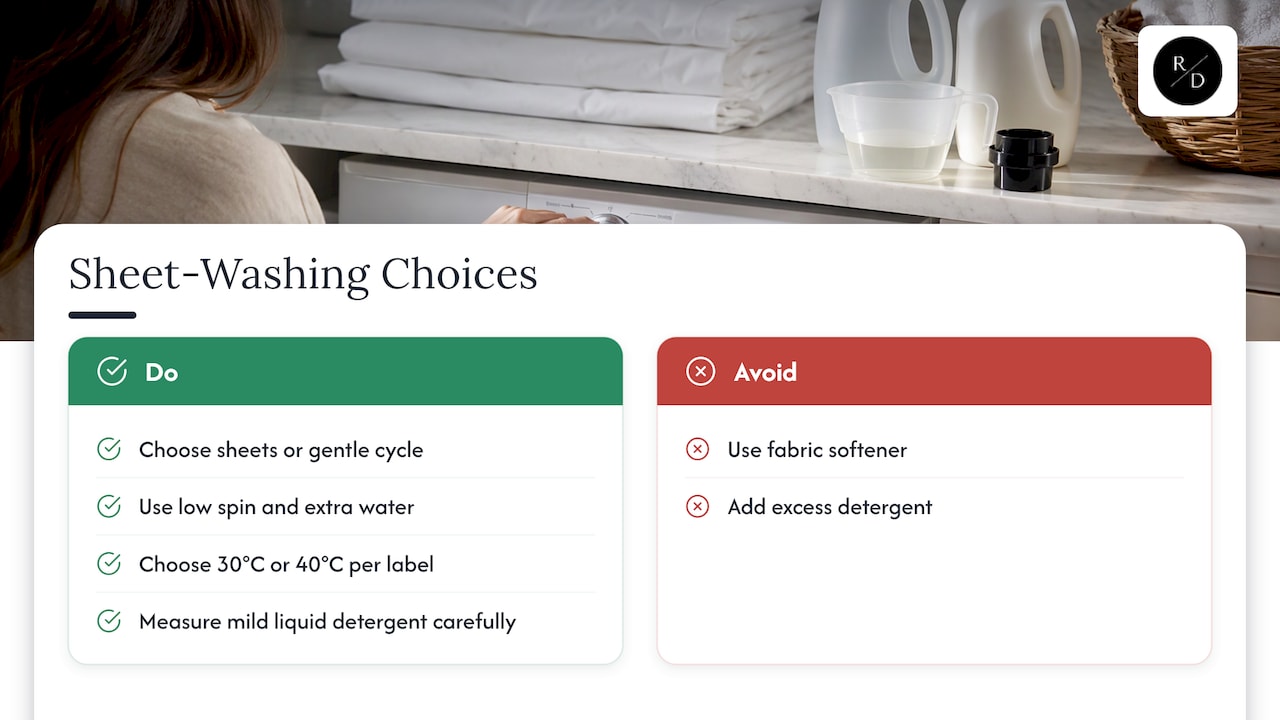
Cycle. Whirlpool describes the bulky or sheets cycle as using warm water, a low spin and extra water to help keep sheets from tangling. If your machine has no such programme, a gentle or delicate cycle does a similar job. Sleep Foundation likewise recommends washing sheets separately on a gentle cycle with a gentle detergent.
Temperature. Use the hottest setting the care label permits, and for fine, high thread count cotton the cooler end of that range is the comfortable choice. A 30°C or 40°C wash cleans everyday use well, protects colour and keeps the fibres supple. Reserve the highest temperature on the label for occasions that call for it, such as after illness in the household.
Detergent. Use a mild liquid detergent. Liquid dissolves fully, so it rinses out of a dense weave without leaving residue. Measure carefully: a smaller dose is often enough for a sheets-only load, and extra detergent is harder to rinse from tightly woven fabric. Skip fabric softener. Softener coats fibres, which can dull the natural smoothness of a good sheet and reduce its freshness. Well-made cotton softens through washing alone.
If you or anyone in the household has sensitive skin, an extra rinse is a simple precaution. Sleep Foundation notes that a second water-only wash can help.
Quick reference by fabric
| Fabric | Cycle | Water | Detergent | Drying |
|---|---|---|---|---|
| Cotton percale or sateen, 400 to 1000 TC | Gentle or sheets | Per label, cool to warm | Mild liquid | Low heat or line |
| Egyptian cotton | Gentle or sheets | Per label, cool to warm | Mild liquid | Low heat or line |
| Mulberry silk | Gentle or delicate | Cold | Mild, delicate-fabric | Air dry, out of direct sun |
| Linen | Gentle or normal | Per label | Mild liquid | Line, or low heat and remove while slightly damp |
The table is a starting point. Your label has the final word.
Step 5: Dry with care
Drying is where many sheets are worn out, so this step is worth the attention.
Tumble drying. Most cotton sheets can go in the dryer on low. Whirlpool says most sheets can be tumble-dried on low, and suggests rubber or wool dryer balls to prevent balling. Sleep Foundation advises moving sheets straight to a low-heat dryer or clothesline rather than leaving them sitting wet in the drum.
Three habits make the biggest difference:
- Low heat. High heat is the quickest way to dull a fine surface and cause shrinkage.
- Do not over-dry. Stop the cycle when the sheets are just dry. Fully baked sheets turn stiff and wrinkle more.
- Take them out promptly. Shake them out and fold or put them on the bed while still slightly warm. This is the best anti-crease trick there is.
Line drying. A breezy day outside leaves cotton fresh and smooth. Hang sheets by the long edge, evenly, and bring them in when dry. For coloured sets, dry them in the shade to keep the shade rich.
Ironing. If you like a crisp finish, iron percale while slightly damp on a setting the label allows. Sateen has a natural sheen and usually needs little more than a shake. Ironing is optional, and sheets taken out of the dryer on time often need none.
How often to wash your sheets
Wirecutter recommends changing sheets once a week. A weekly routine keeps bedding fresh and means each wash can be gentle rather than a deep clean. It also pays to own two sets per bed: while one is on the bed, the other is washed and rests. Rotating sets spreads the wear and keeps each set looking its best.
That is one of the reasons a bed with a quality set of sheets and a matching duvet cover feels like a hotel. Everything you wash weekly is easy to change and easy to refresh.
Silk, linen and other fibres
The routine above is written for cotton, the fibre behind most high thread count sheets. Other fabrics have their own needs.
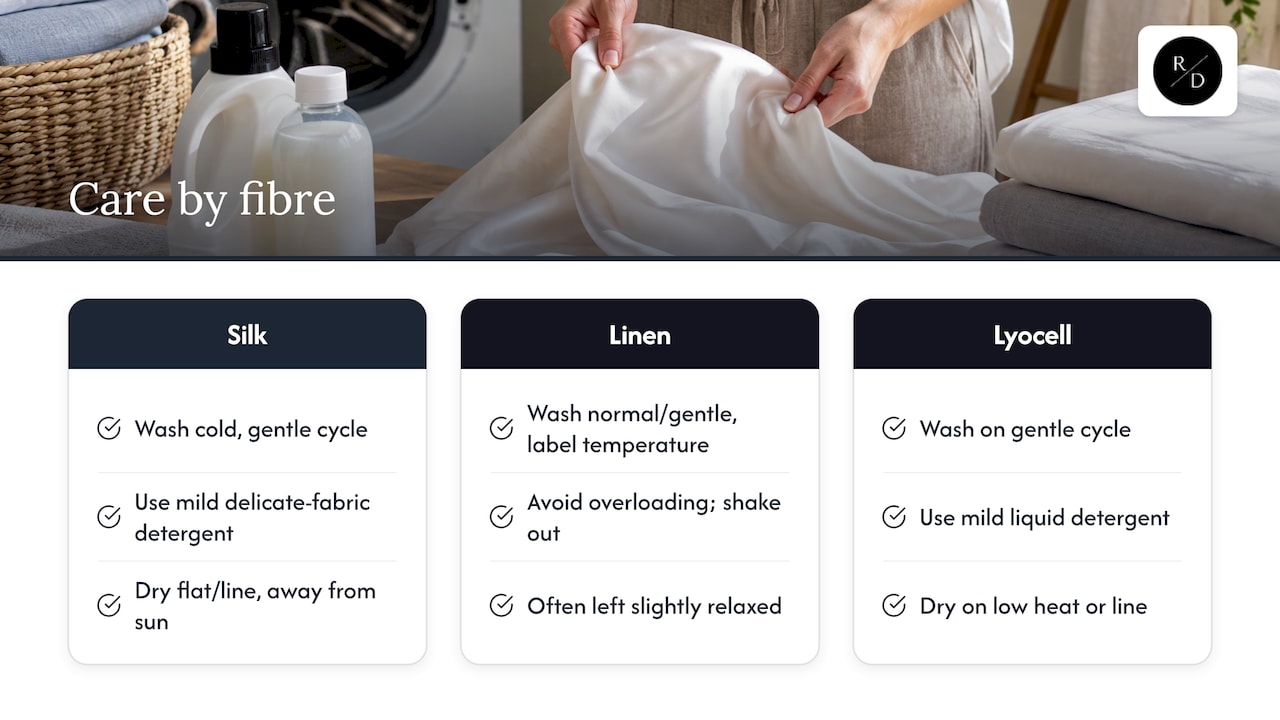
Mulberry silk. Silk is a protein fibre and prefers cool water. Whirlpool’s advice is that silk and satin need cold water, a gentle cycle and mild delicate-fabric detergent. Use a mesh laundry bag, avoid wringing, and dry flat or on a line away from direct sun and radiators. Our mulberry silk bedlinen is best treated this way to keep its natural lustre.
Linen. Linen is a hardwearing fibre that softens with every wash. Wash on a normal or gentle cycle at the temperature on the label, avoid overloading, and shake out well. Many people like linen slightly relaxed rather than ironed flat. Thread count behaves differently with linen, and our guide to linen thread count explains what the numbers mean for this fibre.
Lyocell. Lyocell has a cool, smooth drape. Treat it like fine cotton: a gentle cycle, mild liquid detergent and a low-heat dry or line dry, following the label.
Stains and yellowing
Sleep often leaves marks, and the best defence is to deal with them early. Rinse the mark with cool water, apply a little mild detergent, and wash as soon as you can. Letting a stain dry and set makes it harder to lift.
White sheets can look dull over time from body oils and detergent build-up rather than from age. Using less detergent, giving sheets room in the drum and washing weekly all help prevent that. If the label permits it, a warmer wash now and then refreshes whites. Avoid chlorine bleach unless the label allows it, since it can weaken fibres.
Common mistakes to avoid
- Overloading the drum. Sheets bunch, rinse poorly and crease.
- Too much detergent. Residue is hard to rinse from a dense weave and can leave sheets feeling less smooth.
- Using fabric softener. Good cotton gets softer by itself with washing.
- Washing with heavy items. Towels and denim rub against and pill fine yarns.
- Leaving sheets in the drum. Wet sheets left to sit crease deeply.
- High dryer heat. It is the main shortcut to a stiff, tired sheet.
Avoid these and a 400, 600 or 1000 TC sheet keeps its smoothness wash after wash.
Storing clean sheets
Fold sheets when completely dry and store them somewhere airy and clean, such as a linen cupboard. Keep each set together, with the fitted sheet, flat sheet and pillowcases tucked inside one of the pillowcases, so you grab the whole set at once. Slip a lavender sachet in if you like a light scent. Avoid plastic bags, which hold moisture.
Perspective
Sheets are the part of the bed you touch most, so we think they deserve a proper routine. Our range of high thread count cotton sheets, from 400 to 1000 TC, is designed for a dense, smooth surface, and each of those options has its own character: some like the cool crispness of percale, others the sheen of sateen.
The routine is the same for all of them. Read the label, wash separately, use a mild liquid detergent, dry on low and remove promptly. These few habits are what let a fine weave show what it can do.
We also suggest choosing by fibre and feel as well as by number. Long-staple cotton, a weave you enjoy and a thread count that suits your taste add up to bedding you look forward to getting into.
Roomie Design
Ready to upgrade your set?
If your current sheets have lost their smoothness, a fresh set is the simplest way to reset your bed. Browse our sheets collection, or look at the Prestige 1000 TC Egyptian Cotton Sheet and the Dea Luxury 1000 TC Sheet for a dense, luxurious feel. For the full range, including duvet cover sets and pillowcases, see Roomie Design.
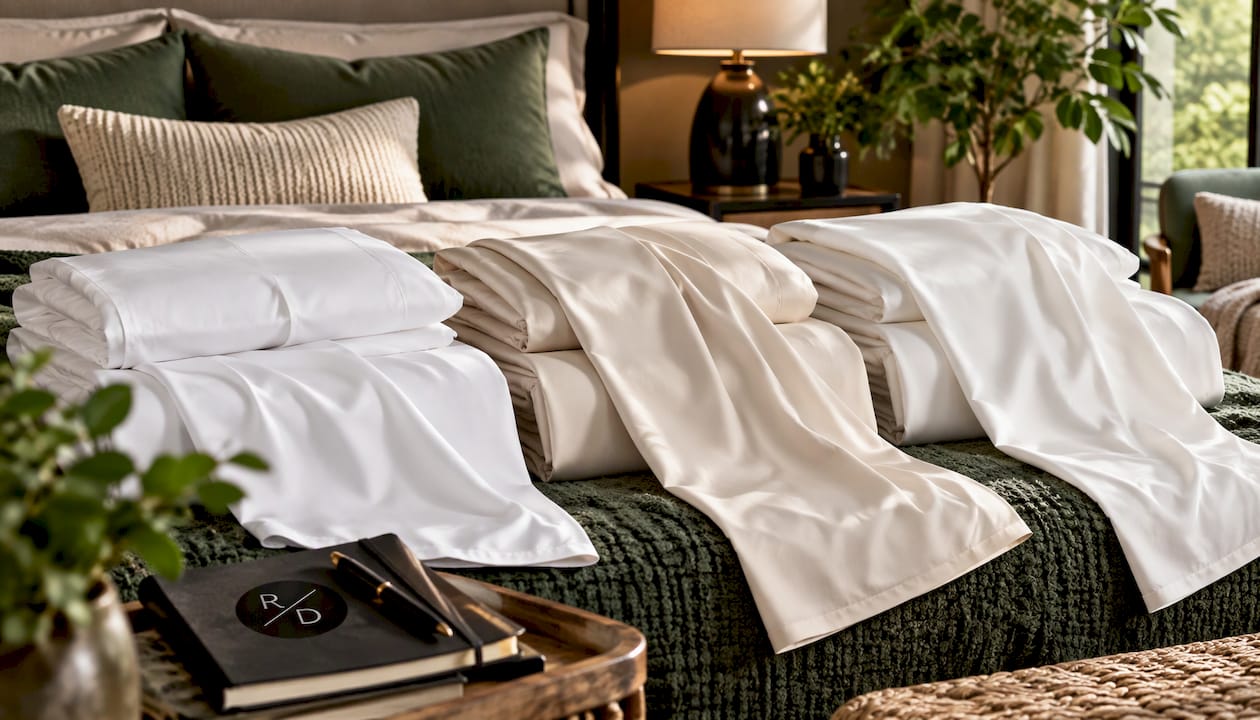
Sizes, fabrics and thread counts are listed on each product page, along with a size guide and customer reviews.
FAQ
Should I wash high thread count sheets before first use?
Yes. New sheets carry finishes and sometimes excess dye, and Consumer Reports advises washing them before sleeping on them. Wash them on their own on a gentle cycle, and give them a couple of washes to reveal their true softness.
What temperature should I wash high thread count cotton sheets at?
Follow the care label. For fine cotton, a cool to warm wash such as 30°C to 40°C on a gentle or sheets cycle cleans well and is kind to the fibres. Keep the hottest label-approved setting for when the household has been unwell.
Can I tumble-dry high thread count sheets?
Usually yes, if the label allows it. Use a low heat, add dryer balls to reduce balling, and remove the sheets as soon as they are just dry. Line drying is an excellent alternative on a breezy day.
How do I stop high thread count sheets creasing?
Give them room in the drum, shake them out before drying, avoid over-drying and take them out promptly. Smoothing them onto the bed while slightly warm leaves them flat without ironing.
Sources
- Sheets Buying Guide, Consumer Reports
- How to Wash Your Sheets, Sleep Foundation
- How to Wash Sheets and How Often to Wash Them, Whirlpool
- The Insider’s Guide to Better Bed Sheets, Wirecutter


