

Why use plain dye bedding: benefits and styling guide
TL;DR:
- Plain dye bedding uses a single, uniform color on natural fibers, providing better skin health and timeless style. It requires fewer chemical treatments than printed bedding, reducing chemical exposure and enhancing comfort. High-quality plain dye bedding improves sleep, offers design flexibility, and ages gracefully over time.
Plain dye bedding is defined as solid-coloured bed linen, typically crafted from natural fibres such as cotton, linen, or mulberry silk, valued for its aesthetic simplicity and superior comfort properties. The term “plain dye” refers to the industry practice of applying a single, uniform colour to the entire fabric, as opposed to printed or woven patterns. If you are considering why use plain dye bedding, the answer sits at the intersection of skin health, sleep quality, and timeless bedroom design. Consumer preferences in 2026 continue to shift towards natural, low-chemical textiles, and plain dye bedding sits firmly at the centre of that movement.
What is plain dye bedding and how does it differ from printed bed linen?
Plain dye bedding uses a single-colour dyeing process applied uniformly across the fabric. The most common fibres are 100% cotton, linen, lyocell, and mulberry silk. Each of these materials accepts dye cleanly, producing a consistent, rich colour without the need for additional chemical treatments or pattern-printing processes.
Printed bedding, by contrast, requires multiple dye applications, binders, and fixatives to hold a pattern in place. Synthetic bedding often uses disperse azo dyes, which migrate onto skin with heat, sweat, and friction. A 2022 study identified 62 different disperse azo dyes in synthetic garments, with Disperse Red 167:1 appearing in 67% of 152 synthetic garments tested. That level of chemical exposure is absent from quality plain dye natural fibre bedding.
| Feature | Plain dye natural fibre | Printed synthetic |
|---|---|---|
| Dye treatments | Single, uniform application | Multiple layers, binders, fixatives |
| Typical fibres | Cotton, linen, silk, lyocell | Polyester, polyester blends |
| Skin contact risk | Lower chemical exposure | Higher risk of dye migration |
| Aesthetic lifespan | Ages with visual richness | Pattern can fade unevenly |
| Design flexibility | High, acts as a base layer | Fixed by the printed design |
The practical difference is clear. Plain dye bedding in natural fibres requires fewer processing stages, which means fewer residual chemicals in contact with your skin for eight hours every night.
What are the primary benefits of plain dye bedding for sleep and skin health?
Natural fibres are the foundation of plain dye bedding’s functional advantages. Cotton and linen both regulate temperature by wicking moisture away from the body, which supports consistent thermal comfort through the night. 79% of consumers prefer 100% cotton for its natural breathability and thermal regulation. That preference reflects a genuine functional benefit, not simply a trend.
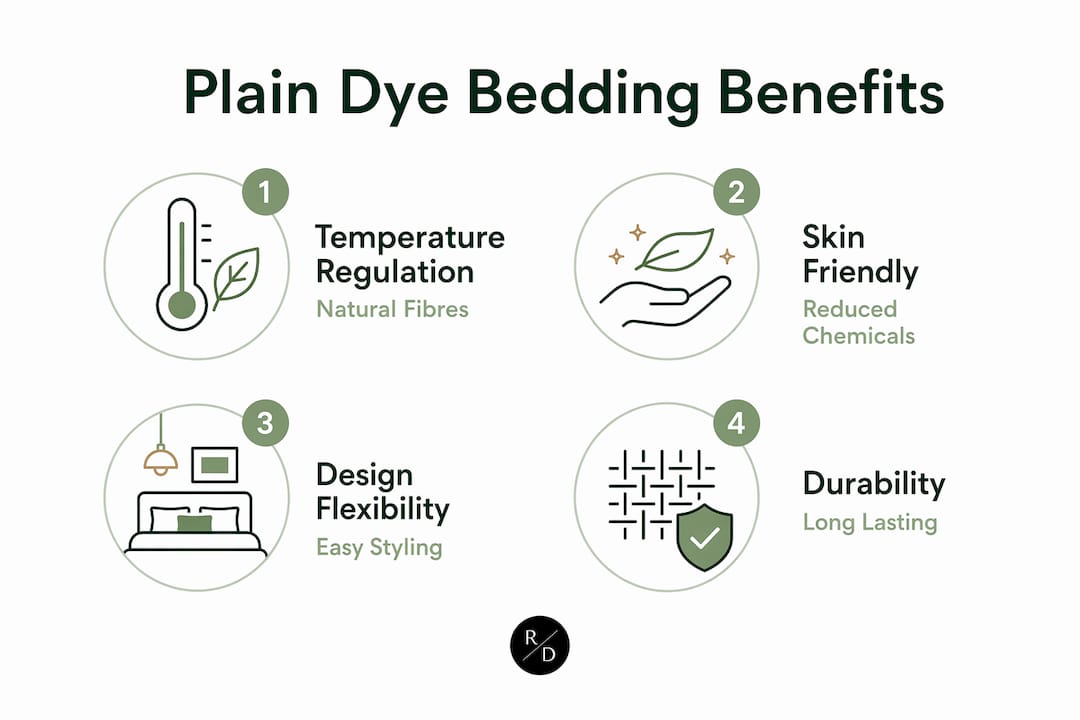
Many complaints attributed to sleeping hot are actually skin reactions to chemical finishes and dyes rather than temperature alone. Plain dye bedding in natural fibres removes that variable. Fewer chemical finishes mean better airflow through the weave and less moisture retention against the skin.
The benefits for sensitive skin are particularly significant:
- Reduced irritant exposure. Fewer dye treatments mean lower risk of contact sensitisation from residual chemicals.
- Better breathability. Natural fibres such as cotton and linen allow air circulation, reducing the warm, damp conditions that aggravate reactive skin.
- Softer hand feel over time. Quality plain dye cotton and linen soften with each wash, improving comfort rather than degrading it.
- Lower allergen load. Natural fibres without heavy finishing treatments carry fewer synthetic residues that can trigger reactions during sleep.
Stat to know: 83% of consumers believe quality bedding improves sleep. The material and dye process behind that bedding determines whether the improvement is real or superficial.
For anyone who wakes with unexplained skin irritation or persistent discomfort, switching to plain dye natural fibre bedding is one of the most direct changes available. You can also read more about cotton bedding benefits to understand why fibre purity matters so much for daily comfort.
How does plain dye bedding enhance bedroom aesthetics and design flexibility?
Plain dye bedding acts as a blank canvas for decor, allowing you to update the look of a bedroom by swapping accent pillows, throws, or cushions without replacing the core bedding. A deep terracotta duvet cover works equally well with warm amber accents in autumn and crisp white linen cushions in summer. The bedding itself does not compete with the room.
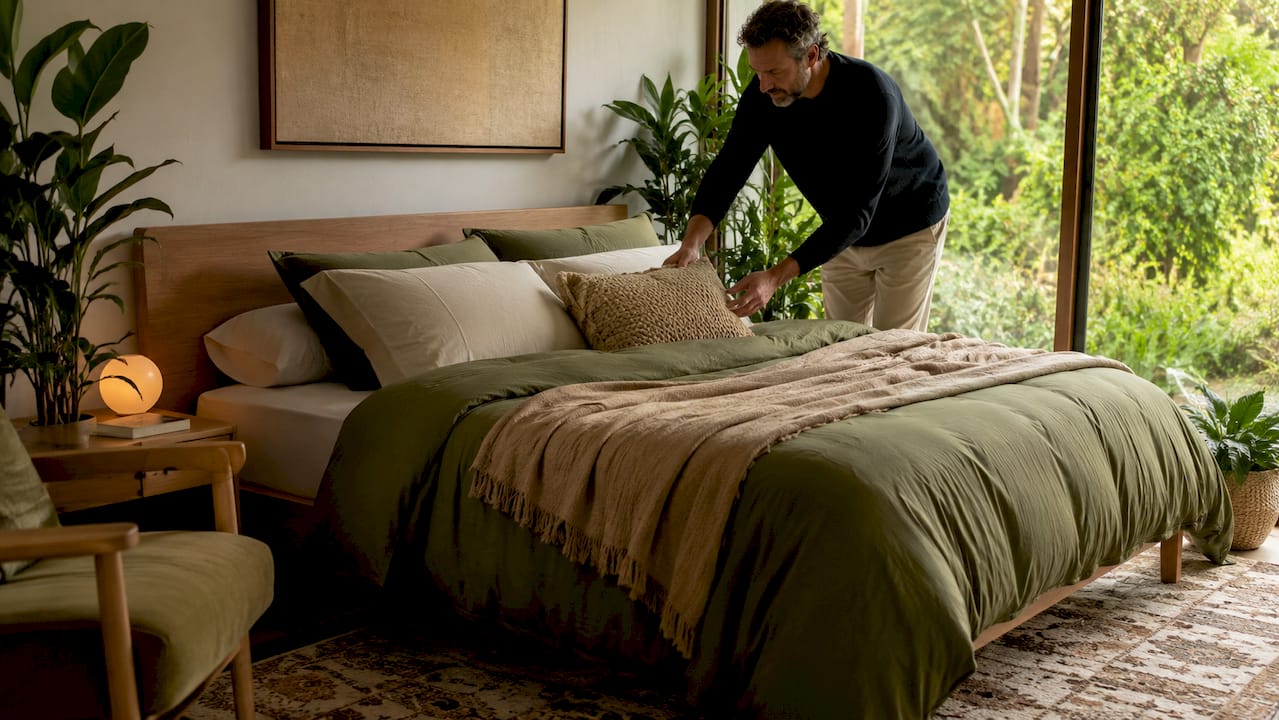
Undyed and plain-dyed textiles support what interior designers call “material consciousness.” This means the visual interest comes from the fabric’s texture, weave, and natural variation rather than from a printed pattern. A linen duvet cover in sage green, for example, develops a subtle, lived-in character over time that a printed alternative cannot replicate.
The risk with solid colour bedding is a flat or clinical appearance. The solution is tactile layering. Quilted, waffle weave, or linen blend textures prevent plain bedding from looking sterile by adding depth through surface variation rather than colour contrast.
Pro Tip: Combine two or three different textures in the same tonal family. A smooth 1000 TC cotton duvet cover paired with a waffle-weave throw and a linen euro pillow creates visual interest without introducing a single pattern.
For a detailed approach to layering and styling, Roomie-design’s guide on styling bedding for luxury covers the full process from base layer to finishing touches.
How to select and maintain high-quality plain dye bedding
Plain dye bedding exposes manufacturing flaws more readily than patterned alternatives. A loose weave, uneven seam, or inconsistent dye lot is immediately visible on a solid colour surface. This makes quality inspection more important, not less.
Follow these steps when selecting plain dye bedding:
- Check the fabric composition label. Look for 100% natural fibre content. Cotton, linen, lyocell, and mulberry silk are the benchmarks. Blends with polyester reduce breathability and increase chemical exposure.
- Assess the weave density. Higher GSM (grams per square metre) in linen and higher thread counts in cotton both indicate a denser, more durable fabric. Roomie-design’s 1000 TC Egyptian cotton sets, for example, combine fibre purity with exceptional weave density for a luxuriously soft result.
- Inspect seams and stitching. Double-stitched seams and neat, consistent finishing indicate quality construction. Plain dye fabric makes any irregularity visible, so poor stitching is easy to spot.
- Avoid heavy chemical finishing. Check fabric composition labels and avoid products with heavy finishing treatments that add stiffness or sheen through chemical means rather than fibre quality.
- Pre-wash before first use. A cool pre-wash removes any residual finishing agents and begins the softening process, particularly with cotton and linen.
- Use gentle, fragrance-free detergents. Harsh detergents strip natural fibres and can affect dye stability over time. A mild, pH-neutral detergent preserves both the colour and the fabric.
- Steam rather than iron at high heat. Steaming relaxes fibres without the friction and heat stress of direct ironing, keeping the weave intact and the colour even.
You can also review the best bedding materials for a broader comparison of natural fibre options and their care requirements.
Plain dye bedding: a considered choice, not a compromise
Plain dye bedding is often positioned as the understated option, as if simplicity were a concession. My view is the opposite. After years of working with premium home textiles, I find that solid-colour natural fibre bedding consistently outperforms patterned alternatives in the areas that matter most: skin comfort, thermal regulation, and long-term visual appeal.
The bedroom is the one space where sensory experience takes priority over visual complexity. A well-chosen plain dye set in 100% Egyptian cotton or mulberry silk communicates quality through touch and drape, not through a printed motif. That is a more sophisticated choice, not a simpler one.
The practical advice I give consistently is this: commit to fibre purity first, then colour. A high-quality plain dye cotton or linen set in a colour you genuinely like will serve you better for longer than a heavily processed printed alternative at any price point. The fabric does the work. Let it.
— Roomie
Premium plain dye bedding from Roomie-design
Roomie-design’s plain dye collection is built around 100% natural fibres and high thread counts, with options ranging from 1000 TC Egyptian cotton to 22mm mulberry silk.

The Terracotta Super Hero 1000 TC duvet cover set delivers a rich, warm tone in 100% Egyptian cotton with a thread count that produces a noticeably soft, weighty hand feel. For a deeper, more neutral palette, the Espresso 1000 TC luxury set offers the same fibre quality in a sophisticated dark tone that works across a wide range of bedroom styles. Both sets reflect Roomie-design’s focus on fibre purity, precise construction, and colour depth that holds over time.
FAQ
What is plain dye bedding?
Plain dye bedding is bed linen produced by applying a single, uniform colour to the fabric, typically using natural fibres such as cotton, linen, or silk. It differs from printed bedding, which uses multiple dye applications and chemical binders to create patterns.
Is plain dye bedding better for sensitive skin?
Plain dye natural fibre bedding carries a lower risk of skin sensitisation because it requires fewer chemical treatments than printed or synthetic alternatives. A 2022 study found 62 different disperse azo dyes in synthetic garments, all of which can migrate onto skin during sleep.
How do I style plain dye bedding without it looking flat?
Tactile layering with textured fabrics such as waffle weaves, quilted throws, and linen euro pillows adds visual depth to solid colour bedding. Varying pillow shapes and sizes within the same tonal range also prevents a clinical appearance.
What thread count is best for plain dye cotton bedding?
Higher thread counts in the 400–1000 TC range produce a softer, denser fabric with a more luxurious hand feel. Roomie-design’s 1000 TC Egyptian cotton sets represent the upper end of this range, combining fibre purity with exceptional softness and durability.
How should I care for plain dye bedding to preserve the colour?
Pre-wash before first use, launder with a mild fragrance-free detergent, and steam rather than iron at high heat. Avoiding harsh detergents and heavy heat preserves both the dye stability and the natural fibre quality over time.


