

Roomie Design's Lyocell Care: Machine and Hand Wash for Luxury Sheets
Wash lyocell sheets on a delicate cycle at cold or 30°C, or hand-wash if you prefer, using a mild liquid detergent, never bleach or fabric softener. Dry them flat or on a shaded line, and only tumble dry on low heat if you must. If creases linger, steam or iron on a low setting. Follow that routine and your sheets will keep their softness wash after wash.
Table of Contents
- Preparing lyocell sheets for their first wash
- How do you machine wash lyocell sheets?
- Should you hand-wash lyocell sheets instead?
- What’s the best way to dry lyocell sheets?
- Can you iron or steam lyocell sheets?
- How do you treat stains on lyocell sheets?
- How often should you wash lyocell sheets?
- How should you store lyocell sheets long term?
- What common mistakes damage lyocell sheets?
- Roomie Design’s approach to lyocell care
- Gentle care is what keeps luxury bedding luxurious
- Ready to build your lyocell bedding rotation?
- Sources
Preparing lyocell sheets for their first wash
Every new set of lyocell sheets carries traces of manufacturing finishes and sizing agents that keep the fabric crisp on the shelf. Wash them once before you sleep on them. This first wash also lets you confirm the fabric’s true hand, since lyocell can show minimal shrinkage in the earliest cycles before it stabilises once it has settled into its routine.
Check the care label before anything else, especially if your set blends lyocell with cotton, polyester or elastane. When fibres are mixed, the most delicate fibre in the blend dictates the wash instructions, not the sturdiest one, so a lyocell-cotton sheet may need gentler handling than pure cotton alone.
A few habits make the difference between sheets that stay luxurious and sheets that fade early:
- Wash new sheets before first use to remove sizing and manufacturing residue.
- Sort by colour and weight; never wash lyocell alongside towels, denim or anything with zips or Velcro.
- Use a large-capacity washer for full sheet sets so the fabric has room to move without crushing.
- Pretreat fresh stains with a cold rinse and a small dab of delicate detergent before the sheets go anywhere near the drum.
- Slip pillowcases or trimmed pieces into a mesh laundry bag to cut down on friction against the machine drum.
That mesh bag habit is worth keeping permanently, not just for the first wash. It reduces the friction that causes pilling over time, which matters for any lyocell item that shares a cycle with other fabrics.
How do you machine wash lyocell sheets?
Lyocell fibres are genuinely strong, but they lose some of that strength when wet, so the machine settings you choose matter more than they would for a sturdier weave. Get the cycle right and the fabric keeps its silky drape wash after wash.
- Set the temperature to cold or 30°C. Only move up to 40°C if the care label explicitly permits it; hot water weakens lyocell fibres and increases the risk of shrinkage.
- Choose the delicate or hand-wash programme with a low spin speed. A short cycle is kinder to the fibres than a long, heavily agitated one.
- Measure out a mild liquid detergent at roughly half the normal dose. Skip anything with bleach or optical brighteners, since strong enzymes and brighteners can damage the fibre surface over repeated washes.
- Load the machine with sheets of similar weight, never overfilled. Lyocell handles wet agitation best when it has space, because excessive rubbing against other fabrics can cause fibrillation on the fibre surface.
- Skip the fabric softener entirely. It coats the fibres and actually reduces the breathable, moisture-wicking feel that makes lyocell so comfortable in the first place.
Pillowcases and any pieces with piping or trim should still go into a mesh bag, even on a routine wash, not just the first one.
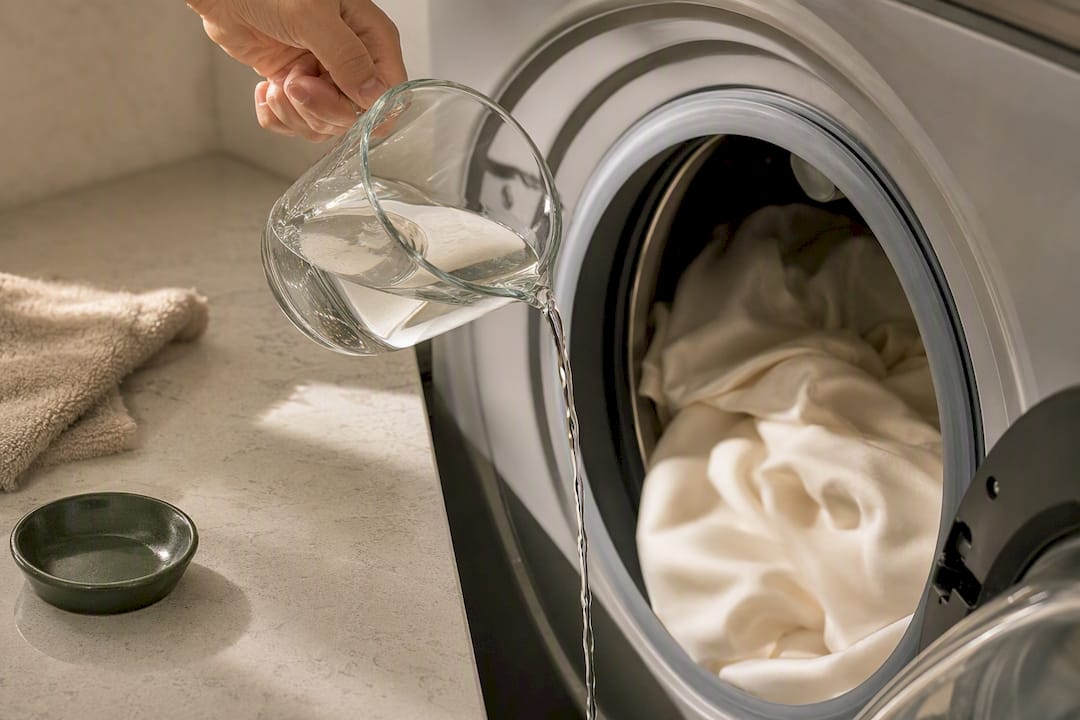
Pro Tip: Add half a cup of white vinegar to the rinse cycle instead of fabric softener. It clears out detergent residue and helps the fibres keep their natural softness, without the coating effect a bottled softener leaves behind.
Should you hand-wash lyocell sheets instead?
Hand-washing suits delicate weaves, sheets with decorative trims, or any set where the label steers you away from a machine altogether. It is also simply the gentlest option available, and hand-washing lets you control exactly how much agitation the fabric experiences, which matters when a sheet has embroidery or a satin border you want to protect.
- Fill a basin with cool to lukewarm water and add a small amount of delicate detergent, mixing it through before the sheet goes in.
- Submerge the sheet and let it soak for around ten minutes. Swirl it gently by hand and press the fabric rather than scrubbing, then rinse repeatedly until the water runs clear.
- Lift the sheet out without wringing it. Roll it in a dry towel and press firmly to draw out excess water, then reshape seams and corners while the fabric is still damp.
Reach for this method whenever you are dealing with a special finish, a blended fabric with delicate trim, or simply a set you want to baby a little more than the weekly wash allows.
What’s the best way to dry lyocell sheets?
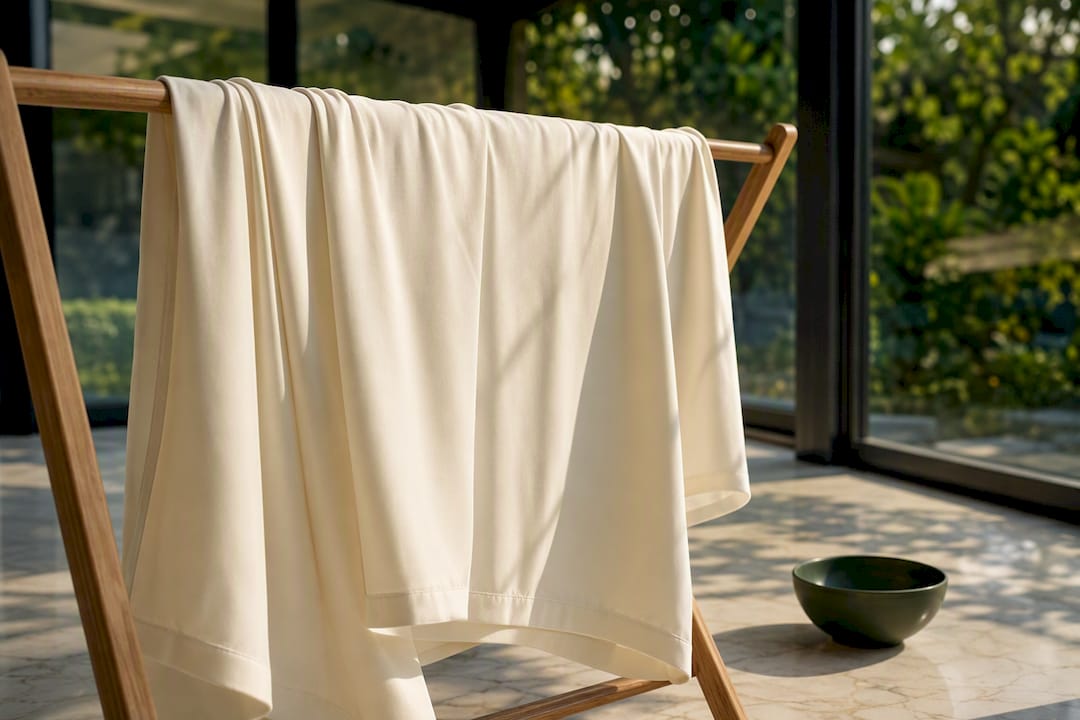
Air drying is the method that protects lyocell’s colour and hand the best. Lay sheets flat or hang them on a line in the shade, because direct sunlight can fade dyes over repeated exposure, and lyocell holds colour beautifully when you keep it out of harsh UV.
If you do use a tumble dryer, keep it on low heat or an air-only setting, and take the sheets out as soon as they finish. Lyocell absorbs and releases moisture faster than cotton, so it typically needs far less tumble time than a heavier cotton sheet, and leaving it in past that point undoes the softness you just spent a cycle preserving.
- Smooth seams and stretch fitted corners back into shape while the fabric is still slightly damp, before it sets fully dry.
- Check dryness earlier than you would with cotton; lyocell finishes drying faster.
- Pull sheets from the dryer the moment they feel just barely damp rather than running a full cycle to bone dry.
Pro Tip: Reshape a fitted sheet’s elasticated corners by hand while damp, stretching them gently over your palm. This keeps the seams from setting crooked and saves you from wrestling a stiff corner back onto the mattress later.
Can you iron or steam lyocell sheets?
Steaming is the safer route for lyocell, since it smooths creases without the fabric ever touching a hot plate. Hold the steam head a few inches from the surface and keep it moving continuously rather than lingering in one spot.
If you do reach for an iron, use a low, silk or synthetic setting and turn the sheet inside out first. A pressing cloth between the iron and the fabric adds a layer of protection against shine marks or scorching.
- Keep the iron moving at all times; never let it rest still on the fabric.
- Lightly dampen stubborn creases before ironing rather than raising the heat.
- Avoid high heat and heavy downward pressure altogether, since both can flatten the fibre’s natural texture.
Readers who care for other delicate textiles, such as hide rugs, will recognise the logic here: gentle, moving heat lifts creases far more safely than a hot, stationary iron.
How do you treat stains on lyocell sheets?
Speed matters more than force with any stain on lyocell. Rinse a fresh mark with cold water immediately, dabbing rather than rubbing, since rubbing pushes the stain deeper into the fibre and can rough up the surface.
- Dab protein or oil-based stains with a small amount of delicate detergent, or a little diluted white vinegar, testing on a hidden seam first before treating the visible mark.
- Skip bleach and any strong commercial stain remover; both are harsher than lyocell fibres can comfortably handle.
- For a stain that has already set, soak the area gently and wash the whole piece by hand rather than attacking just the mark.
- If a set carries a manufacturer warning against home treatment, or has a delicate printed or embroidered finish, take it to a professional cleaner instead of experimenting.
How often should you wash lyocell sheets?
Every one to two weeks is the right rhythm for most households, and you can wash more often if you have allergies, pets sharing the bed, or a tendency to perspire heavily overnight. Lyocell’s natural moisture-wicking quality means it feels fresher for longer between washes than some other fabrics, but a fortnightly wash still keeps oils and skin cells from building up in the weave.
- Keep two or three sets in rotation so no single sheet takes the full brunt of weekly washing.
- Use a mattress protector to cut down on how often the fitted sheet itself needs a full wash.
- Skip heavy lotions or body oils right before bed when you can, since they transfer straight into the fibres.
- Air sheets out between uses and spot-clean small marks instead of running a full wash for a minor mark.
Owning a spare set also means you are never caught short on laundry day. An additional matching sheet slots straight into rotation without disrupting the look of your bedroom.
How should you store lyocell sheets long term?
Store sheets only once they are completely dry, folded neatly in a cool, dark spot away from direct sunlight. Any lingering dampness invites mildew, and that is the one thing that can genuinely spoil a beautiful set of sheets in storage.
- Use breathable cotton storage bags rather than sealed plastic, which traps the moisture you just dried out.
- Fold rather than hang for long stretches, since hanging can stretch the weave out of shape over time.
- Air folded sheets out every few months even in storage, just to keep them fresh.
- Tuck in a natural sachet, such as lavender or cedar, and skip mothballs entirely; keep the storage space dry and well ventilated.
What common mistakes damage lyocell sheets?
Most damage to lyocell bedding comes down to a handful of repeatable mistakes, all of them avoidable once you know to look for them.
- Washing in hot water or tumble drying on high heat, both of which stress fibres that are already weaker when wet.
- Using bleach, strong enzymatic detergents, or fabric softener, any of which strip or coat the fibre in ways that dull its natural softness.
- Overloading the washer or mixing lyocell with rough fabrics like denim or towelling in the same load.
- Wringing sheets by hand or leaving them damp in a laundry basket instead of drying them promptly.
Roomie Design’s approach to lyocell care
Every lyocell set is designed to respond well to this care routine, from the weave to the finish. Our lyocell dark blue fitted three-piece sheet set and lyocell white fitted three-piece sheet set both respond beautifully to the cold-wash, air-dry method described above, keeping their colour and softness through repeated cycles.
- Lyocell’s natural breathability makes it a strong option for anyone reading our guide to bedding for sensitive skin.
- Rotating sets, as covered in our tips for extending bedding lifespan, keeps any single sheet from carrying all the wear.
- Colour-care and sizing notes for each set are typically available on product pages, helping to guide appropriate wash routines for different weaves.
Gentle care is what keeps luxury bedding luxurious
A little extra attention at wash time is a small price for sheets that still feel new years in. Lyocell rewards that care with a softness that genuinely deepens over time rather than wearing thin, and the fibre’s own qualities mean it dries faster and handles more gently than many people expect.
Keeping two sets in rotation and following specific care notes helps maintain bedding quality, with the wash routine being an important factor in preserving premium bedding.
— Roomie Design
Ready to build your lyocell bedding rotation?
Caring for lyocell well is easiest when you are not relying on a single set to get you through every wash cycle. Roomie Design’s collection gives you room to rotate between fabrics and finishes without ever settling for something less than premium.
If you already own lyocell sheets, an additional matching sheet means one set is always resting while the other is in the wash, which cuts down on how often any single sheet goes through a cycle. For richer texture on the same bed, the Reverie Luxury Duvet Cover Set and the Diamond Weave 1200TC Luxury Bedding Set both pair beautifully with lyocell sheets, layering in a denser, more indulgent weight without ever feeling heavy against the skin. Readers drawn to silk’s cool drape will find the Premium Champagne Mulberry Silk 22 mm Bedding Set a natural next step, while the Tranquility Pillowcases (Set of 2) and a Sleeping Mask round out a full sleep set worth the same gentle wash routine. Browse the full range and add a spare set to your rotation today.
Sources
- Can Lyocell Be Washed? Your Complete Care and Washing Instructions - Knowing Fabric
- How to Wash Lyocell Fabric: Easy Care Tips for Longevity - The Black Urban Times
- Lyocell garment care — Asket
- Lyocell — Fabric Analysis | FabricIQ
- Lyocell Fabric Features, Uses and Tips | Love, Bonito INTL


