Breaking down bedding terminology: a clear guide
TL;DR:
- Bedding includes all items that cover a mattress for comfort, warmth, and hygiene. Proper understanding of terminology helps buyers distinguish between bedding components, bed linens, and marketing terms, ensuring better purchase decisions.
Bedding is defined as the complete collection of items that cover a mattress for comfort, warmth, and hygiene. Breaking down bedding terminology means understanding the precise categories of sheets, duvets, pillows, and protective layers that form a complete sleep system. The industry draws a clear line between “bedding” as the umbrella term and “bed linens” as the washable fabric layers that touch the skin directly. Knowing this distinction, along with terms like thread count, fill power, GSM, percale, and sateen, puts you in control of every purchase decision. This bedding terminology guide covers every key term you need.
Breaking down bedding terminology: what each term really means
“Bedding” covers all items on a mattress, including duvets, blankets, mattress protectors, and pillows. “Bed linens,” by contrast, refers specifically to the washable fabric layers that contact the skin, such as sheets and pillowcases. Duvets, comforters, and blankets fall under bedding but are not classified as bed linens. This distinction matters when you read product listings, because retailers use both terms, sometimes interchangeably and sometimes with precision.
Retail terms like “bed set” and “sleep set” are marketing labels rather than industry standards. A bed set typically bundles a duvet cover, fitted sheet, and pillowcases. A sleep set may include the duvet insert itself. Neither term is regulated, so reading the individual item list in any product description is the reliable approach.
What are the main components of bedding and their functions?
Each layer in a bedding system serves a distinct purpose. Understanding what each component does helps you build a setup that balances comfort, hygiene, and style.
- Fitted sheet: The elasticated sheet that wraps directly over the mattress. It acts as the primary skin-contact layer and protects the mattress surface.
- Flat sheet: A non-elasticated sheet placed between the fitted sheet and the duvet. Not all sleepers use one, but it adds a washable barrier and a layer of warmth.
- Pillowcases: Fabric covers for pillows. They protect the pillow fill from oils and moisture and are the most frequently laundered bedding item.
- Duvet: A filled, quilted cover used as the main top layer. It provides warmth and is usually housed inside a removable duvet cover.
- Duvet cover: A removable fabric shell that encloses the duvet insert. It is washed regularly and acts as the decorative face of the bed.
- Comforter: Common in North American retail, a comforter is a quilted, filled blanket used without a separate cover. In British usage, the duvet with its cover is the standard equivalent.
- Quilt: A stitched, padded layer, typically lighter than a duvet. Quilts are often used as decorative throws or additional warmth layers.
- Mattress protector: A fitted cover placed over the mattress, beneath the fitted sheet. It guards against moisture, allergens, and general wear.
- Mattress topper: An additional cushioning layer placed on top of the mattress to adjust firmness or add softness.
These layers combine into a practical system. The mattress protector and fitted sheet handle hygiene at the base. The pillow and pillowcase manage head support and skin contact. The duvet and its cover deliver warmth and visual style.
Pro Tip: Wash your fitted sheet and pillowcases together on the same schedule. It keeps the skin-contact layers consistently clean without requiring you to track separate routines.
How do fabric types and weave patterns affect bedding quality?
Fabric choice and weave construction are the two factors that most directly shape how bedding feels and performs. The best bedding materials each carry distinct properties suited to different preferences and climates.
Cotton: percale vs sateen
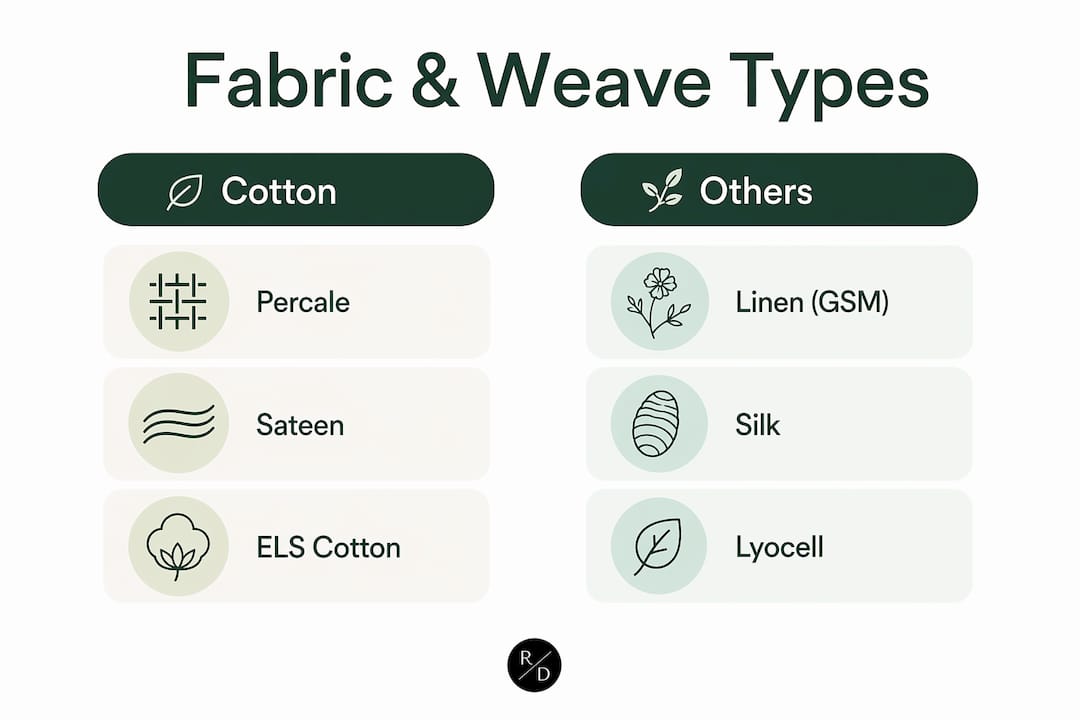
Cotton percale weave produces a cool, crisp feel with higher breathability, making it well suited to warm sleepers. Sateen weave uses a different interlacing pattern that creates a smoother, slightly drapey surface with a subtle sheen. Sateen feels warmer and softer against the skin, which suits cooler sleepers or those who prefer a silkier texture. Both weaves use cotton as the base fibre, so the difference is entirely in construction.
Fibre quality within cotton matters as much as weave. Extra-long-staple (ELS) cotton, such as Egyptian cotton or Supima cotton, produces longer, finer fibres that result in softer, more durable fabric. Thread count is a secondary indicator. Counts above 400–500 often use multi-ply threads to inflate the number without improving softness or durability. Fibre length and quality are the more reliable markers of a premium cotton sheet.
Linen
Linen bedding uses GSM (grams per square metre) as its quality measure rather than thread count. A higher GSM indicates a thicker, more durable fabric. Linen is naturally breathable and textured, with exceptional longevity. It softens with each wash, making older linen bedding often more comfortable than new. It suits warm sleepers and those who prefer a relaxed, lived-in aesthetic.
Silk and lyocell
Mulberry silk is the premium end of natural fibres. It is smooth, temperature-regulating, and gentle on skin and hair. Lyocell (often sold under the brand name Tencel) is a plant-derived fibre with a soft, slightly cool feel and good moisture management. Both are well suited to sensitive skin.
| Fabric | Key feel | Best for | Quality measure |
|---|---|---|---|
| Cotton percale | Crisp, cool | Warm sleepers | Fibre length (ELS) |
| Cotton sateen | Smooth, warm | Cool sleepers | Fibre length (ELS) |
| Linen | Textured, breathable | Hot sleepers | GSM |
| Mulberry silk | Silky, temperature-regulating | Sensitive skin | Grade and momme weight |
| Lyocell | Soft, cool | Sensitive skin | GSM |
Pro Tip: When comparing cotton sheets, look for “long-staple” or “extra-long-staple” in the product description rather than relying on thread count alone. These terms signal genuine fibre quality.
What do fill types and construction terms mean in bedding?
Fill terminology applies primarily to duvets, comforters, and pillows. Understanding these terms helps you match a product to your warmth needs and maintenance preferences.
- Fill power: A measurement of down quality. It indicates how much space one ounce of down occupies. Fill power of 500–800+ is the standard range for quality down bedding. Higher fill power means more loft and warmth relative to weight. A fill power of 450–600 suits warm sleepers who want lighter warmth without bulk.
- Down: The soft underlayer of waterfowl feathers. Down clusters trap air efficiently, providing warmth with minimal weight. High-quality down retains its loft for 5–10 years with proper care and regular cleaning.
- Down alternative: Synthetic fills, typically polyester, that mimic the loft of down. They suit those with allergies to natural fills and are generally easier to machine wash.
- Wool fill: A natural alternative with excellent temperature regulation. Wool wicks moisture and suits sleepers who run hot in summer and cold in winter.
- Baffle-box construction: A duvet construction method where internal fabric walls (baffles) create three-dimensional boxes that hold fill in place. Baffle-box construction prevents fill shifting and cold spots better than box-stitched designs.
- Box-stitched construction: A simpler quilting method where stitching goes through all layers, creating flat squares. The stitched seams compress the fill, which can reduce insulation at those points.
- Duvet cover: A removable shell that protects the duvet insert and is laundered regularly. Choosing a duvet cover in a quality fabric extends the life of the insert beneath it.
- Pillow protector: A zippered cover placed over the pillow before the pillowcase. It blocks moisture and allergens from reaching the fill, significantly extending pillow life.
The Roomie Design Minimalist Down & Feather Duvet uses goose down fill with baffle-box construction, which keeps the fill evenly distributed across the entire surface for consistent warmth.
How to read bedding labels and care for your bedding correctly
Prioritising fibre type, weave, and construction terms over marketing labels like “bed set” or “sleep set” is the most reliable approach to shopping for bedding. Marketing bundles vary widely in what they include, so checking the individual item list and the fabric specification gives you the information that actually matters.
Follow these steps when reading a bedding product label or description:
- Identify the fibre. Look for cotton, linen, silk, lyocell, or polyester. If cotton, check whether it specifies long-staple or extra-long-staple.
- Check the weave or construction. Percale, sateen, jacquard, or plain weave each produce a different feel. For linen, look for GSM rather than thread count.
- Note the fill type and fill power for duvets and pillows. A fill power figure tells you more about warmth-to-weight performance than a vague “luxury” label.
- Read the care instructions. Natural fibres like linen and silk often require cooler wash temperatures. Down inserts need low-heat tumble drying with dryer balls to restore loft.
- Check what is included. A duvet cover set typically includes the cover and pillowcases but not the insert. Confirm before purchasing.
Washing frequency matters as much as washing method. Sheets benefit from weekly washing, pillowcases twice weekly for those with acne-prone skin, duvet covers every 2–4 weeks, and duvet inserts every 6–12 months. Mattress protectors need laundering every 1–2 months. Following a consistent schedule removes dust mite allergens and keeps bedding performing at its best.
Pro Tip: For long-term stays or rental properties, a structured cleaning routine for bedding extends the life of every layer and keeps sleep quality consistent for every occupant.
For sizing guidance when purchasing, the Roomie Design bedding size guide covers standard UK dimensions across all product types.
Why terminology is the most underrated part of buying bedding
Most buyers focus on price and appearance when shopping for bedding. The terms on the label are treated as background noise. That is a costly habit.
Knowing the difference between baffle-box and box-stitched construction, for example, directly affects how warm and how durable a duvet will be over years of use. Knowing that ELS cotton outperforms standard cotton at any thread count means you stop being misled by inflated numbers. These are not obscure details. They are the actual specifications that determine whether a product performs as expected.
The confusion between “bedding” and “bed linens” causes real purchasing errors. Buyers expecting a full set sometimes receive only the washable layers, without the insert or the protector. Reading the terminology correctly prevents that disappointment.
At Roomie Design, the observation is consistent: customers who understand fill power, weave type, and GSM make purchases they are satisfied with long term. Those who rely on marketing labels alone tend to return products or replace them sooner than necessary. Terminology is not academic knowledge. It is practical consumer intelligence that pays for itself in every purchase.
The best approach is to treat bedding terms as a short, learnable vocabulary rather than a barrier. Once you know percale from sateen and baffle-box from box-stitch, every product description becomes clear and every purchase becomes confident.
— Roomie Design
Premium bedding that matches what you now know
Understanding fill power, construction, and fabric quality makes it straightforward to identify products worth investing in.
The Roomie Design Minimalist Down & Feather Pillow set uses natural goose down and feather fill for genuine loft and support, exactly the kind of product the fill power terminology in this guide describes. The Minimalist Down & Feather Duvet pairs baffle-box construction with high-quality down fill, keeping warmth evenly distributed through every season. Both products are built around the same quality markers covered here: fibre quality, fill performance, and construction integrity. Browse the full range at Roomie Design to find bedding that matches your comfort preferences and care routine.
FAQ
What is the difference between bedding and bed linens?
Bedding is the umbrella term for all items covering a mattress, including duvets, blankets, and mattress protectors. Bed linens refers specifically to the washable fabric layers that touch the skin, such as sheets and pillowcases.
What does fill power mean in a duvet?
Fill power measures how much space one ounce of down occupies. A higher fill power, typically 500–800+, indicates a lighter, loftier duvet with better warmth-to-weight performance.
Is thread count the best way to judge sheet quality?
Thread count is a useful starting point but not the most reliable indicator. Fibre length matters more: extra-long-staple (ELS) cotton produces softer, more durable sheets regardless of thread count.
What is baffle-box construction in a duvet?
Baffle-box construction uses internal fabric walls to create three-dimensional compartments that hold fill in place. This prevents cold spots and fill shifting, which box-stitched quilting cannot fully prevent.
How often should bedding be washed?
Sheets should be washed weekly, pillowcases twice weekly for acne-prone skin, duvet covers every 2–4 weeks, and duvet inserts every 6–12 months. Mattress protectors need laundering every 1–2 months.


