
How to organise luxury bedding inventories: 2026 guide
TL;DR:
- Effective luxury bedding inventory management involves categorising, storing, tracking, and replenishing stock to preserve quality and boost sales. Using specialized software, integrating systems, and implementing precise storage and replenishment methods lead to fewer stockouts, better product condition, and greater operational efficiency. Continuous monitoring and proactive data use help retailers reduce errors, prevent loss, and improve customer satisfaction.
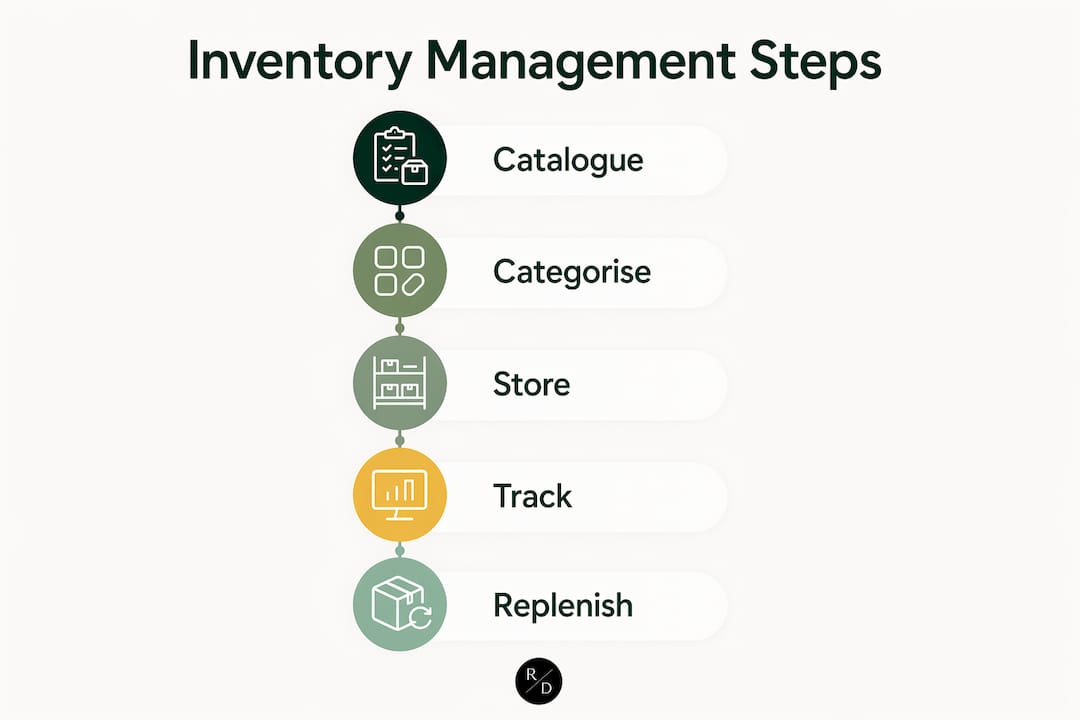
Luxury bedding inventory management is the structured process of categorising, storing, tracking, and replenishing high-end textile stock to preserve quality and maximise sales performance. Retailers and interior designers who apply a disciplined system to organising high-end bedding report fewer stockouts, less product damage, and faster fulfilment. This guide covers the tools, storage methods, replenishment workflows, and tracking techniques that define best practice in 2026, drawing on real operational data from luxury textile businesses.
What essential tools support luxury bedding inventory management?
The right technology is the foundation of any efficient bedding inventory system. Without it, even well-organised physical stock becomes difficult to track, replenish, and report on accurately.
Inventory management software built for luxury retail should handle multi-location stock, variant tracking by size, fabric, and thread count, and automated reorder alerts. Brands using modern automated forecasting report up to 90% easier supply planning compared to manual spreadsheets. That figure reflects how much time and error is embedded in traditional methods.
Integrating your point-of-sale system with back-end accounting and CRM tools produces measurable gains. High-end bedding retailers who connect these systems save up to 160 hours per month on reconciliation and data entry, with order creation time dropping from 45 minutes to 5 minutes. Those hours translate directly into time spent on client relationships and product curation.
AI-driven platforms add another layer by forecasting demand across wholesale, retail, and online channels simultaneously. This multi-channel visibility prevents the reactive buying that erodes margins on luxury lines.
| Technology type | Primary benefit | Best suited for |
|---|---|---|
| Inventory management software | Variant and location tracking | Retailers with multiple SKUs |
| POS and CRM integration | Reduced manual data entry | Wholesale and retail operations |
| AI forecasting platform | Demand prediction across channels | Scaling luxury brands |
| Linen management software | Par level and laundry cycle tracking | Hospitality and service businesses |
Pro Tip: Before selecting software, map every product variant you carry, including size, fabric, thread count, and colourway. Software that cannot handle this level of detail will create gaps in your reporting from day one.
How to categorise and store luxury bedding to maintain quality
Physical organisation is where inventory management becomes tangible. The way you categorise and store luxury linens directly affects product condition, retrieval speed, and the impression you make on clients.

Start by standardising your categorisation system. Group stock first by collection or style (for example, plain dye, floral, or jacquard weave), then by size, and finally by fabric type such as Egyptian cotton, mulberry silk, or linen. This three-tier structure mirrors how clients and buyers search, making retrieval faster and reducing the risk of mismatched sets leaving the stockroom.
Storage materials matter as much as storage structure. Breathable cotton and linen bags protect luxury bedding from dust without trapping moisture, which is the primary cause of yellowing and fabric degradation in sealed plastic packaging. Natural fabric storage maintains air circulation and keeps high-thread-count sets in showroom condition.
For bespoke storage solutions that complement a luxury stockroom, fitted storage cabinetry designed for high-end bedrooms can be adapted for retail and designer studio environments, providing both organisation and presentation quality.
Best practices for physical storage:
- Store complete sets together, folded inside one pillowcase from the set, to prevent pieces becoming separated
- Use shelf dividers labelled by size and fabric to eliminate visual searching
- Stack sets with the folded edge facing outward so the label is visible without disturbing the pile
- Keep high-turnover lines at eye level and archive stock on upper or lower shelves
- Avoid direct sunlight on open shelving, as UV exposure fades colour in premium fabrics over time
Pro Tip: Fold duvet cover sets using the burrito method: lay the cover flat, place the folded duvet insert on top, roll both together, then tuck the roll inside the cover. This keeps the set compact, wrinkle-free, and immediately identifiable.
What methodologies optimise replenishment and prevent stockouts?
Replenishment is the most operationally complex part of luxury bedding inventory management. Getting it wrong means either empty shelves on your best-selling lines or capital tied up in slow-moving stock.
Par level calculations based on actual consumption and laundry cycle data produce far more accurate reorder points than default settings. A par level is the minimum quantity of each SKU needed to meet demand between reorder and delivery. Set it too low and you face stockouts; set it too high and you carry unnecessary holding costs on expensive luxury stock.
End-to-end visibility across retail floors, call centres, and suppliers prevents the hidden costs of excess inventory that accumulate when these channels operate in isolation. Automated connections between systems flag discrepancies before they become costly.
A reliable replenishment workflow follows these steps:
- Set par levels for each SKU using a minimum of three months of actual sales data
- Configure automated reorder alerts in your inventory software at 120% of par level to allow lead time
- Assign a named supplier contact for each product category to speed up communication
- Review and adjust par levels quarterly, accounting for seasonal demand shifts in luxury bedding
- Log every reorder, receipt, and variance in a single system to build an accurate consumption history
Common mistakes to avoid: reordering based on gut feel rather than data, failing to account for supplier lead times in par level calculations, and treating all SKUs as equally urgent regardless of margin or sell-through rate.
How do tracking systems improve inventory accuracy and loss prevention?
Continuous monitoring separates reactive inventory management from a genuinely controlled system. For luxury bedding retailers, where individual SKUs carry significant value, tracking accuracy is a financial priority.
Regular physical counts with variance analysis detect loss patterns early. Monthly full counts cross-referenced against par levels trigger investigations when variances appear, rather than allowing shrinkage to accumulate unnoticed across a quarter.
For larger operations, RFID tagging offers a more automated approach. RFID delivers ROI within 18–24 months for inventories valued above £500,000, with tag costs running at £1–3 per unit plus reader infrastructure. The system automates real-time tracking across receiving, storage, and dispatch processes.
| Tracking method | Accuracy level | Cost | Best suited for |
|---|---|---|---|
| Manual count | Moderate | Low | Small retailers |
| Property management system (PMS) | Good | Medium | Hospitality businesses |
| Dedicated linen software | High | Medium | Multi-location retailers |
| RFID tagging | Very high | High | Large luxury inventories |
Integrating your tracking system with a property management system or dedicated linen software closes the gap between physical stock and digital records. The bedding selection workflow for retailers and designers benefits directly from this integration, as accurate stock data informs purchasing decisions at every stage.
What I have learned from implementing luxury inventory systems
The retailers and designers who manage luxury bedding inventories well share one habit: they treat technology adoption as urgent rather than optional. The businesses that delay integrating their POS, accounting, and inventory systems spend years recovering time and accuracy that a connected setup would have preserved from the start.
The most common practical challenge is not the technology itself. It is the initial data entry required to build an accurate product catalogue with every size, fabric, thread count, and colourway correctly recorded. That groundwork feels slow, but it is the difference between a system that works and one that creates more problems than it solves.
The shift from reactive to proactive inventory management produces results that are visible within one quarter. Stockouts on premium lines drop, client satisfaction improves, and the time spent firefighting reorders converts into time spent on product development and client service. That is the real return on a well-organised inventory system.
— Roomie
Roomie-design’s luxury bedding range for well-organised inventories
Retailers and interior designers who invest in organising their stock deserve products worth organising. Roomie-design offers a curated range of premium bedding sets built for clients who expect both quality and design consistency.
The Aristocrat Gold Luxury Designer Bedding Set is a high-conversion option for retailers seeking statement pieces that photograph well and sell confidently. For clients drawn to tactile luxury, the Dusty Rose Mulberry Silk Duvet Cover Set in 22mm 100% mulberry silk represents the upper end of the premium range. Roomie-design’s collections span plain dye, floral, jacquard, and reversible styles across cotton, silk, linen, and lyocell, giving retailers the depth of range that a well-structured inventory system is built to handle.
FAQ
How do I start organising a luxury bedding inventory from scratch?
Begin by cataloguing every SKU with size, fabric, thread count, and colourway recorded in a single system. Then set par levels based on at least three months of sales data before configuring reorder alerts.
What storage materials are best for luxury linens?
Breathable cotton and linen bags are the best storage option for luxury bedding. They allow air circulation and prevent moisture build-up, which is the primary cause of fabric yellowing and degradation.
When does RFID tracking become worth the investment?
RFID tagging delivers return on investment within 18–24 months for inventories valued above £500,000. Below that threshold, dedicated linen software or a property management system integration provides strong accuracy at lower cost.
How often should physical inventory counts be carried out?
Monthly full counts cross-referenced against par levels are the standard practice for luxury bedding inventories. This frequency detects loss patterns early and keeps digital records aligned with physical stock.
What is the fastest way to reduce manual data entry in bedding inventory management?
Integrating your POS system with back-end accounting and CRM tools eliminates the majority of manual reconciliation. Retailers who make this connection report saving up to 160 hours per month on data entry alone.


