

Wie man Bettwäsche richtig dimensioniert: eine komplette Anleitung
TL;DR:
- Für die genaue Größenbestimmung von Bettwäsche müssen Breite, Länge und Tiefe der Matratze gemessen werden, um einen passenden Sitz zu gewährleisten. Richtige Maße verhindern, dass Bettlaken, Bettbezüge und Kopfkissenbezüge verrutschen oder sich zusammenballen, was sowohl die Funktion als auch die Ästhetik verbessert. Stimmen Sie die Maße der Bettwäsche immer mit den Matratzenmaßen ab, unter Berücksichtigung von Tiefe und Kissengröße, für optimalen Komfort und Aussehen.
Die richtige Größenbestimmung von Bettwäsche bedeutet, dass Bettbezüge, Spannbettlaken, Bettlaken und Kopfkissenbezüge genau auf die Maße Ihrer Matratze abgestimmt sind, einschließlich Breite, Länge und Tiefe. Dies richtig zu machen, ist kein unwichtiges Detail. Schlecht sitzende Laken rutschen von den Ecken, Bettbezüge bauschen sich in ihren Einlagen, und zu lose oder zu enge Kopfkissenbezüge stören das Aussehen eines ansonsten gut gemachten Bettes. Namhafte Bettwäsche-Autoritäten wie Frette, John Lewis und Martha Stewart beginnen ihre Größenberatung alle am selben Punkt: Messen Sie zuerst die Matratze und wählen Sie dann die passende Bettwäsche aus.
So finden Sie die richtige Bettwäschegröße, indem Sie Ihre Matratze messen
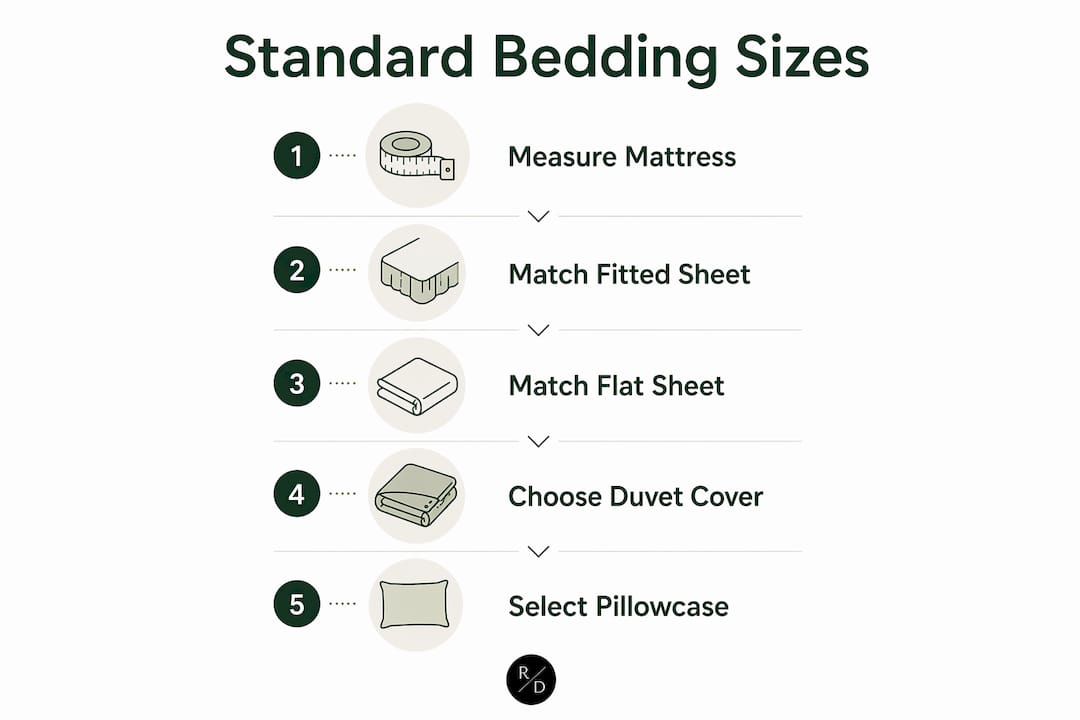
Die genaue Messung der Matratze ist die Grundlage jeder Entscheidung, die Sie bezüglich Ihrer Bettwäsche treffen werden. Sie benötigen drei Angaben: Breite, Länge und Tiefe. Jede davon beeinflusst eine andere Komponente Ihres Bettwäsche-Sets.
Befolgen Sie diese Schritte für eine präzise Messung:
- Messen Sie die Breite von einer Seite der Matratze zur anderen an ihrer breitesten Stelle, indem Sie ein Stoff- oder Metallmaßband flach über die Oberfläche legen.
- Messen Sie die Länge vom Kopfende der Matratze zum Fußende, wobei das Maßband wieder flach und straff liegen sollte.
- Messen Sie die Tiefe an der dicksten Stelle der Matratze, die sich typischerweise in der Mitte befindet. Wenn Sie einen Matratzen-Topper verwenden, addieren Sie dessen Dicke zu diesem Wert. Diese kombinierte Tiefe bestimmt die Größe der Tasche Ihres Spannbettlakens.
- Wiederholen Sie jede Messung zweimal, um die Genauigkeit zu überprüfen. Abgerundete Ecken oder Pillow-Top-Oberflächen können dazu führen, dass eine erste Messung leicht abweicht.
Profi-Tipp: Bitten Sie jemanden, ein Ende des Maßbandes zu halten, während Sie die Messung vornehmen. Ein Maßband, das sich auf einer Pillow-Top-Oberfläche auch nur leicht verschiebt, kann zu einem Messfehler von einem Zoll führen, was ausreicht, damit ein Spannbettlaken von den Ecken rutscht.
Matratzengrößen in Großbritannien folgen Standardmaßen: Einzelbett (90 x 190 cm), Doppelbett (135 x 190 cm), Kingsize (150 x 200 cm) und Super Kingsize (180 x 200 cm). Dies sind Ihre Ausgangswerte. Jede weitere Bettwäschemessung baut darauf auf.
Erklärung der Standardgrößen für Bettwäsche: Laken, Bettbezüge und Kopfkissenbezüge
Sobald Sie Ihre Matratzenmaße haben, können Sie diese den richtigen Bettwäschemaßen zuordnen. Jede Bettwäschekomponente folgt ihrer eigenen Größenlogik.
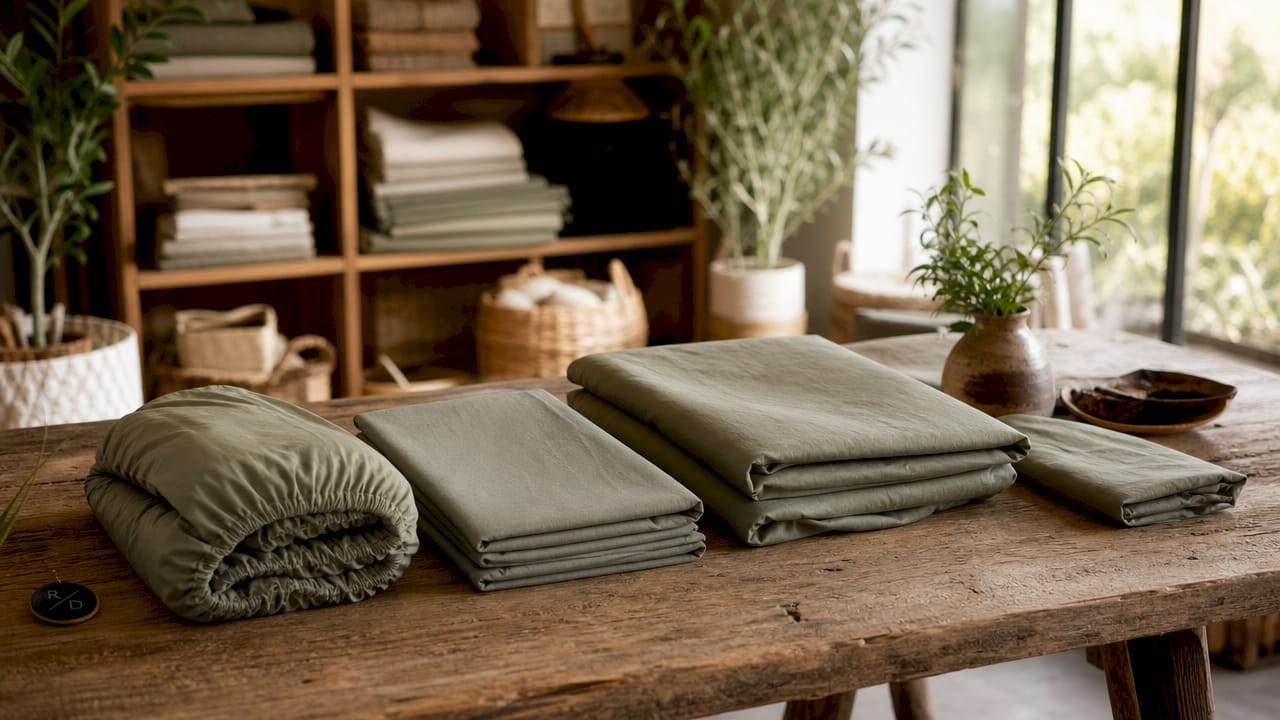
Spannbettlaken und normale Laken haben unterschiedliche Funktionen, und ihre Maße spiegeln dies wider. Spannbettlaken entsprechen den Matratzenmaßen mit elastischen Kanten, während normale Laken einen großzügigen Überhang zum Einstecken oder Drapieren haben. Für ein normales Laken addiert man typischerweise 24 bis 30 Zoll zur Matratzenlänge und 36 bis 40 Zoll zur Breite, um ein bequemes Einstecken und Drapieren an allen Seiten zu ermöglichen. Das bedeutet, dass normale Laken immer wesentlich größer sind als die Matratzenoberfläche selbst.
Die folgende Tabelle zeigt Standard-UK-Matratzengrößen zusammen mit ihren entsprechenden Bettwäschemaßen:
| Matratzengröße | Matratzenmaße (cm) | Spannbettlaken (cm) | Flaches Laken (cm) | Bettbezug (cm) | Standard-Kopfkissenbezug (cm) |
|---|---|---|---|---|---|
| Einzelbett | 90 x 190 | 90 x 190 + Tasche | 180 x 260 | 135 x 200 | 50 x 75 |
| Doppelbett | 135 x 190 | 135 x 190 + Tasche | 230 x 260 | 200 x 200 | 50 x 75 |
| Kingsize | 150 x 200 | 150 x 200 + Tasche | 260 x 280 | 225 x 220 | 50 x 90 |
| Super Kingsize | 180 x 200 | 180 x 200 + Tasche | 295 x 280 | 260 x 220 | 50 x 90 |
Die Größe des Kissenbezugs richtet sich nach dem Kissen selbst. Standard-, Queen- und King-Kissen haben jeweils entsprechende Kissenbezugsmaße, und ein zu großer Bezug sieht unordentlich aus, während ein zu kleiner Bezug nicht richtig schließt. Überprüfen Sie immer die Kissenmaße auf dem Produktetikett, bevor Sie Bezüge separat kaufen.
Bettbezüge sollten zum Bettdeckeneinsatz passen, nicht nur zur Matratze. Eine Doppelbettdecke in einem King-Size-Bezug verrutscht im Bezug und führt zu einer ungleichmäßigen Wärmeverteilung. Stellen Sie immer sicher, dass der Einsatz und der Bezug die gleichen Tog-Wert-Maße haben.
Warum die Matratzentiefe für die Taschenhöhe des Spannbettlakens wichtig ist
Die Matratzentiefe ist das am häufigsten übersehene Maß beim Kauf von Bettwäsche und die Ursache für die meisten Probleme mit Spannbettlaken. Die meisten Probleme mit Spannbettlaken entstehen durch eine Unterschätzung der Matratzentiefe. Das Messen der dicksten Stelle, einschließlich eines eventuellen Toppers, und das Hinzufügen zusätzlicher Zentimeter für die Taschenhöhe sorgt für einen sicheren Sitz.
Die Taschenhöhenkategorien für Spannbettlaken gliedern sich im Allgemeinen wie folgt:
- Standard-Taschenhöhe: 25 bis 30 cm. Geeignet für Matratzen bis ca. 25 cm Dicke ohne Topper.
- Tiefe Tasche: 30 bis 38 cm. Geeignet für dickere Matratzen oder solche mit einem Standard-Topper.
- Extra tiefe Tasche: 38 cm und mehr. Extra tiefe Taschenlaken sind für Betten über 50 cm Dicke geeignet, was bei Pillow-Top- oder Memory-Foam-Matratzen in Kombination mit einem Topper üblich ist.
Die Regel ist einfach: Die Taschenhöhe sollte Ihre Matratzenhöhe für einen sicheren Sitz um mindestens 5 bis 7 cm überschreiten. Eine 35 cm hohe Matratze mit Topper benötigt eine Taschenhöhe von mindestens 40 bis 42 cm.
Profi-Tipp: Verlassen Sie sich beim Kauf von Spannbettlaken niemals allein auf das Größenetikett. Überprüfen Sie immer die Produktspezifikation für die angegebene Taschenhöhe. Zwei als „Kingsize“ bezeichnete Laken können Taschenhöhen haben, die sich um 10 cm oder mehr unterscheiden.
Pillow-Top- und Memory-Schaum-Matratzen komprimieren und dehnen sich anders als Standardfederkernmatratzen. Messen Sie sie in ihrem natürlichen Ruhezustand, nicht unter Körpergewicht, um eine genaue Tiefenmessung zu erhalten.
So wählen Sie das richtige Bettwäschematerial und die richtige Fadenzahl
Bettwäschegröße und Material arbeiten zusammen. Ein perfekt dimensioniertes Laken im falschen Stoff beeinflusst immer noch Ihre Schlafqualität. Die Wahl des richtigen Materials für Ihren Schlafstil ist genauso wichtig wie die richtigen Abmessungen.
Die am häufigsten verwendeten Bettwäschestoffe bieten jeweils unterschiedliche Eigenschaften:
- Baumwoll-Perkal: Frisch, kühl und strapazierfähig. Geeignet für heiße Schläfer und solche, die ein Hotel-ähnliches Finish bevorzugen.
- Baumwollsatin: Glatt und glänzend mit einem weichen Fall. Geeignet für diejenigen, die ein seidigeres Gefühl auf der Haut bevorzugen.
- Leinen: Leinen leitet Körperwärme auf natürliche Weise ab und wird mit jeder Wäsche weicher. Ausgezeichnet für warme Klimazonen oder heiße Schläfer.
- Bambus: Feuchtigkeitsableitend und hypoallergen. Eine gute Wahl für Menschen mit empfindlicher Haut oder solche, die warm schlafen.
- Maulbeerseide: Außergewöhnlich glatt und temperaturregulierend. Eine Premium-Option für diejenigen, die das ganze Jahr über luxuriösen Komfort suchen.
Die Fadenzahl ist ein zuverlässiger Indikator für die Gewebedichte und das Gefühl. Fadenzahlen zwischen 200 und 400 bieten alltägliche Weichheit und Atmungsaktivität, während Zahlen im Bereich von 400 bis 1000 ein merklich reicheres, luxuriöseres Gefühl mit größerer Haltbarkeit über die Zeit erzeugen. Bettlaken mit höherer Fadenzahl entwickeln mit wiederholtem Waschen eine tiefere Weichheit, was sie zu einer soliden Langzeitinvestition macht.
Lauren Miller, die für Martha Stewart schreibt, rät, dass Ihr Schlafprofil, ob Sie zu Hitze oder Kälte neigen, Ihre Stoffwahl ebenso stark leiten sollte wie Größe und Fadenzahl. Entdecken Sie Bettwäschematerialien für den Schlaf, um den Stoff an Ihre spezifischen Bedürfnisse anzupassen.
Häufige Größenfehler und wie man sie behebt
Auch umsichtige Käufer machen Größenfehler. Wenn Sie die Anzeichen frühzeitig erkennen, sparen Sie Geld und Frustration.
Häufige Anzeichen für schlecht dimensionierte Bettwäsche sind:
- Spannbettlaken-Ecken, die nachts abspringen
- Eine Bettdecke, die sich im Bezug auf eine Seite zusammenschiebt
- Kopfkissenbezüge, die klaffen oder sich eng um das Kissen ziehen
- Flache Laken, die an den Seiten nicht weit genug herunterreichen, um sie einzustecken
Um diese Probleme zu beheben, gehen Sie die folgenden Schritte durch:
- Messen Sie Ihre Matratze erneut, einschließlich der Tiefe mit einem vorhandenen Topper.
- Überprüfen Sie die angegebene Taschenhöhe in der Produktspezifikation, nicht nur auf dem Größenetikett.
- Bestätigen Sie, dass Ihre Bettdecke und Ihr Bettbezug die gleichen Maße haben. Ein Größenunterschied von auch nur 10 cm führt zu sichtbarem Verrutschen.
- Messen Sie Ihre Kissen, bevor Sie Bezüge kaufen. Standard-UK-Kissen messen 50 x 75 cm; Oxford-Kissenbezüge haben einen dekorativen Rand und sind größer.
- Erwägen Sie, Spannbettlaken und flache Laken separat zu kaufen, wenn Ihre Matratzentiefe oder der bevorzugte Überhang von den Standardmaßen abweicht.
Profi-Tipp: Wenn Ihr Spannbettlaken ständig an den Ecken hochrutscht, liegt das Problem fast immer an der Taschenhöhe, nicht an der Breite oder Länge. Wechseln Sie zu einer tiefen Ausführung, bevor Sie das gesamte Bettlaken-Set ersetzen.
Für eine detailliertere Fehlerbehebung behandelt der Leitfaden zu Bettwäscheproblemen von Roomie-design die häufigsten Passform- und Komfortprobleme mit praktischen Lösungen.
Was ich nach jahrelanger Erfahrung in der Branche über die Größenbestimmung von Bettwäsche gelernt habe
Der häufigste Fehler, den ich sehe, ist, dass die Leute die Breite und Länge der Matratze messen und dann aufhören. Die Tiefe wird als Nebensächlichkeit behandelt, und sie ist das Maß, das die meisten Rücksendungen und Beschwerden verursacht. Ein Matratzen-Topper fügt der Gesamttiefe 5 bis 10 cm hinzu, und das allein kann ein Standard-Spannbettlaken in den Bereich der extra tiefen Taschen bringen.
Meine weitere Beobachtung ist, dass die Leute unterschätzen, wie sehr die Ästhetik eines Bettes von der richtigen Größenbestimmung abhängt. Ein flaches Laken mit zu wenig Überhang sieht sparsam und unfertig aus. Eine Bettdecke, die ihren Bezug nicht ausfüllt, sieht eingefallen aus. Die richtigen Maße sind nicht nur eine Frage der Funktion. Sie prägen das gesamte Erscheinungsbild des Raumes.
Beim Upgrade der Bettwäsche empfehle ich immer, die Matratze neu zu messen, anstatt davon auszugehen, dass die vorherige Größe immer noch zutrifft. Matratzen komprimieren sich mit der Zeit, und Topper verändern die Tiefengleichung vollständig. Investieren Sie mit Zuversicht in hochwertige Materialien, sobald Sie die richtigen Maße haben. Die Kombination aus genauer Größenbestimmung und Premium-Stoff ist das, was ein Bett erzeugt, das sich wirklich außergewöhnlich anfühlt und aussieht.
— Roomie
Werten Sie Ihr Schlafzimmer mit der präzise dimensionierten Bettwäsche von Roomie-design auf
Die richtigen Maße zu finden, ist nur die halbe Miete. Die andere Hälfte ist die Wahl von Bettwäsche, die aus Materialien besteht, die ihre Form behalten, bei Gebrauch weicher werden und auf dem Bett außergewöhnlich aussehen.

Roomie-design bietet eine kuratierte Auswahl an Premium-Bettwäschesets mit präziser Größenanpassung für alle britischen Standardmaße. Das Natural 100% Leinen-Bettwäscheset ist exakt zugeschnitten aus einem atmungsaktiven, temperaturregulierenden Stoff, der sowohl für warme als auch für kühle Schläfer geeignet ist. Für ein formelleres Luxus-Finish ist der Annabelle Silbergrau Bettbezug mit 1000 Fäden pro Quadratzoll gefertigt und hat maßgeschneiderte Abmessungen, die wunderschön auf King- und Super-King-Size-Betten passen. Stöbern Sie im vollständigen Bettwäsche-Größenratgeber, um die richtige Passform für Ihr Schlafzimmer zu finden.
FAQ
Wie messe ich meine Matratze für Bettwäsche?
Messen Sie die Breite, Länge und Tiefe Ihrer Matratze mit einem Maßband, wobei Sie einen eventuellen Matratzen-Topper in die Tiefenmessung einbeziehen. Diese drei Maße bestimmen die richtige Größe für Ihr Spannbettlaken, Bettlaken, Ihren Bettbezug und Ihre Kissenbezüge.
Welche Taschenhöhe benötige ich für ein Spannbettlaken?
Die Taschenhöhe sollte die Matratzenhöhe für einen sicheren Sitz um mindestens 5 bis 7 cm überschreiten. Eine Matratze mit einem Topper, der insgesamt 35 cm tief ist, benötigt ein Spannbettlaken mit einer Taschenhöhe von mindestens 40 bis 42 cm.
Sollte mein Bettbezug zu meiner Matratzengröße oder meiner Bettdeckengröße passen?
Ihr Bettbezug sollte zu den Maßen Ihres Bettdeckeneinsatzes passen, nicht zu denen der Matratze. Das Einlegen einer doppelten Bettdecke in einen King-Size-Bezug führt dazu, dass der Einsatz verrutscht und sich zusammenballt, was die Wärmeverteilung und das Aussehen beeinträchtigt.
Was ist der Unterschied zwischen Standard- und Oxford-Kissenbezügen?
Ein Standard-Kissenbezug passt eng um das Kissen, ohne überschüssigen Stoff. Ein Oxford-Kissenbezug hat einen flachen Zierrand, typischerweise 5 bis 8 cm breit, wodurch er insgesamt größer ist. Überprüfen Sie immer die Innenmaße eines Oxford-Bezugs mit Ihren Kissenmaßen, bevor Sie ihn kaufen.
Beeinflusst die Fadenzahl die Passform der Bettwäsche?
Die Fadenzahl beeinflusst nicht die physikalischen Abmessungen der Bettwäsche, aber sie beeinflusst, wie der Stoff fällt und seine Form behält. Bettlaken mit höherer Fadenzahl, von 400 bis 1000 TC, haben tendenziell eine dichtere Webart, die über die Zeit ein glattes, gut sitzendes Aussehen auf dem Bett beibehält.
Empfohlen
- Bettwäsche-Essentials für neue Wohnungen: Eine vollständige Checkliste – Roomie Design
- Queen vs. King Bettwäsche: Finden Sie Ihre perfekte Größe für Komfort – Roomie Design
- So organisieren Sie Bettwäschesets für ein aufgeräumtes Schlafzimmer – Roomie Design
- Bettwäsche-Auswahl-Workflow: Eine Schritt-für-Schritt-Anleitung – Roomie Design


