

30–40°C: Wash Linen Bedding and Preserve Its Texture, Roomie Design
Yes, you can machine wash linen bedding safely. Use a gentle cycle at 30°C–40°C, a mild liquid detergent, and skip the bleach and fabric softener entirely. Dry it on low heat or air dry until barely damp, then finish in the tumble dryer. Wash every 7–10 days, and store it properly between uses to keep the fibres in good shape for years.
Table of Contents
- Step-by-step routine for washing linen sheets
- Drying linen for softness without shrinkage
- Treating stains without damaging the weave
- Should you iron linen bedding at all?
- Storing and rotating linen bedding correctly
- Why linen softens, wrinkles, and sometimes shrinks
- What Roomie Design has learned about caring for linen
- Ready-to-buy linen sets built for easy care
- Sources
- FAQ
Step-by-step routine for washing linen sheets
Linen rewards a little preparation before it goes anywhere near the drum. Shake sheets and duvet covers out first, checking seams and corners for marks you might otherwise set into the fabric during a full cycle. Sort by colour, and keep linen away from towels, zips, or anything with hooks and clasps that can snag the weave during agitation.
Once you’re ready to load the machine, follow this sequence:
- Pre-treat visible stains with cool water and a small amount of mild detergent, working it in gently rather than scrubbing.
- Select a delicate or gentle cycle at 30°C–40°C. This range cleans effectively without stressing the flax fibres or triggering unnecessary shrinkage, a point echoed in The Independent’s guidance on washing linen bedding.
- Use a liquid detergent free of optical brighteners, which can dull linen’s natural finish over time.
- Load the drum loosely. Linen needs room to move and flex against water, so cramming in a full duvet set alongside pillowcases works against you.
- Run the cycle, then remove sheets promptly rather than leaving them balled up in the drum.
How often you repeat this depends on how you sleep. Every 7 to 10 days is a sensible baseline for most bedrooms. Hot sleepers, allergy sufferers, and pet owners tend to do better on a weekly wash, since sweat, dander, and pet hair build up faster than the fabric shows it.
Pro Tip: Wash a brand-new linen set on its own the first time. Any initial dye transfer or fibre shedding stays contained, and you get an early read on how the fabric responds to your machine’s actual water temperature.
Drying linen for softness without shrinkage
Drying decides more about how your linen feels than most people expect. A combination approach consistently gives the best result: air-dry until the fabric is just barely damp, then transfer it to the tumble dryer on low heat for a short spell. This finishes the job with a softness that full line-drying alone rarely achieves, while avoiding the stiffness that comes from letting linen dry completely flat.
If you prefer to skip the tumble dryer altogether, line-dry fully but reshape the sheets while they’re still damp. This eases out creases before they set and reduces the distorted, stretched look that flat linen can pick up on a washing line.
A few habits protect the fabric long after it leaves the machine:
- Use low heat only. Linen sheds moisture faster than cotton, so it rarely needs a high setting.
- Avoid repeated high-heat cycles, which gradually weaken flax fibres over time, a concern flagged in guidance on the pros and cons of linen sheets.
- Remove sheets from the dryer promptly and make the bed while they’re still slightly damp. This uses the bed itself to smooth out most creases, cutting down on ironing later.
Treating stains without damaging the weave
Fresh stains respond best to a quick, gentle approach rather than an aggressive one. Blot the mark first to lift excess liquid, then rinse with cool water and work in a small amount of mild detergent or a little diluted white vinegar. Cool water matters here: heat can set certain stains permanently into the fibres before you’ve had a chance to treat them.
A few rules keep the fabric intact while you work:
- Skip chlorine bleach and hydrogen peroxide unless the care label explicitly allows them, since both can weaken or discolour linen over time.
- For oil-based marks, use a gentle solvent-based stain remover, but test it on an inside seam first to check for any colour change.
- Repeat a light treatment two or three times rather than reaching for one aggressive application. Linen responds better to persistence than to force.
The Vanish guide to washing linen backs this cautious approach, particularly the advice to test any product on an inconspicuous area before treating the visible stain directly.
Pro Tip: Keep a small spray bottle of cool water and a dab of your regular detergent by the linen cupboard. Treating a stain the moment you spot it, rather than waiting for wash day, makes a real difference to how well it lifts.
Should you iron linen bedding at all?
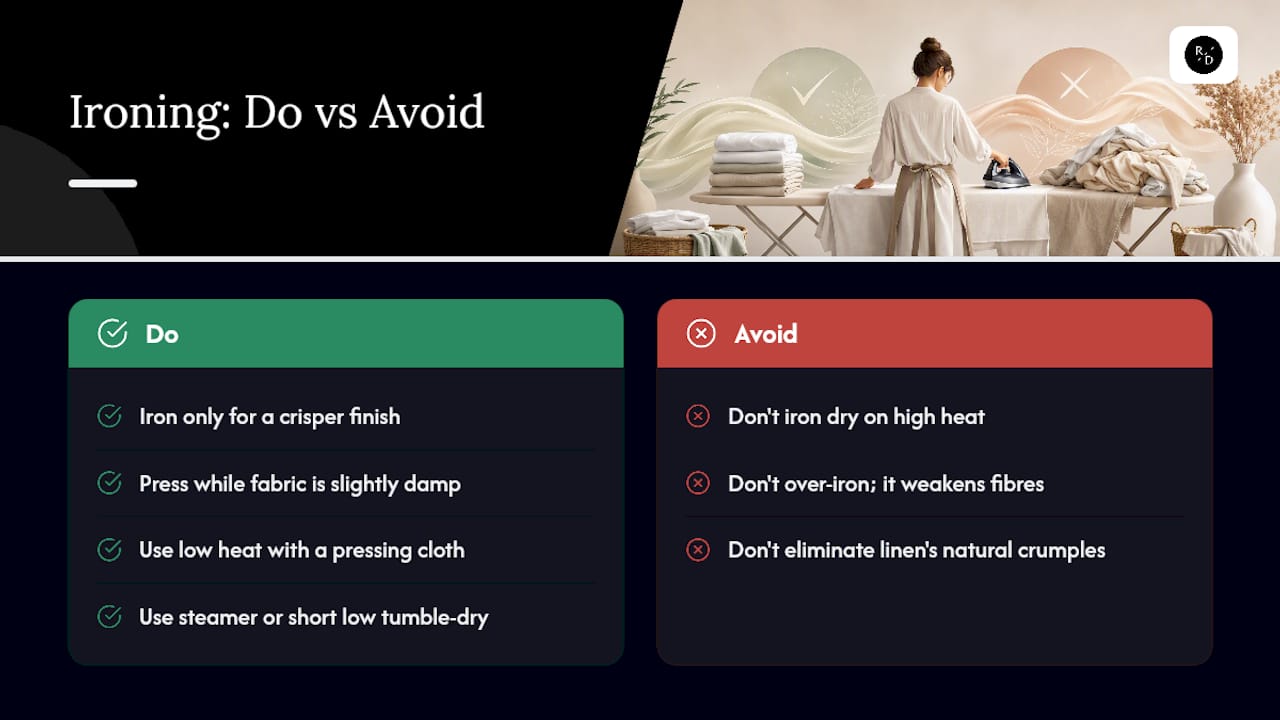
Ironing linen is optional, and honestly, most of the time it’s unnecessary. If you do want a crisper finish, press while the fabric is still slightly damp, on a low heat setting, with a cloth between the iron and the linen to protect the surface. A short burst in the tumble dryer on low, or a quick pass with a steamer, relaxes creases just as effectively without the risk of a hot iron scorching the weave.
The crumpled texture that linen develops naturally is part of its character, not a flaw to correct. Over-ironing flattens that texture and puts unnecessary strain on the fibres for a result that fades the next time you sit on the bed anyway.
Storing and rotating linen bedding correctly
Store linen sheets in a cool, dry, well-ventilated spot, and avoid sealing them in plastic bags, which trap moisture and encourage a musty smell over time. Breathable cotton storage bags or open shelving work far better.
Rotating between two or more sets spreads out wear and gives each one time to rest between washes. If a new set feels snug on the mattress, a pre-wash cycle often helps it settle and fit properly. Fold everything loosely rather than pressing it into tight squares, and keep sets out of direct sunlight, since prolonged exposure can fade even the richest linen tones.
Why linen softens, wrinkles, and sometimes shrinks
Flax fibres are naturally robust, and one of linen’s most appealing traits is that it keeps softening with every wash rather than wearing thin. Pre-washed or stonewashed linen starts several steps ahead, since much of that initial stiffness has already been broken in before the fabric reaches your bed.
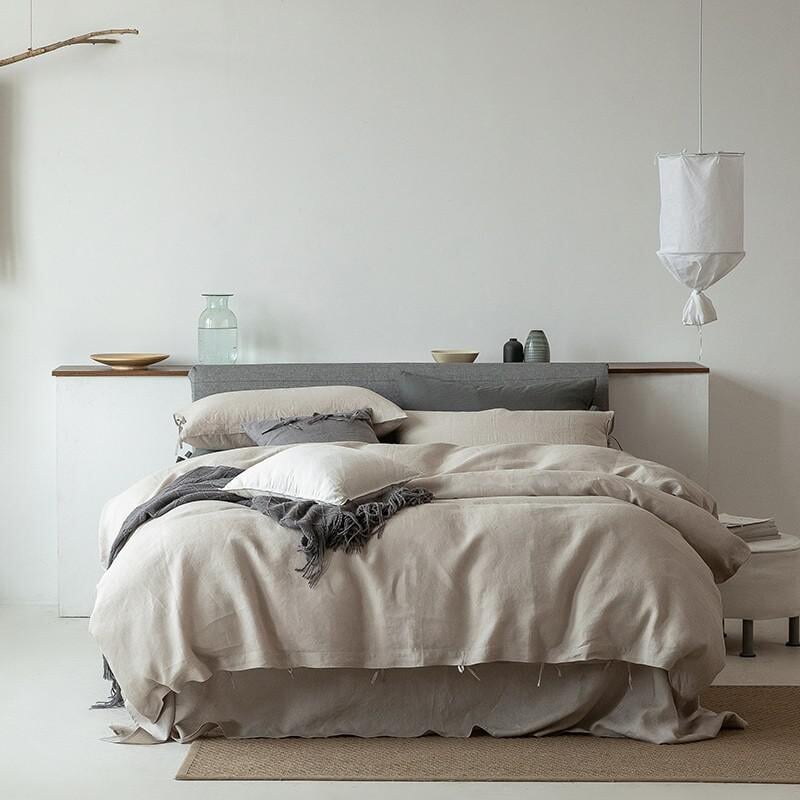
The loose, breathable weave that makes linen so good for hot sleepers is also what gives it that relaxed, crumpled look. That’s normal fabric behaviour, not a sign of damage. Shrinkage risk is highest on the very first wash and whenever high heat gets involved, so sticking to a cool or warm cycle and low tumble heat keeps any size change minimal from the outset.
What Roomie Design has learned about caring for linen
Roomie Design works with linen bedding across multiple collections, and the pattern is consistent: readers who start with a pre-washed or stonewashed set spend far less time waiting for that famous softness to arrive. It settles in within the first handful of washes rather than dozens.
If you’re choosing between a raw finish and a pre-washed one, the pre-washed route gets you comfortable sooner with none of the early stiffness.
— Roomie Design
Ready-to-buy linen sets built for easy care
If you’d rather start with linen that’s already partway through its softening process, Roomie Design stocks three options built around exactly the care routine covered above.
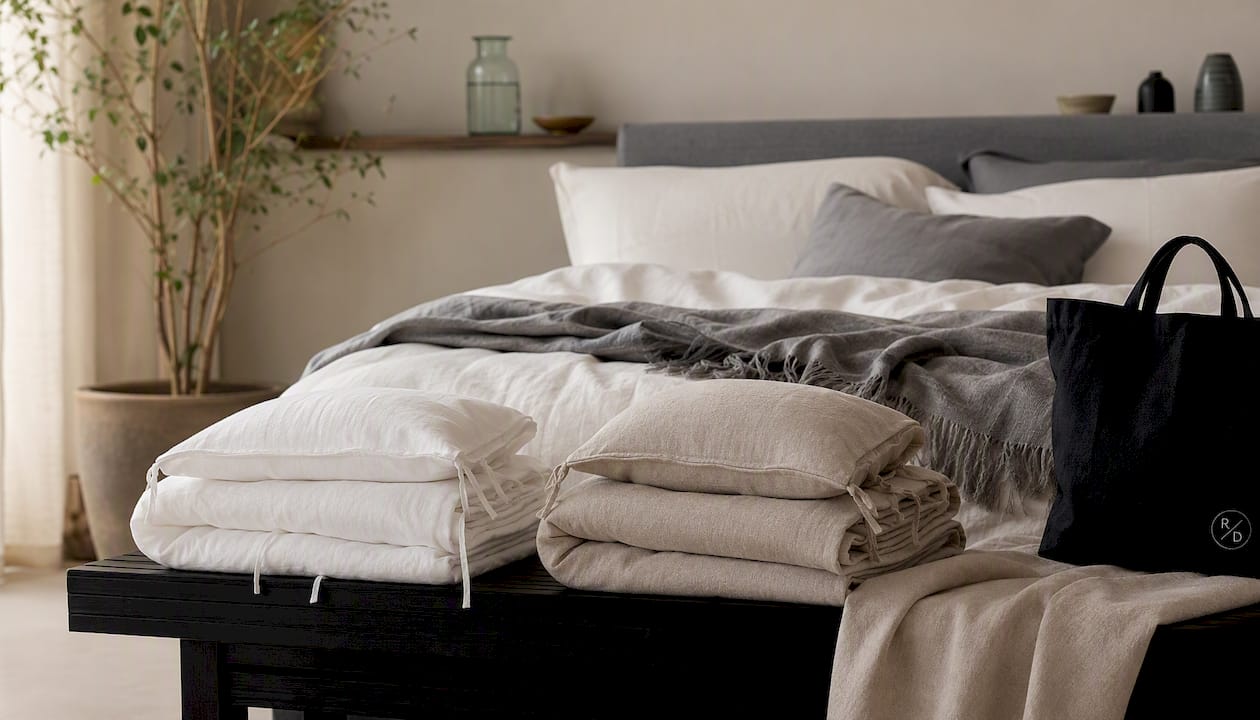
The White 100% Linen Bedding Set suits anyone who wants a crisp, classic bedroom look that still handles regular washing without fuss. The Natural 100% Linen Bedding Set leans into linen’s raw, earthy tone and works particularly well for readers who want that lived-in texture from the first night. For anyone testing linen before committing to a full set, the Natural Flax Linen Sheet is a low-commitment way to feel the difference on your own mattress.
All three are designed to respond well to the gentle wash-and-dry routine outlined above, softening further with each cycle rather than wearing out. If you’re also weighing up covers or cushions to match, browse the wider duvet cover sets or pillowcases collections while you’re there. Pick a set, follow the 30°C–40°C wash guidance, and you’ll have bedding that keeps improving for years rather than one that peaks on day one.
Sources
- How to wash linen bedding, according to an expert | The Independent
- Linen vs. cotton sheets | Sleep Foundation
- Linen sheets pros and cons (2026) - Mattress Nut
- How to wash linen: a step-by-step guide | Vanish
FAQ
Can you machine wash linen bedding?
Yes, linen bedding is machine washable on a gentle or delicate cycle. Keep the water temperature between 30°C and 40°C and avoid overloading the drum so the fabric can move freely.
Should I wash linen on 30 or 40 degrees?
Either works, and the right choice depends on how soiled the sheets are. 30°C is gentler and fine for a routine wash, while 40°C suits bedding that needs a deeper clean, and both sit within the safe range for linen.
How should you wash linen bedding?
Use a mild liquid detergent, a delicate cycle, and skip bleach or fabric softener, both of which can weaken or coat the fibres over time. Dry on low heat, or air-dry until slightly damp before finishing in the tumble dryer, which helps preserve softness according to guidance on linen’s pros and cons.
Does 100% linen shrink after washing?
Some shrinkage can happen, and it’s most likely on the very first wash or when high heat is used during drying. Washing at 30°C–40°C and drying on low heat keeps this to a minimum, and choosing a pre-washed set reduces the risk further since much of that initial settling has already taken place.


